2 tala 1967 specimen
About This Note
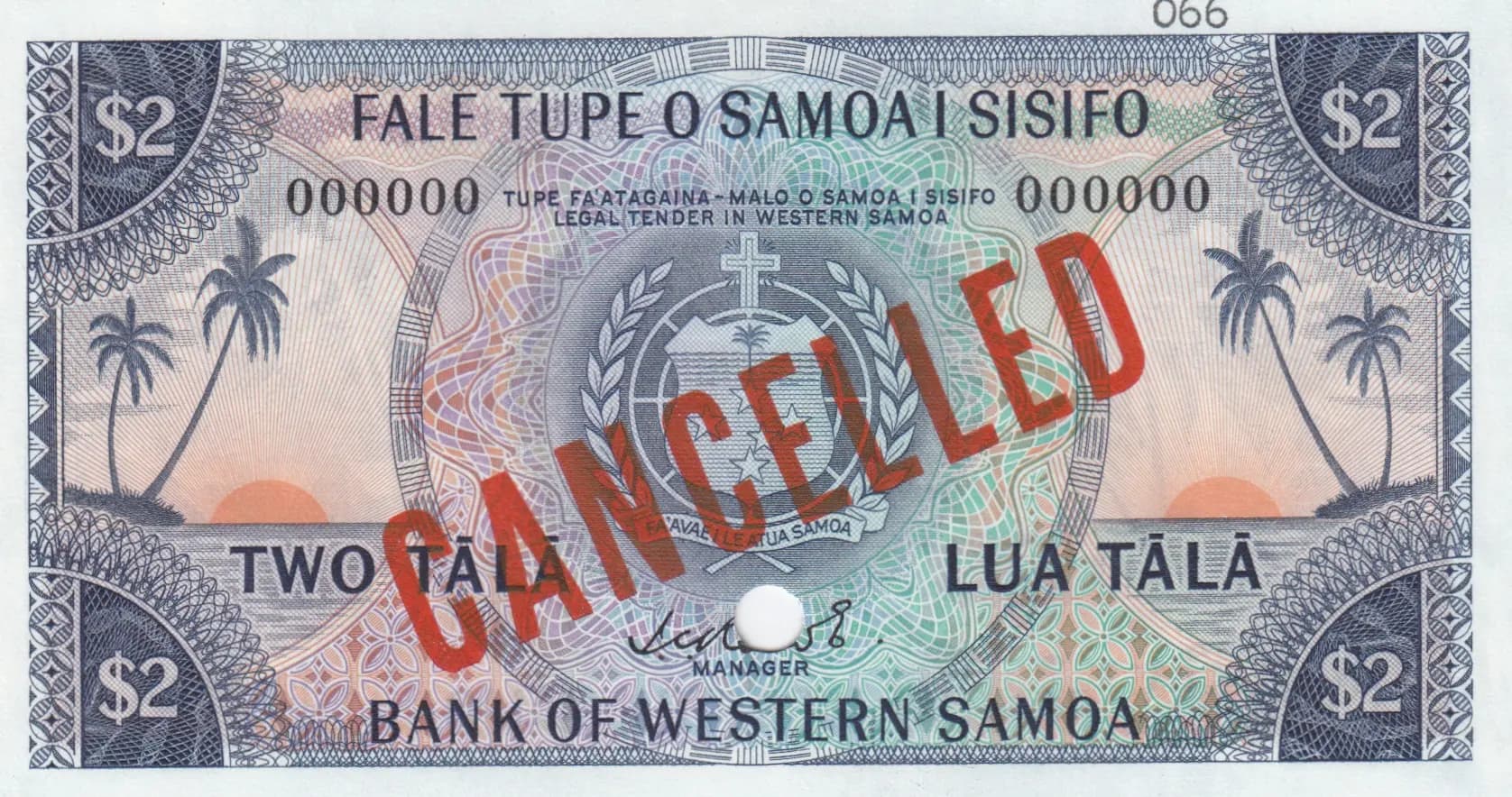
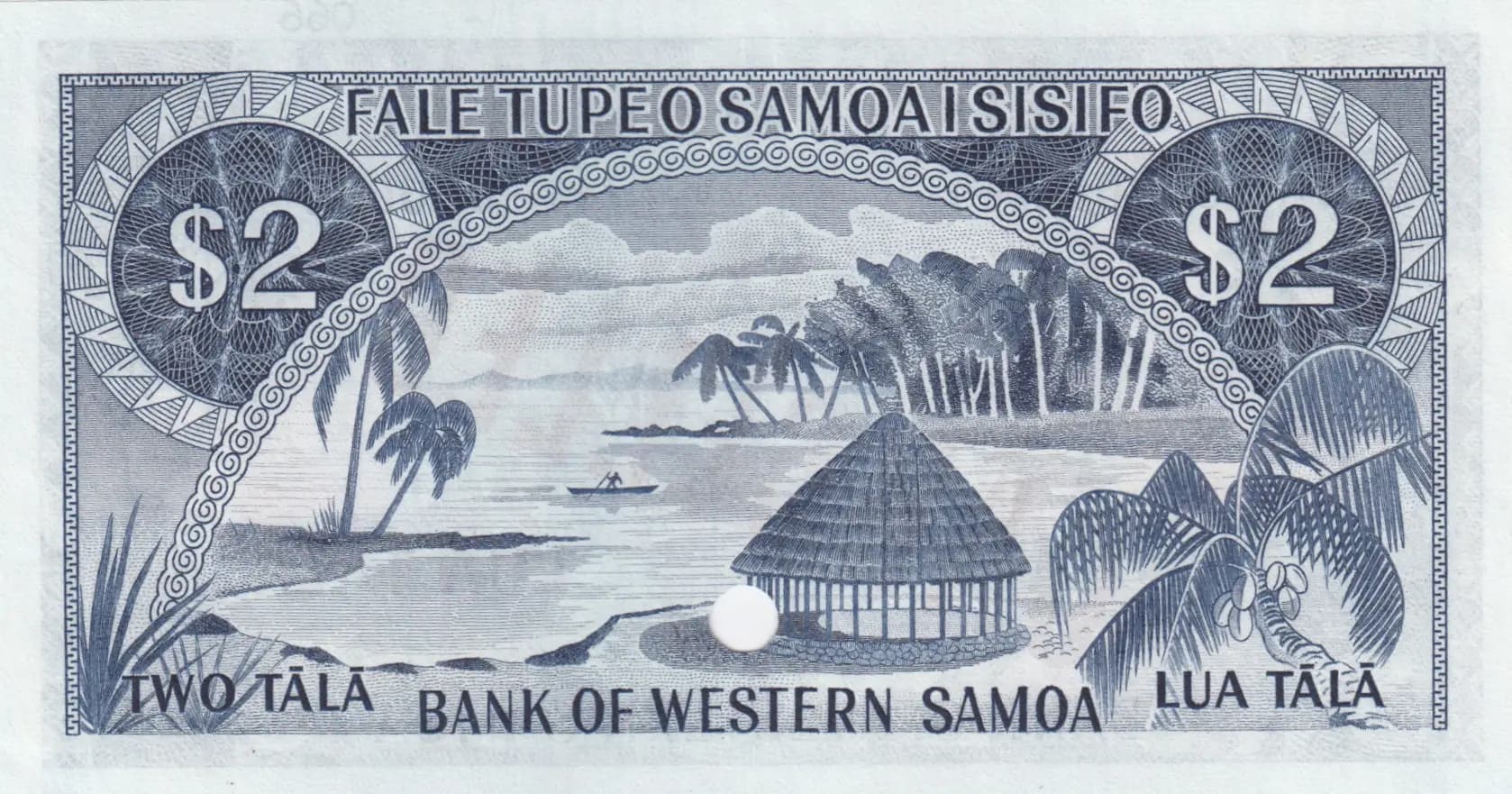
This is an uncirculated 1967 specimen note from the Bank of Western Samoa in the denomination of 2 tala (Pick P-17as). The note features an elegant design with a central cross medallion surrounded by laurel wreaths and flanked by palm trees on a multicolored front, while the reverse depicts a traditional Samoan fale (thatched-roof house) in a detailed tropical coastal landscape. As a specimen note with red 'SPECIMEN' overprint and characteristic specimen punch holes, this represents an important early issue from Western Samoa's first central bank.
Common. The 1967 2 tala specimen note from Western Samoa is a standard inaugural issue specimen from a stable central bank. While specimen notes are less common in circulation than regular issues, they were produced in sufficient quantities for banking distribution and institutional holdings. Specimen notes of this era from small island nations are regularly encountered in the numismatic market at modest valuations. The absence of any recorded print run restrictions, the straightforward design without special limited editions, and the institutional nature of specimen production all indicate this is a common variety in the UNC grade.
This 1967 specimen note marks the inaugural currency issue of the Bank of Western Samoa, established following the nation's independence. The imagery reflects Samoa's cultural and natural heritage: the cross medallion with laurel wreaths symbolizes Christian influence and sovereignty, while the reverse's depiction of the traditional fale and tropical landscape anchors the currency in Samoan identity and the island nation's economic foundation in agriculture and traditional lifeways. The bilingual inscriptions in English and Samoan underscore the post-colonial transition and the assertion of local governance over monetary affairs.
The obverse features a formal, symmetrical design centered on a circular medallion containing a cross, symbolic of Christian influence in Samoa, flanked by classical laurel wreaths representing peace and sovereignty. Palm trees are illustrated on both sides of the composition, evoking Samoa's tropical environment. The border consists of ornate geometric and floral motifs typical of high-security currency design. The color palette—blues, greens, peachy-orange, and black—creates visual distinction and printing complexity. The reverse presents a detailed engraved vignette of a traditional Samoan fale with characteristic open design and thatched roof, situated within a coastal landscape that includes ocean, canoe, coconut palms, and distant mountains. This landscape composition celebrates Samoan vernacular architecture and maritime culture. The fine line engraving throughout demonstrates sophisticated intaglio work.
Front Side: 'FALE TUPE O SAMOA I SISIFO' (State Bank of Western Samoa / Bank of Western Samoa); '$2' and 'TWO TALA' / 'LUA TALA' (denomination indicators); 'LEGAL TENDER IN WESTERN SAMOA' / 'TUPE FA'ATAGAINA - MALO O SAMOA I SISIFO' (legal tender declaration); 'SPECIMEN' (red overprint indicating non-circulating specimen); Serial number placeholder '000000'; Reference number '066'. Back Side: 'FALE TUPE O SAMOA I SISIFO' (State Bank of Western Samoa); '$2' (repeated in opposite corners); 'TWO TALA' / 'LUA TALA' (denomination in English and Samoan); 'BANK OF WESTERN SAMOA'.
Intaglio (recess) printing on banknote paper, employing fine line engraving and crosshatching for the landscape vignette and border details. The multicolor printing on the obverse (blues, greens, oranges, blacks) indicates multiple plate passes or color separation techniques typical of currency production in this era. Security features include intricate line work patterns, ornamental borders designed for difficulty of reproduction, and small circular intaglio elements. The printer for this Western Samoa series is consistent with Commonwealth currency production standards of the 1960s, likely produced by a specialized security printer such as Thomas De La Rue or similar establishment printer.
This is a specimen variety (indicated by the red 'SPECIMEN' overprint and characteristic punch holes). The reference number '066' visible in the top right corner suggests this is part of a sequential specimen series. The serial number placeholder '000000' is standard for specimens and not indicative of a separate variety. No signature varieties or date variations are present on this note, as the ND (no date) 1967 issue represents a single printing. This Pick P-17as designation specifically identifies it as the specimen variety of the 1967 2 tala note.