2 tala 1980
About This Note
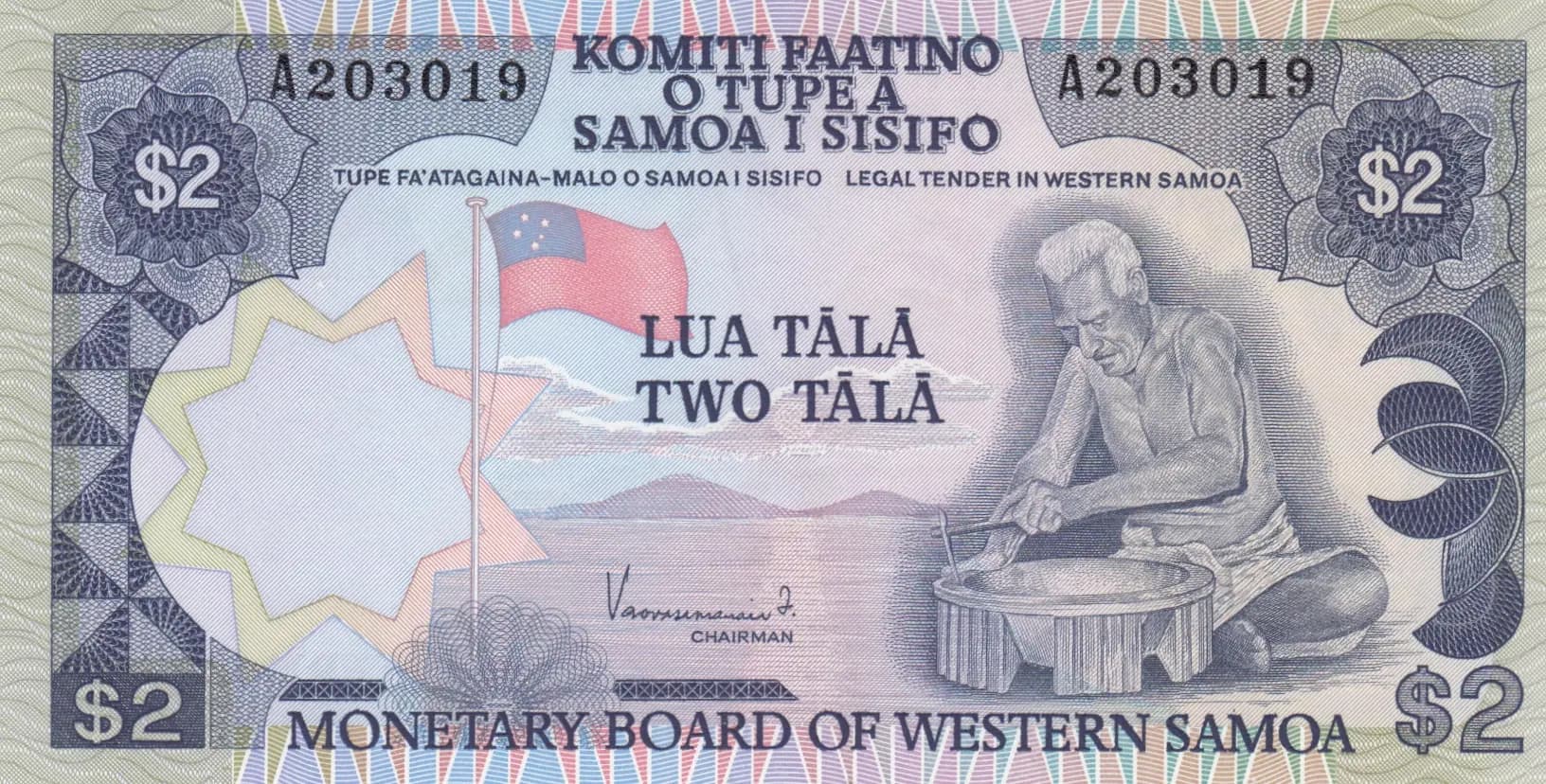
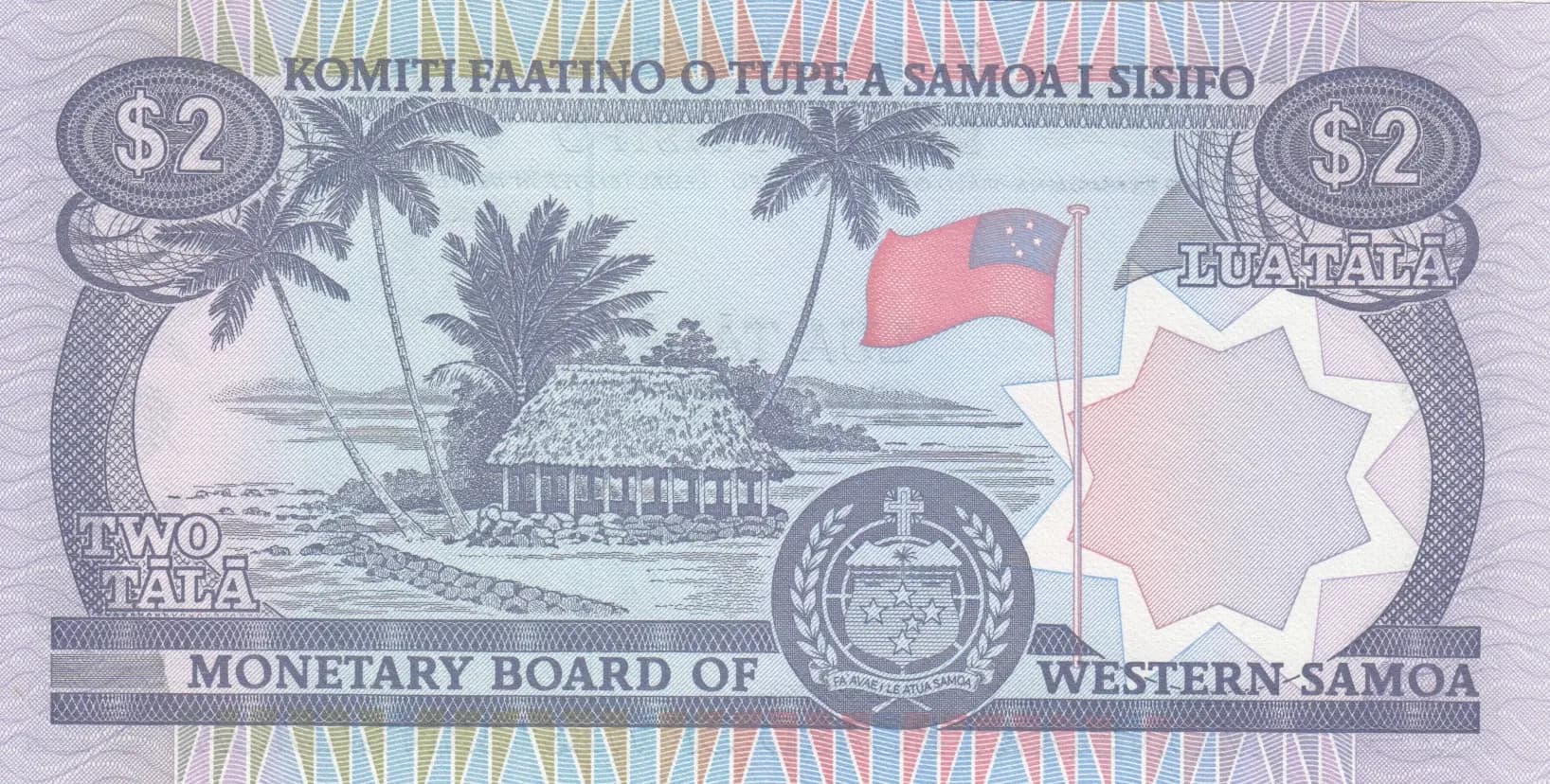
This is a pristine example of the 1980 Western Samoa 2 Tala banknote (Pick P-20) in uncirculated condition, showcasing exceptional print quality and vibrant original colors of light blue, pink, and cream. The front features a dignified portrait of an elderly craftsman engaged in traditional weaving, paired with the Samoan flag, while the reverse depicts an iconic traditional fale (thatched-roof house) against a tropical seascape backdrop. The note displays outstanding preservation with sharp, clear printing throughout and no signs of circulation, making it an attractive example for collectors of Pacific island currency and Samoan numismatic material.
common. The 1980 2 Tala note (Pick P-20) is a standard-issue banknote from a series with substantial print runs intended for general circulation in Western Samoa. In UNC condition, examples are readily available in the numismatic market at modest prices (typically $5-15 USD), indicating strong supply relative to collector demand. This note does not fall into a short print run, was not recalled, and the Monetary Board of Western Samoa was a stable, long-established issuing authority. The appearance of examples in both raw and certified formats on the market supports its common status.
Issued during Western Samoa's post-independence period by the Monetary Board of Western Samoa, this 1980 note celebrates Samoan cultural heritage through its iconography of traditional craftsmanship and vernacular architecture. The prominent display of the Samoan flag and the detailed rendering of the fale (traditional house) and weaving practices reflect the nation's emphasis on preserving cultural identity during this era of monetary autonomy. The bilingual Samoan-English inscriptions underscore the country's dual cultural and linguistic inheritance during the early decades following independence.
The obverse features a right-facing profile portrait of an elderly Samoan man with white/grey hair, depicted engaged in traditional weaving or woodcarving work, representing the nation's artisanal heritage. The Samoan flag (red field with blue canton bearing white stars) appears prominently on the left side. Ornate corner rosettes with intricate geometric and floral patterns provide decorative framing, while extensive guilloche security work runs throughout the design. The reverse showcases a picturesque tropical landscape centered on a traditional Samoan fale—a characteristic open-sided thatched-roof house elevated on stilts—positioned against a backdrop of palm trees and ocean waters, evoking the island nation's natural beauty and cultural architecture. A circular national seal featuring crossed palm fronds and a central cross occupies the center-bottom position. Denomination cartouches in oval frames bearing '$2' appear symmetrically on both left and right sides of the reverse. The overall color palette of light blue, pink, cream, and dark navy blue creates a distinctive tropical aesthetic characteristic of 1980s-era Pacific island currency design.
FRONT SIDE: 'KOMITI FAATINO O TUPE A SAMOA I SISIFO' (Monetary Board of Western Samoa); 'TUPE FA'ATAGAINA-MALO O SAMOA I SISIFO' (Legal tender in Western Samoa); 'LEGAL TENDER IN WESTERN SAMOA' (English equivalent); '$2' and 'LUA TĀLA' / 'TWO TĀLA' (denomination in both numeric and bilingual text); 'CHAIRMAN' and 'MONETARY BOARD OF WESTERN SAMOA' (issuer identification); Serial number 'A203019'. BACK SIDE: 'KOMITI FAATINO O TUPE A SAMOA I SISIFO' (Monetary Board of Western Samoa); '$2', 'LUA TALA' / 'TWO TATA' (denomination inscriptions); 'MONETARY BOARD OF WESTERN SAMOA' (issuer name in English). All inscriptions appear in both Samoan and English, reflecting the nation's bilingual official status.
The note was produced using intaglio (engraved) printing, as evidenced by the sharp, detailed line work visible in the guilloche patterns, corner rosettes, landscape engraving, and fine security lines throughout. The multi-color printing with precise registration and the crisp, raised-feel appearance of the printed elements are characteristic of intaglio production. The security printer for Western Samoa notes of this era was typically De La Rue or similar Commonwealth security printers, though specific attribution for Pick P-20 would require documentation review. The complexity of the guilloche work and the fine detail preservation visible in this uncirculated example demonstrates high-quality intaglio craftsmanship.
The observed serial number 'A203019' represents one of many serial number varieties issued for this denomination. The standard obverse and reverse designs shown here—with the craftsman portrait and traditional fale landscape respectively—constitute the primary design type for Pick P-20. No major varieties such as significant overprints, signature varieties, or design modifications have been documented for this Pick number. Collectors should note that the bilingual Samoan-English inscription format is consistent across all examples of this issue.