10 tala 1967 specimen
About This Note
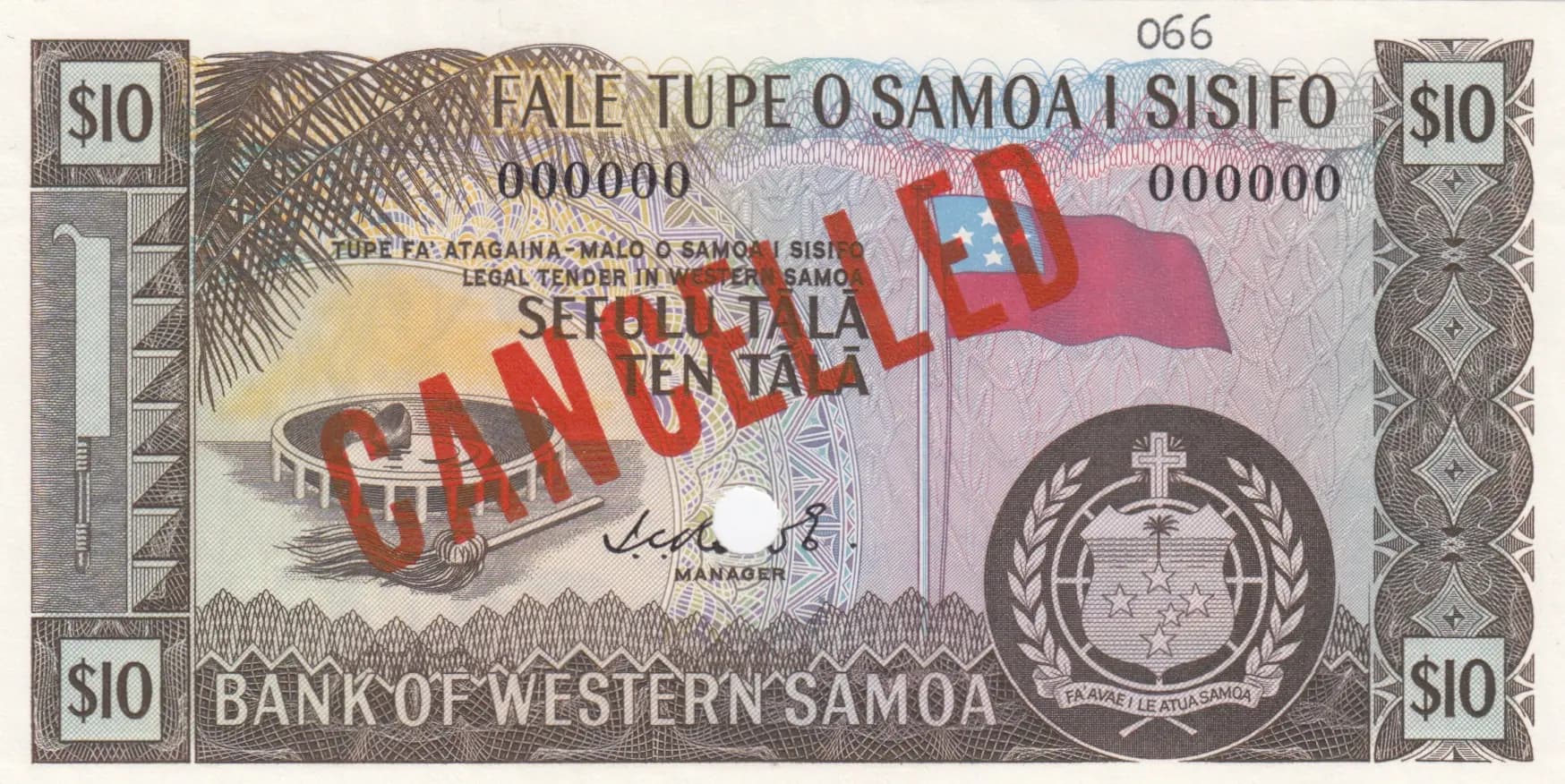
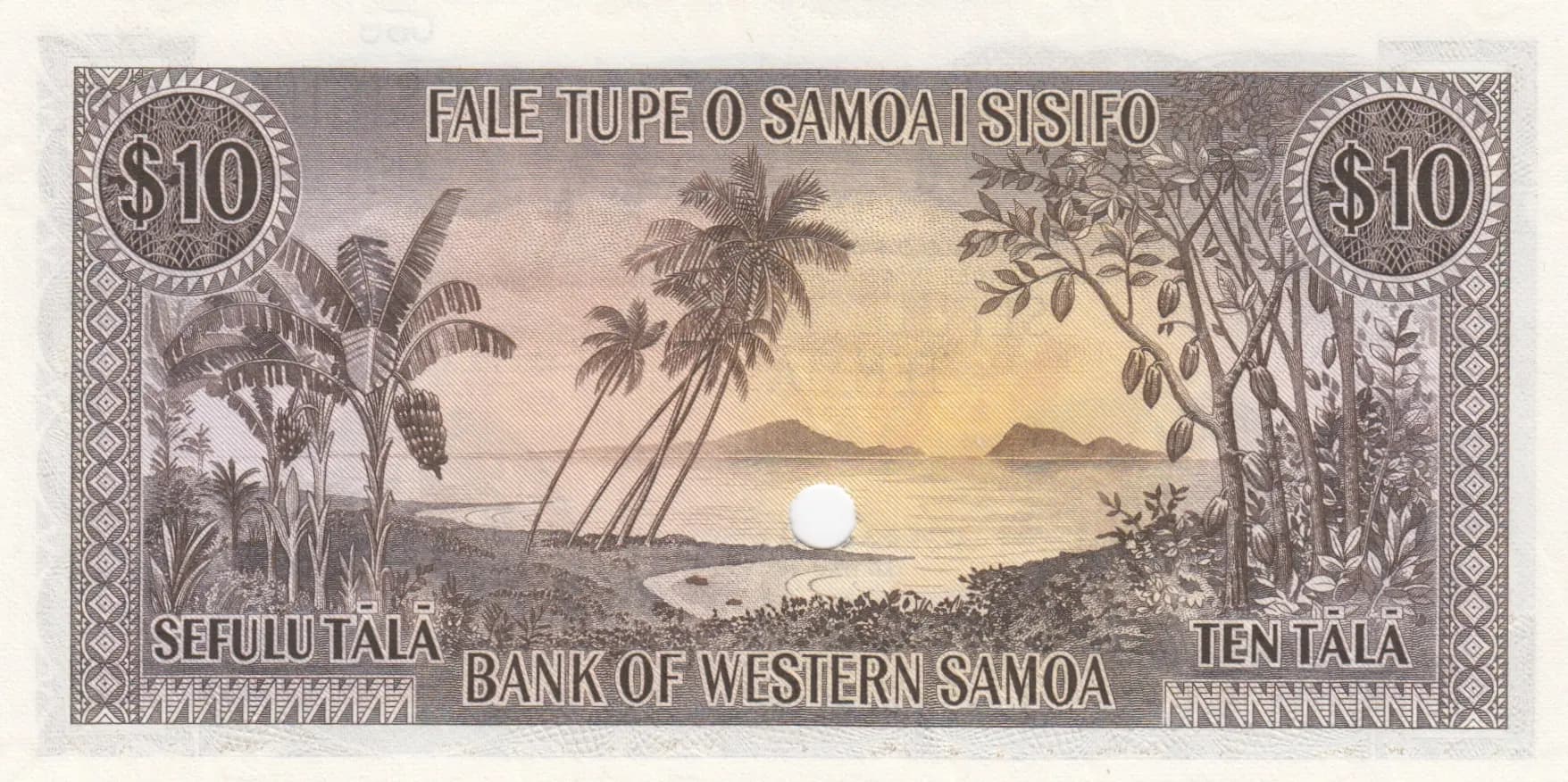
This is a pristine 1967 specimen note of the 10 tala denomination from the Bank of Western Samoa, graded UNC. The note features vibrant multi-color printing with a traditional Samoan canoe (fautasi) and national flag on the obverse, and a serene tropical landscape with palm trees and sunset on the reverse. The red 'CANCELLED' overprint and specimen status (indicated by the reference marking '066') confirm this note was never released into circulation, making it an excellent example of early Samoan currency design.
Common. The 10 tala denomination from the 1967 issue of Western Samoa is widely available in both circulated and uncirculated examples. While this particular note is a specimen with CANCELLED overprint (which restricts it to collector/institutional holdings rather than circulation), specimen examples of this series regularly appear in the market. Print runs for early Western Samoan currency were substantial relative to the small population, and specimen notes were produced in reasonable quantities for archival and institutional distribution purposes.
Issued in 1967 during Western Samoa's post-independence period, this banknote reflects the young nation's cultural identity and natural heritage. The imagery—featuring the traditional fautasi canoe, national flag, and tropical island landscape—emphasizes Samoa's maritime tradition and island paradise character during an era when the Central Bank of Western Samoa was establishing its currency identity and international recognition.
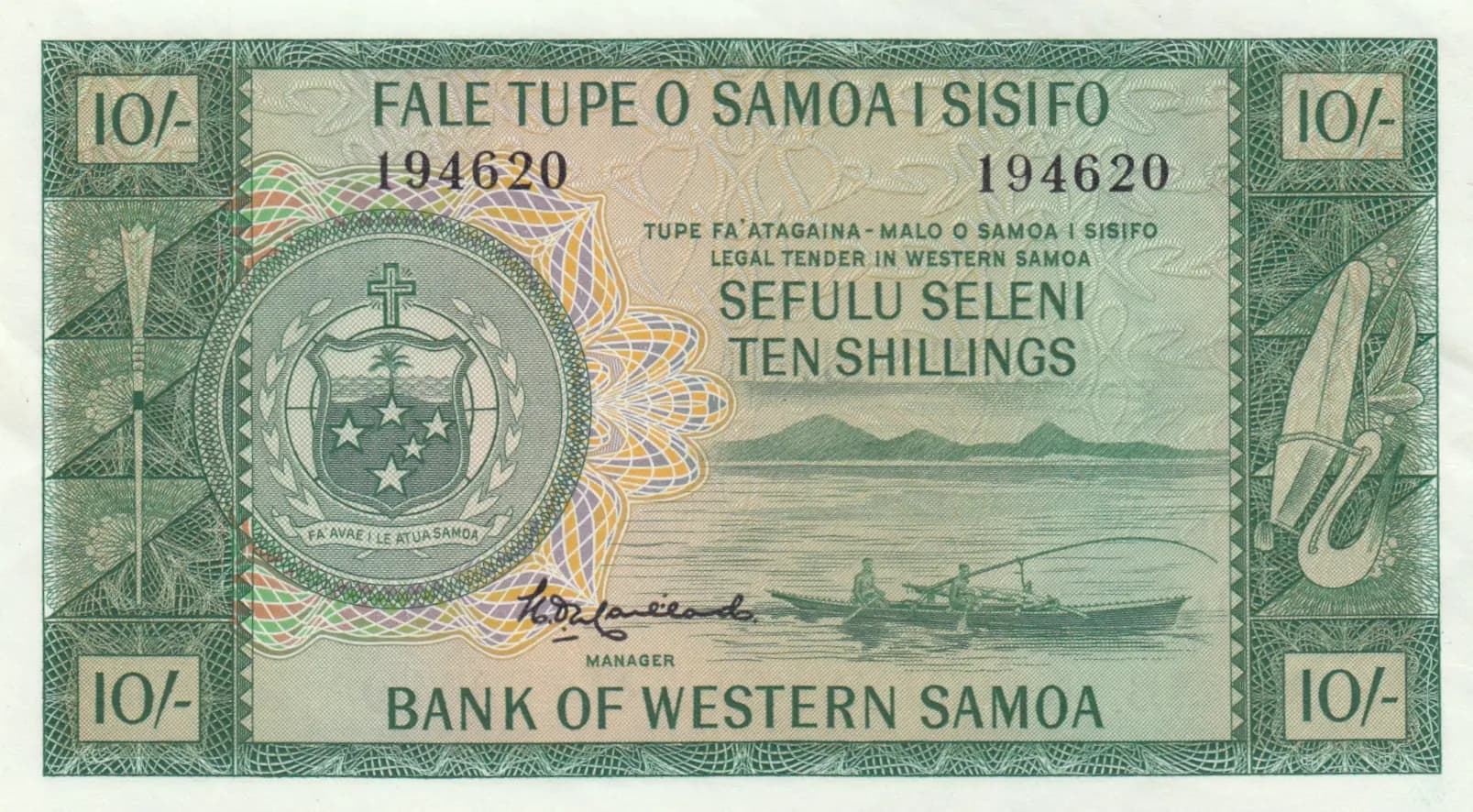
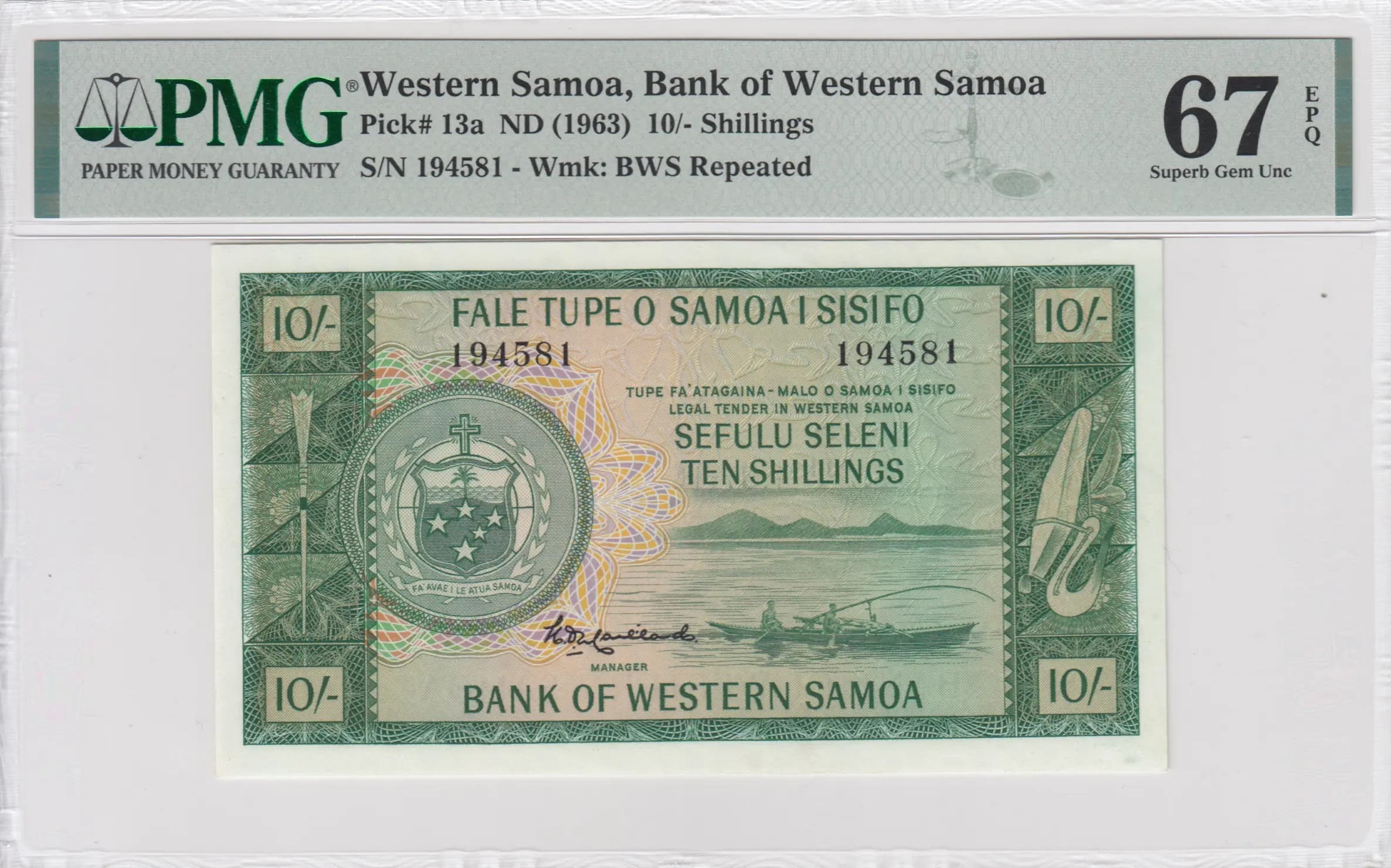
The obverse features a traditional Samoan double-hulled canoe (fautasi) positioned on the left, symbolizing Samoa's maritime heritage and navigation prowess. The national flag of Samoa (red and blue field with white star) occupies the right side, representing national sovereignty. A circular emblem at lower right displays a cross with laurel wreath, likely representing the nation's Christian heritage and civic authority. The reverse presents an idyllic tropical seascape with coconut palms and vegetation in the foreground, a calm body of water in the middle ground, and distant islands visible on the horizon beneath a rising or setting sun rendered as a white circle. Ornate geometric decorative borders frame both sides in the traditional style. The denomination '$10' appears in all four corners on the obverse and in circular cartouches on the reverse.
Front side: 'FALE TUPE O SAMOA I SISIFO' (Bank of Western Samoa), '$10' (denomination in English), 'SEFULU TALA' (Ten Tala in Samoan), 'TUPE FA'ATAGAINA-MALO O SAMOA I SISIFO LEGAL TENDER IN WESTERN SAMOA' (legal tender declaration in Samoan/English), 'BANK OF WESTERN SAMOA' (English issuer name), 'CANCELLED' (specimen overprint), serial number area marked '000000', reference number '066'. Back side: 'FALE TUPE O SAMOA I SISIFO' (Bank of Western Samoa), '$10' (denomination in circular frames), 'SEFULU TALA' (Ten Tala in Samoan), 'TEN TALA' (Ten Tala in English), 'BANK OF WESTERN SAMOA' (English issuer name).
This note was produced using intaglio engraving combined with multi-color lithography, a standard technique for banknote production in the 1960s. The fine line engraving patterns visible throughout, particularly in the decorative borders and the intricate landscape work on the reverse, indicate professional banknote engraving. The security features include watermark areas and fine line work designed to prevent counterfeiting. The printer is not definitively identifiable from the visible inscriptions, though the quality suggests one of the major international banknote printers active during this period.
This is identified as Pick 18as, the 's' suffix indicating it is a specimen note. The reference number '066' and the red 'CANCELLED' diagonal overprint are hallmarks of the specimen variety. Serial numbers on this specimen read '000000', confirming non-circulation status. No other major varieties are apparent from the visual analysis, though other versions of this note may exist without the specimen cancellation marking (cataloged as Pick 18a for circulation notes). The color scheme, design elements, and inscriptions appear consistent with the standard 1967 issue.