10 tala 1985
About This Note
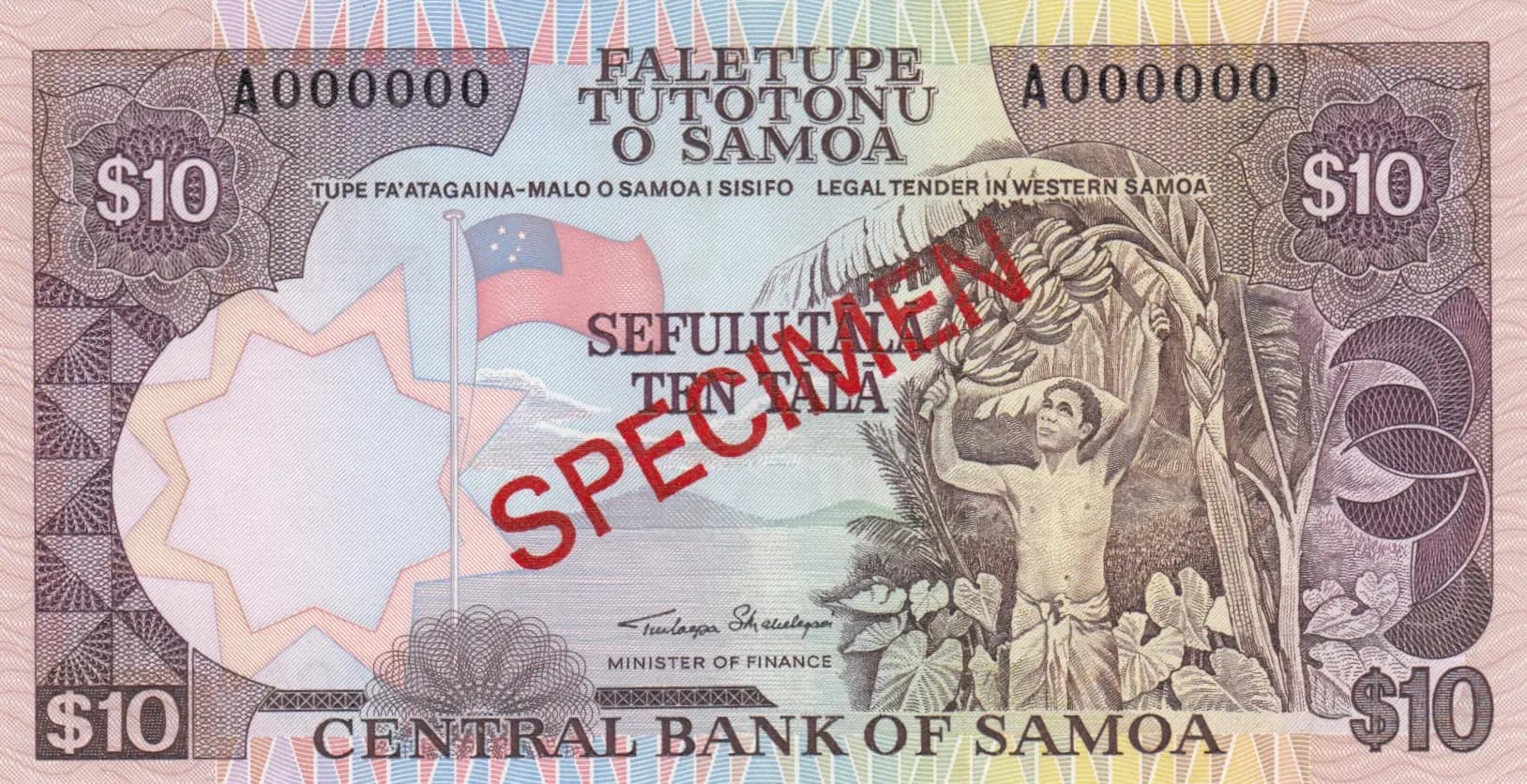
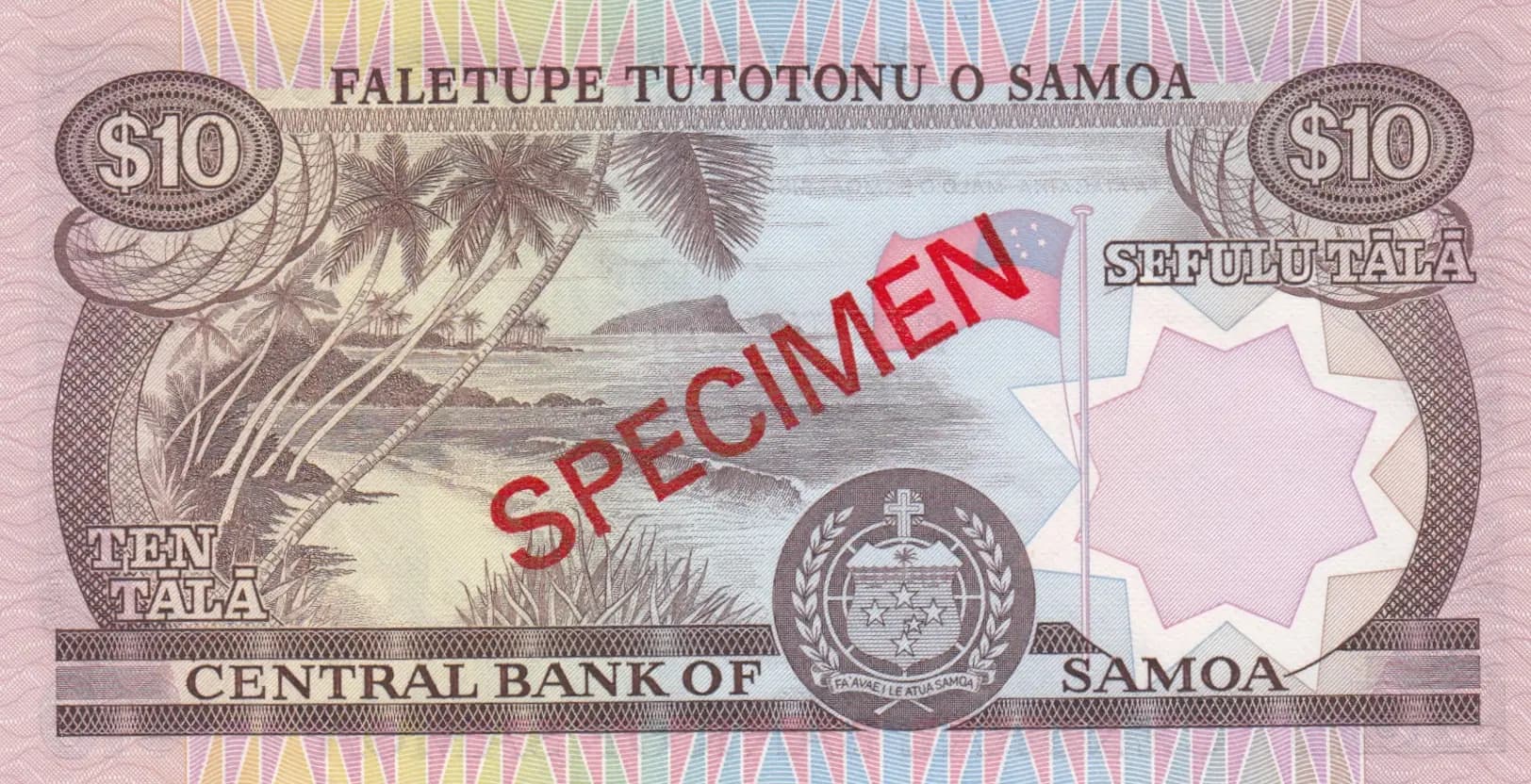
This is a specimen note of the Western Samoa 10 tala from 1985 (Pick P-27), presented in pristine uncirculated condition. The note features vibrant purple and brown coloring with a striking portrait of a young boy reaching toward palm fronds on the obverse, complemented by a tropical coastal landscape on the reverse. The large red 'SPECIMEN' overprint and all-zero serial number (A000000) identify this as a specimen printing, making it an interesting reference example of this important early Central Bank of Samoa issue.
Common. The 10 tala denomination was a standard circulation issue from the Central Bank of Samoa in 1985 and was produced in sufficient quantities to meet regular monetary demand. While specimen notes like this example are less common than circulated examples, they are not rare—specimen printings were routinely produced for reference, presentation, and archival purposes by central banks and were distributed to numismatists and institutions. The Pick P-27 catalog designation and widespread availability in the numismatic market indicate this is a common date/denomination combination.
Issued by the Central Bank of Samoa in 1985, this banknote reflects Western Samoa's post-independence economy and cultural identity during a period of monetary consolidation. The imagery emphasizes Samoa's agricultural heritage (palm fronds and tropical agriculture) and natural resources, while the Samoan flag and bilingual inscriptions (Samoan/English) reinforce the nation's identity. The note's legal tender inscription specifies 'Western Samoa,' reflecting the political designation used before the country's name was simplified to 'Samoa' in 1997.
The obverse features a portrait of a young boy in profile, depicted reaching upward toward palm fronds, symbolizing youth, aspiration, and connection to Samoa's agricultural heritage. The Samoan flag (characterized by its red field with blue canton containing white stars and a white crescent) is prominently displayed on the left side. The reverse depicts a tropical coastal landscape with palm trees and island scenery, reinforcing the nation's natural resources and island geography. Both sides incorporate a central seal featuring a cross and laurel wreath with stars, representing national authority and sovereignty. Ornamental guilloché patterns, decorative floral and geometric borders, and intricate line work frame the entire design in purple and brown tones with cream/beige and pink accents, reflecting the sophisticated security printing standards of 1985.
FRONT SIDE: 'FALETUPE TUTUTONU O SAMOA' = Central Bank of Samoa; 'TUPE FA'ATAGAINA-MALO O SAMOA SISIFO' = Currency of Western Samoa; 'LEGAL TENDER IN WESTERN SAMOA' = Legal tender declaration; 'SEFULUATA TENE ANA' = Ten tala; '$10' = Denomination; 'MINISTER OF FINANCE' = Ministerial authority; 'CENTRAL BANK OF SAMOA' = Issuing authority; 'SPECIMEN' = Specimen designation. REVERSE SIDE: 'FALETUPE TUTUTONU O SAMOA' = Central Bank of Samoa; 'SEFULUATA TENE TALA' = Ten tala; '$10' = Denomination; 'CENTRAL BANK OF SAMOA' = Issuing authority; 'FA'AVALE E ATUA SAMOA' = God bless Samoa; 'SPECIMEN' = Specimen designation.
This note employs intaglio printing (offset lithography combined with engraving) combined with sophisticated security features typical of banknote production in the 1980s. The fine guilloché patterns, intricate border designs, and complex seal work are characteristic of professional security printing. The watermark areas visible in both obverse and reverse (faint facial features on front, landscape elements on reverse) indicate incorporation of watermarking technology. The vibrant color separation and precise registration suggest multi-color offset lithography combined with intaglio engraving. The exact security printer for this Pick number is not definitively documented in standard references, though Central Bank of Samoa notes from this period were commonly produced by established international security printers.
This is identified as a specimen note by the large red 'SPECIMEN' overprint and the serial number designation A000000, indicating it is not a regular circulation note but rather a reference or presentation specimen. Specimen notes of this issue may exist with different signature combinations or printer marks, though detailed variety information for this specific Pick number is limited in standard references. The specimen status itself is the primary distinguishing feature of this particular example.