10 tala 1980
“#005025”
About This Note
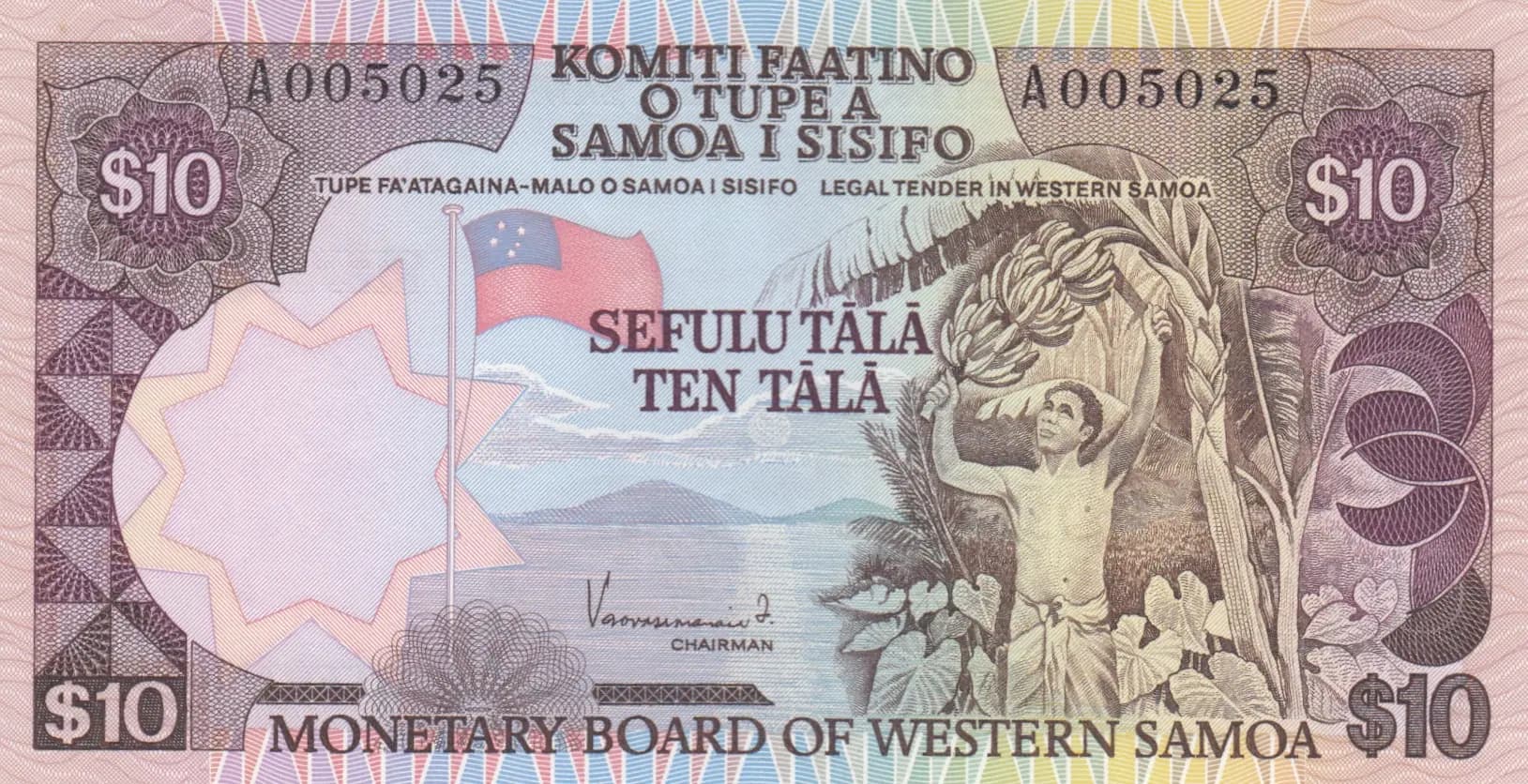
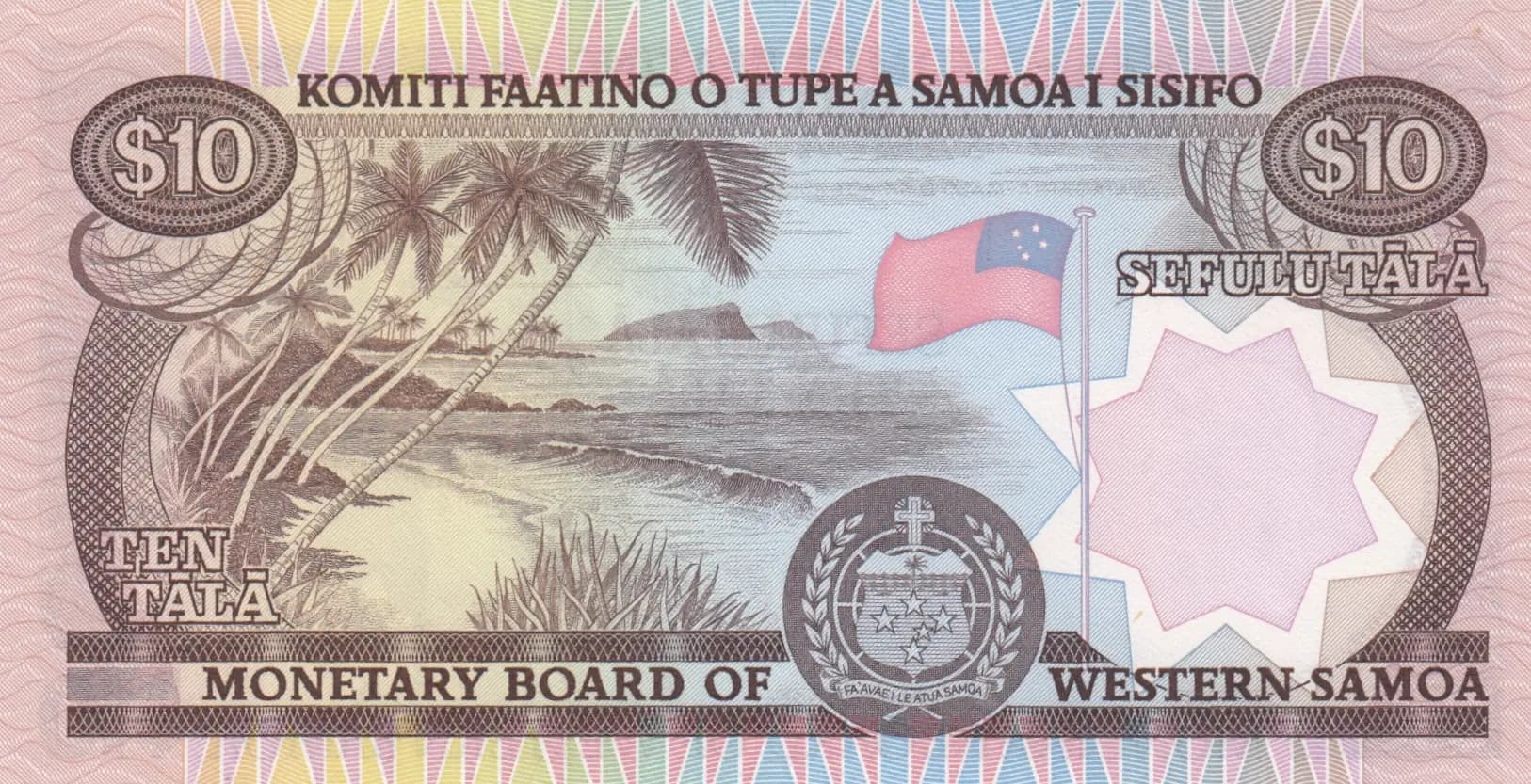
This is an uncirculated 1980 Western Samoa 10 tala note (Pick P-22) in pristine condition, showcasing the characteristic tropical imagery and bilingual Samoan-English design that defined the Monetary Board's currency during this period. The note features vibrant purple and brown tones with intricate intaglio engraving throughout, depicting a classical female allegorical figure on the obverse and a detailed tropical coastal landscape on the reverse, both enhanced by the national flag motif. As a high-grade example with serial number A005025, this note represents an important piece of early post-independence Samoan numismatic history.
Common. This 1980 Western Samoa 10 tala (Pick P-22) is a standard circulation issue from a relatively stable, long-lived currency series that continued production beyond 1980. The UNC condition grade is desirable among collectors, but the note itself represents a mainstream denomination from a regular issue by the Monetary Board. No evidence of restricted print runs, short-lived authorization, or recall activities suggests this note was produced in quantities typical of circulating currency. High-grade examples command modest collector premiums, but the note type itself is not scarce in the numismatic market.
Western Samoa's independence in 1962 and subsequent monetary autonomy are reflected in this 1980 issue by the Monetary Board of Western Samoa, which assumed full control of currency issuance. The classical female figure depicted on the obverse represents Western Samoa's aspirational modernization during the 1970s-80s, while the tropical landscape and palm-fringed shoreline on the reverse celebrate the nation's natural heritage and identity. The prominent display of the Western Samoan flag and bilingual Samoan-English inscriptions underscore the assertion of national sovereignty and cultural pride during this formative period of the young nation.
The obverse presents a classical allegorical female figure in draped Greco-Roman style reaching upward beneath tropical palm vegetation, symbolizing prosperity and the nation's aspirations, positioned against a seascape with distant islands rendered in fine engraved detail. The reverse depicts a naturalistic tropical coastal scene with prominent palm trees on the left, sandy or rocky beach terrain, and ocean waters extending to the horizon with visible islands, establishing the identity of Western Samoa's island geography. Both sides incorporate the red flag of Western Samoa (red field with blue canton containing white stars) as a central national symbol. The reverse features a heraldic circular seal with a cross at its apex and laurel wreath elements, representing governmental authority. Denomination markers are presented in ornate oval frames, and decorative scrollwork and fine-line patterns in purple and brown dominate the margins, typical of security printing techniques of the era.
FRONT SIDE: 'KOMITI FAATINO O TUPE A SAMOA I SISIFO' (Monetary Board of Western Samoa) / '$10' (Ten dollars) / 'TUPE FA'ATAGAINA-MALO O SAMOA I SISIFO' (Legal tender in Western Samoa) / 'LEGAL TENDER IN WESTERN SAMOA' / 'SEFULU TÁLA TEN TÁLA' (Ten tala in Samoan and English) / 'MONETARY BOARD OF WESTERN SAMOA' / Signature with title 'CHAIRMAN' / Serial number 'A005025'. BACK SIDE: 'KOMITI FAATINO O TUPE A SAMOA I SISIFO' (Monetary Board of Western Samoa) / '$10' (Ten dollars) / 'SEFULU TÁLA' / 'TEN TALA' / 'MONETARY BOARD OF WESTERN SAMOA' / Circular seal with partially legible text and heraldic design featuring a cross and laurel wreath.
The note exhibits characteristics of intaglio engraving (also called recess printing or copperplate engraving), evidenced by the fine line work, ornate decorative patterns, and depth of image detail visible throughout both obverse and reverse. The complex landscape engraving with fine hatching, the intricate heraldic seal rendering, and the precision of the classical figure's drapery are consistent with high-quality intaglio security printing. The note was likely produced by an established security printer contracted by the Monetary Board; De La Rue, Thomas De La Rue, or similar established security printers commonly produced notes for Pacific island nations during this period, though specific printer attribution would require additional research documentation.
Serial number A005025 indicates this is from the early-numbered production run, with the 'A' prefix typical of initial 1980 releases. The signature on the obverse (Varmuneaux as Chairman) should be cross-referenced with known officials of the Monetary Board of Western Samoa in 1980 to identify the specific variety and any succession of signatories. Standard varieties for this Pick number would include different signature combinations as different chairmen served, which would constitute collectible varieties. No overprints or unusual markings are noted on this example.