1 tala 1980
About This Note
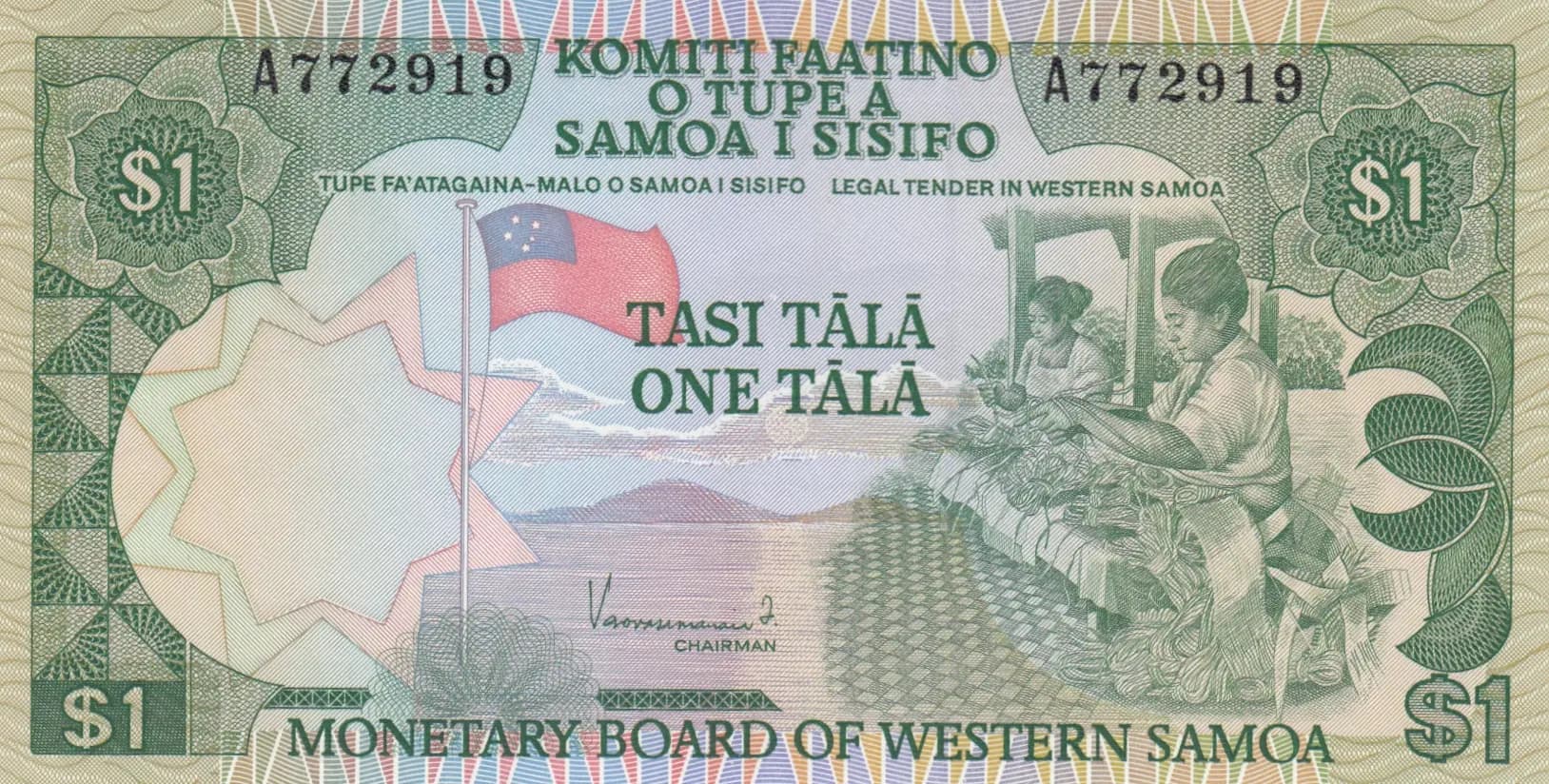
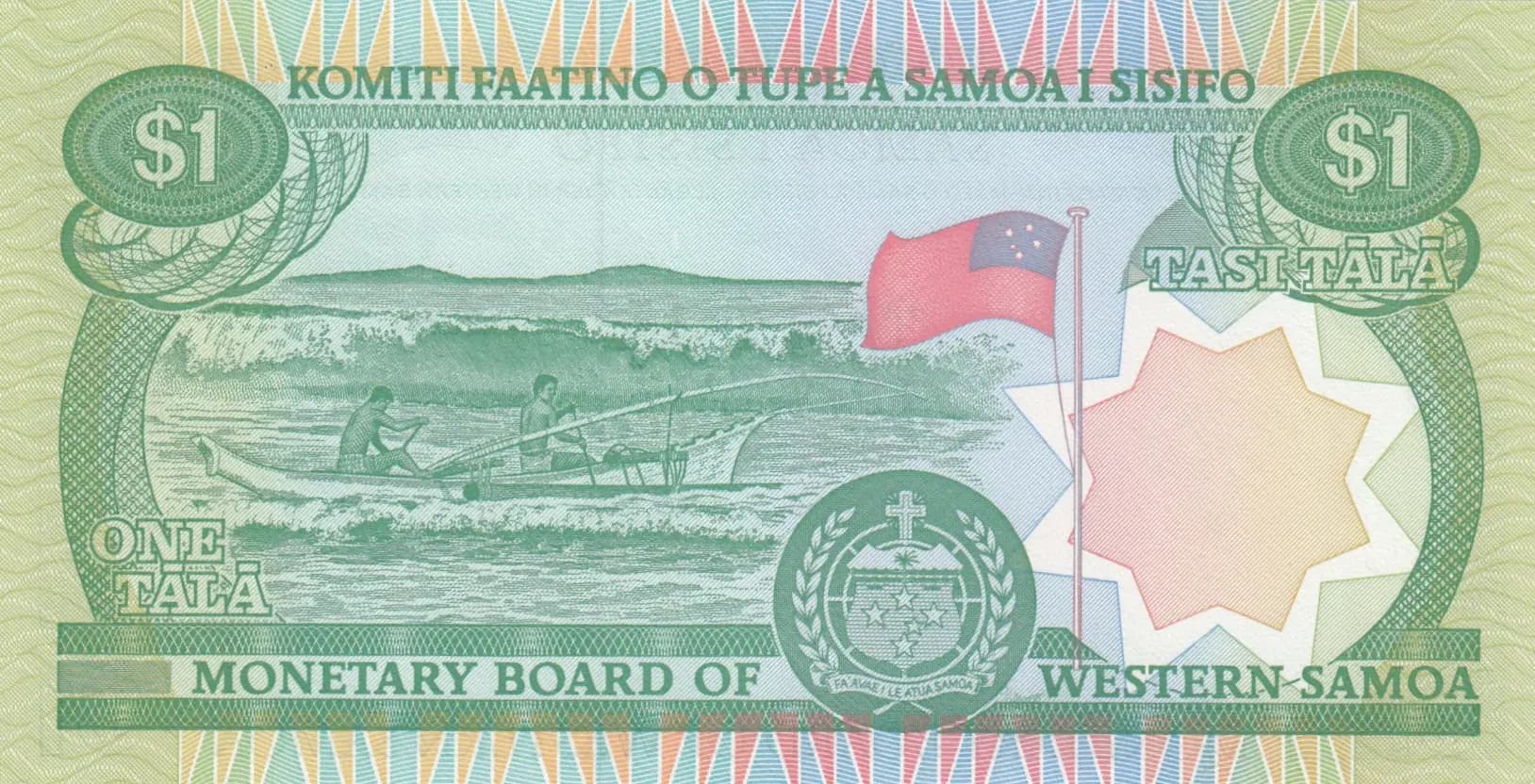
This 1980 Western Samoa 1 tala note (Pick 19) is presented in pristine uncirculated condition, displaying vibrant multicolored printing with a distinctive green-dominant palette. The note features dual imagery celebrating Samoan cultural heritage—the obverse depicts the national flag alongside traditional weavers, while the reverse showcases fishermen in an outrigger canoe against a mountainous coastal landscape. The crisp detail in the fine-line engraving, absence of any wear or circulation marks, and exceptional color preservation make this an excellent collector example of early independent Samoa's currency.
Common. The 1980 1 tala note (Pick 19) represents a standard denomination from the early post-independence period of Western Samoa with a substantial print run to support the nation's circulating currency needs. No evidence of limited mintage, early recall, or scarcity exists for this Pick number. These notes remain readily available in the collector market at modest valuations typical of common circulation-era currency.
Issued in 1980 by the Monetary Board of Western Samoa, this note commemorates the nation's cultural and economic foundation during the early years of independence (Western Samoa became independent in 1962). The imagery—traditional weaving and fishing activities—reflects the primarily subsistence-based economy and strong cultural traditions that defined Samoan society in this era. The prominent display of the national flag on both sides underscores the importance of national identity during this formative period of the young nation-state.
The obverse features the Western Samoa national flag (red field with blue canton containing white stars) positioned prominently in the center-left, paired with depictions of two young Samoan individuals engaged in traditional weaving activities on the right side. Large decorative corner elements in green display shell or leaf-like motifs interspersed with dollar sign symbols. The reverse depicts a scenic coastal landscape with two figures operating a traditional double-hulled outrigger canoe on water, with mountainous terrain visible in the background. A circular national seal—featuring wreath and cross symbolism and inscribed 'FA'ALAVELAVE SAMOA'—is centered in the lower portion. Both sides feature ornamental borders with multicolored wavy lines and decorative circular corner badges containing dollar signs. The color palette combines green as the dominant hue with accents of red, blue, white, cream, pink, and yellow throughout.
FRONT SIDE: 'KOMITI FAATINO O TUPE A SAMOA I SISIFO' (Monetary Board of Western Samoa) / 'TUPE FA'ATAGAINA-MALO O SAMOA I SISIFO' (Currency - Government of Western Samoa) / 'LEGAL TENDER IN WESTERN SAMOA' (English legal tender declaration) / 'TASI TĀLA' and 'ONE TĀLA' (denomination in Samoan and English) / '$1' (numerical denomination) / 'CHAIRMAN' and 'MONETARY BOARD OF WESTERN SAMOA' (signature block identifier) / Serial number: A7729919. BACK SIDE: 'KOMITI FAATINO O TUPE A SAMOA I SISIFO' (Monetary Board of Western Samoa) / 'TASI TĀLA' and 'ONE TĀLA' (denomination in Samoan and English) / '$1' (numerical denomination) / 'MONETARY BOARD OF WESTERN SAMOA' (issuer identification) / 'FA'ALAVELAVE SAMOA' (Samoan celebration/gathering, on central seal).
This note employs intaglio engraving combined with multicolor offset lithography, evidenced by the fine-line detail work visible in the landscape backgrounds, facial features, and ornamental borders, as well as the precise color registration across multiple printing passes. The security printer for Western Samoa currency during this period was typically De La Rue or similar British Commonwealth security printers, though specific attribution for Pick 19 would require further archival verification. The complexity of the scenic engraving and ornamental security patterns indicates professional-grade currency production.
The observed specimen displays serial number A7729919 with no overprints or exceptional markings. Standard varieties for Pick 19 would be distinguished by signature blocks (Chairman signatures vary across printing runs), serial number prefixes, and minor color or design registration variations typical of long production runs. Without comparative reference materials, specific variety designation cannot be confirmed from this single specimen, though the 'A' prefix on the serial number may indicate the first printing series of this issue.