500 francs 1959
“Togo”
About This Note
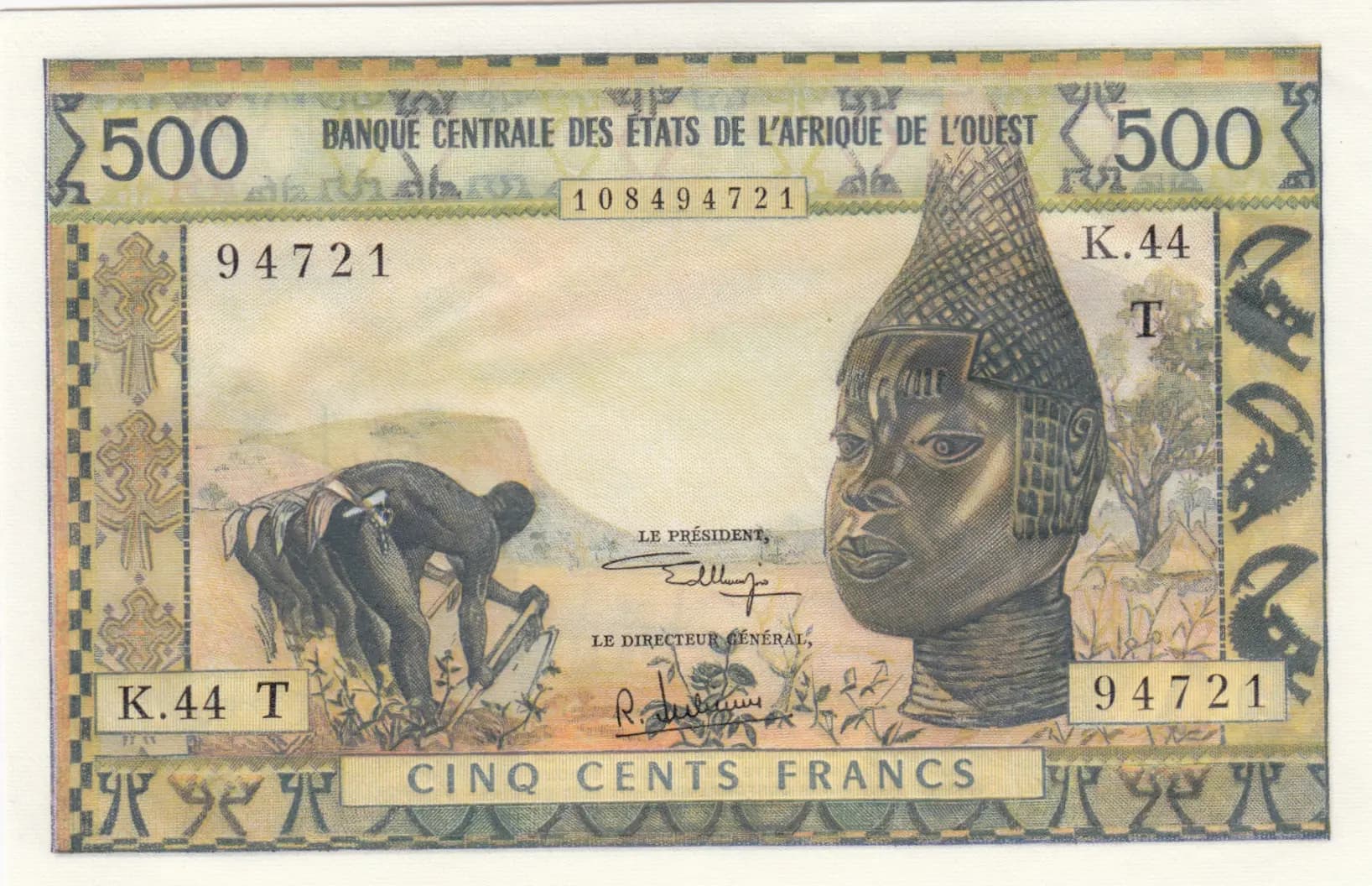
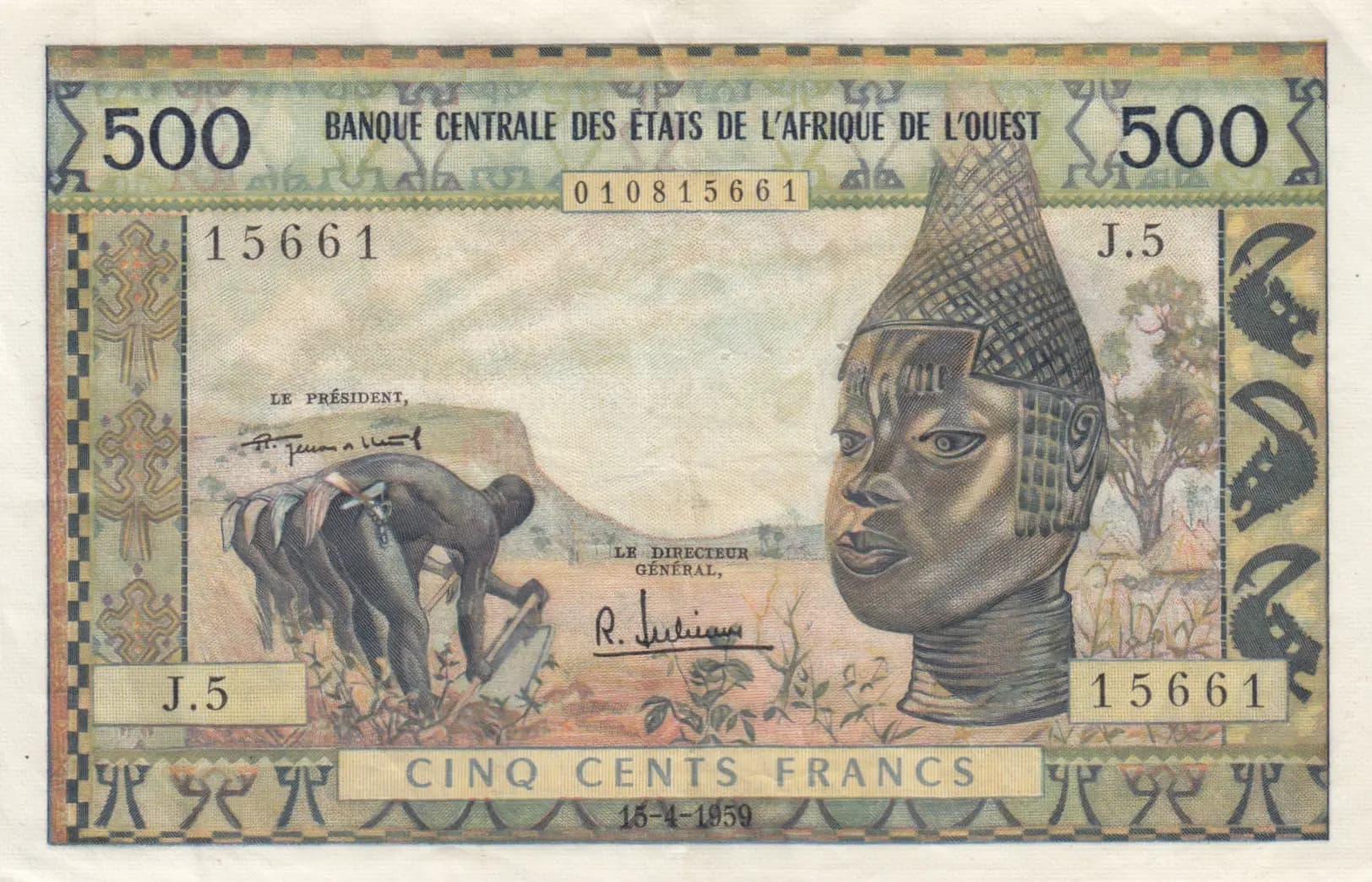
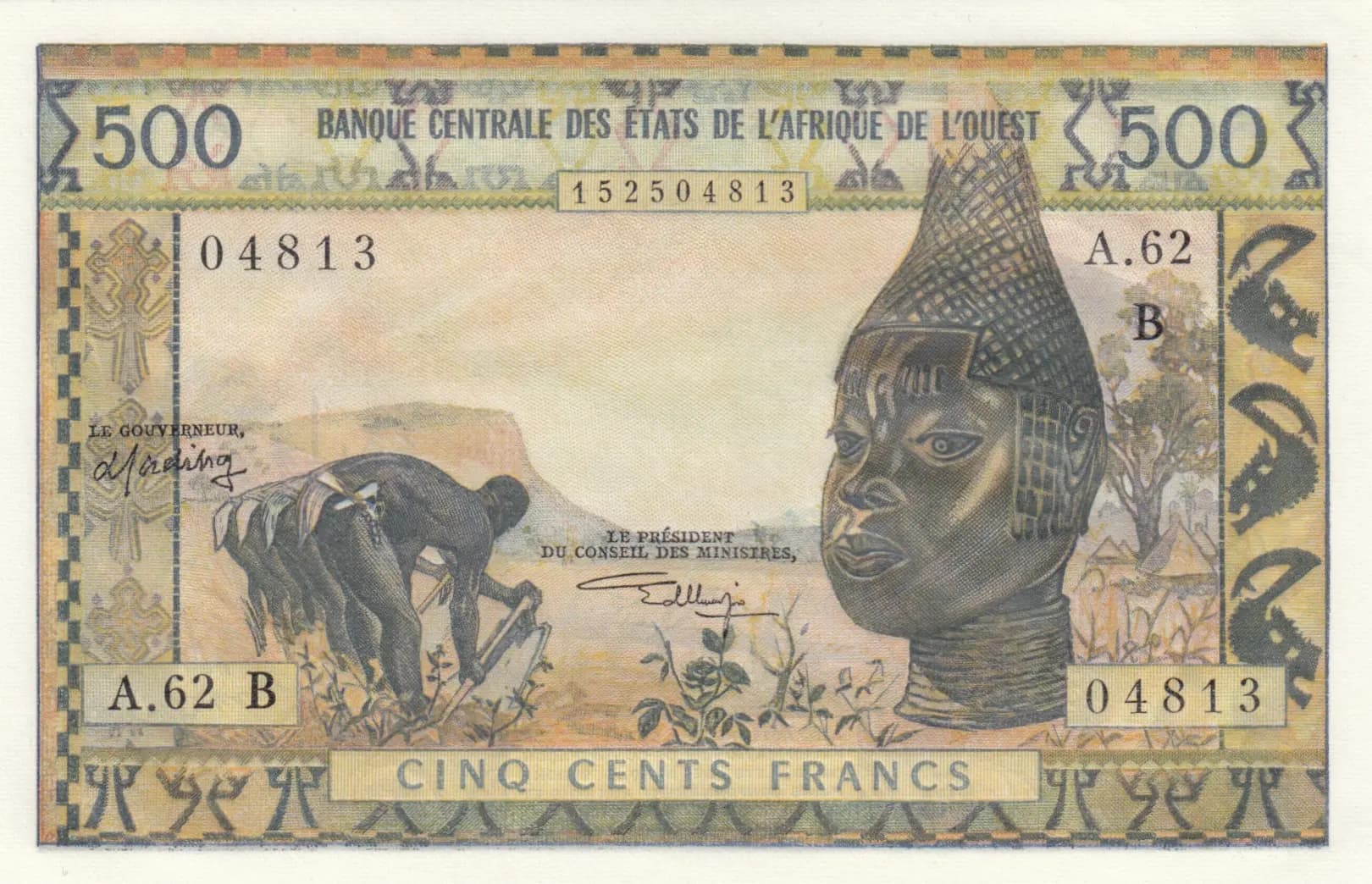
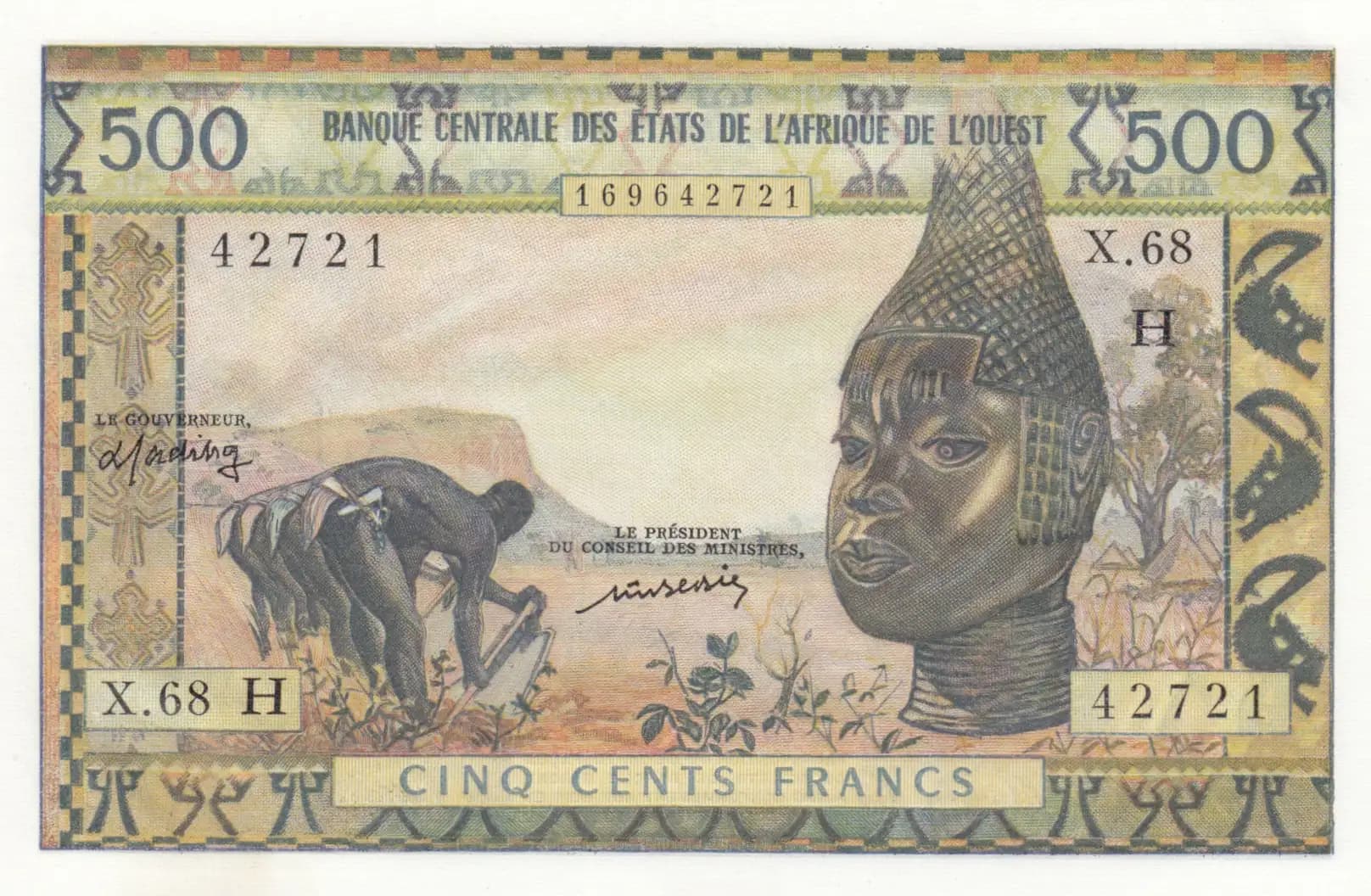
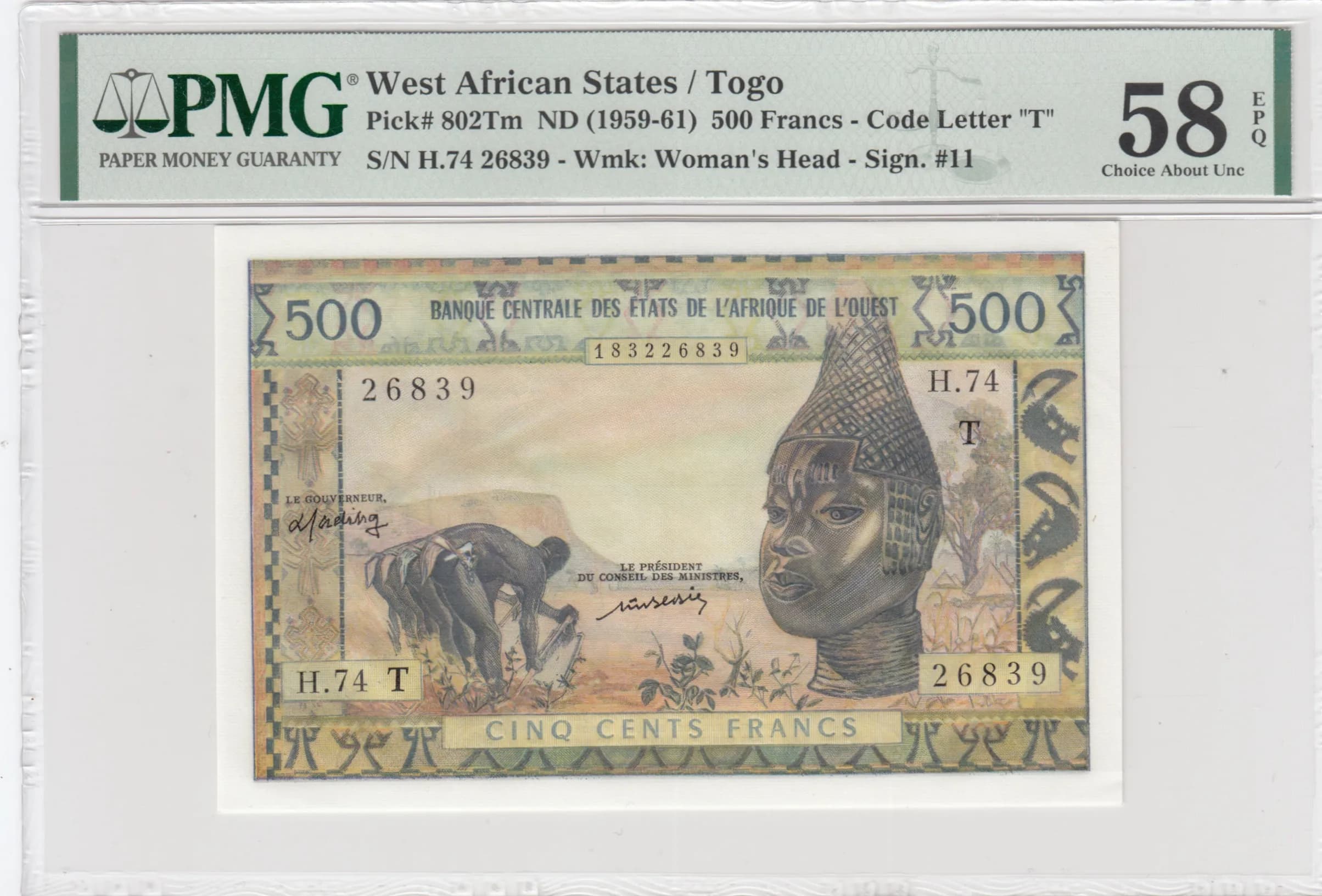
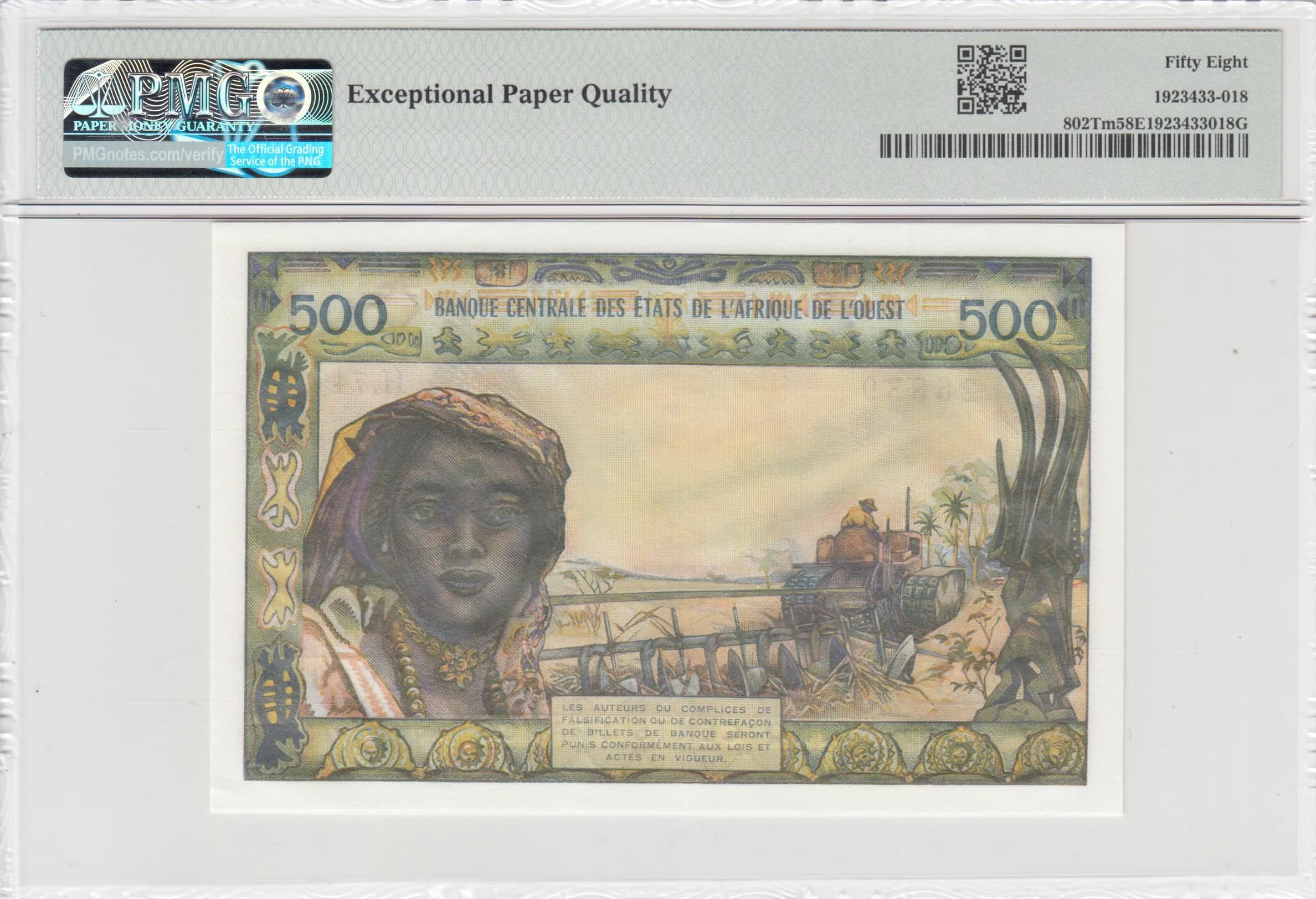
This is a PMG 58 EPQ (Choice About Uncirculated) graded 500 Francs banknote from the West African States (Togo), dated 1959-61, issued by the Banque Centrale des Etats de l'Afrique de l'Ouest. The note exhibits exceptional preservation with vibrant colors, sharp printing, and no visible wear, creases, or tears, making it an excellent example of this early West African currency issue. The obverse features distinctive indigenous African artwork including a carved wooden mask and agricultural labor scene, while the reverse displays a woman in traditional dress and a plantation landscape, reflecting the colonial-era artistic themes characteristic of mid-20th century African banknote design.
Common. The 500 Francs denomination from the West African States 1959 issue was part of a large, routine currency circulation across multiple West African nations with the code letter 'T' for Togo. No evidence of restricted print runs, early recalls, or short-lived issue periods that would indicate scarcity. The Pick catalog notes only one catalogued variant (P-802Tm), suggesting this is the standard type without rare varieties. Notes from major banknote-issuing authorities of this era are typically common unless specific historical factors (war, recall, destruction) reduced surviving specimens.
This 500 Francs note represents the early currency of the newly independent West African states in 1959, issued by the Central Bank of West African States during the transitional period following decolonization. The imagery prominently features agricultural labor, palm trees, and traditional African cultural elements (masks, traditional dress), which served both to celebrate African heritage and subtly reinforce the economic dependence on colonial-era plantation agriculture and resource extraction. The bilingual French inscriptions and European-influenced engraving style reflect the post-colonial Franco-African monetary union framework under which these states initially operated.
The obverse features a left-facing composition with an indigenous figure engaged in agricultural labor (tending plants/crops) on the left side and an African carved wooden mask displaying geometric tribal patterns on the right, surrounded by decorative geometric borders reflecting traditional African design motifs. The reverse presents a woman's portrait in profile wearing traditional African headwrap on the left, paired with a colonial-era agricultural landscape scene on the right depicting workers, palm trees, and distant plantation structures, bordered by circular ornamental medallions and geometric decorative patterns. The color palette of greens, browns, blues, and earth tones creates visual coherence between the indigenous cultural elements and the agricultural economic themes. The note measures standard banknote dimensions with the denomination prominently displayed as both numerals and spelled-out text in French.
FRONT SIDE: '500' (Five Hundred); 'BANQUE CENTRALE DES ETATS DE L'AFRIQUE DE L'OUEST' (Central Bank of West African States); 'CINQ CENTS FRANCS' (Five Hundred Francs); 'H.74' (printer/engraver designation); 'T' (code letter for Togo); 'LE GOUVERNEUR' (The Governor); 'LE PRÉSIDENT DU CONSEIL DES MINISTRES' (The President of the Council of Ministers); serial number components. BACK SIDE: '500' (Five Hundred); 'BANQUE CENTRALE DES ETATS DE L'AFRIQUE DE L'OUEST' (Central Bank of West African States); 'LES AUTEURS OU COMPLICES DE L'ALIFICATION OU DE CONTREFACON DE BILLETS DE BANQUE SERONT PUNIS CONFORMÉMENT AUX LOIS ET ACTES EN VIGUEUR' (The authors or accomplices of the alteration or counterfeiting of banknotes will be punished in accordance with the laws and acts in force).
This note was produced using intaglio (copperplate) engraving, evidenced by the fine detailed line work, sharp portrait rendering, intricate geometric borders, and the depth and quality of impression visible in both the obverse and reverse. The designation 'H.74' likely refers to the engraver or security printer (Hélio or a similar French security printing house was common for West African currency of this era). The multi-color printing technique combines primary intaglio engraving with additional color application, typical of French-influenced African banknote production of the late 1950s-early 1960s period.
This note is cataloged as Pick P-802Tm, representing the 500 Francs denomination with code letter 'T' (Togo) from the 1959-61 dated issue. The 'T' code letter is the key identifier for the Togo variety among the West African States notes. The serial number structure includes the code 'T' followed by serial numerals. PMG has recorded this as the only documented variant for the base Pick number P-802T, indicating this is the standard Togo variety without known sub-varieties related to signature, printing, or date variations.