500 francs 1981
“Ivory Coast”
About This Note
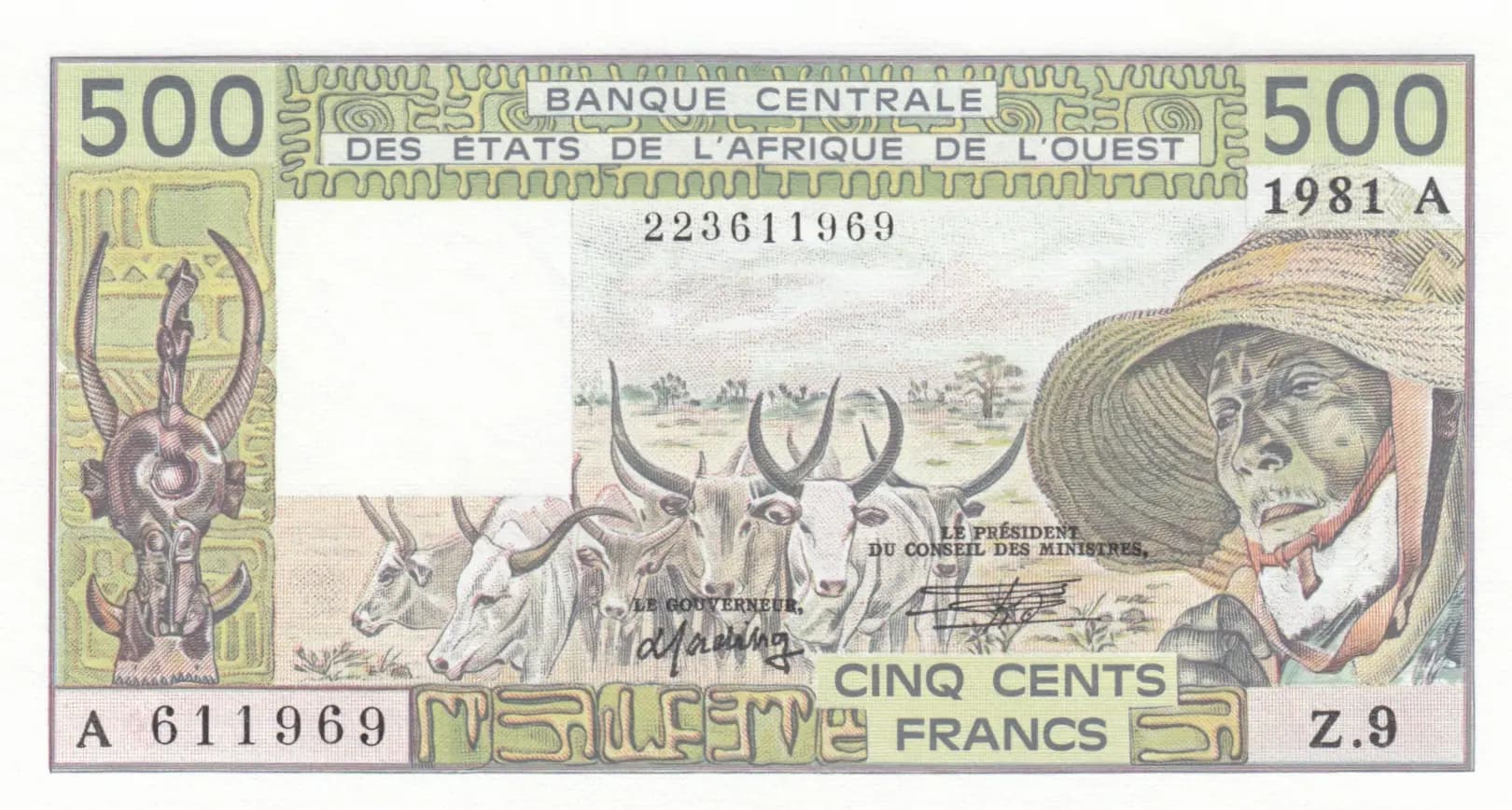
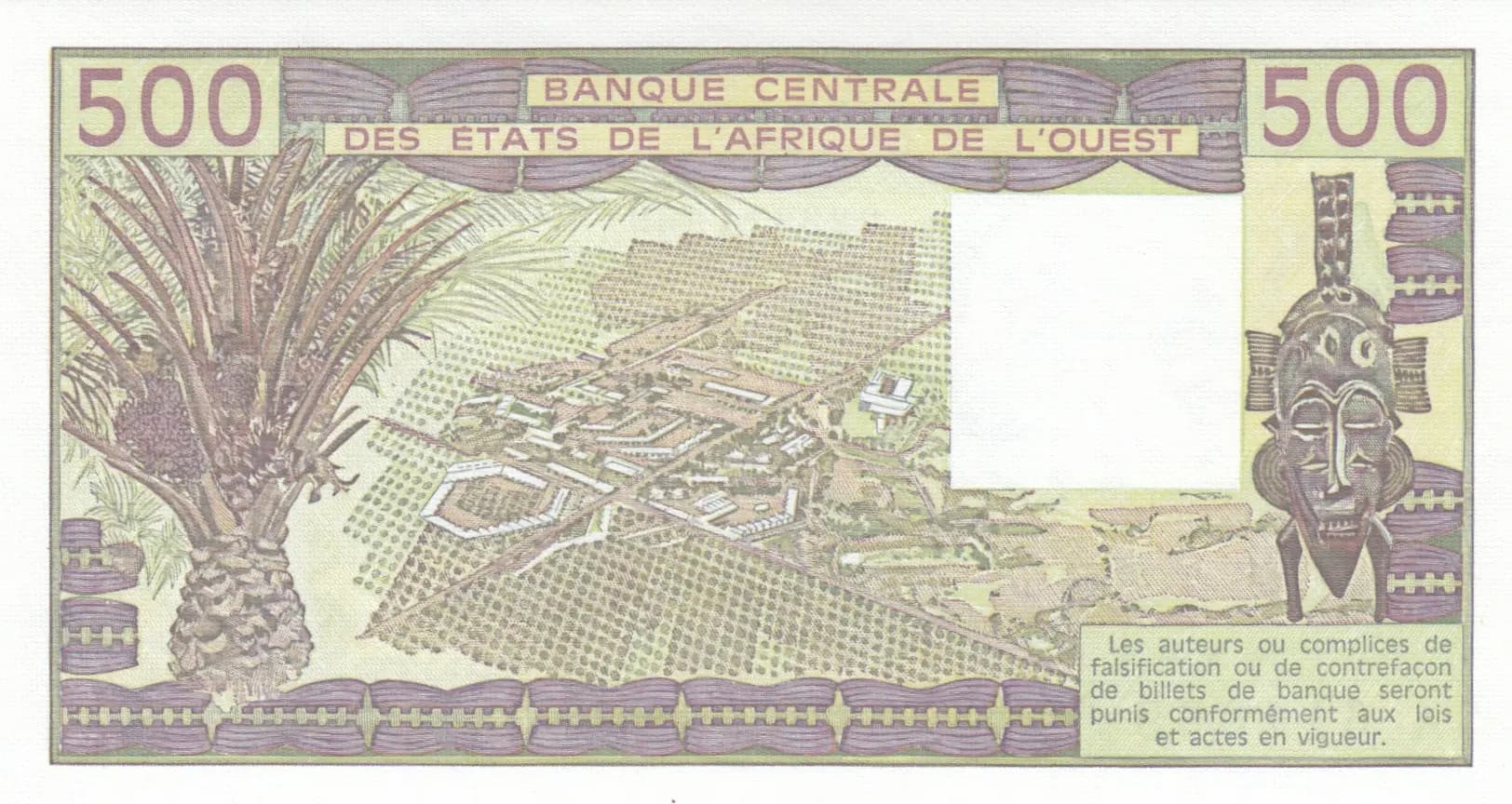
This is an uncirculated 1981 West African States 500 Francs note (Pick P-106Ac) in pristine condition, featuring exceptional artisanal engraving work depicting pastoral and agricultural themes central to West African economies. The note showcases a harmonious yellow, purple, and cream color palette with detailed imagery of cattle herding on the obverse and palm cultivation on the reverse, making it a visually striking example of mid-20th century African currency design. The crisp, damage-free appearance and artistic sophistication make this an attractive piece for collectors of African numismatics.
Common. The 500 Francs denomination from the 1981 series represents standard-issue currency from an active regional central bank with significant print runs across multiple West African member states (primarily Ivory Coast, Mali, Senegal, and others). While uncirculated examples command modest premiums over circulated specimens, the note itself is frequently encountered in the collector market at modest valuations. No evidence of limited print runs, recall status, or restricted distribution patterns indicates this is a routine banknote issue rather than a scarce or rare variety.
Issued by the Banque Centrale des Etats de l'Afrique l'Ouest (Central Bank of West African States) in 1981, this note reflects the economic foundations of Ivory Coast and neighboring West African nations during a period of post-colonial nation-building. The imagery celebrating pastoralism (cattle herding) and agricultural development (palm cultivation and organized field patterns) underscores the importance of these sectors to the regional economy during the early 1980s. The note's design emphasizes traditional African cultural symbolism through the ornate tribal masks and geometric patterns, positioning modern currency within a framework of cultural pride and historical continuity.
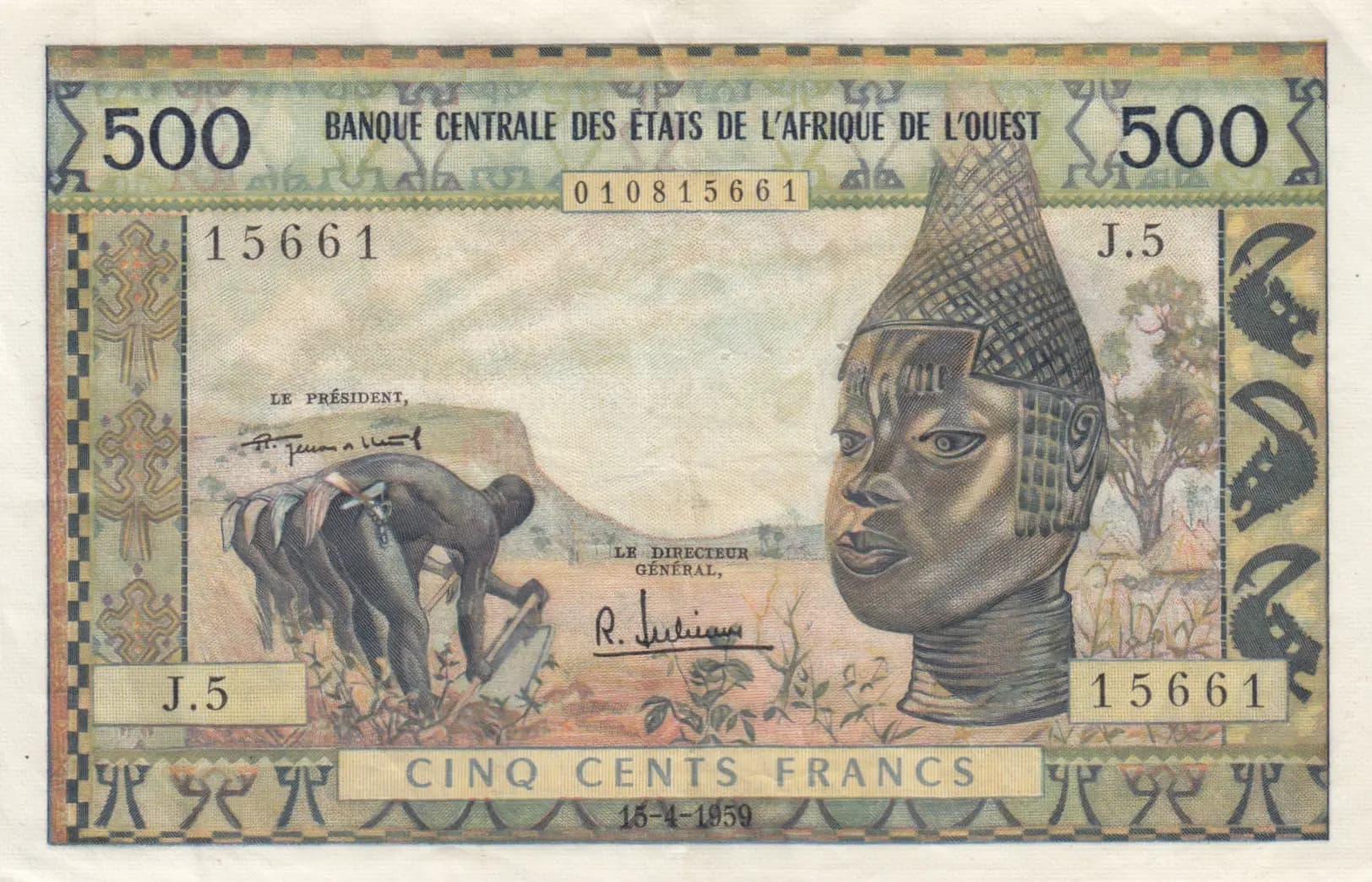
The obverse features a portrait on the right side of a dignitary in traditional dress with a distinctive red accent stripe on the head covering, likely representing a West African political or cultural leader from the period. The left vertical panel contains an ornate African tribal mask in purple against a yellow background, symbolizing cultural heritage. The central composition depicts a savanna pastoral scene with horned cattle grazing amid sparse vegetation, representing the nomadic herding traditions of the Sahel region. The reverse showcases an agricultural landscape dominated by a detailed palm tree on the left, with organized cultivated fields and rural buildings in the center, emphasizing the region's agricultural productivity. Decorative geometric border patterns in yellow, purple, and cream frame both sides, with fine line engraving throughout providing the note with sophisticated visual depth and security characteristics.
FRONT SIDE: '500' (Five hundred), 'BANQUE CENTRALE' (Central Bank), 'DES ETATS DE L'AFRIQUE DE L'OUEST' (Of the States of West Africa), '1981 A' (date and series designation), '223611969' (serial number), 'CINQ CENTS FRANCS' (Five Hundred Francs), 'LE PRÉSIDENT DU CONSEIL DES MINISTRES' (The President of the Council of Ministers), 'LE GOUVERNEUR' (The Governor). BACK SIDE: '500' (Five hundred), 'BANQUE CENTRALE' (Central Bank), 'DES ETATS DE L'AFRIQUE DE L'OUEST' (Of the States of West Africa), 'Les auteurs ou complices de falsification ou de contrefaçon de billets de banque seront punis conformément aux lois et actes en vigueur.' (The authors or accomplices of falsification or counterfeiting of banknotes will be punished in accordance with the laws and acts in force.)
This note was produced using traditional intaglio (engraved steel plate) printing methods, evidenced by the fine line work, detailed shading, and raised surface characteristics visible in the pastoral scenes, palm tree rendering, and ornamental borders. The layered color application and precise geometric patterns suggest multi-color intaglio printing. The Banque Centrale des Etats de l'Afrique l'Ouest typically contracted with European security printers; notes from this series were commonly printed by De La Rue or similar specialized currency printers, though specific attribution requires reference to printer marks not clearly identified in the visual analysis.
This note is cataloged as Pick P-106Ac, corresponding to Code Letter 'A' and the 1981 date. The serial number observed (223611969 with prefix 'A') confirms the Code Letter 'A' designation. PMG records indicate two cataloged variants for this base Pick number (P-106Af and P-106Ak, both also Code Letter 'A'), suggesting potential differences in signature combinations or other subtle printing variations across the production run. The specific signature pairing of the President of the Council of Ministers and Governor depicted on this specimen would further refine the variety classification within the P-106A series.