1000 francs 1959
“Togo”
About This Note
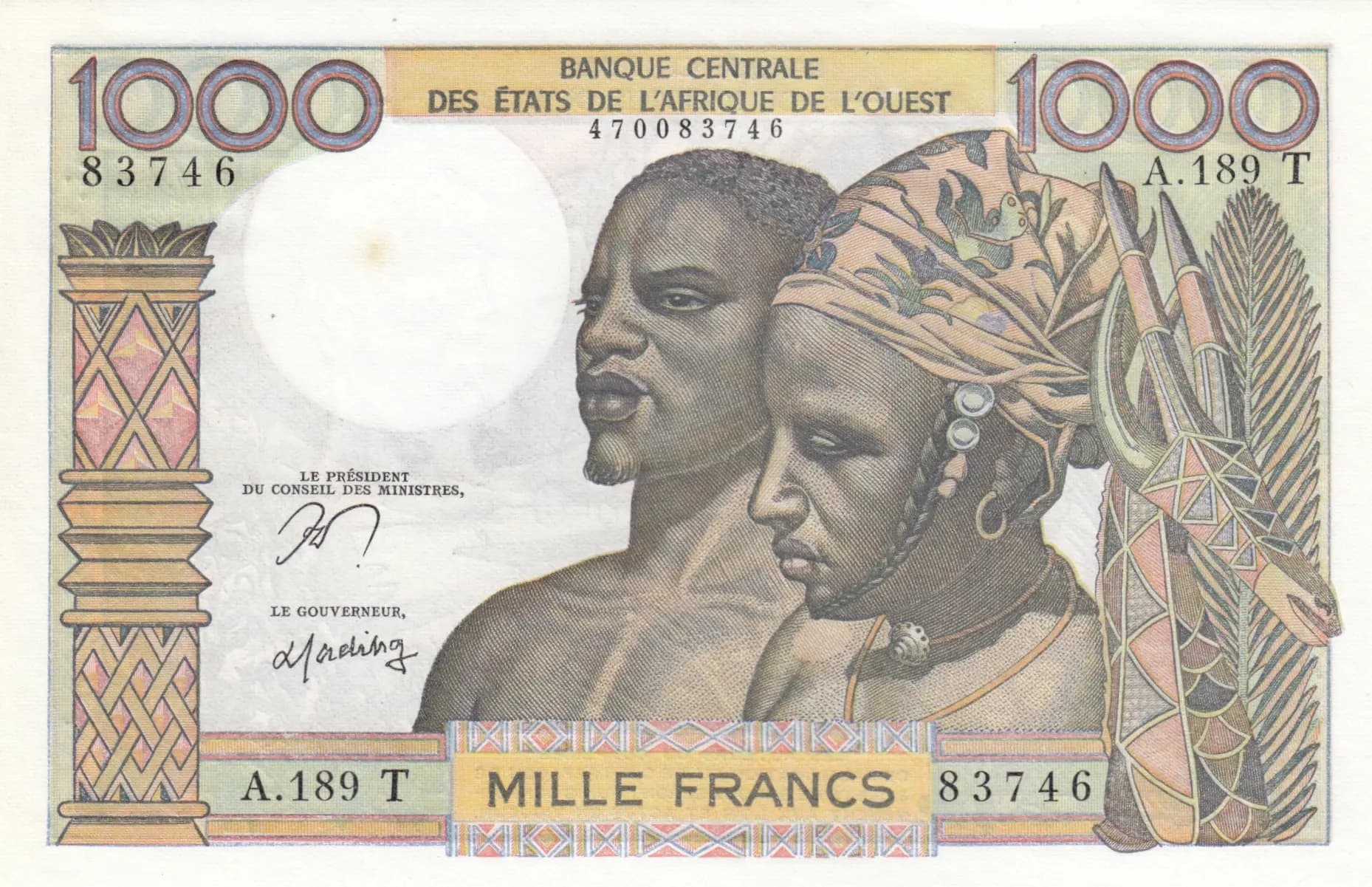
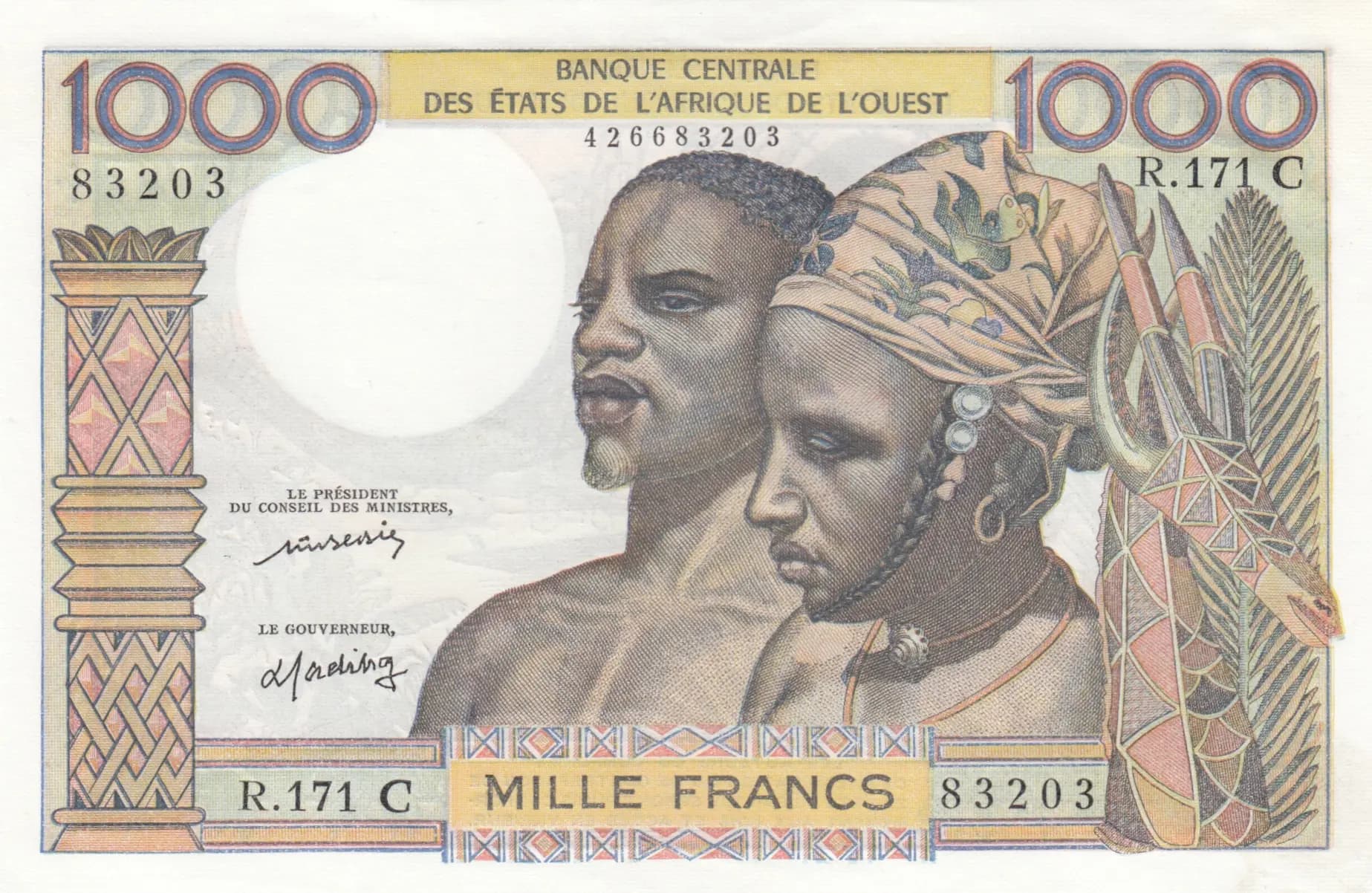
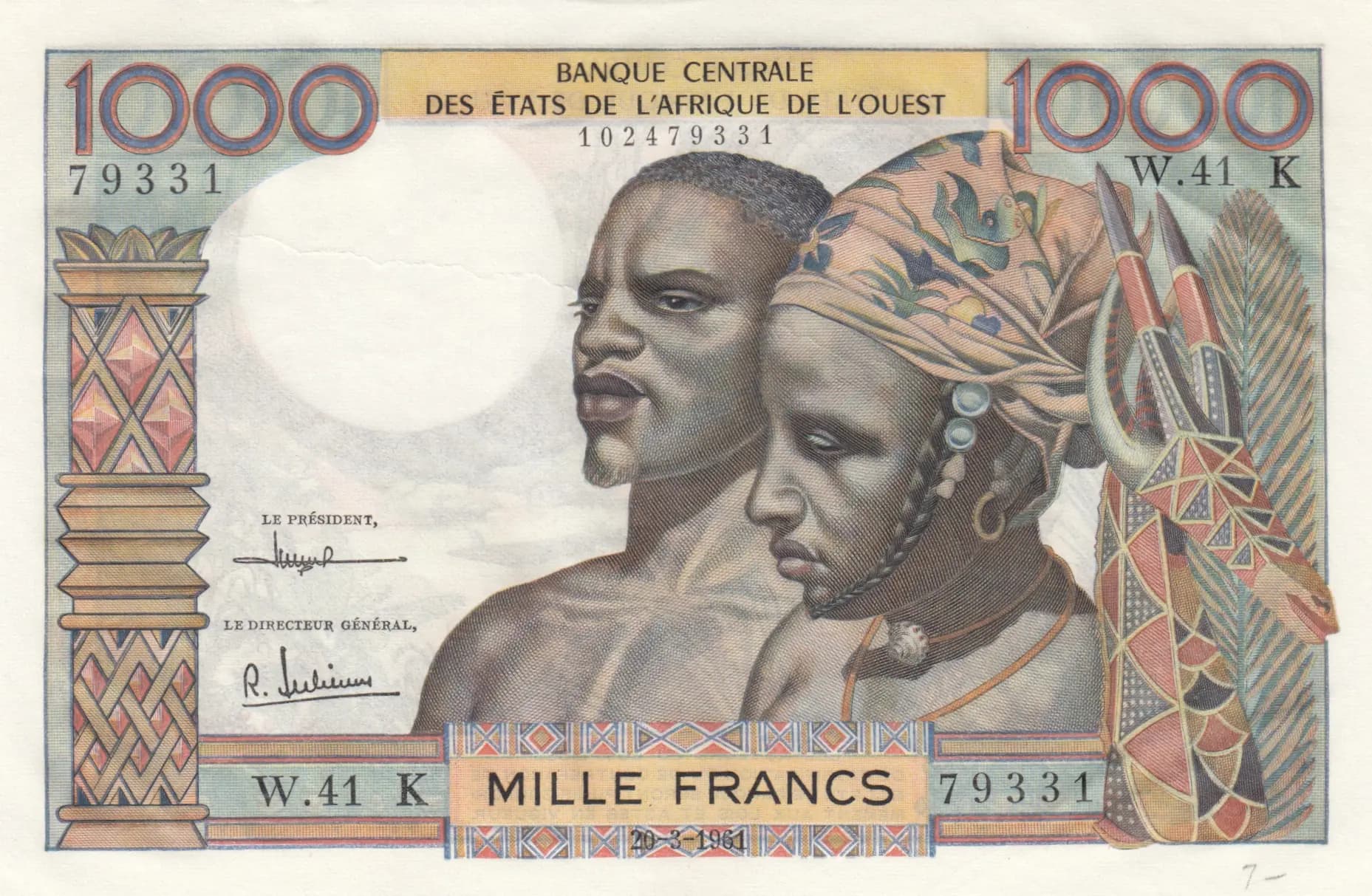
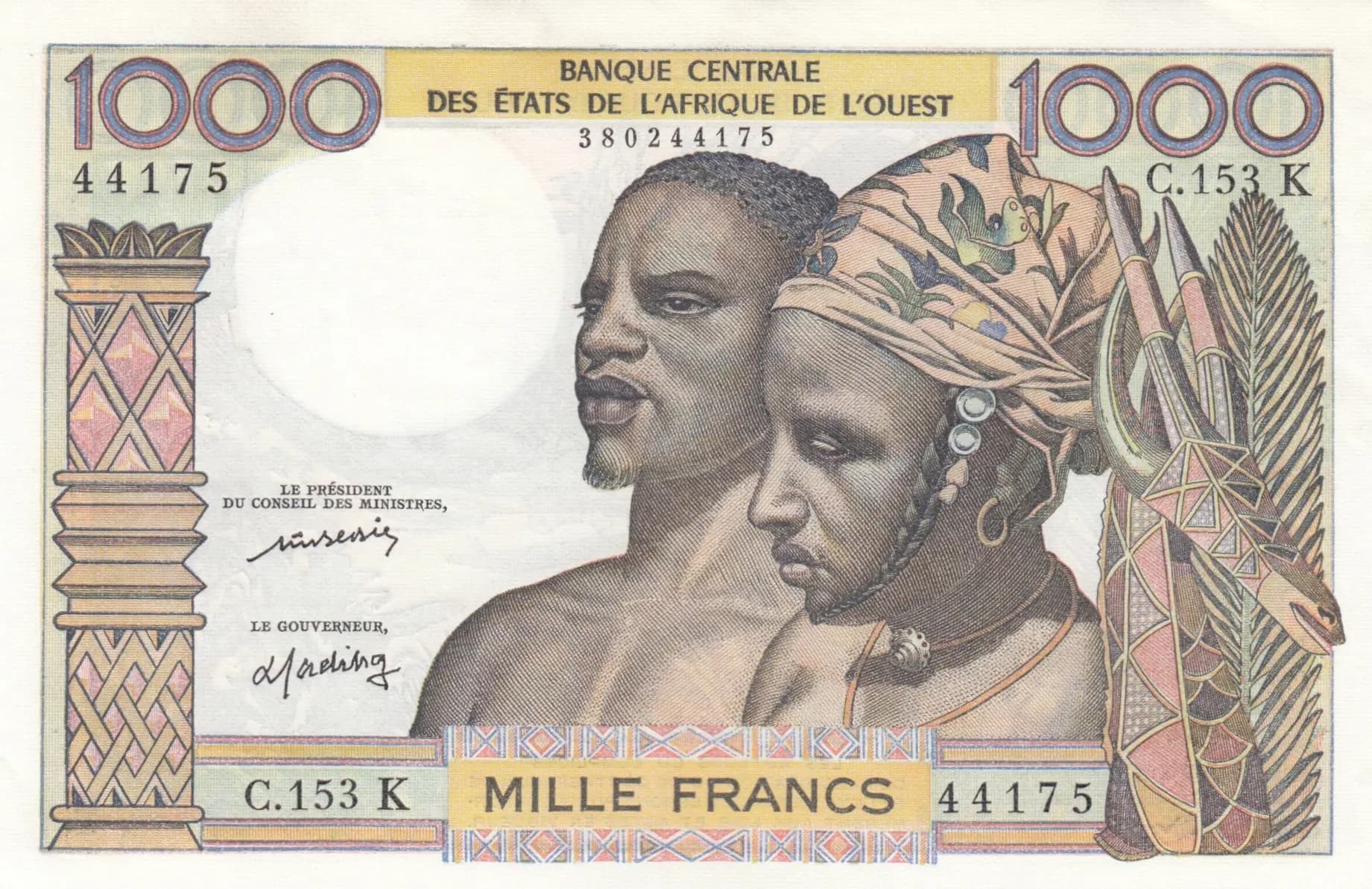
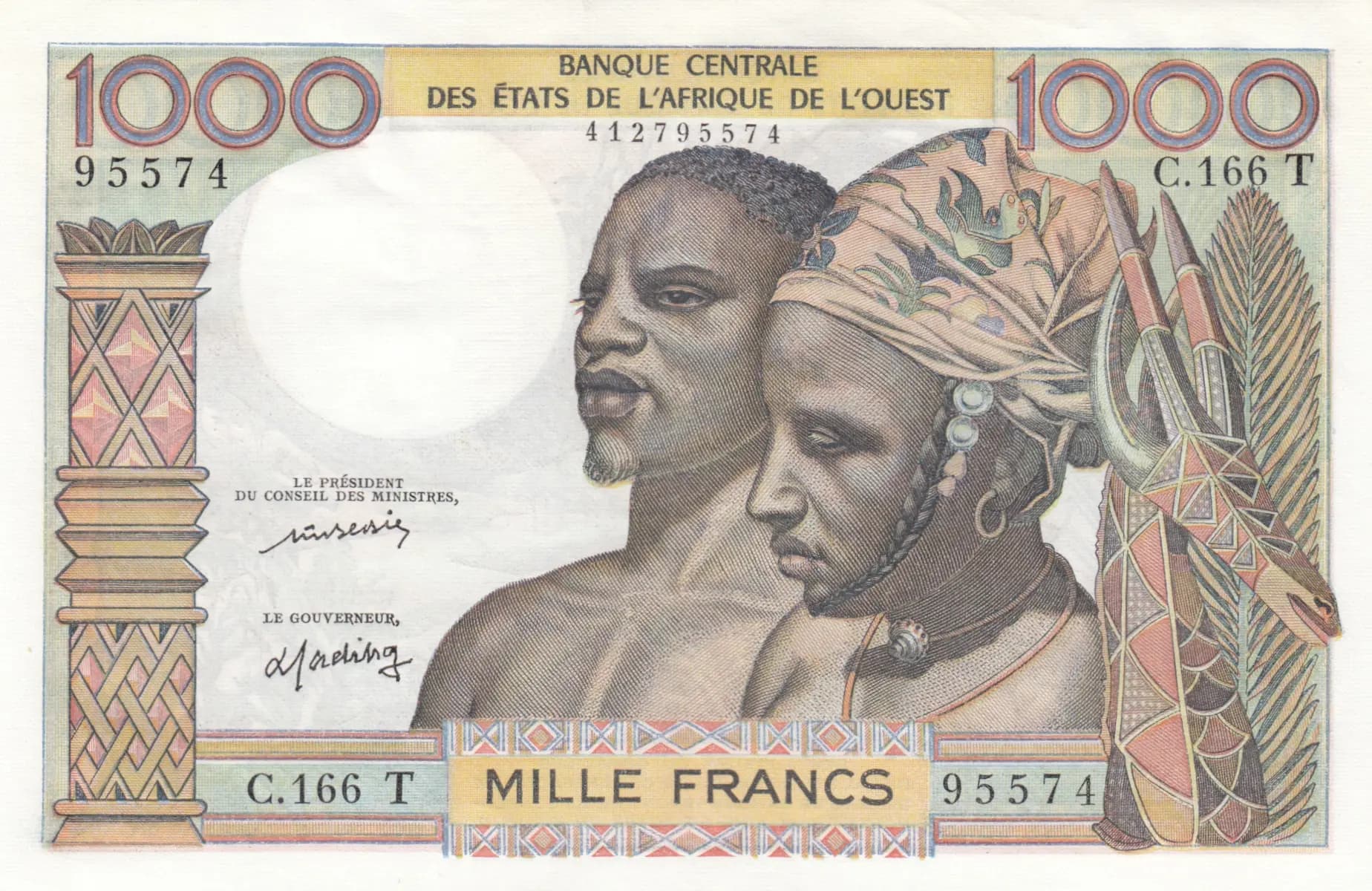
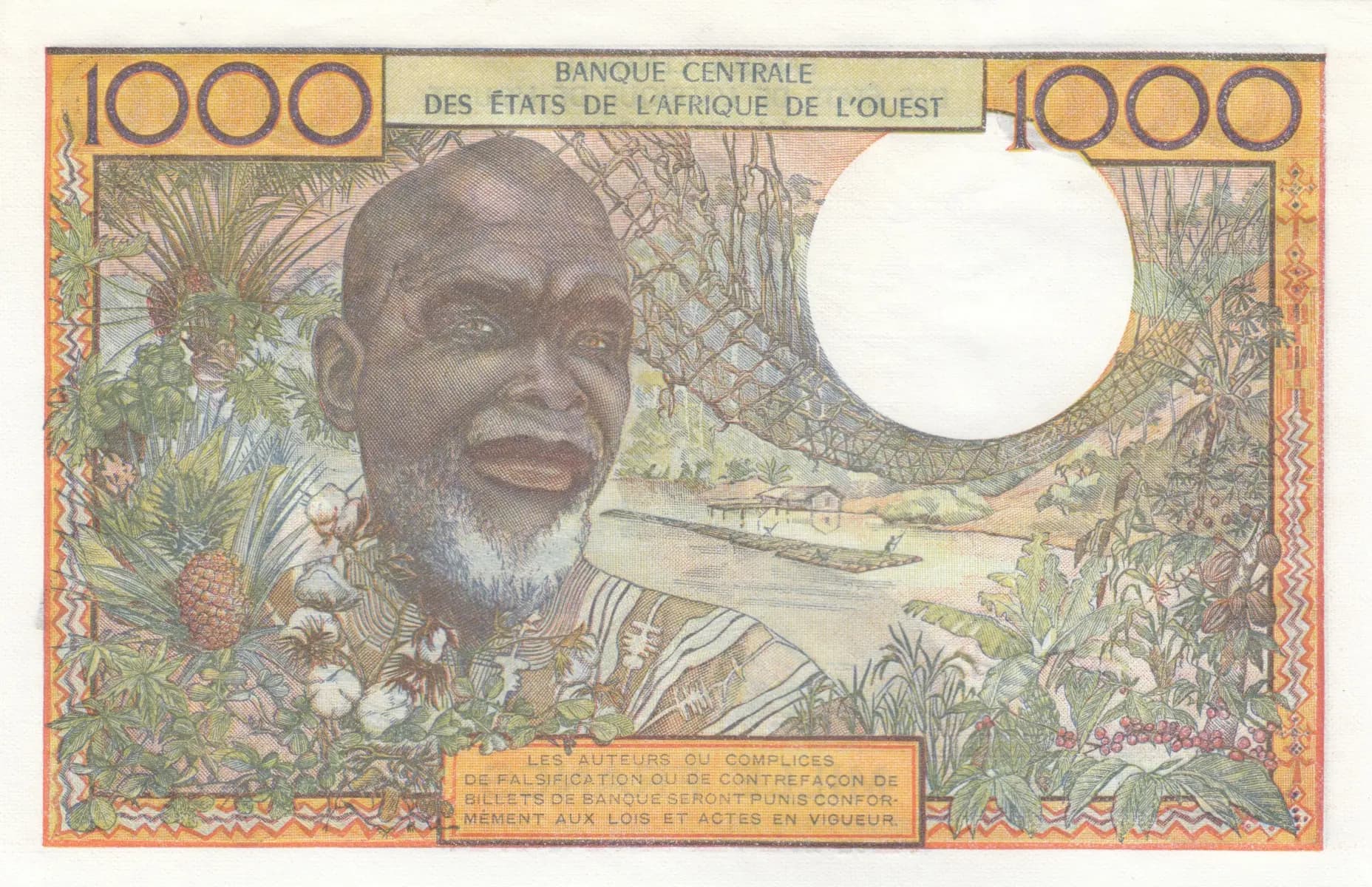
This is an exceptional AU example of the 1959 West African States 1000 francs note (Pick 803Tm), issued by the Banque Centrale des États de l'Afrique de l'Ouest. The note displays crisp, bright paper with no visible wear, creases, or stains, featuring two portrait busts on the front and a single bearded male portrait set within a rich tropical landscape on the reverse. The detailed engraving work, geometric ornamental borders, and sophisticated multicolor printing make this an attractive example of early post-independence West African currency design.
Common. While the 1000 francs denomination from 1959 represents an early issue of the West African monetary union, these notes were produced in substantial quantities for the circulation needs of multiple member states including Togo. No evidence suggests this specific Pick number or variety had a particularly limited print run or was recalled. AU-graded examples of this note typically trade in modest price ranges ($15-35 USD market pricing), consistent with common banknotes that, while desirable for their historical significance and condition, do not command premium valuations characteristic of truly scarce issues.
This note was issued in 1959, a pivotal year marking the transition toward West African independence and monetary sovereignty. The imagery reflects the cultural and economic identity of the newly formed monetary union, with the tropical landscape featuring cotton plants and a waterside settlement symbolizing the region's agricultural heritage and development aspirations. The dual portraits on the obverse and the emphasis on natural resources and settlement scenes underscore the union's focus on celebrating indigenous leadership and the economic foundations of the West African states during this formative post-colonial period.
The obverse presents two profile busts facing left: a bearded male figure on the left and a female figure on the right wearing elaborate decorative headwrap and pearl earrings, representing the cultural diversity and leadership of the West African states. These portraits are framed by ornamental geometric patterns on the left featuring diamond lattice and basket-weave designs in earth tones, while tropical vegetation including palm fronds occupies the right side. The reverse showcases a single bearded male portrait in profile facing right, positioned on the left portion of the note, with an extensive landscape scene depicting the region's economic base: cotton plants with white bolls, palm trees, a tropical river or waterway, and a waterside settlement with visible structures and buildings in the middle ground. The entire design is bounded by geometric ornamental borders with zigzag and diamond patterns in orange/gold tones. Large circular watermark areas are positioned in the center-right of both sides, and the note features two signature lines for authorized bank officials.
FRONT SIDE: 'BANQUE CENTRALE DES ÉTATS DE L'AFRIQUE DE L'OUEST' (Central Bank of the West African States); 'MILLE FRANCS' (One Thousand Francs); 'LE PRÉSIDENT DU CONSEIL DES MINISTRES,' (The President of the Council of Ministers,); 'LE GOUVERNEUR,' (The Governor,); 'C.166 T' (Country/series code C.166, letter T for Togo); Serial numbers '95574' and '412795574'; Two authorized signatures (hand-signed by officials). REVERSE SIDE: 'BANQUE CENTRALE DES ÉTATS DE L'AFRIQUE DE L'OUEST' (Central Bank of the West African States); 'LES AUTEURS OU COMPLICES DE FALSIFICATION OU DE CONTREFAÇON DE BILLETS DE BANQUE SERONT PUNIS CONFORMÉMENT AUX LOIS ET ACTES EN VIGUEUR' (The authors or accomplices of counterfeiting or forgery of banknotes will be punished in accordance with applicable laws and acts); Denomination '1000' in top corners.
Intaglio engraving (line engraving) combined with multicolor letterpress or combined intaglio printing, evidenced by the fine, intricate line work visible throughout the design, the detailed botanical and architectural renderings, and the sophisticated color registration between the geometric patterns, portraits, and landscape elements. The security watermark areas and the overall complexity of the design suggest production by a specialized security printer, likely Bradbury, Wilkinson & Company or similar European security printer, which was common for West African currency of this era.
This specific example is cataloged as Pick 803Tm, with the 'T' letter code indicating Togo as the country of use/origin. The serial number structure '412795574' and signature varieties may indicate a specific printing series, though without direct comparison to other known examples of this prefix, the precise variety cannot be definitively established from the available information. The handwritten signatures appear to read 'Masserie' and 'Marling' (or similar), which would correspond to specific officials of the period and could be cross-referenced with known signature combinations documented in comprehensive banknote catalogs for variety identification.