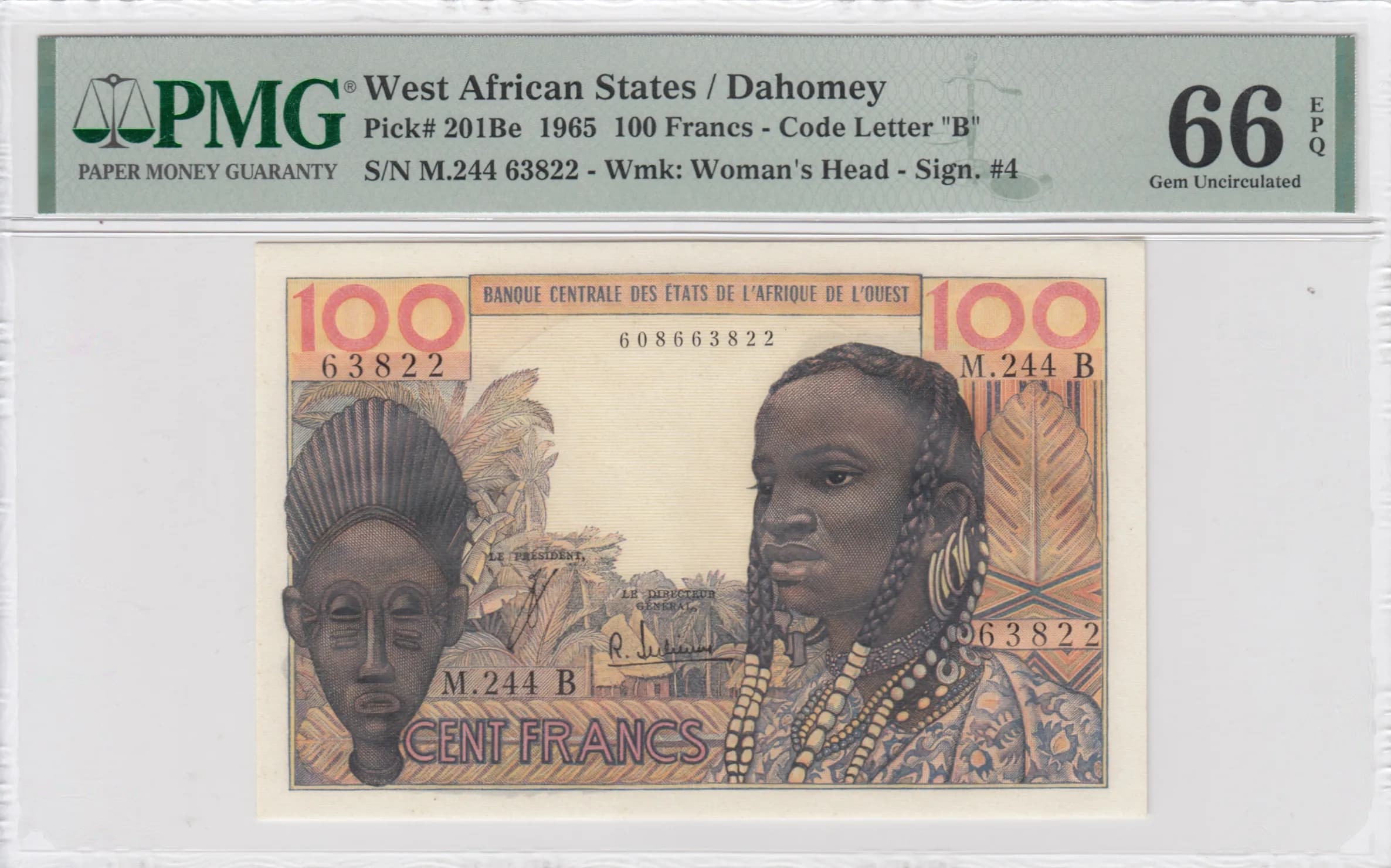
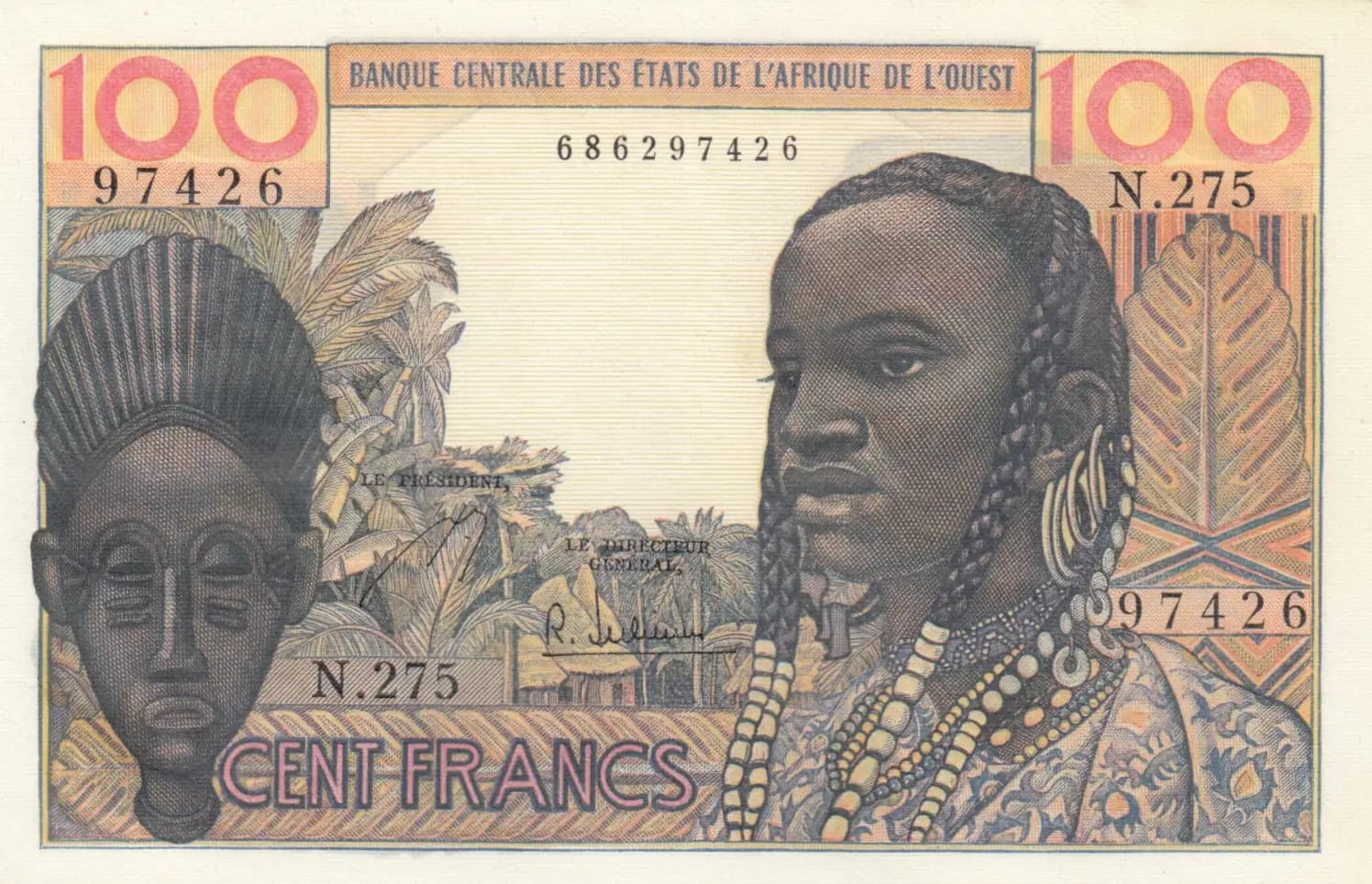
100 francs 1965
“Togo”
About This Note
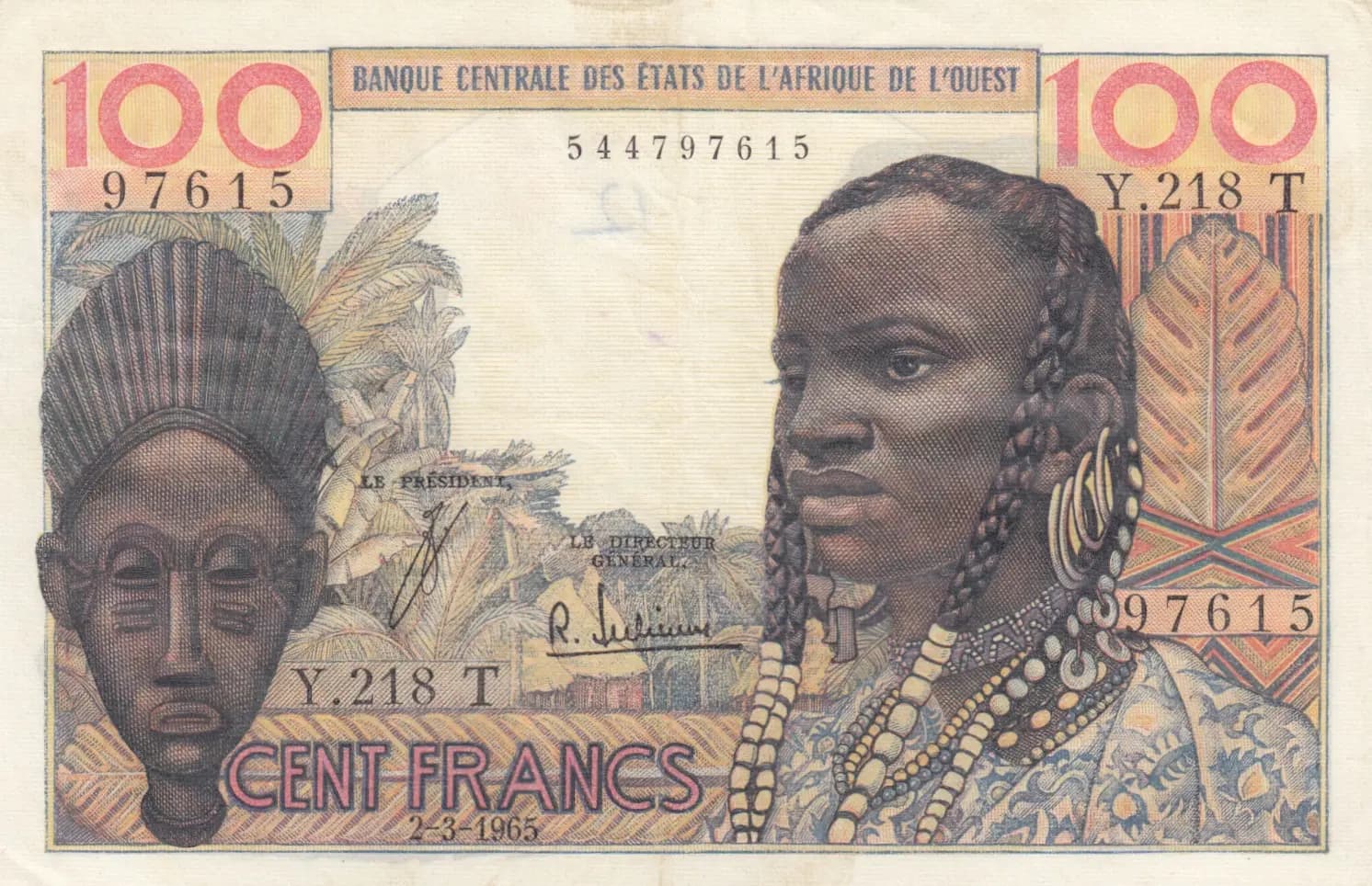
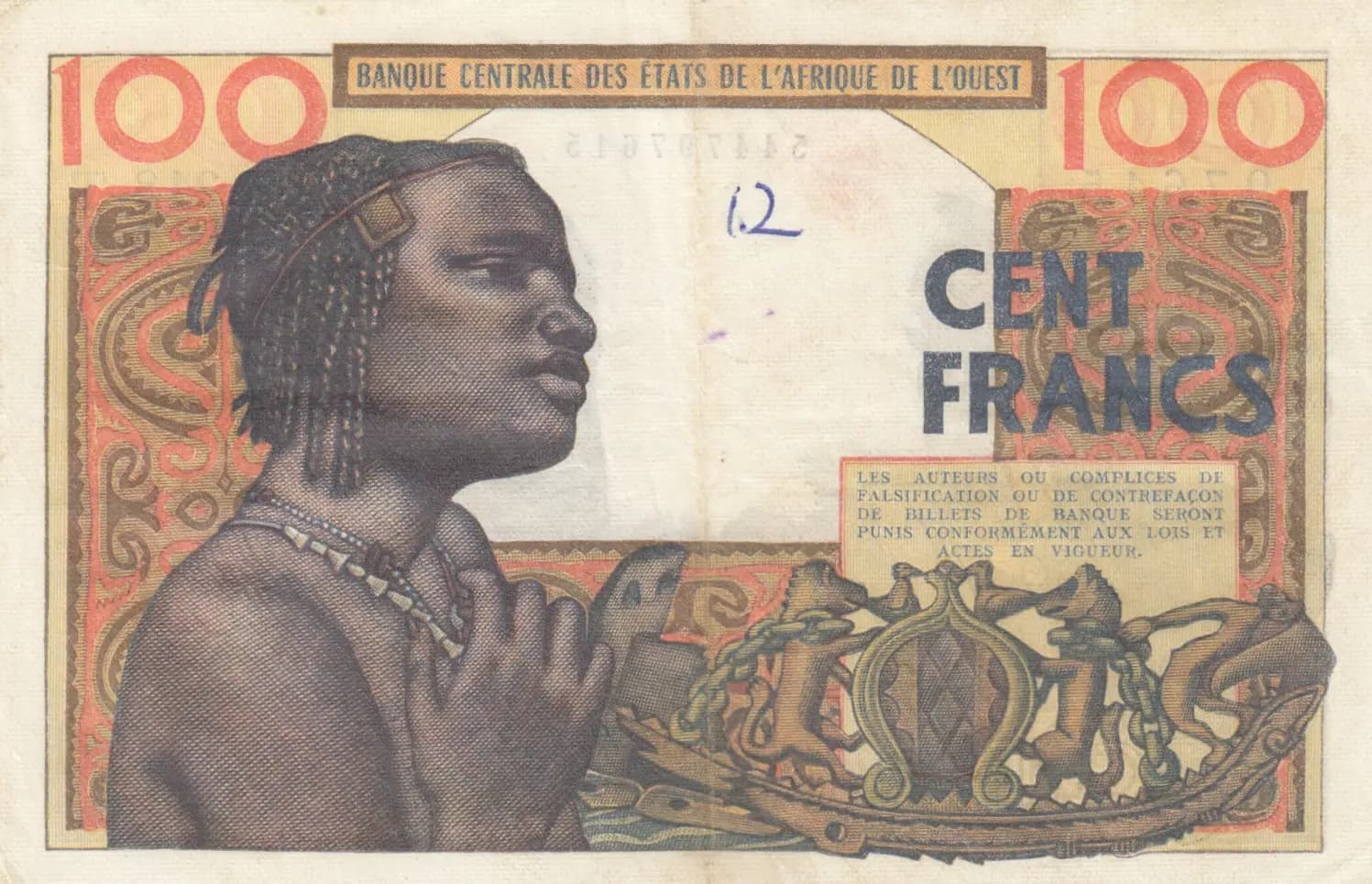
This West African States 100 francs note from 1965 (Pick P-801Te) presents a striking ethnographic design celebrating West African cultural heritage through detailed portrait work and traditional imagery. The obverse features two carefully engraved African portraits with distinctive traditional adornments—one wearing an elaborate vertical-ridged headdress and the other displaying braided hair with beaded necklaces—while the reverse showcases a profile female portrait with similar cultural ornamentation. In VF condition, the note displays expected age-related wear including foxing and discoloration, with fine line engraving and color gradation effects characteristic of 1960s West African currency design.
Common. The 100 francs denomination was a standard circulating note for the West African States during this period, with substantial print runs characteristic of a workhorse denomination. The VF condition and presence of circulation wear indicates this was a heavily used note in commerce. No evidence of limited mintage, recall status, or short-lived production run exists for this Pick number. Standard market availability for this note type in similar condition grades confirms its common status.
Issued during the early years of the Banque Centrale des États de l'Afrique de l'Ouest, this 1965 note reflects the post-independence emphasis on African cultural identity and pride in the newly formed monetary union of West African states. The deliberate choice to feature African portraiture—rather than colonial imagery—on the front and back represents a significant symbolic shift toward self-determination and cultural affirmation in the years following independence movements across the region. The ethnographic focus on traditional dress, headdresses, and beaded ornamentation underscores the importance of celebrating indigenous heritage during this formative period of African nation-building.
The note exemplifies early West African monetary design with ethnographic portraiture as its central motif. The obverse features two complementary African busts: on the left, a male figure adorned with a distinctive headdress featuring prominent vertical ridge patterns suggesting traditional craftsmanship and rank; on the right, a profile portrait with intricately braided hair and multiple strands of beaded necklaces indicating wealth and cultural status. The center space incorporates decorative vegetation (possibly palm elements) and architectural or landscape elements creating visual balance. The reverse showcases a female profile facing left, similarly adorned with elaborate beaded necklaces and braided hair, accompanied by ornamental red and gold decorative elements, scrollwork designs, and what appear to be ceremonial vessels or cultural artifacts in the lower portion. The color palette—dominated by pink/red, tan/beige, brown, blue, and yellow/gold—creates visual hierarchy while the fine line engraving throughout provides sophisticated anti-counterfeiting protection. The denomination appears prominently in multiple locations in large red numerals and French text.
FRONT SIDE: 'BANQUE CENTRALE DES ÉTATS DE L'AFRIQUE DE L'OUEST' (Central Bank of West African States); '100' and 'CENT FRANCS' (One Hundred Francs); 'LE PRÉSIDENT' (The President); 'LE DIRECTEUR GÉNÉRAL' (The General Director); '23-1965' (Date: 1965); Reference code 'Y.218 T'; Serial numbers '9761597615' and '544797615'. BACK SIDE: 'BANQUE CENTRALE DES ÉTATS DE L'AFRIQUE DE L'OUEST' (Central Bank of West African States); '100' and 'CENT FRANCS' (One Hundred Francs); 'LES AUTEURS OU COMPLICES DE FALSIFICATION OU DE CONTREFAÇON DE BILLETS DE BANQUE SERONT PUNIS CONFORMÉMENT AUX LOIS ET ACTES EN VIGUEUR.' (The authors or accomplices of falsification or counterfeiting of banknotes will be punished in accordance with the laws and acts in force); Reference marking 'i.2'.
Intaglio engraving (line engraving), characteristic of security printing for banknotes of this era. The fine line work, intricate hatching patterns, and color gradient effects visible in both the portraits and decorative elements are hallmarks of steel plate engraving. This method, combined with the multi-color printing visible in the design, indicates professional security printing production typical of Banque de France's subsidiaries or contracted security printers producing West African currency during this period. The precision of the portrait work and elaborate decorative patterning suggests high-quality engraved steel plates.
The reference code 'Y.218 T' on the obverse and marking 'i.2' on the reverse appear to be printer/production control codes. The serial number configuration (dual serial numbers: 9761597615 and 544797615) represents the standard variety for this issue. The date marking '23-1965' indicates this specific printing. No major recognized varieties (such as significant signature variations, overprints, or printing errors) are evident from the visual analysis, though the presence of what appears to be a handwritten or stamped mark in the center area of both sides may indicate collector or institutional handling. This appears to be a standard printing variety of the P-801Te without notable variant status.