2 dollars 1928G
About This Note
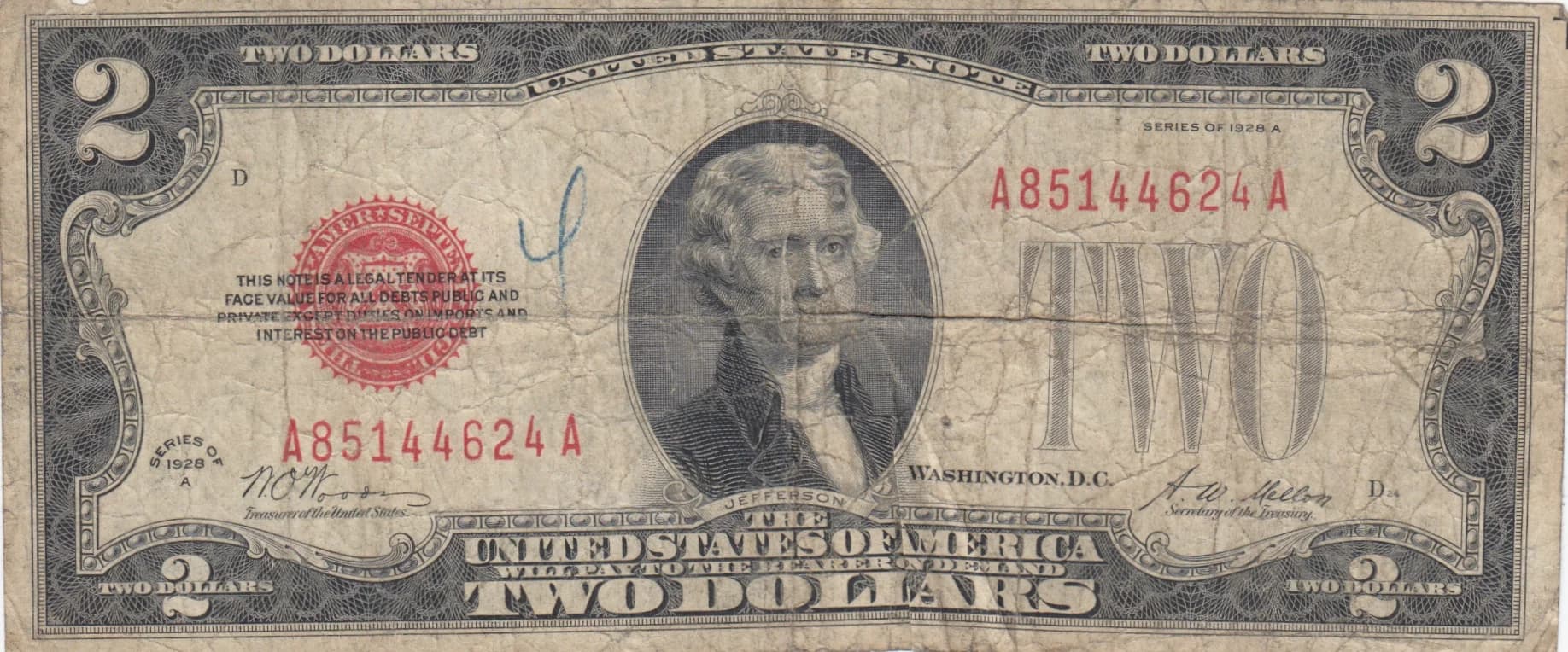
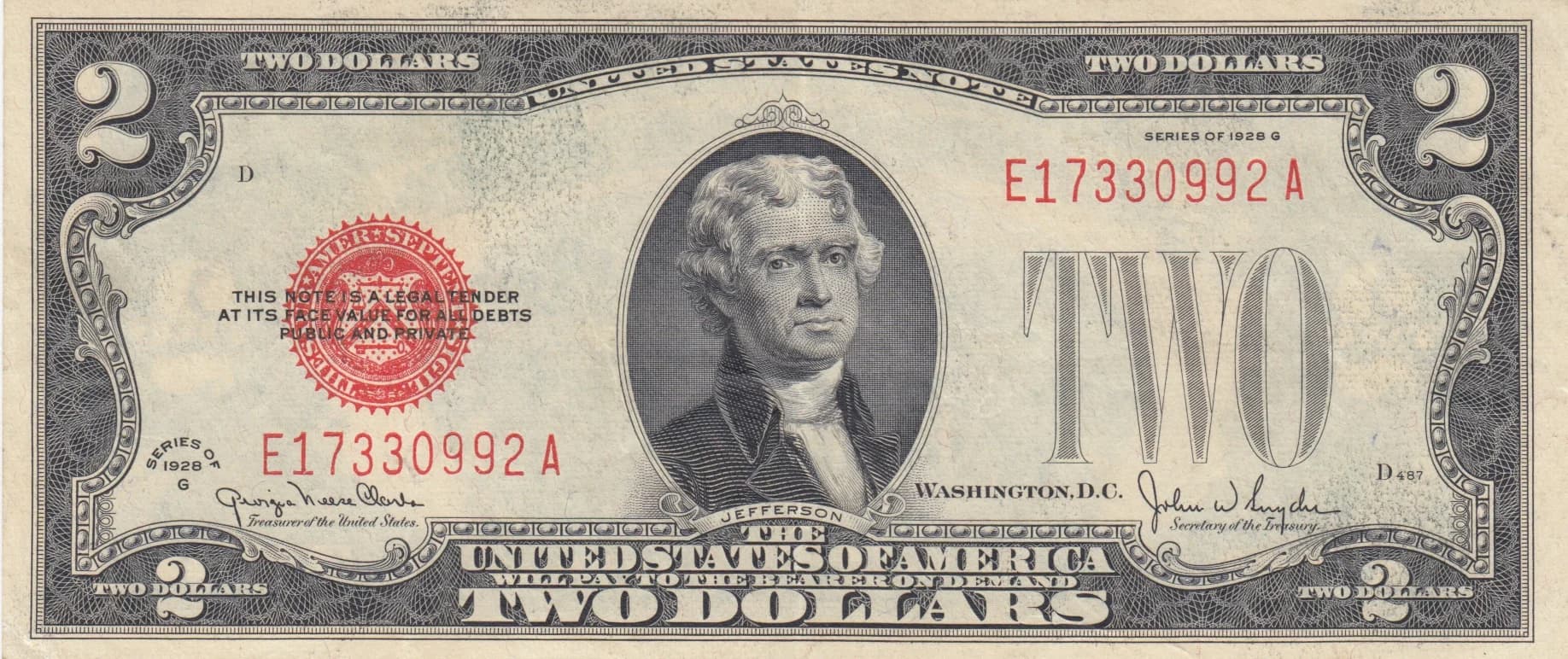
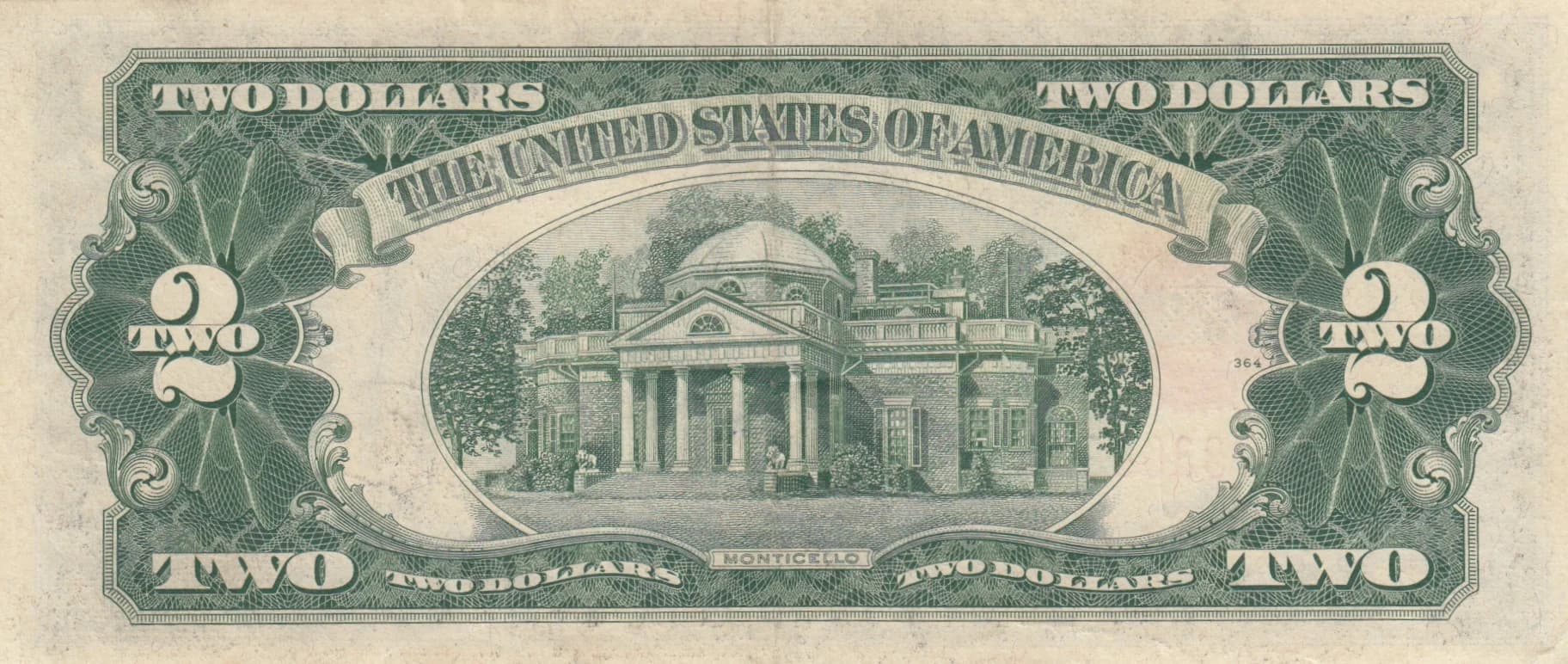
This Series of 1928 G $2 United States note presents a well-preserved example of Depression-era American currency in Very Fine condition. The note displays the iconic portrait of Thomas Jefferson on the obverse and Monticello on the reverse, both rendered in fine engraving with the characteristic gray-and-black front and green-and-black reverse typical of this series. Despite visible aging with foxing around the edges and multiple creases consistent with circulation, the note retains excellent clarity in its fine-line details and vibrant red seal impression, making it an attractive collector piece from this historically significant period.
Common. The Series of 1928 G $2 notes were produced in substantial quantities during the 1928-1935 period and represent one of the most commonly encountered denominations from this series in the numismatic market. In Very Fine condition, these notes are readily available to collectors at modest premiums above face value. No evidence of limited print runs, recalls, or scarcity for this Pick number exists in numismatic records.
The Series of 1928 G $2 note was issued during the Great Depression, a period when currency design remained relatively stable despite economic turmoil. Thomas Jefferson's portrait and his neoclassical home, Monticello, served as enduring symbols of American democratic ideals and early American architecture. The legal tender declaration and references to the Treasurer and Secretary of the Treasury reflect the formal monetary authority structure of 1920s-era United States currency production.
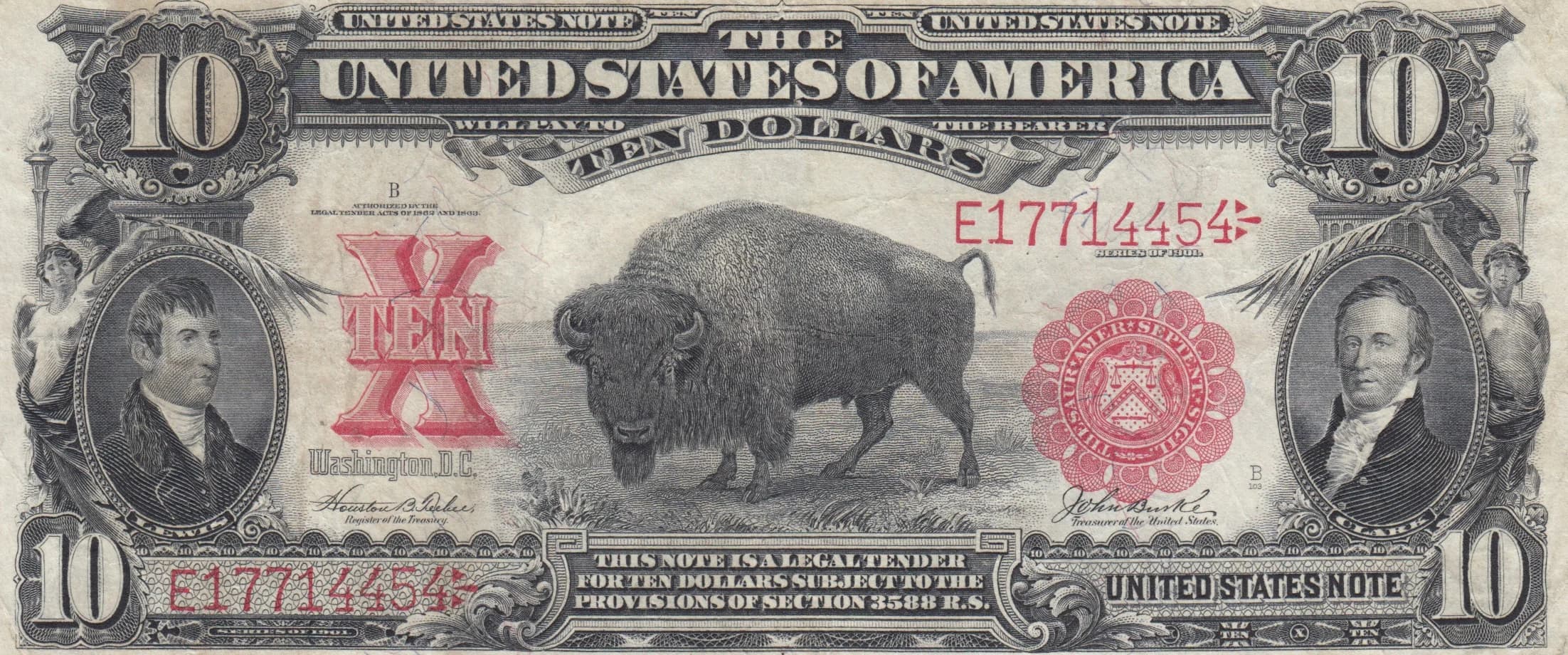
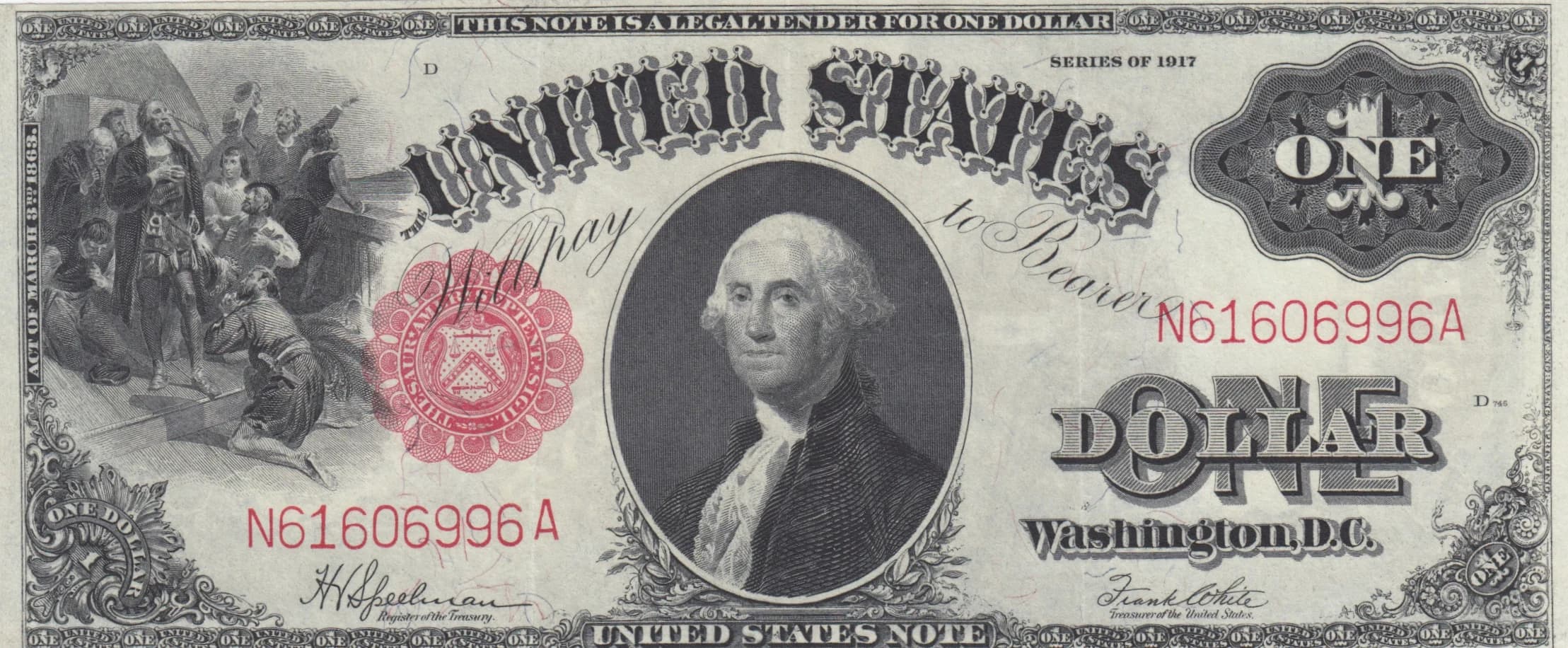
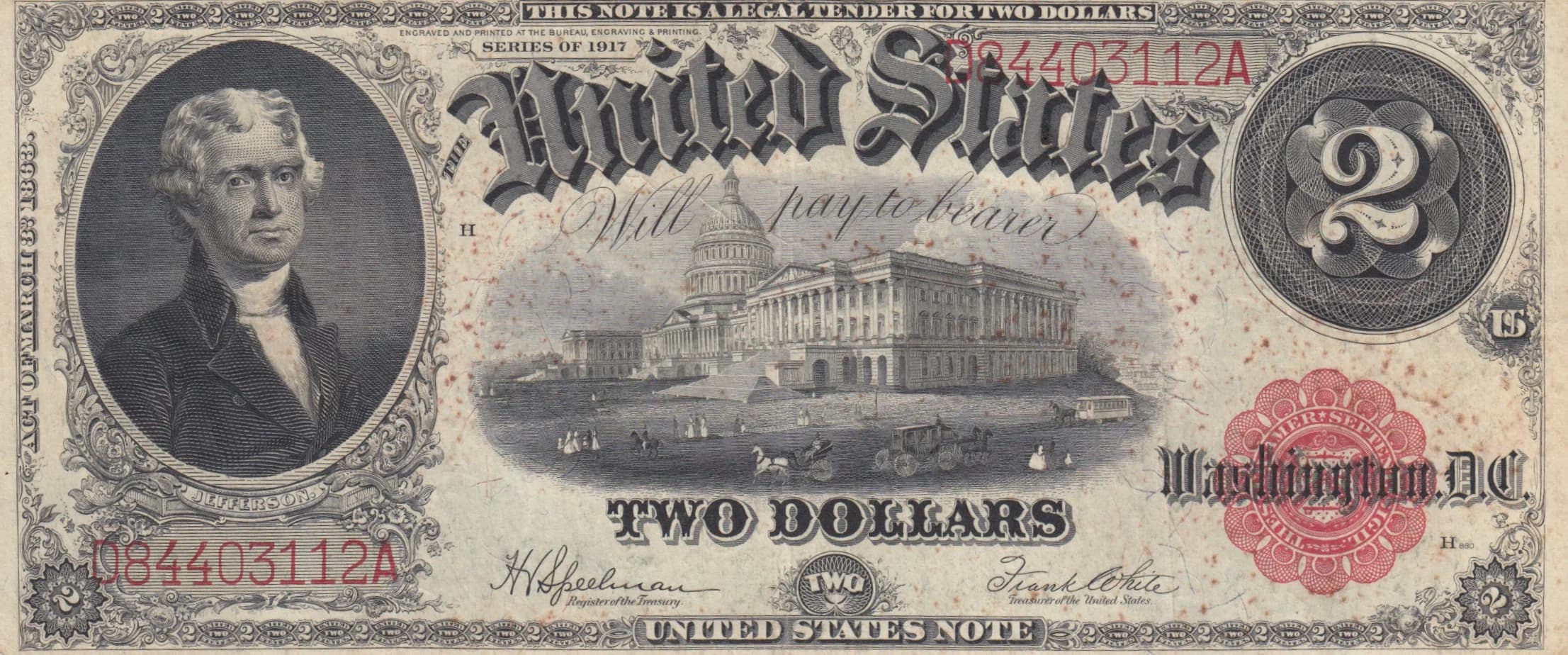
The obverse features a centered portrait of Thomas Jefferson in a finely-engraved oval frame, rendered in profile facing slightly left, set against an ornate background of scrollwork and geometric patterns. The portrait is flanked by large denomination numerals '2' in the upper corners and surrounded by intricate decorative borders. A prominent red circular stamp reading 'UNITED STATES OF AMERICA' with radiating lines occupies the left side, with the serial number 'E17330992 A' printed in matching red ink. The reverse showcases a detailed neoclassical engraving of Monticello, Jefferson's estate, centered in an oval frame with its distinctive dome, columns, and surrounding landscaping rendered in fine lines. Large denomination numerals '2' appear in all four corners with matching ornate scrollwork and radiating line security patterns throughout the design. The color scheme combines gray and black on the front with predominantly green and black tones on the reverse, with cream/beige background throughout.
FRONT SIDE: 'TWO DOLLARS' (appears multiple times in corners); 'SERIES OF 1928 G' (series designation); 'E17330992 A' (serial number); 'THIS NOTE IS A LEGAL TENDER AT ITS FACE VALUE FOR ALL DEBTS PUBLIC AND PRIVATE' (legal tender clause); 'UNITED STATES OF AMERICA' (issuing nation); 'JEFFERSON' (portrait identification); 'WASHINGTON, D.C.' (seat of government); 'D487' (Federal Reserve District designation); 'Treasurer of the United States' and 'Secretary of the Treasury' (official titles). BACK SIDE: 'TWO DOLLARS' (appears four times in corners); 'THE UNITED STATES OF AMERICA' (issuing nation); 'MONTICELLO' (landmark identification); '364' (plate number).
This note was produced using intaglio engraving (steel plate engraving), the standard security printing method for United States currency of this era. The fine-line engraving throughout, complex geometric background patterns, and precision of the ornamental borders are characteristic of the Bureau of Engraving and Printing's work. The red seal stamp and serial numbers were printed separately using additional passes, a standard multi-color security feature of 1920s currency production.
This note is identified as Pick P-378g, specifically the Series of 1928 G variant. The serial number 'E17330992 A' indicates issuance by Federal Reserve Bank of Dallas (Federal Reserve District D). The presence of signatures of officials serving during the 1928-1935 period would confirm the specific printing year within the Series of 1928 G window. The plate number '364' on the reverse indicates this particular reverse plate designation. Minor variations in seal style and signature combinations exist within the 1928 G series, though all represent the same catalog variety.