2 dollars 1928A
About This Note
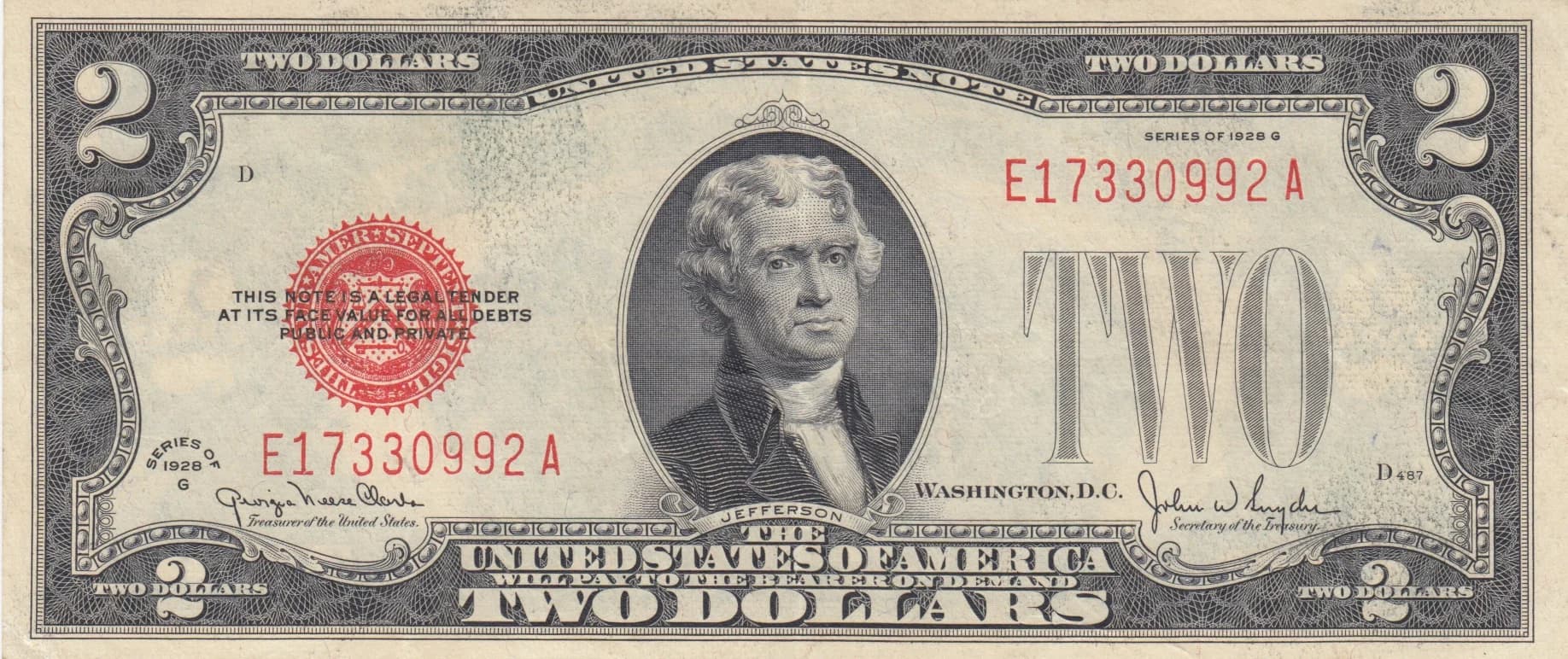
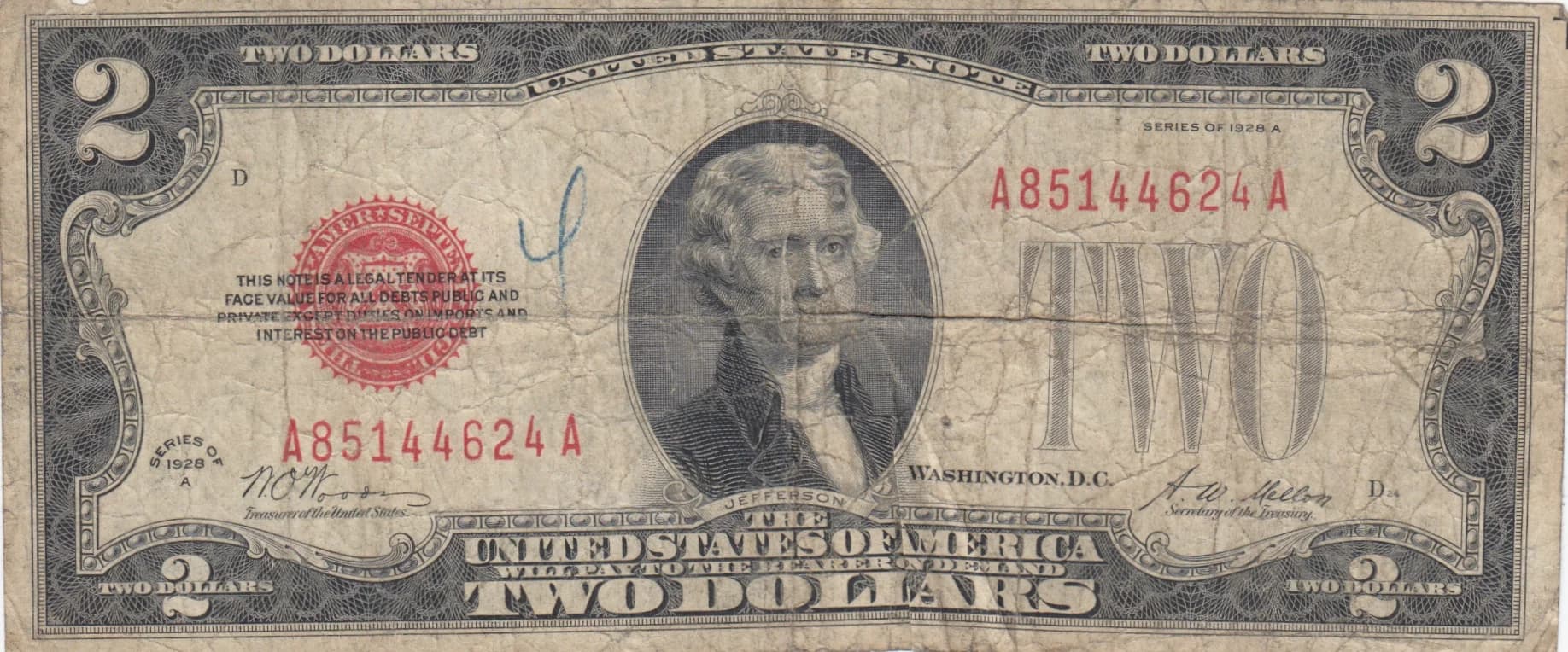
This Series of 1928A $2 note represents a classic example of early 20th-century U.S. currency in Very Good condition. The note displays typical circulation wear including creasing, foxing, and yellowing consistent with its age, yet the engraved details remain clearly visible. The red Treasury seal and serial numbers are particularly striking, making this an appealing example for collectors interested in pre-modern American currency.
Common. The 1928A $2 note series had substantial print runs and circulated widely. Series 1928A notes remain frequently encountered in the numismatic market across all condition grades. This particular note, while showing appropriate age-related wear, presents no characteristics suggesting scarcity. Market evidence indicates these notes typically trade at modest premiums ($15-$40) depending on condition and serial number appeal, consistent with common-grade material.
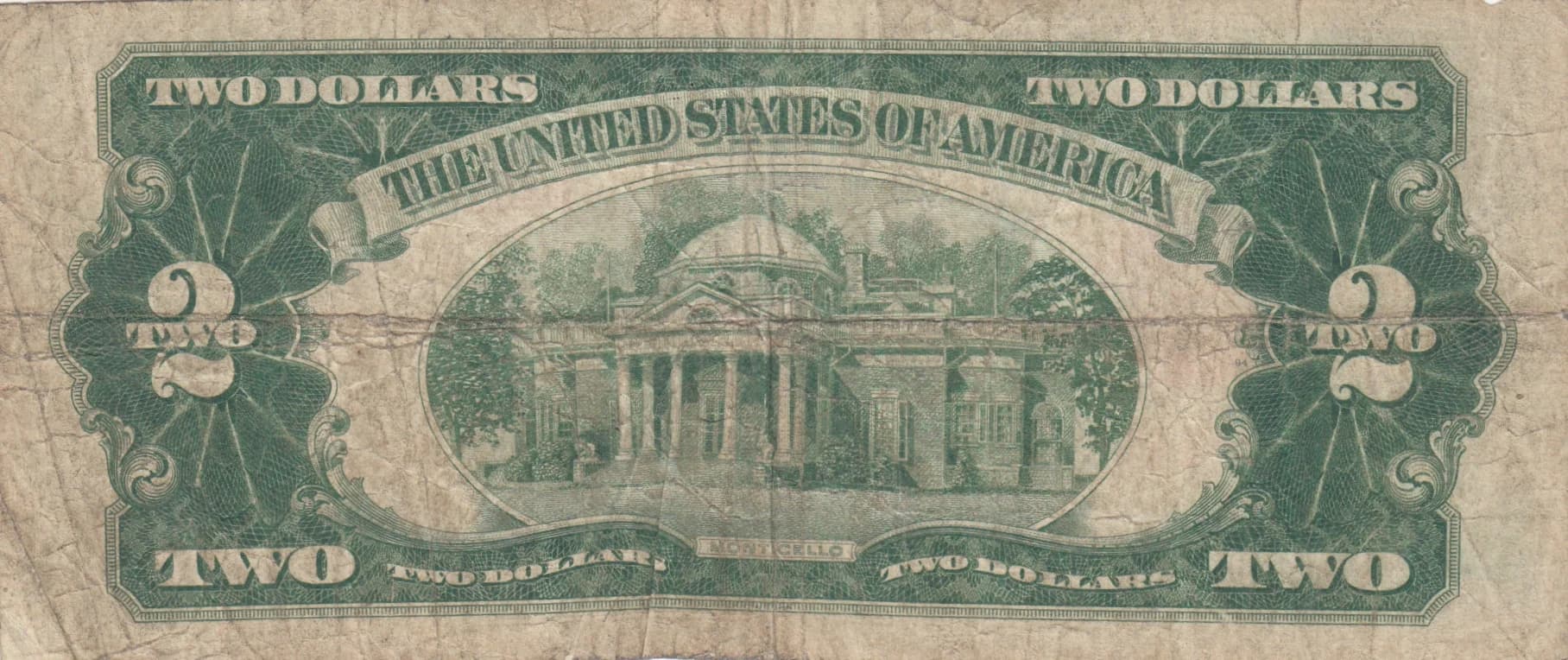
The 1928A series marks a transitional period in U.S. currency design, following the gold standard era. The neoclassical architecture depicted on the reverse reflects the federal government's authority and stability during the post-WWI period. The legal tender clause visible on the front demonstrates the standardization of U.S. paper currency during this era of monetary reform.
The obverse features a portrait of Thomas Jefferson in profile facing left within a central oval, rendered in formal 19th-century style engraving, flanked by decorative scrollwork and geometric border patterns. The reverse displays the neoclassical facade of Monticello, Jefferson's Virginia residence, prominently featured within an oval frame, symbolizing American architectural heritage and the founding principles. Both sides incorporate ornamental corner elements with palm frond motifs and fine-line engraving patterns typical of Bureau of Engraving and Printing work from this period. The color scheme employs black and gray on the obverse with a red Treasury seal, while the reverse is dominated by green ink—standard for U.S. currency of this era.
FRONT: 'TWO DOLLARS' (denomination), 'SERIES OF 1928 A' (identification), Serial number 'A85144624 A' with Federal Reserve District 'D', 'UNITED STATES OF AMERICA', 'THIS NOTE IS A LEGAL TENDER ITS FACE VALUE FOR ALL DEBTS PUBLIC AND PRIVATE EXCEPT THE DUTIES ON IMPORTS AND INTEREST ON THE PUBLIC DEBT' (legal authority statement), 'WASHINGTON, D.C.' (seat of issuing authority), 'Treasurer of the United States' and 'Secretary of the Treasury' (signing officials). BACK: 'TWO DOLLARS' (repeated denomination), 'THE UNITED STATES OF AMERICA', 'TWO', additional 'TWO DOLLARS' inscription.
Intaglio engraving (line engraving and steel plate printing), executed by the Bureau of Engraving and Printing. The fine detail visible in the portrait, architectural vignette, and ornamental borders is characteristic of high-security intaglio work. The red and green inks were applied separately using traditional multi-plate printing processes standard for U.S. currency manufacture during the 1920s-1930s period.
Series of 1928A represents a specific issuing variant of the 1928 design. This note falls under Pick 378a classification. Varieties within the 1928A series are typically distinguished by Federal Reserve District letters (this example shows 'D' for the fourth district, Chicago), signature combinations of the Treasurer and Secretary of the Treasury at the time of issuance, and serial number prefixes. No rare overprints or exceptional markings are evident in the visual analysis of this example.