1 dollar 1935H
About This Note
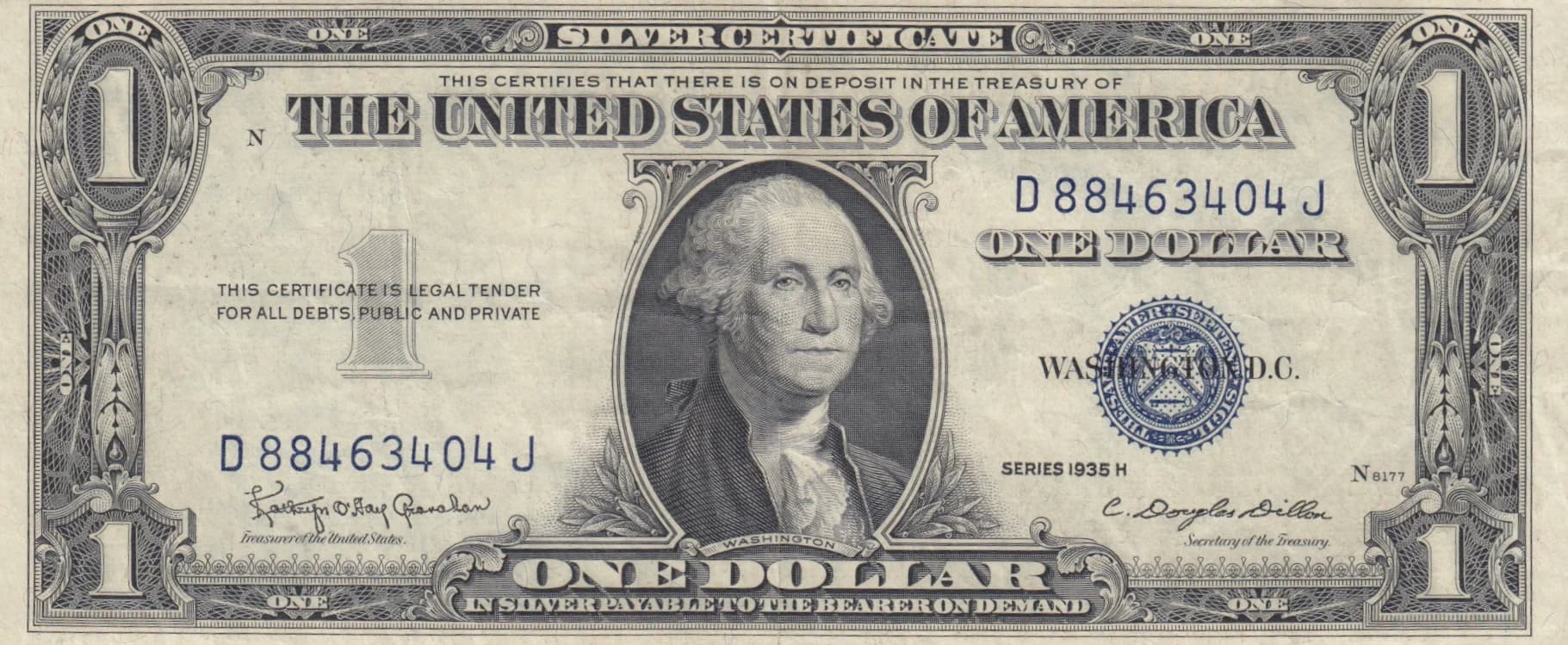
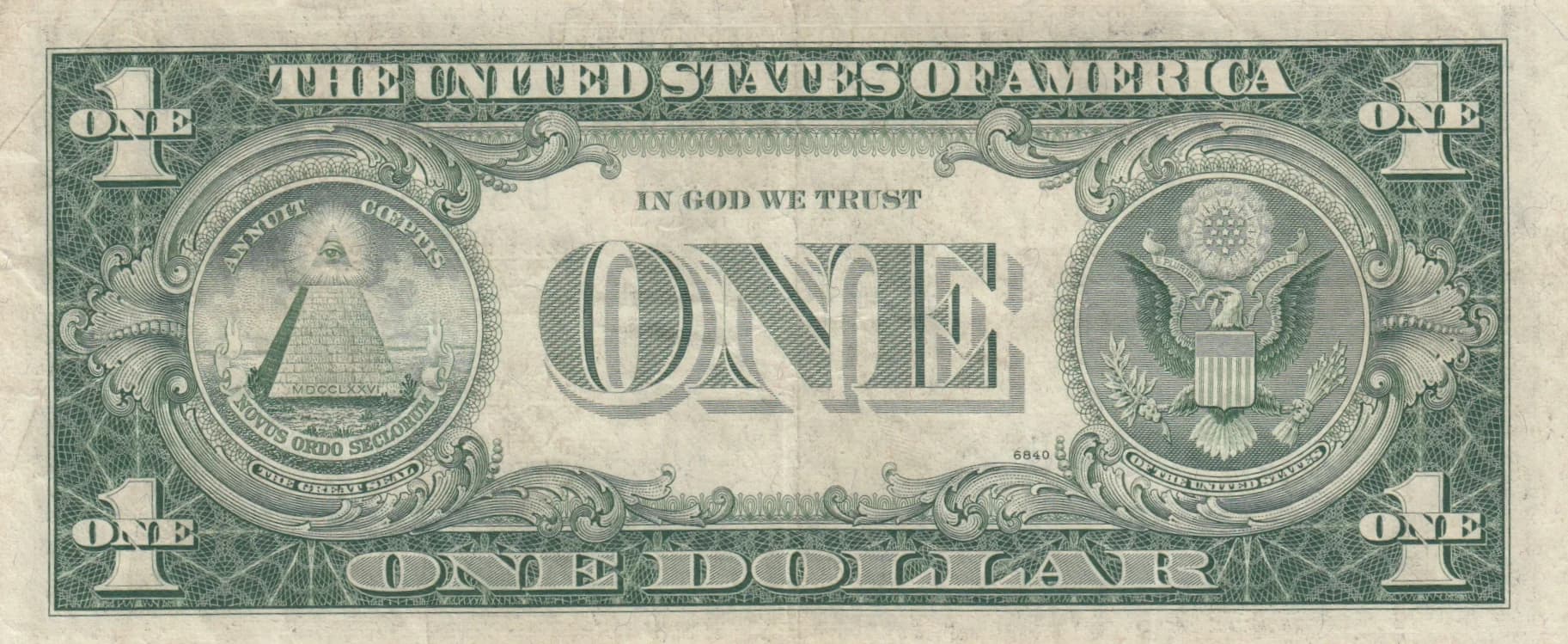
This is a Series 1935H United States one dollar silver certificate in Very Fine condition, featuring George Washington's portrait on the obverse and the iconic Great Seal imagery on the reverse. The note displays excellent preservation with no visible wear, creases, or stains, and exhibits the characteristic light cream background with black and blue inks typical of this era's currency. The 1935H series represents a transitional period in American currency design, making this a desirable example for collectors of early 20th-century U.S. paper money.
Common. The 1935H series silver certificate is one of the most widely produced and readily available U.S. currency issues. Millions of these notes were printed and circulated, and significant quantities survive in collector hands today. Even in Very Fine condition, this note remains abundant in the numismatic market and does not command premiums associated with scarce or rare issues.
The 1935H series silver certificate was issued during the New Deal era under President Franklin D. Roosevelt, following the gold standard's suspension and the implementation of the Silver Purchase Act of 1934. The note's prominent declaration that 'IN SILVER PAYABLE TO THE BEARER ON DEMAND' reflects the monetary policy of the period, before this redemption privilege was formally discontinued in 1968. The reverse's Great Seal imagery, featuring both the pyramid with the all-seeing eye and the eagle, symbolizes the nation's founding principles and continuity during a period of significant economic and political transformation.
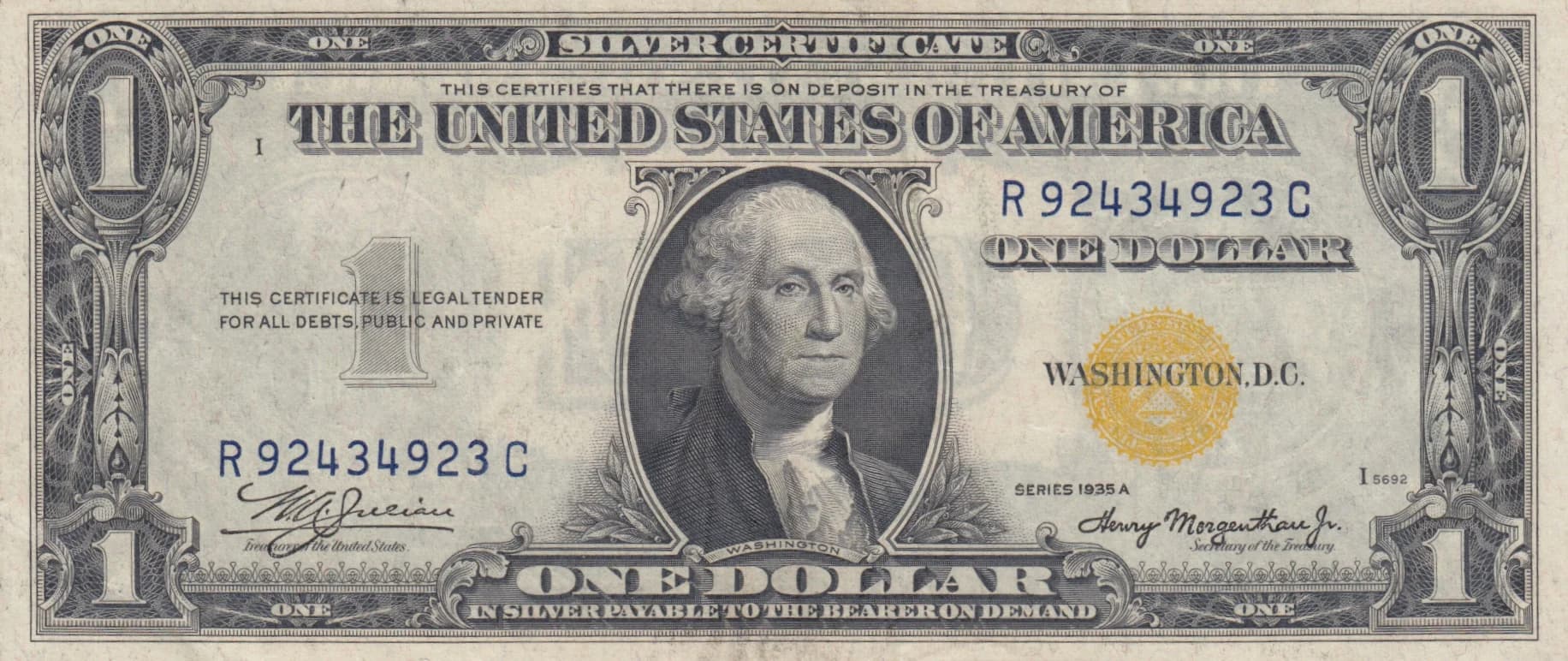
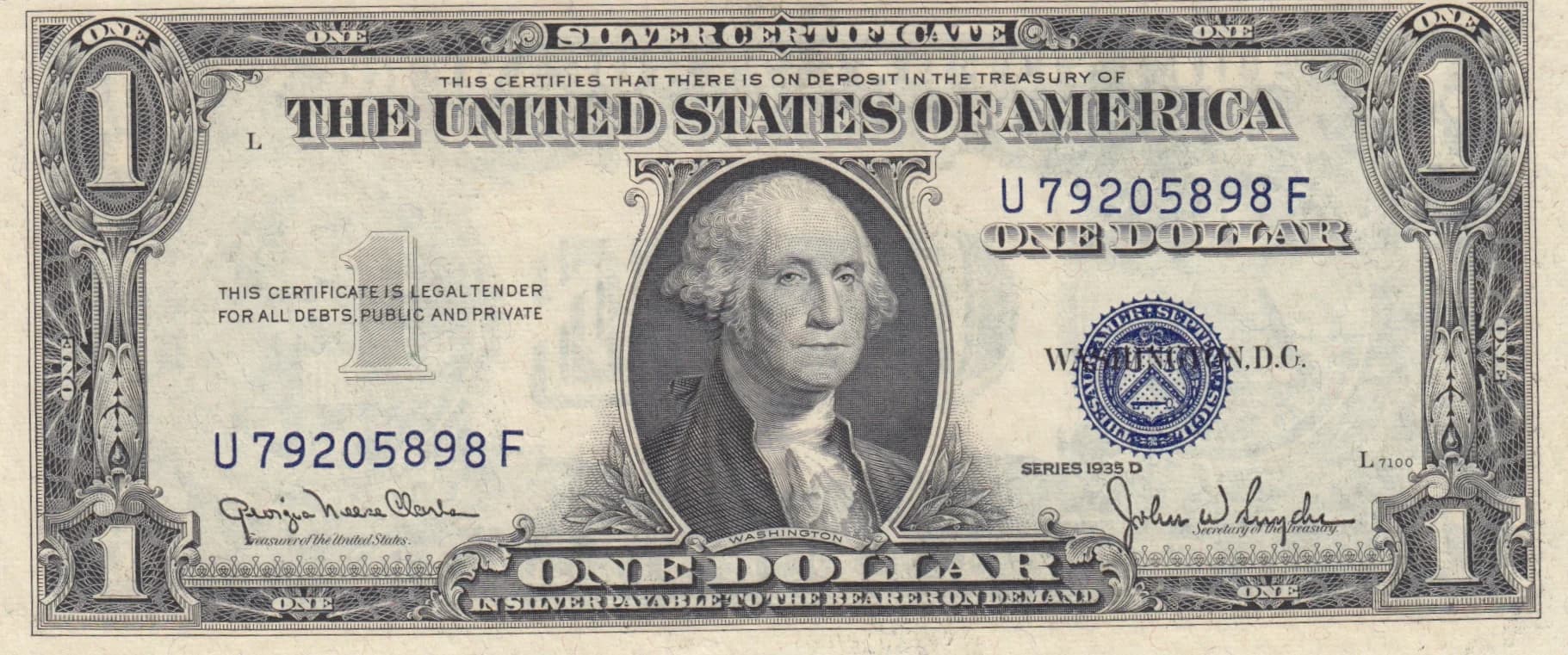
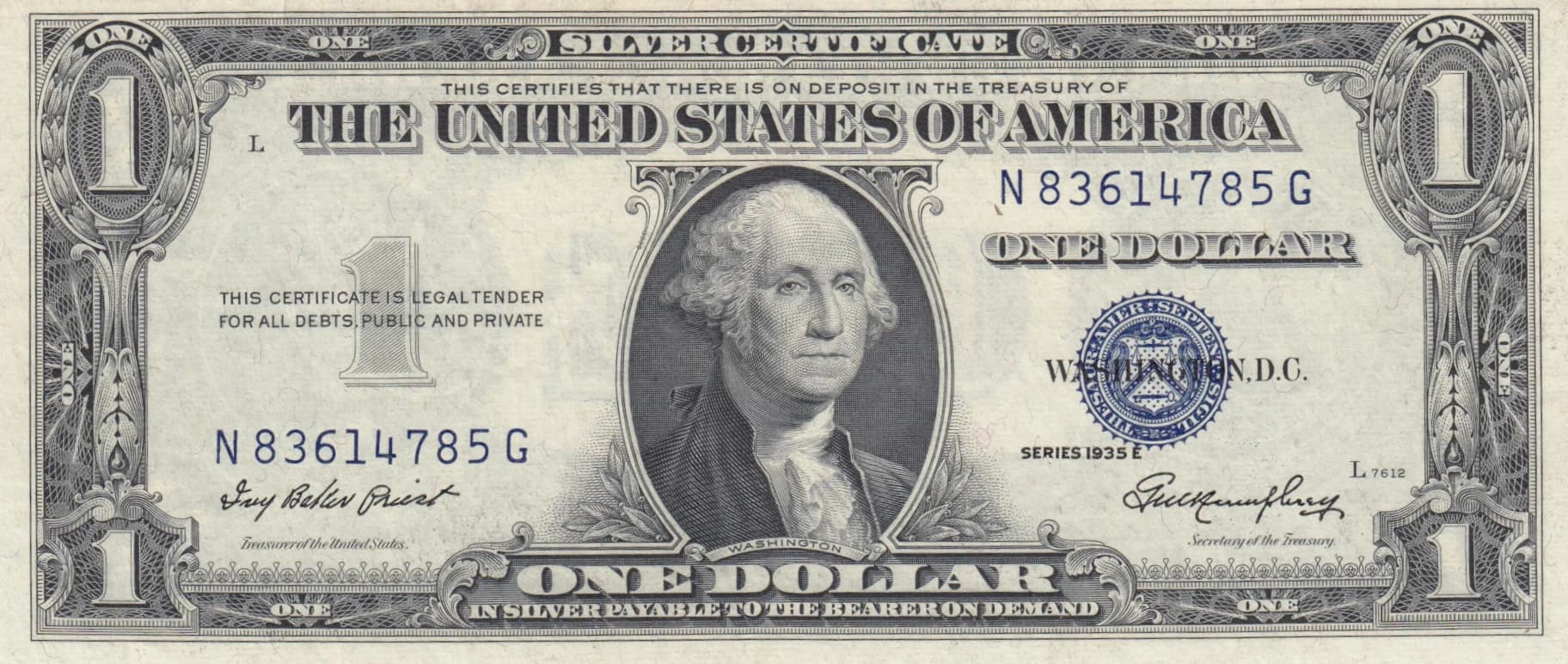
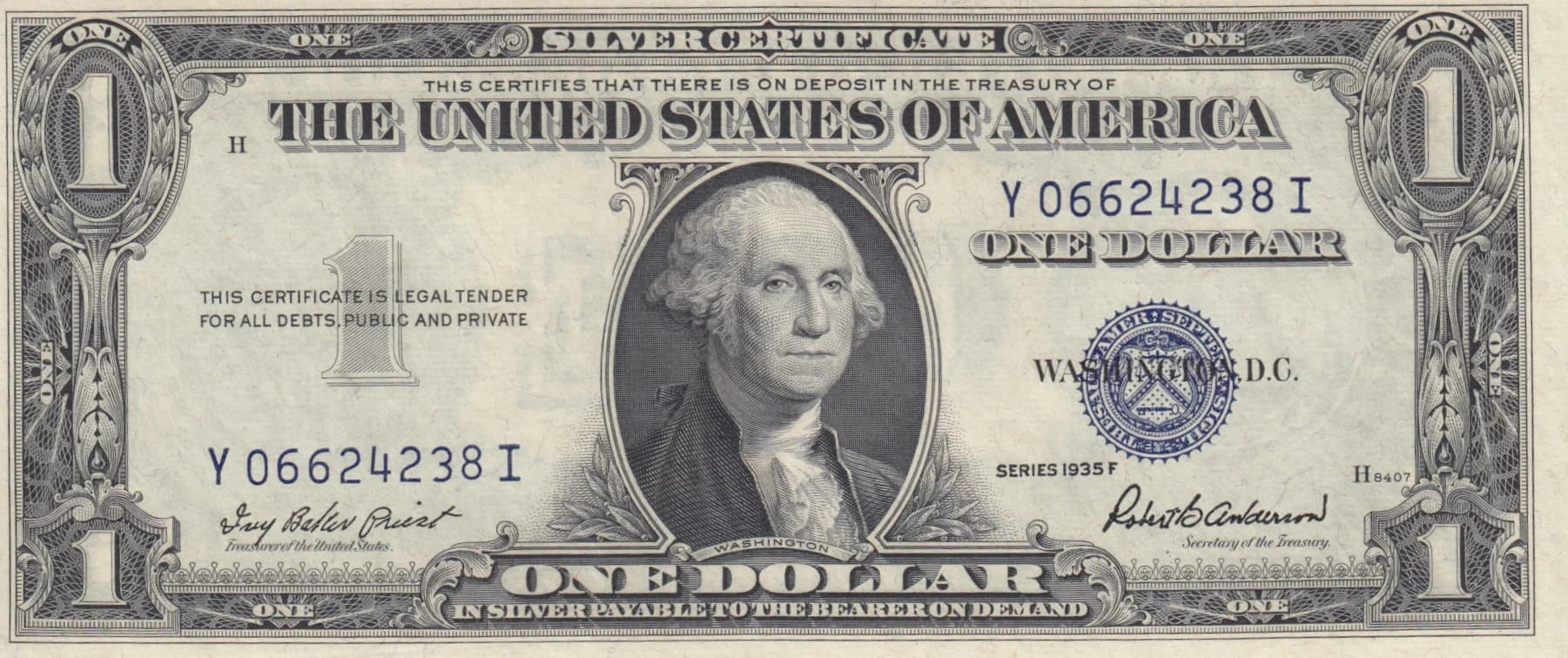
The obverse features a left-facing portrait of George Washington in a central oval frame, surrounded by ornamental numerals '1' in all four corners and intricate scrollwork. The Treasury Department seal appears as a circular blue emblem on the right side. The reverse displays two prominent circular medallions: the left contains the Great Seal's pyramid with the all-seeing eye (Annuit Coeptis), while the right features the Great Seal eagle with spread wings, a shield on its chest, laurel wreath below, and arrows clutched in its talons. The central text 'ONE' dominates between these symbols, with 'IN GOD WE TRUST' positioned above. The overall color scheme utilizes a light cream/beige base with black text and dark blue/green accents.
FRONT SIDE: 'THIS CERTIFIES THAT THERE IS ON DEPOSIT IN THE TREASURY OF THE UNITED STATES OF AMERICA' — official certification language; 'THIS CERTIFICATE IS LEGAL TENDER FOR ALL DEBTS, PUBLIC AND PRIVATE' — legal tender declaration; 'ONE DOLLAR' and 'IN SILVER PAYABLE TO THE BEARER ON DEMAND' — denomination and redemption promise; 'SERIES 1935 H' — series designation; Serial number 'D88463404J' and note position 'N8177'. REVERSE SIDE: 'THE UNITED STATES OF AMERICA' — country identification; 'IN GOD WE TRUST' — national motto; 'ONE' and 'ONE DOLLAR' — denomination markings; 'ANNUIT COEPTIS' (Latin: 'He approves our undertakings') and 'NOVUS ORDO SECLORUM' (Latin: 'A new order of the ages') — Great Seal mottos from the reverse side imagery.
This note was produced using the intaglio engraving method, which was the standard security printing technique for U.S. currency during this period. The fine line engraving, intricate scrollwork patterns, and detailed portrait rendering visible in the analysis are characteristic of Bureau of Engraving and Printing (BEP) production. The complex medallion designs and elaborate ornamental details throughout the note reflect the high-security intaglio process employed to prevent counterfeiting.
This note is identified as Series 1935H based on the visible inscription. The specific variety can be further determined by examining the signatures of the Treasurer and Secretary of the Treasury present on the note, which varied throughout the 1935H series depending on the officials in office during the printing period. The serial number prefix 'D' indicates the Federal Reserve Bank of issue. Without access to signature details from the visual analysis, the precise signature variety cannot be determined, but this information would be valuable for detailed cataloging.