1 dollar 1935E
About This Note
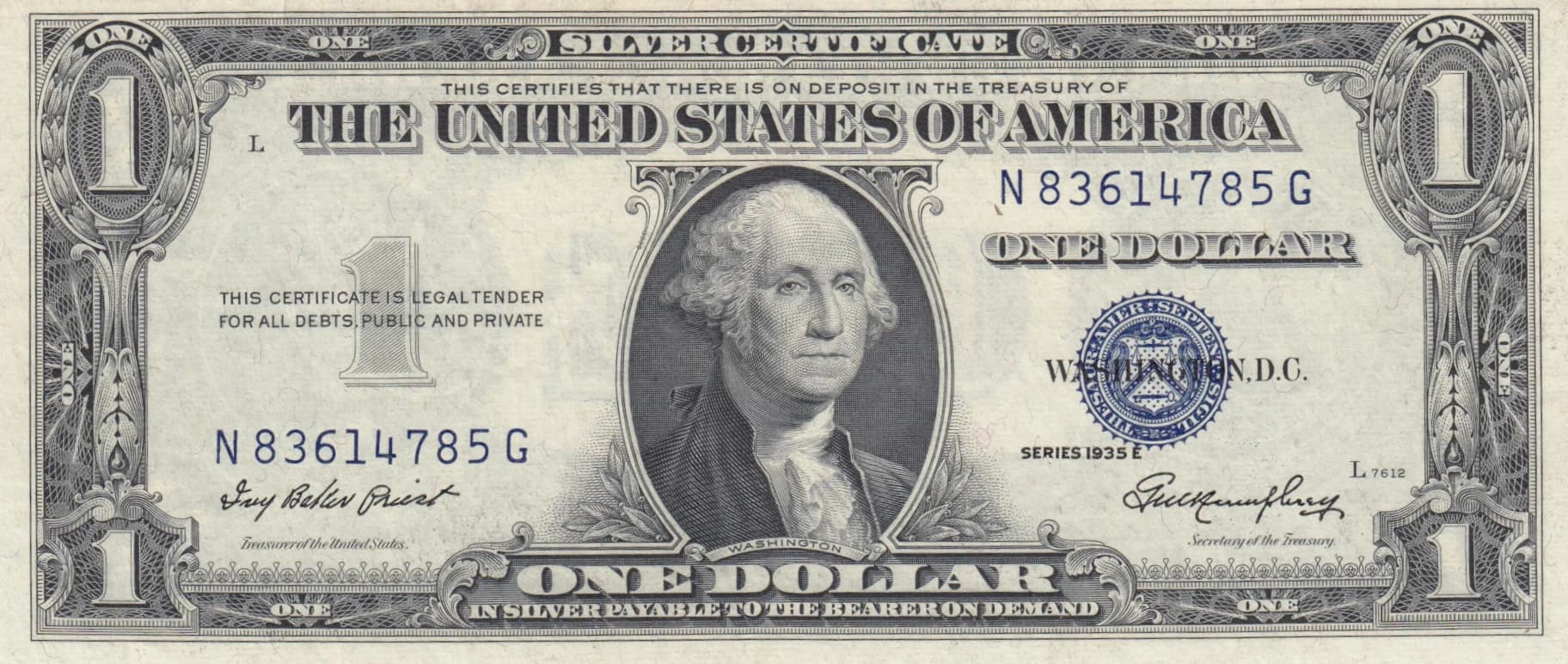
This is an exceptional example of a United States Silver Certificate one dollar bill from the 1935E series, graded EF (Extremely Fine). The note displays the classic design featuring George Washington in profile on the obverse, with the Great Seal imagery on the reverse including the pyramid with all-seeing eye and eagle. The specimen exhibits uncirculated characteristics with sharp, crisp printing throughout, no visible creases or wear, and excellent color preservation—making it a desirable example for collectors of Depression-era currency.
Common. The 1935E series Silver Certificate $1 note (Pick P-416D2e) is one of the most commonly encountered Depression-era notes in the collector market. The series had substantial print runs, and these notes remain readily available in all grades, including fine condition examples. While this particular specimen is in excellent condition (EF grade), the note itself is not scarce, and such examples typically trade well below $50 in the secondary market, confirming its common status among numismatists.
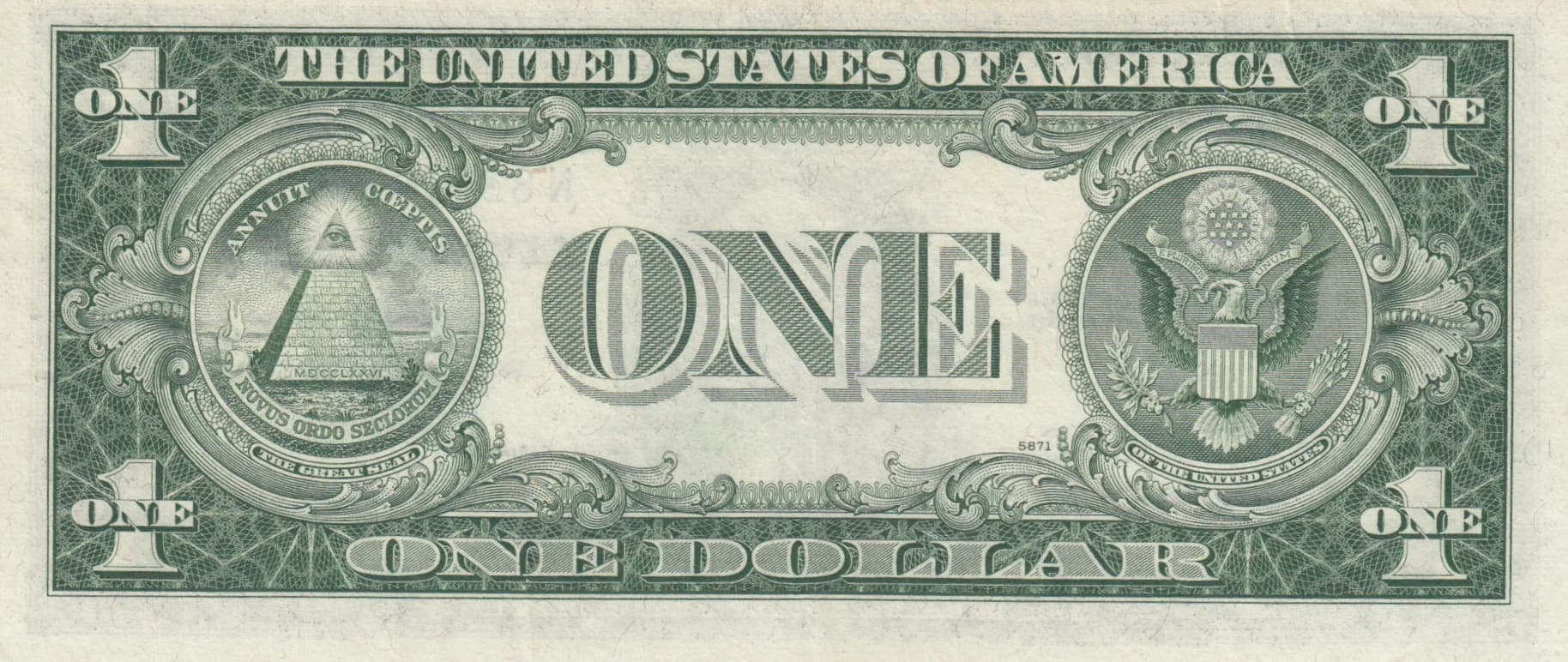
The 1935E series Silver Certificates were issued during the Great Depression era and represent a significant period in American monetary policy when silver backing was still emphasized. The dual Great Seal design on the reverse, featuring both the pyramid with 'Annuit Coeptis' and the eagle with shield, reinforced the government's commitment to backing currency with precious metal reserves. This series predates the abandonment of silver backing for circulating currency, making these notes historically significant artifacts of pre-World War II American finance.
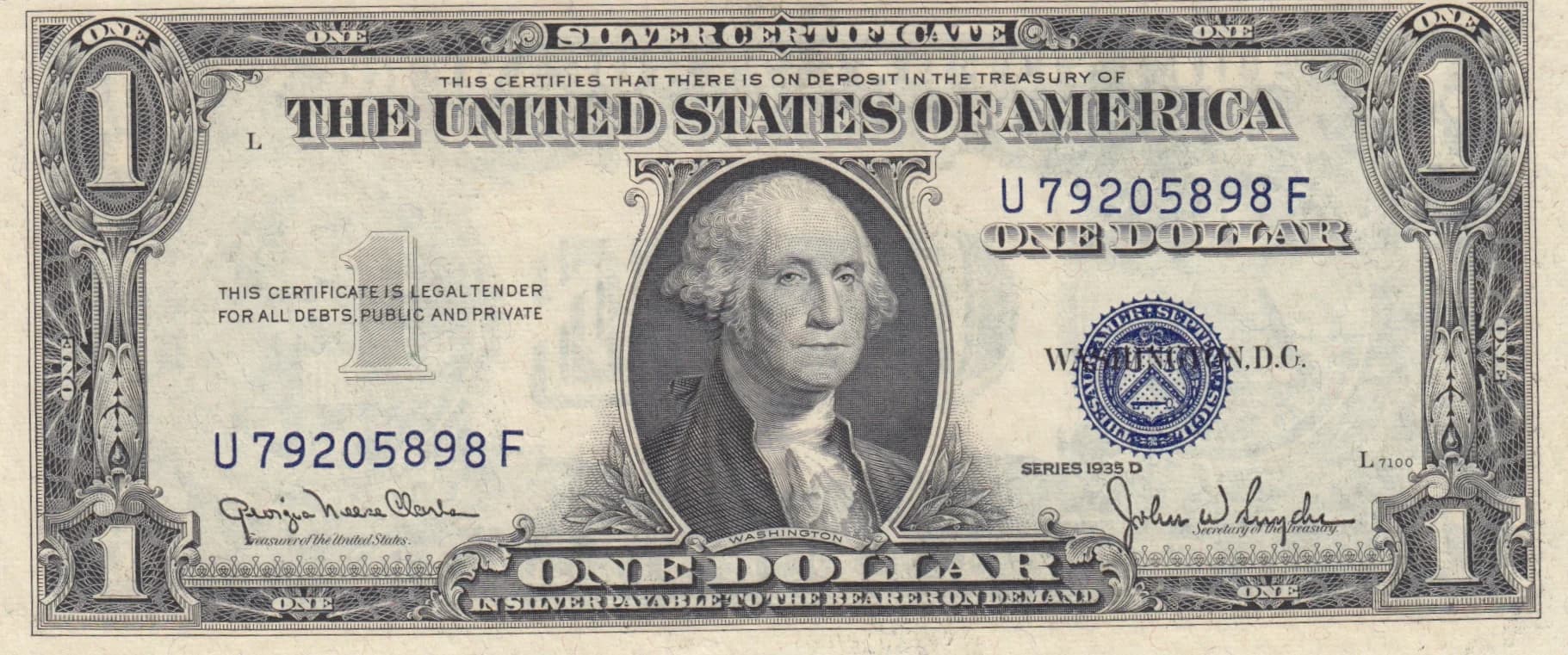
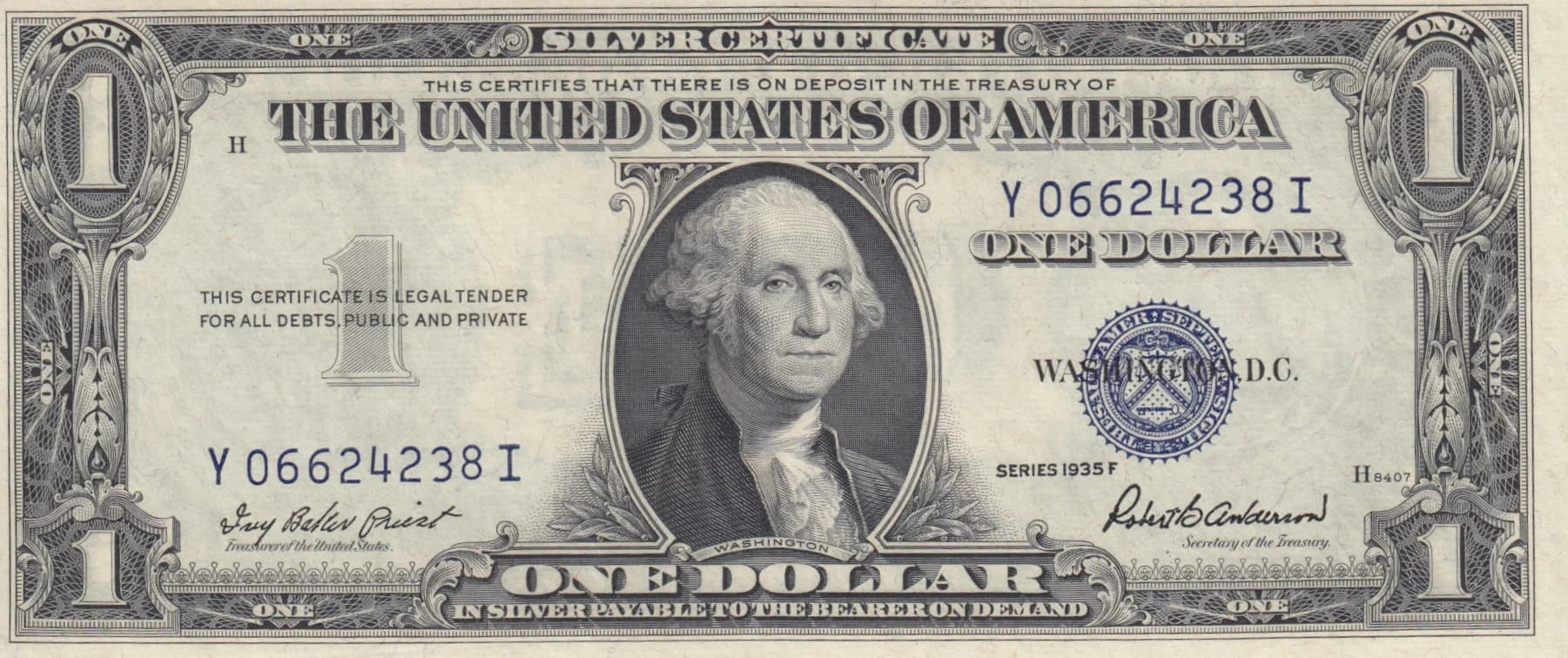
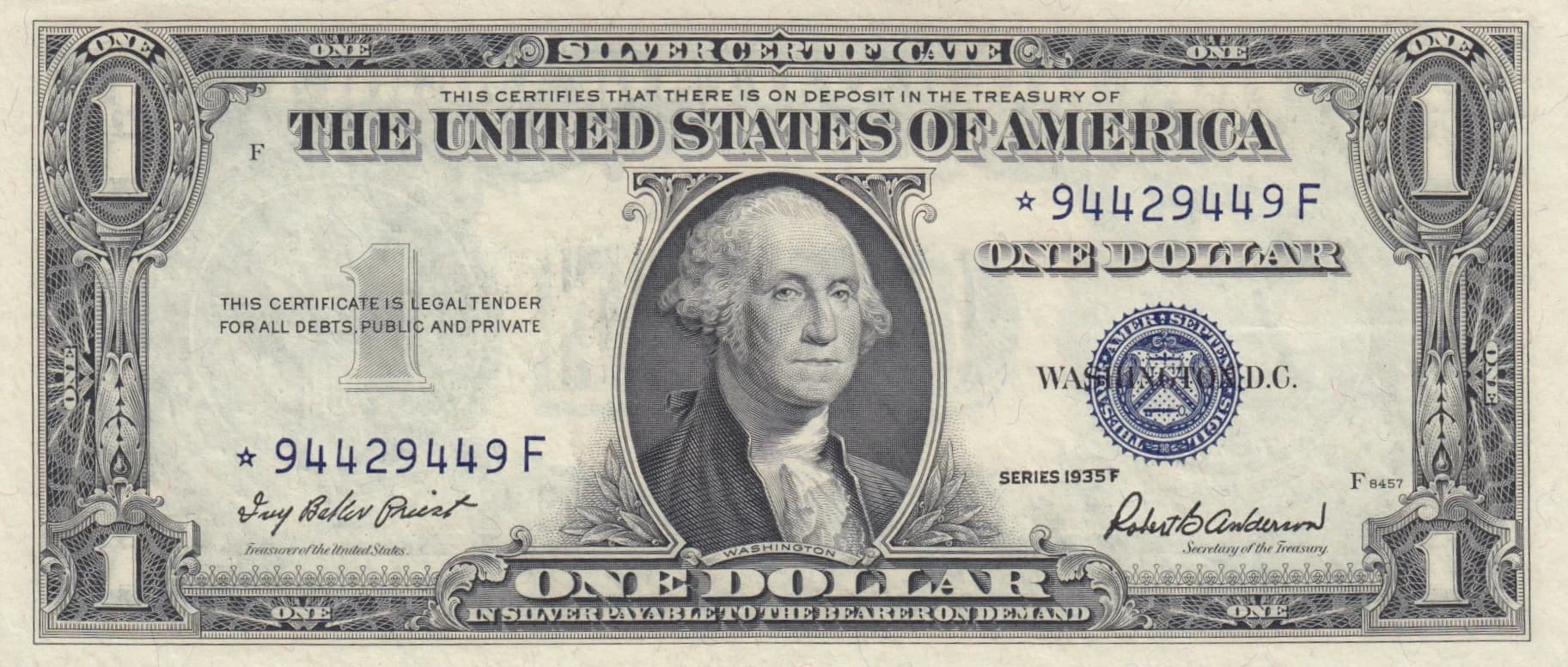
The obverse features a formal three-quarter portrait of George Washington within an ornate oval frame, dressed in 18th-century formal attire with characteristic receding hairline, facing right. The design incorporates elaborate decorative borders with fine line patterns and scrollwork, with the denomination '1' displayed in decorative ovals at all four corners. A blue circular Treasury Department seal with eagle emblem appears on the right side. The reverse presents the Great Seal of the United States split into two circular medallions: the left shows the pyramid with the all-seeing eye and 'ANNUIT COEPTIS' inscribed above, while the right displays the eagle with shield beneath. The word 'ONE' is prominently centered between these seals. Both sides feature intricate geometric crosshatching and fine line patterns characteristic of intaglio engraving security design.
Front Side: 'SILVER CERTIFICATE' - designation of certificate type; 'THIS CERTIFIES THAT THERE IS ON DEPOSIT IN THE TREASURY OF THE UNITED STATES OF AMERICA' - legal certificate language; 'ONE DOLLAR' - denomination; 'THIS CERTIFICATE IS LEGAL TENDER FOR ALL DEBTS, PUBLIC AND PRIVATE' - legal tender declaration; 'SERIES 1935 E' - issue series identification; Serial number 'N 83614785 G'; Signatures of Treasurer (Ivy Baker Priest) and Secretary of the Treasury (Fred Kimphly); 'WASHINGTON, D.C.' - location; Bureau identifier 'L 7612'. Back Side: 'THE UNITED STATES OF AMERICA' - country designation; 'ONE' and 'ONE DOLLAR' - denomination; 'ANNUIT COEPTIS' (Latin: 'He favors our undertakings'); 'E PLURIBUS UNUM' (Latin: 'Out of many, one'); 'NOVUS ORDO SECLORUM' (Latin: 'New order of the ages'); Bureau identifier '5871'.
This note was produced using the intaglio (engraved) printing method, standard for all U.S. currency of this period. The fine line geometric patterns, intricate crosshatching, ornate scrollwork, and precise detail visible throughout both obverse and reverse indicate the high-security engraving technique employed by the Bureau of Engraving and Printing (BEP). The multiple print layers, careful color alignment (black on obverse, green on reverse), and exceptional sharpness of all details in this EF specimen demonstrate the sophisticated multi-stage printing process used for Silver Certificates during this era.
This specimen is identifiable as the 1935E series by the 'SERIES 1935 E' inscription on the obverse. The signatures present are those of Ivy Baker Priest (Treasurer) and Fred Kimphly (Secretary of the Treasury), which are the appropriate signatures for the 1935E series. The serial number format 'N 83614785 G' indicates standard numbering for this series. No major varieties such as overprints or unusual serial number characteristics are apparent in this example; it represents a standard production note from the main print run of the 1935E series.