1 dollar 1935A
About This Note
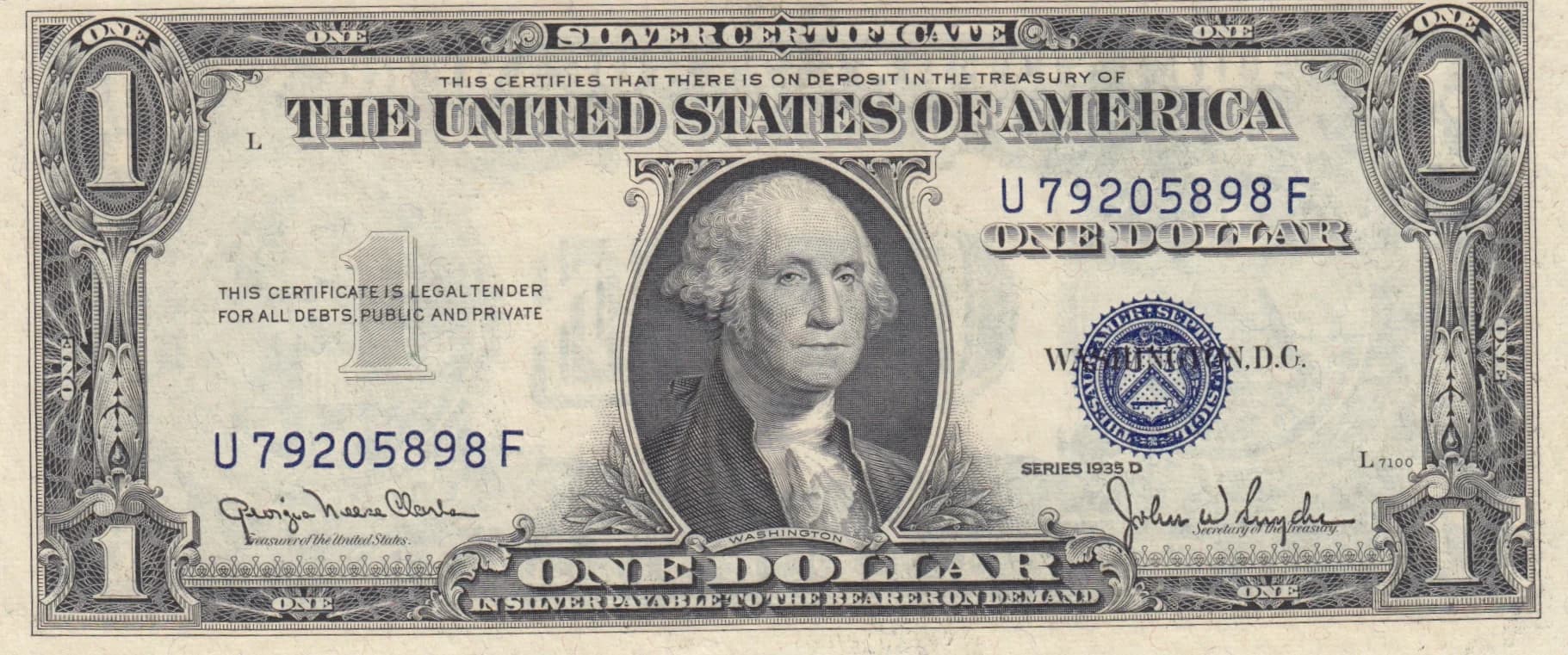
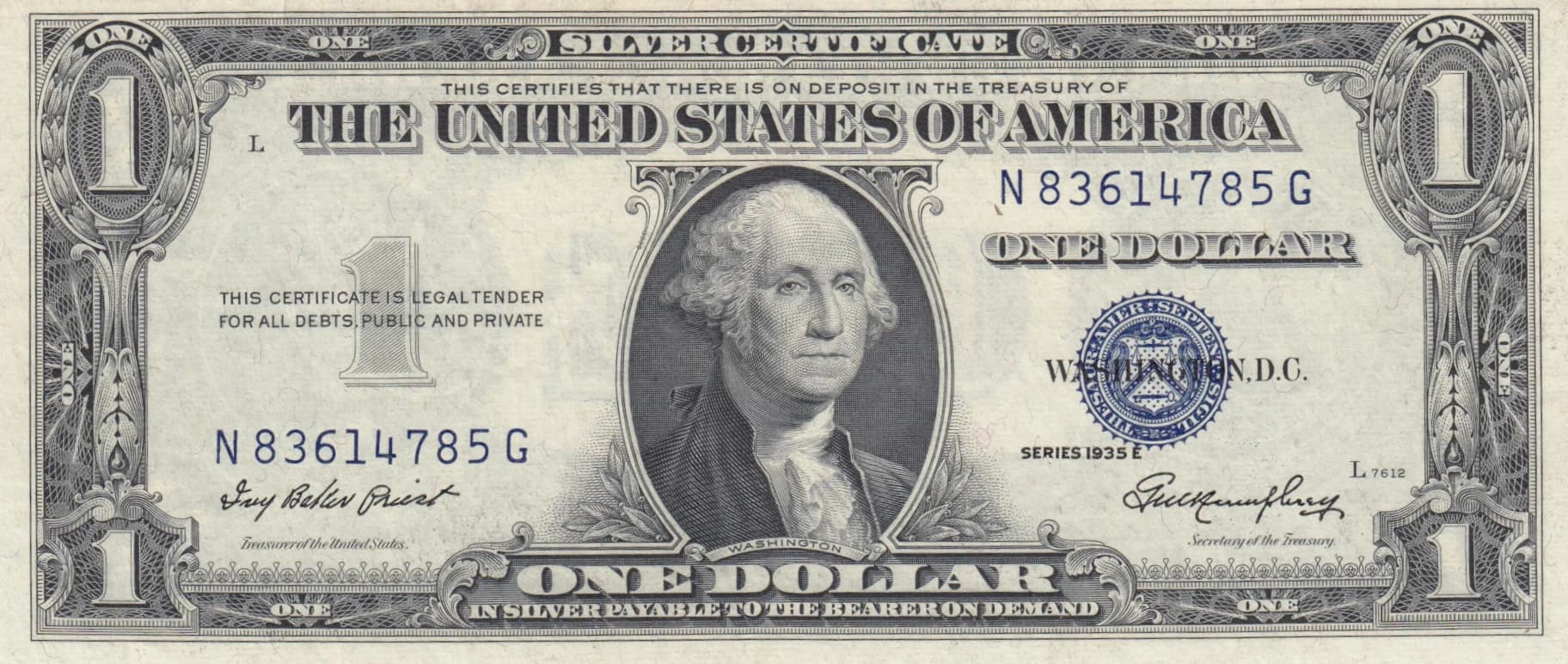
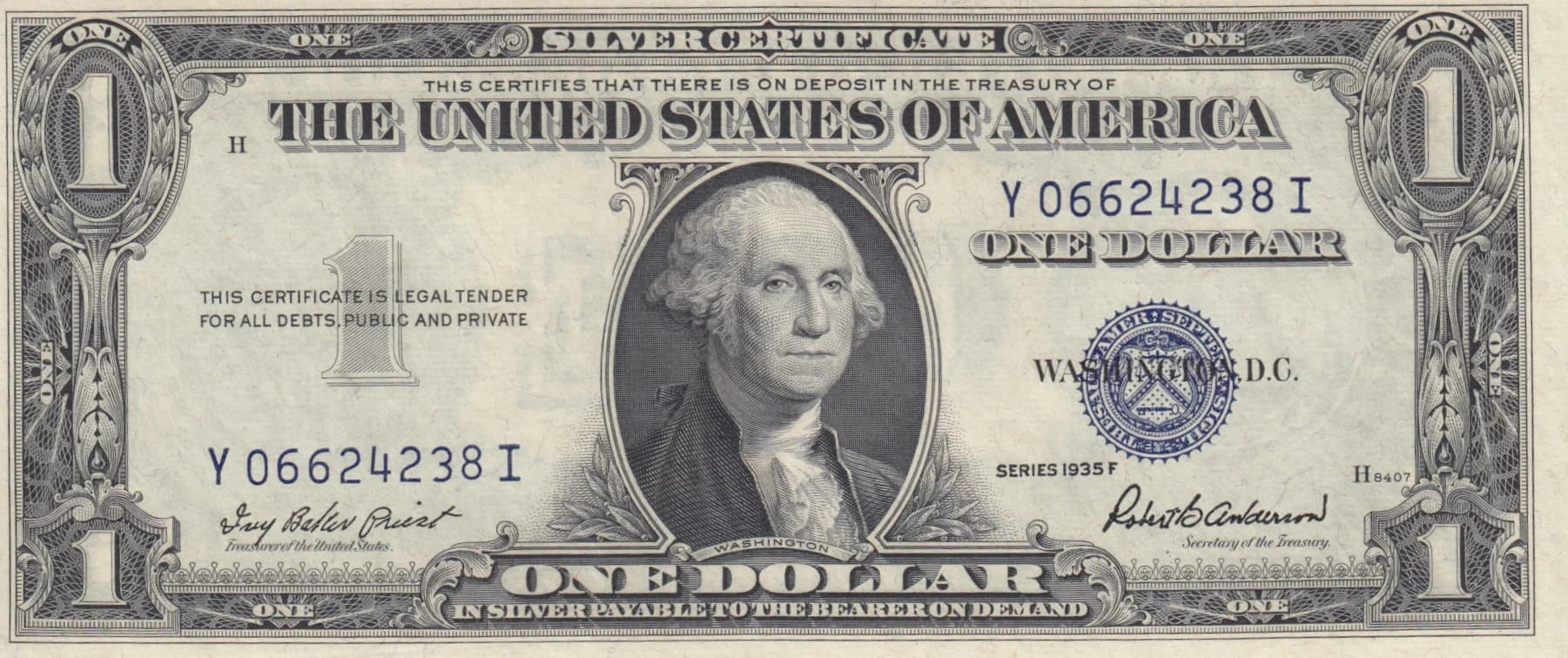
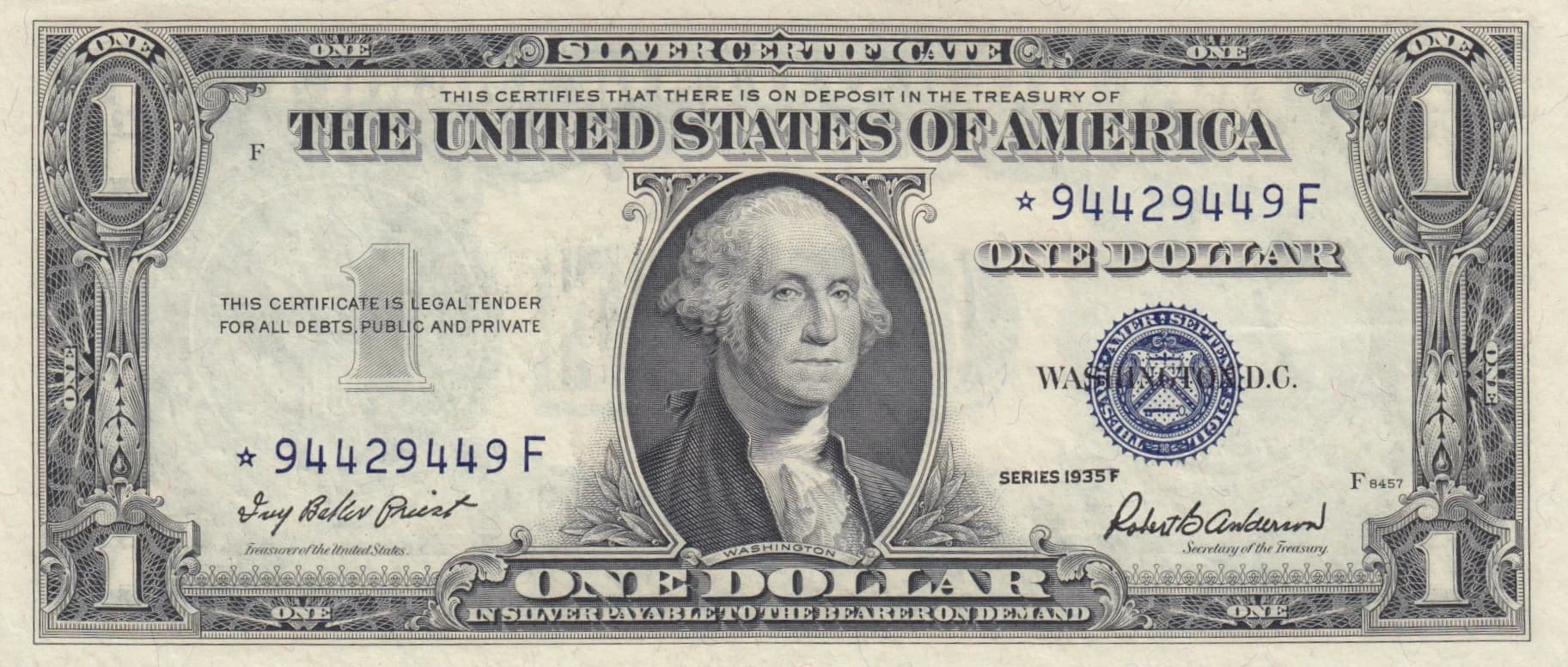
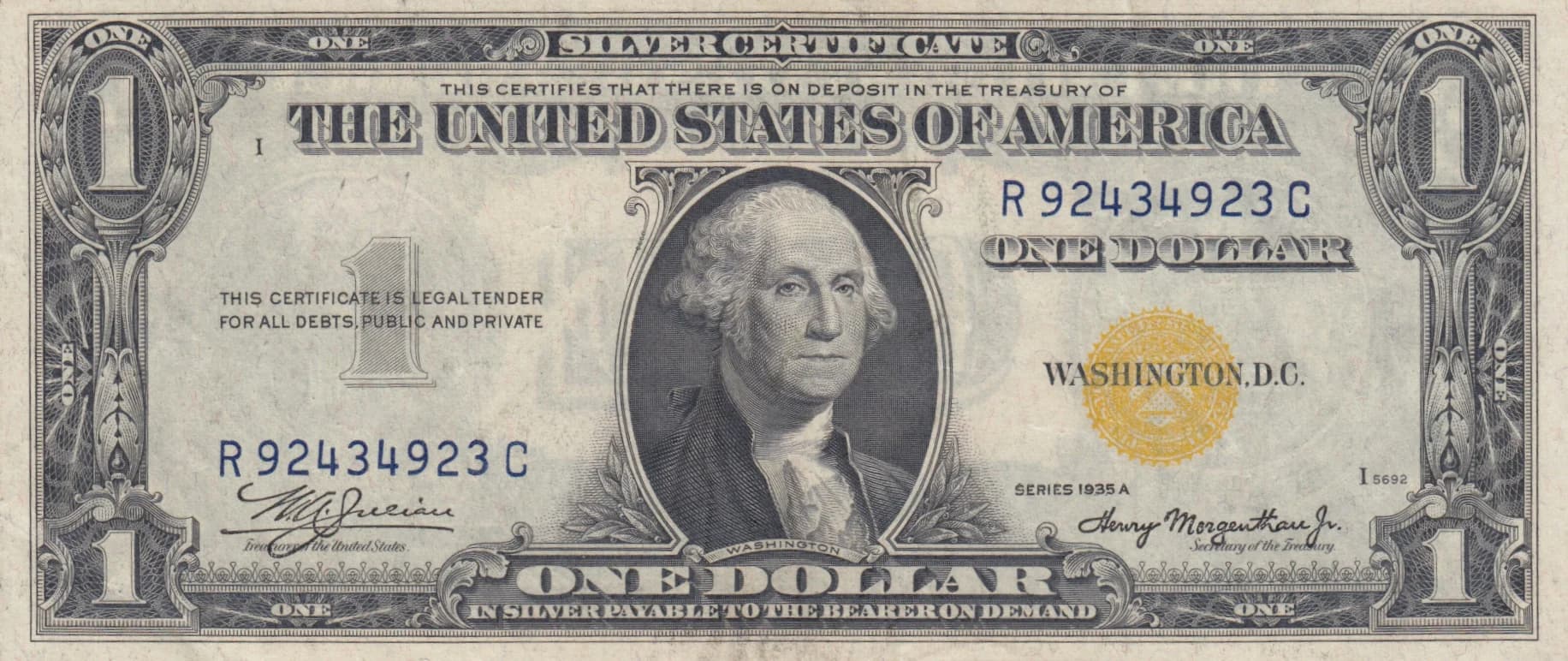
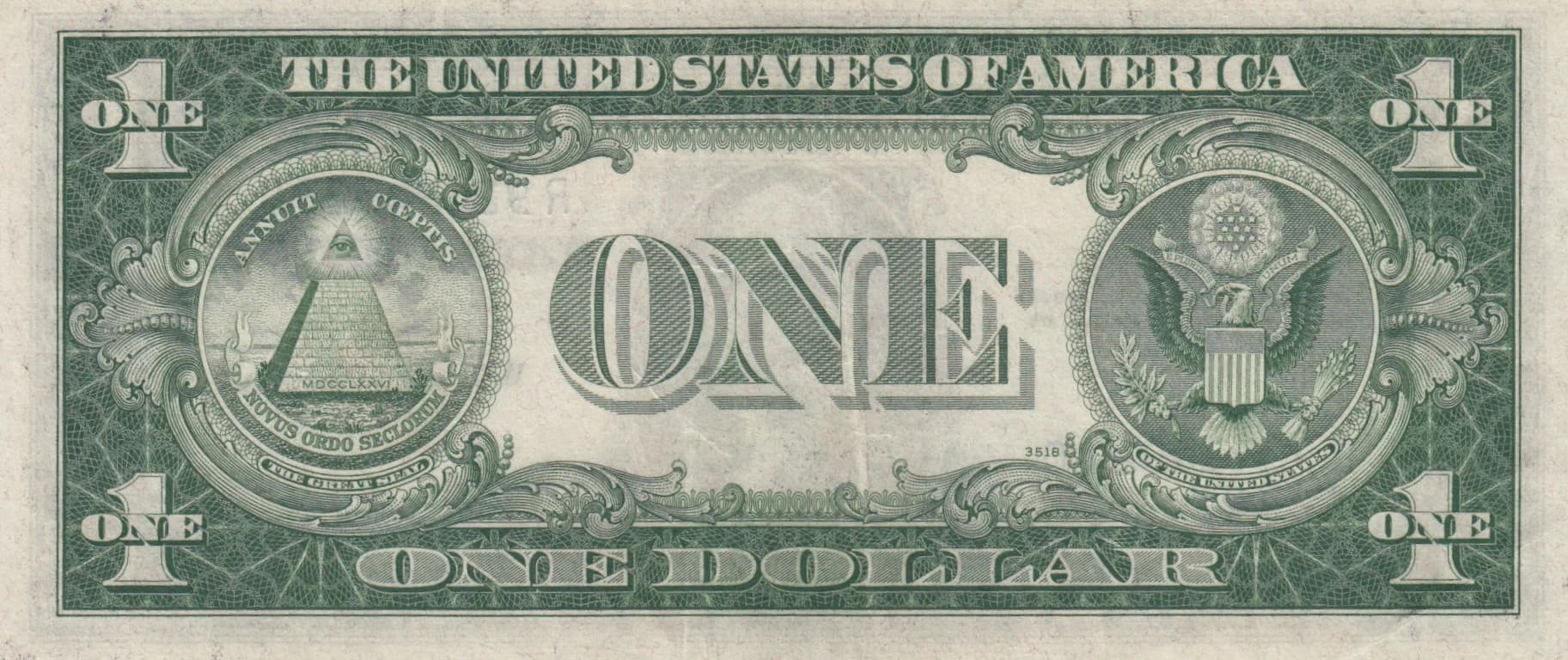
This is a Series 1935A One Dollar Silver Certificate in Very Fine condition, featuring the iconic portrait of George Washington in an ornate oval frame on the obverse. The note displays characteristic features of mid-1930s U.S. currency design with excellent preservation, showing only light aging consistent with its age and no significant wear, creases, or tears. The reverse showcases the Great Seal of the United States with its distinctive pyramid and eagle emblems, making this a desirable example of an important transitional series in American currency history.
Common. The Series 1935A One Dollar Silver Certificate was produced in very large quantities throughout the late 1930s and early 1940s and remains readily available in the secondary market. While this specific note appears to be in excellent Very Fine condition, Series 1935A Silver Certificates are among the most frequently encountered U.S. currency notes of the period, with millions still in existence in various grades. Notes of this type typically command modest premiums over face value in VF condition, rarely exceeding $10-20 for standard examples, confirming their common status despite their historical significance.
The Series 1935A Silver Certificate represents a pivotal moment in American monetary policy during the New Deal era under President Franklin D. Roosevelt. The note's inscriptions referencing Secretary of the Treasury Henry Morgenthau Jr. and the promise of 'silver payable to the bearer on demand' reflect the United States' attempt to maintain confidence in currency backed by precious metals during the Great Depression. This series marked one of the last major issues of Silver Certificates before the Treasury Department gradually reduced silver backing and eventually discontinued the program in 1968.
The obverse features a formal portrait of George Washington, the first President of the United States, rendered in classical style within an ornate oval frame surrounded by decorative scrollwork and corner medallions. The reverse displays the dual imagery of the Great Seal of the United States: on the left, the pyramid with the All-Seeing Eye representing the unfinished work of the nation, and on the right, the eagle (reverse of the seal) symbolizing strength and sovereignty. The design employs symmetrical Art Deco-influenced ornamentation with fine line work, flourishes at top and bottom of the obverse, and numerals '1' integrated into the corner designs on the reverse. The color scheme features black and gray tones on the front with the distinctive gold/yellow seal, while the reverse employs green ink in the traditional manner of U.S. currency.
FRONT: 'ONE' (denomination); 'SILVER CERTIFICATE' (note type); 'THIS CERTIFIES THAT THERE IS ON DEPOSIT IN THE TREASURY OF THE UNITED STATES OF AMERICA' (legal declaration); 'THIS CERTIFICATE IS LEGAL TENDER FOR ALL DEBTS, PUBLIC AND PRIVATE' (legal tender clause); 'ONE DOLLAR' (denomination spelled out); 'R 92434923 C' (serial number); 'WASHINGTON, D.C.' (place of issue); 'SERIES 1935 A' (series designation); 'McFarlane' (Comptroller of the Currency signature); 'Henry Morgenthau Jr.' and 'Secretary of the Treasury' (Treasury official signature); 'L 5692' (plate number); 'SILVER PAYABLE TO THE BEARER ON DEMAND' (silver redemption promise). BACK: 'THE UNITED STATES OF AMERICA' (country name); 'ONE' (denomination); 'ONE DOLLAR' (denomination spelled out); '3518' (plate or reference number).
Intaglio engraving (also known as line engraving or steel plate engraving), the primary method used for U.S. currency production by the Bureau of Engraving and Printing. The visual analysis reveals the characteristic fine line work, multiple layers of intricate detail, and ornate engraving patterns throughout that are hallmarks of intaglio technology. This labor-intensive process involved engraving designs into hardened steel plates, which were then used to transfer ink under high pressure, producing the distinctive sharp lines, subtle tonal variations, and three-dimensional quality visible in the note's preserved condition.
This note bears the signatures of W.A. Julian (Comptroller of the Currency, listed as 'McFarlane' in the visual analysis transcription—likely 'Julian') and Henry Morgenthau Jr. (Secretary of the Treasury), which is characteristic of Series 1935A notes from the mid-to-late 1930s. The serial number R 92434923 C and plate number L 5692 provide specific identification for this individual note. Series 1935A exists with multiple signature combinations and various plate numbers, but all represent standard-issue varieties of this common series. No overprints, star notes, or other exceptional markings are noted in the visual analysis.