5 dirhams 1973
Market Prices
77 salesAbout This Note
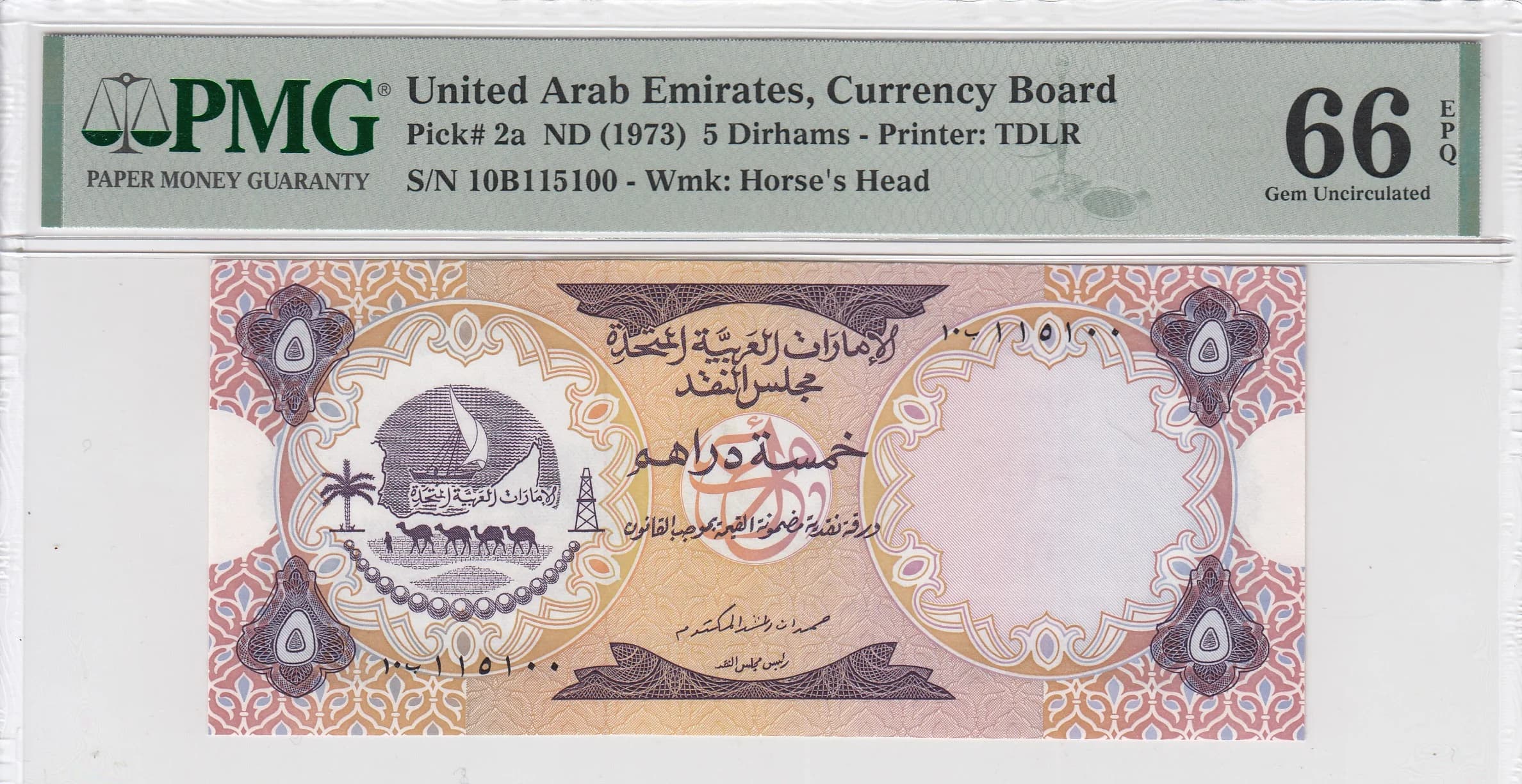
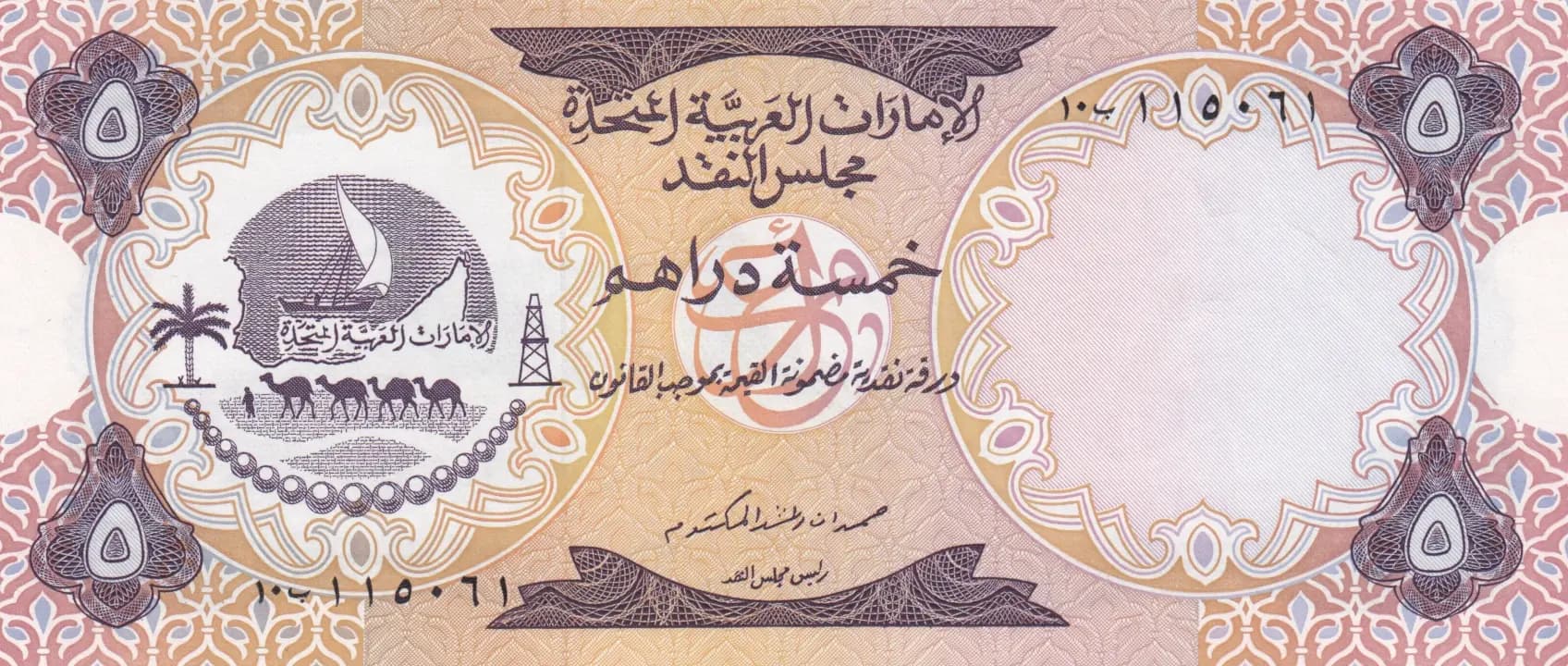
This is an uncirculated example of the scarce 1973 UAE 5 Dirham note (Pick P-2), issued by the United Arab Emirates Currency Board shortly after the nation's formation. The note displays pristine condition with crisp paper, sharp engraving, and no signs of wear or circulation. The front features an iconic desert scene with oil derrick, palm tree, and camel caravan within an ornate oval medallion—symbolic imagery celebrating the UAE's petroleum wealth and Bedouin heritage during its critical formative decade.
Scarce to uncommon. While this note is over 50 years old and from the first currency issue of a newly formed nation, it is not rare. eBay market data shows specimens in lower grades (F-VF) consistently sell in the $10-20 range, with UNC examples fetching $75-177 historically. The print run appears to have been substantial enough for this denomination to be available to collectors, but the 1973 series is more difficult to find than later issues. The scarcity is moderate—typical for a first-issue commemorative banknote from a small nation, but not approaching 'rare' territory given current market availability.
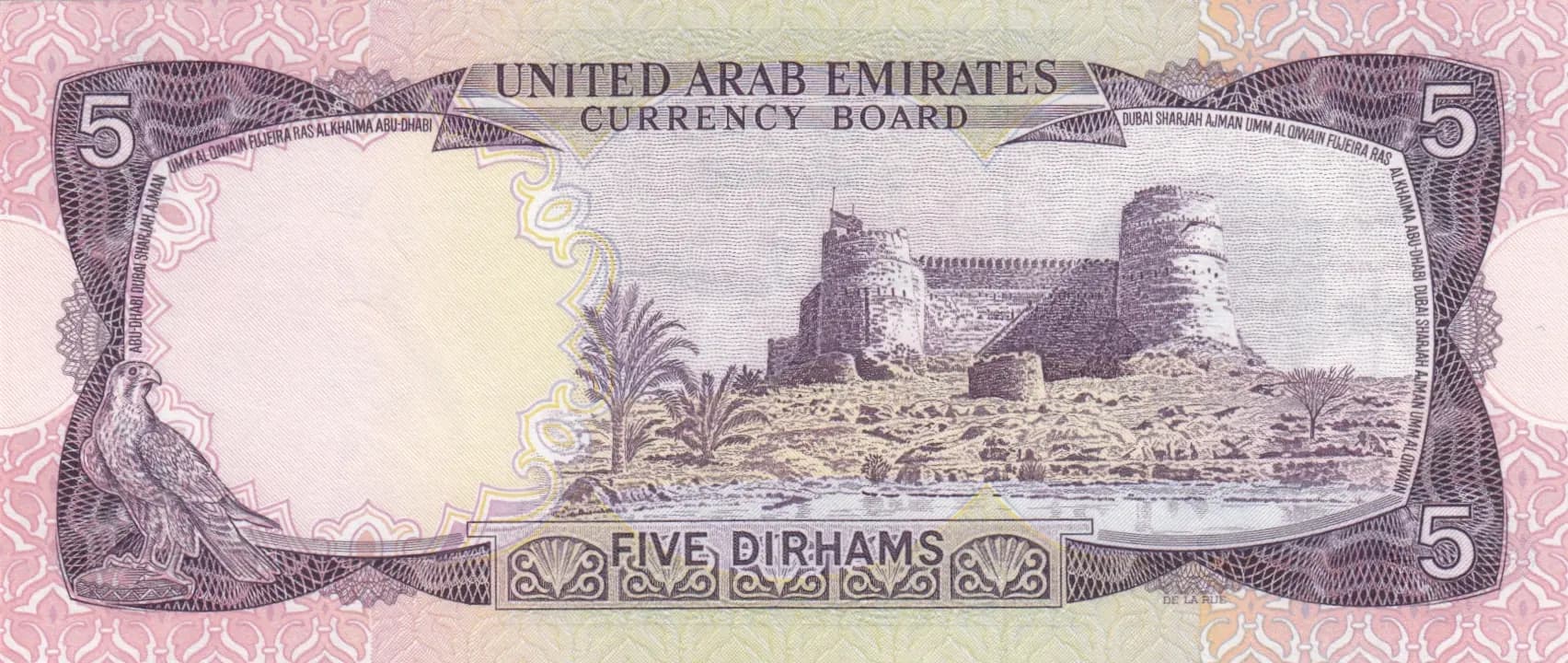
This banknote commemorates the United Arab Emirates Currency Board's first issue in 1973, just two years after the federation's establishment in 1971. The imagery—combining the oil derrick representing modernization and petroleum wealth with traditional desert elements (camels, palm trees)—reflects the UAE's rapid transformation during the oil boom era. The reverse features Fujairah Fort, one of the seven emirates' historic fortifications, connecting the nation's traditional maritime and defensive heritage to its new unified identity.
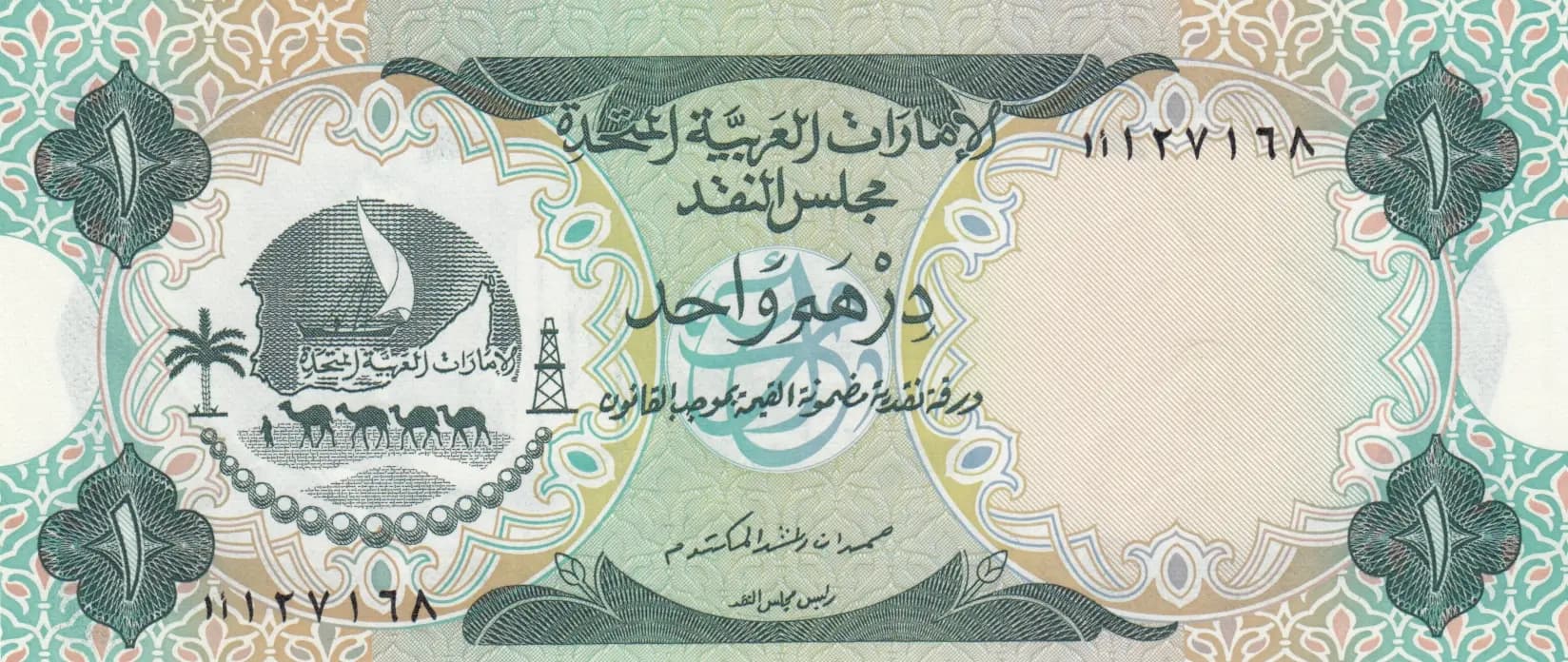
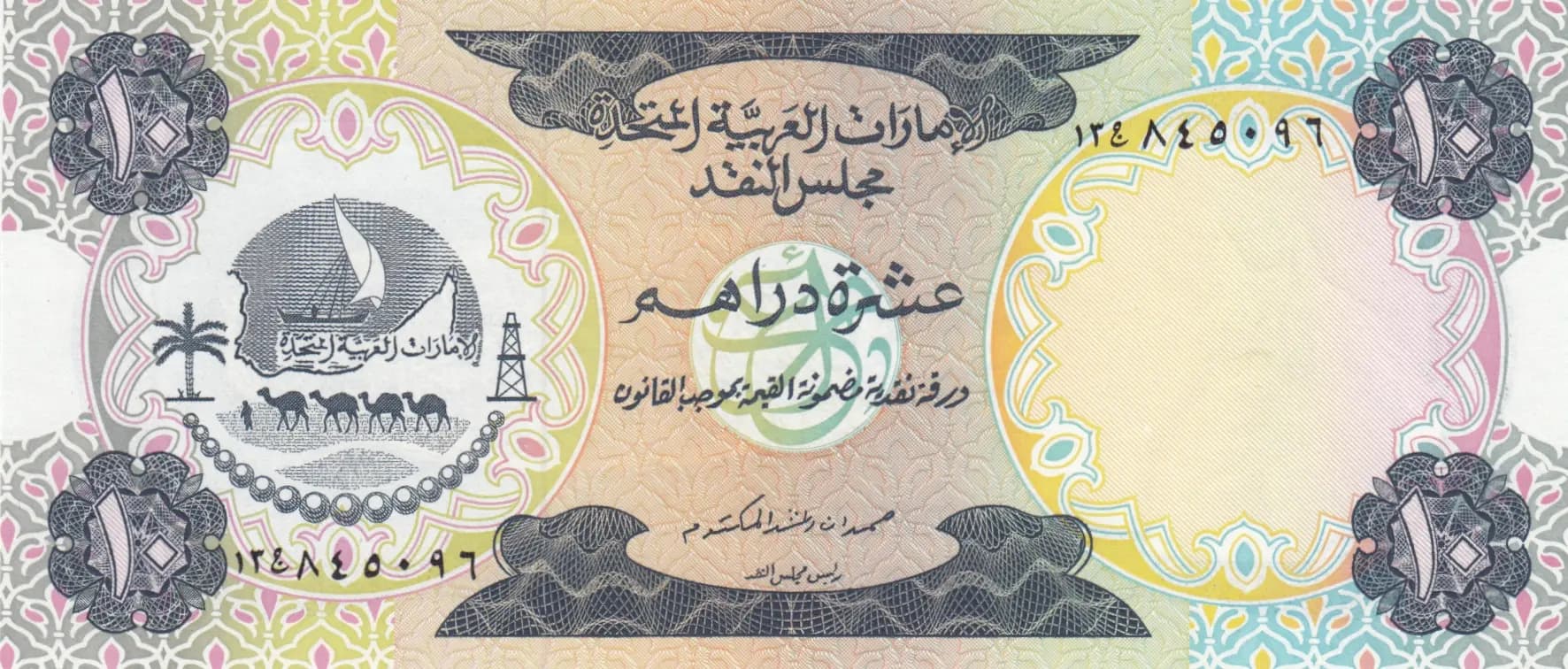
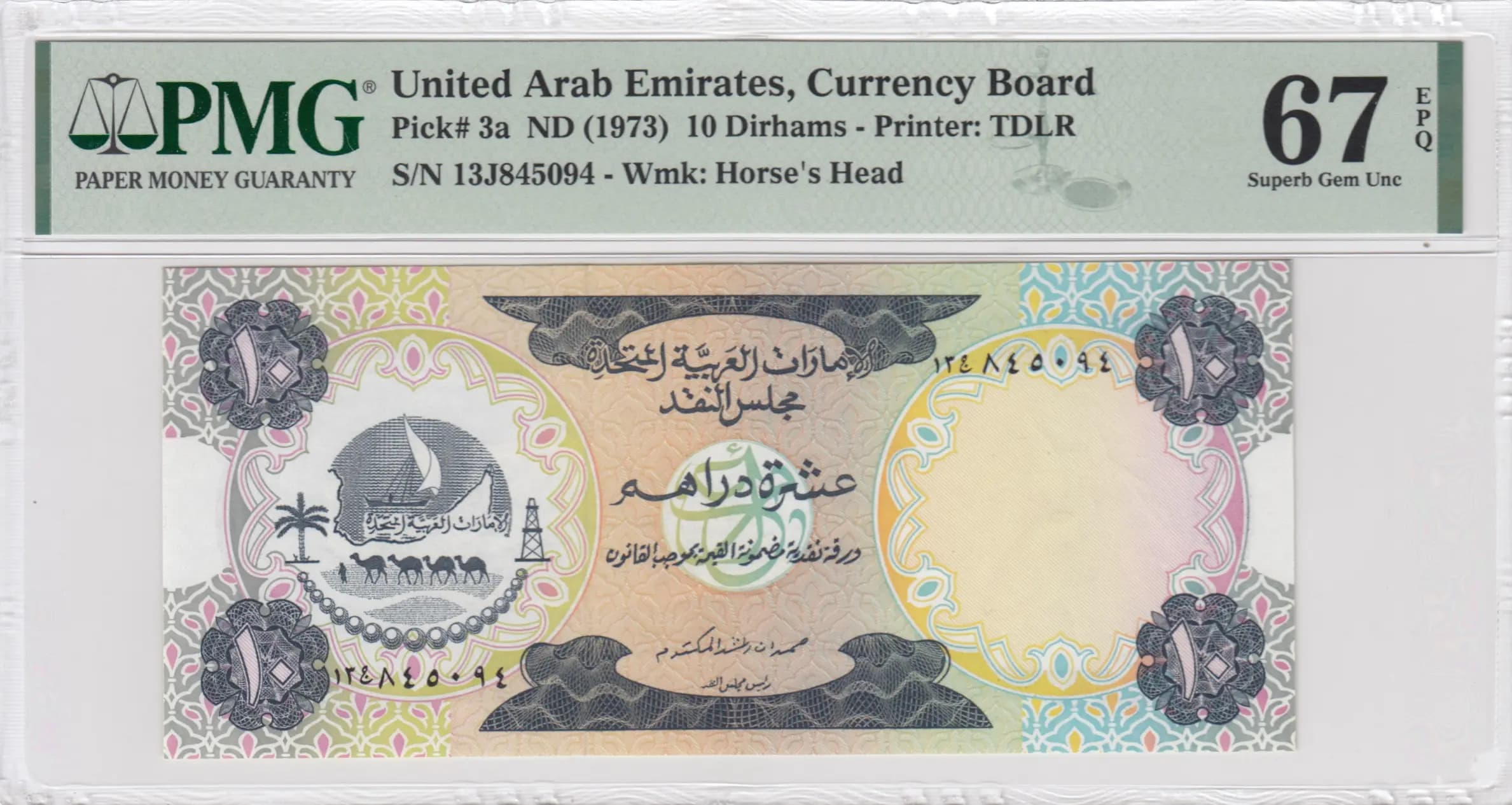
The obverse features a striking central oval medallion containing a desert landscape symbolizing the UAE's heritage: a prominent oil derrick (representing the petroleum industry driving national development), a tall palm tree, and silhouettes of a camel caravan in traditional formation. The medallion is framed by a pearl-like circular beaded border in an ornamental style. The entire design is set against a warm beige/tan background with intricate orange and white Islamic geometric patterns forming decorative borders—hallmarks of Arabian artistic tradition. The reverse depicts Fujairah Fort, one of the coastal fortifications of the northern emirates, rendered in fine detail with twin towers and connecting walls overlooking water. A falcon or eagle symbol appears on the left, representing Arabian heritage and the emirates' traditional symbol. Both sides employ bilingual text (Arabic on front, English on back), reflecting the federation's dual cultural identity.
FRONT: Arabic text reads 'إمارات العربية المتحدة مجلس النقد' (United Arab Emirates Currency Board) and 'خمسة دراهم' (Five Dirhams), with 'الإمارات العربية المتحدة' (United Arab Emirates). BACK: English inscriptions include 'UNITED ARAB EMIRATES', 'CURRENCY BOARD', 'FIVE DIRHAMS', and a listing of all seven emirate names: 'ABU DHABI, DUBAI, SHARJAH, AJMAN, UMM AL QUWAIN, RAS AL KHAIMAH, FUJAIRAH'.
Intaglio engraving on banknote paper, printed by De la Rue of London (marked 'TDLR'—Thomas De la Rue). The fine line work visible in the detailed medallion portrait, the crisp geometric patterns, and the precise architectural rendering of Fujairah Fort are characteristic of De la Rue's security printing technology. The watermark features an Arabian horse's head, a sophisticated security feature typical of De la Rue's 1970s-era currency production.
This example corresponds to Pick P-2a (with De la Rue printer mark 'TDLR' visible). The PMG population report indicates multiple varieties exist for this denomination across the 1973 series: P-2a, P-2a*, and P-2s (specimen), suggesting signature variations or other distinguishing features. The specific serial number, any signature variants, and prefix letters should be examined to determine the precise variety within the P-2a classification. This UNC example likely represents the standard P-2a variety with full original crispness.