1 dirham 1973
Market Prices
68 salesAbout This Note
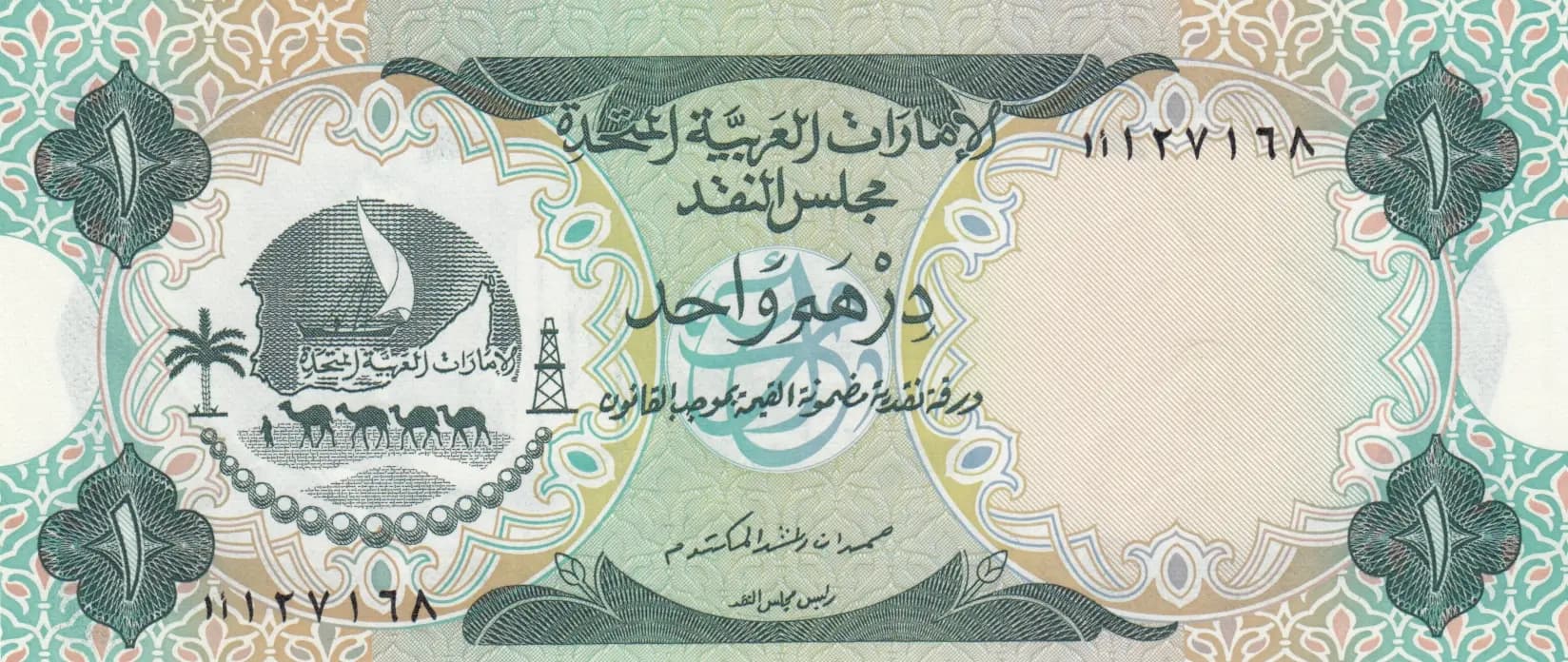
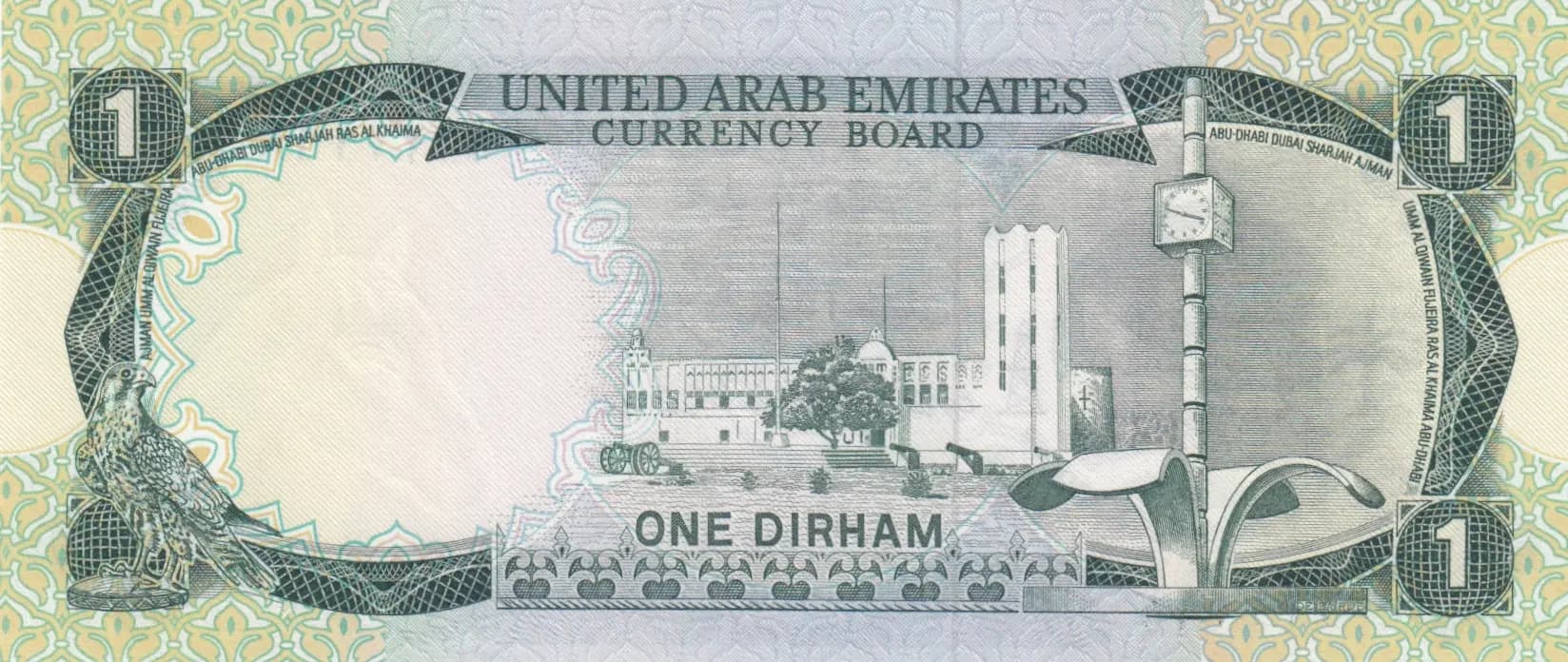
This is the historic first banknote issued by the United Arab Emirates Currency Board in 1973, featuring the iconic turquoise and cream color scheme that defined early UAE currency. The obverse displays an elegant circular vignette with a crescent moon, palm tree, oil derrick, and camel caravan—symbolizing the nation's heritage and modern economy—while the reverse showcases the architectural landmark of Dubai's Police Station with its distinctive clock tower. The note is graded UNC (Uncirculated), displaying excellent preservation with sharp impressions, vibrant colors, and no visible wear, making it a highly desirable example of this foundational issue.
Common. Despite being the inaugural issue of the UAE Currency Board and now over 50 years old, this note remains common in the market. eBay historical sales data shows regular transaction volumes across all condition grades, with UNC examples consistently selling in the $75–$230 range historically, and more recent sales (2023–2026) showing stable pricing around $200–$260 for high-grade examples. Print runs for this foundational issue were substantial, and considerable quantities survive in circulation and collections. The 2019 catalog value of $80 UNC reflects its status as a collectible but readily available issue.
Issued in 1973, just two years after the UAE's independence, this 1 Dirham note represents the nation's first monetary independence and the establishment of its central banking authority. The imagery deliberately juxtaposes traditional Emirati symbols—the crescent moon and camel caravan—with symbols of modernization and petroleum wealth, such as the prominent oil derrick, reflecting the UAE's rapid transformation during the early post-independence period. The architectural focus on Dubai's Police Station and clock tower on the reverse underscores the significance of Dubai as an emerging regional hub during this formative era of nation-building.
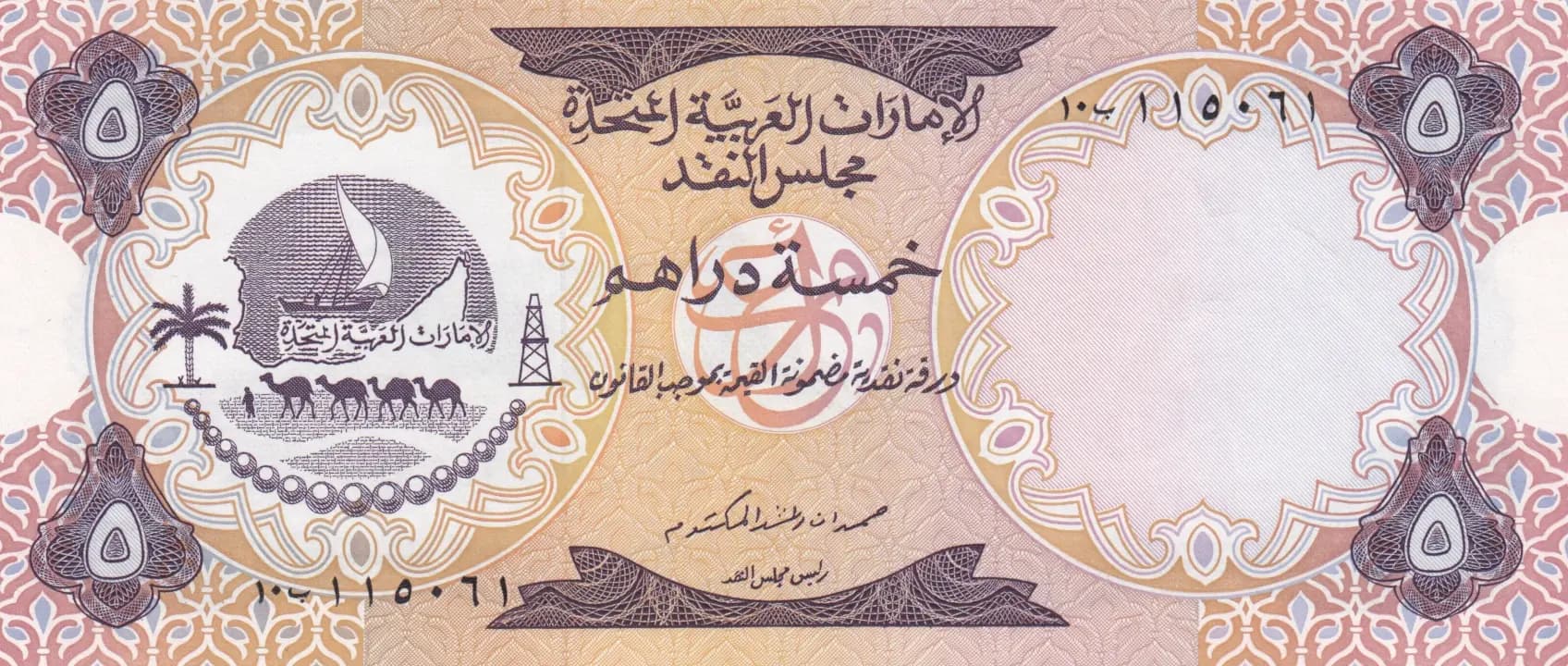
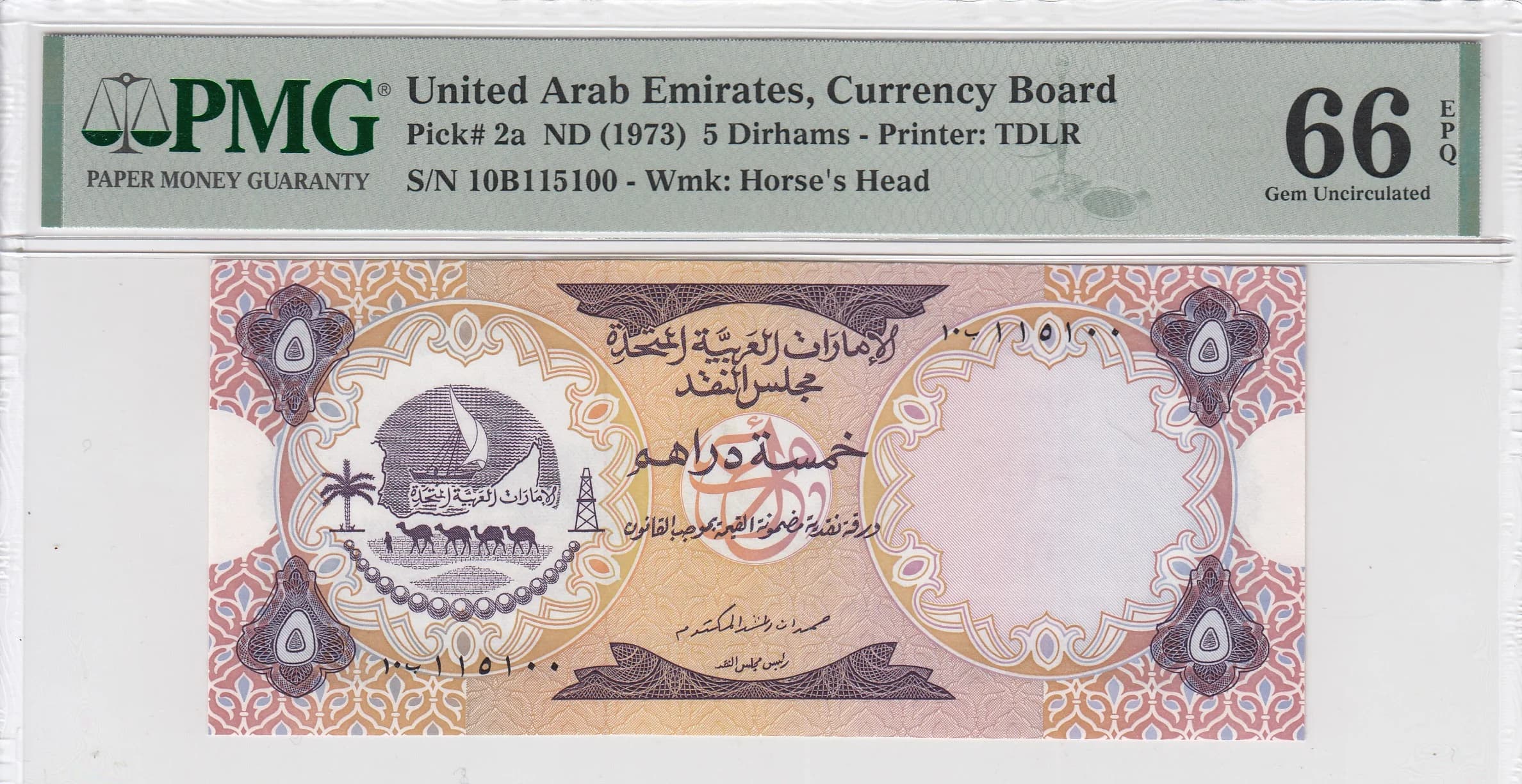
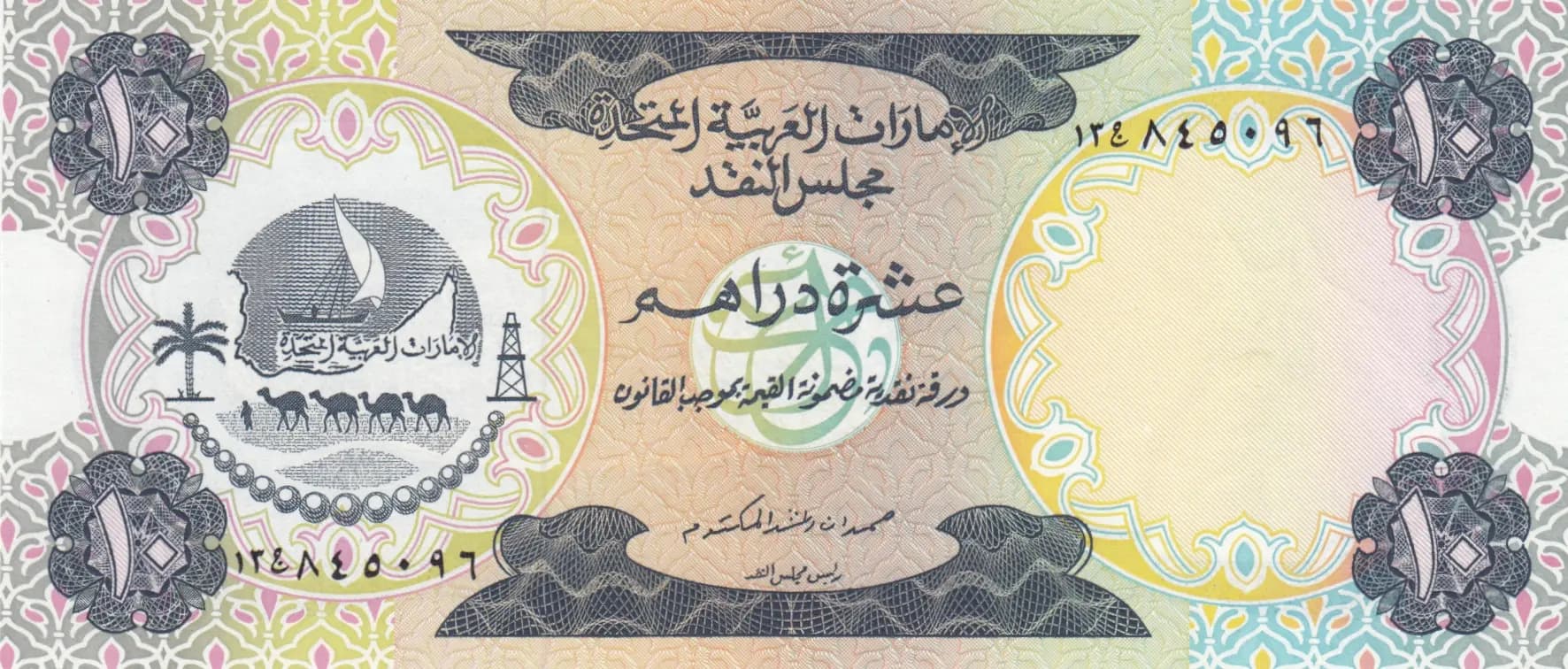
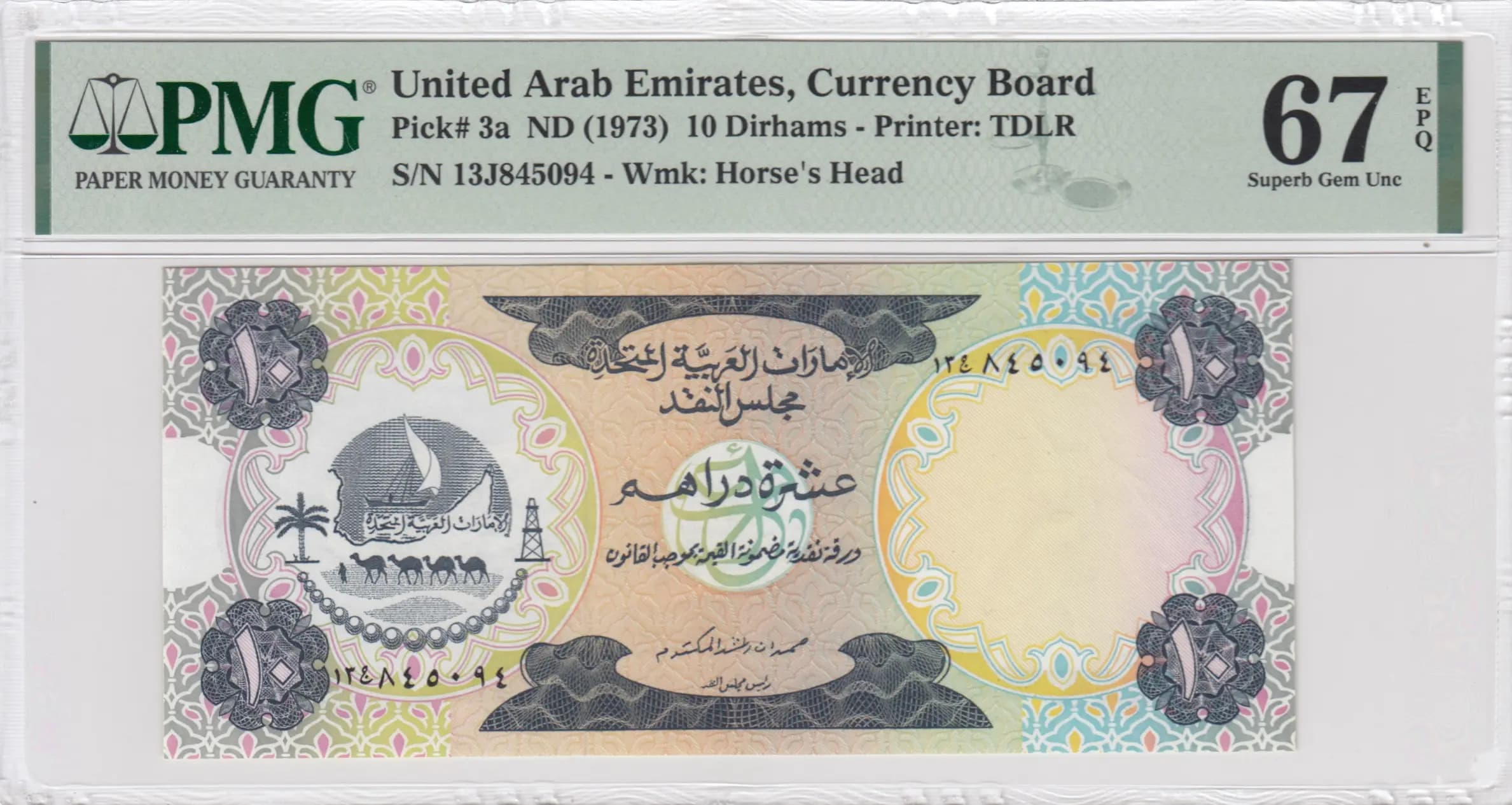
The obverse features an intricately engraved circular vignette positioned at the left side, enclosed by a decorative pearl border, depicting a crescent moon with a landscape background, a traditional palm tree, a modern oil derrick symbolizing petroleum production, and a silhouetted caravan of camels traversing the composition. The design is rendered in turquoise, cream, and beige tones with ornate Islamic geometric patterns and floral motifs in the corners and margins, reflecting traditional Islamic artistic conventions. The reverse displays a detailed black-and-white architectural engraving of a significant building complex—the Dubai Police Station—featuring twin towers or minarets flanking a domed central structure, with a prominent clock tower on the right side. A national falcon or eagle emblem is engraved on the left side, symbolizing UAE sovereignty. The note incorporates bilingual text (Arabic and English) and includes the names of the four original emirates along the margins.
Front: 'إمارات العربية المتحدة' (United Arab Emirates), 'مجلس النقد' (Currency Board), 'درهم واحد' (One Dirham), '١٩٧٣' (1973), with serial number '١١٢٧١٦٨'. Back: 'UNITED ARAB EMIRATES', 'CURRENCY BOARD', 'ONE DIRHAM', with marginal text listing 'ABU-DHABI DUBAI SHARJAH AJMAN' (the constituent emirates). Decorative numerals '1' appear in the corners of the reverse.
Intaglio (engraving) printing, executed by De la Rue, London, the world's leading currency printer. The note exhibits fine line work, complex geometric security patterns, and multi-layer color printing characteristic of high-security banknote production. The intricate vignettes, detailed architectural rendering, and decorative borders demonstrate the sophisticated security engraving techniques typical of De la Rue's work during this period.
This example corresponds to Pick-1a, the primary variety with De la Rue (TDLR) printer mark. PMG records document additional varieties including P-1a* (starred notes, likely replacements) and P-1s (specimen notes). Serial number '11271648' should be verified against known ranges for this variety. The visual analysis confirms the presence of the TDLR printer attribution mentioned in catalog sources. No overprints or unusual variations are evident in this specimen.