50 karbovantsev 1918
Market Prices
30 salesAbout This Note
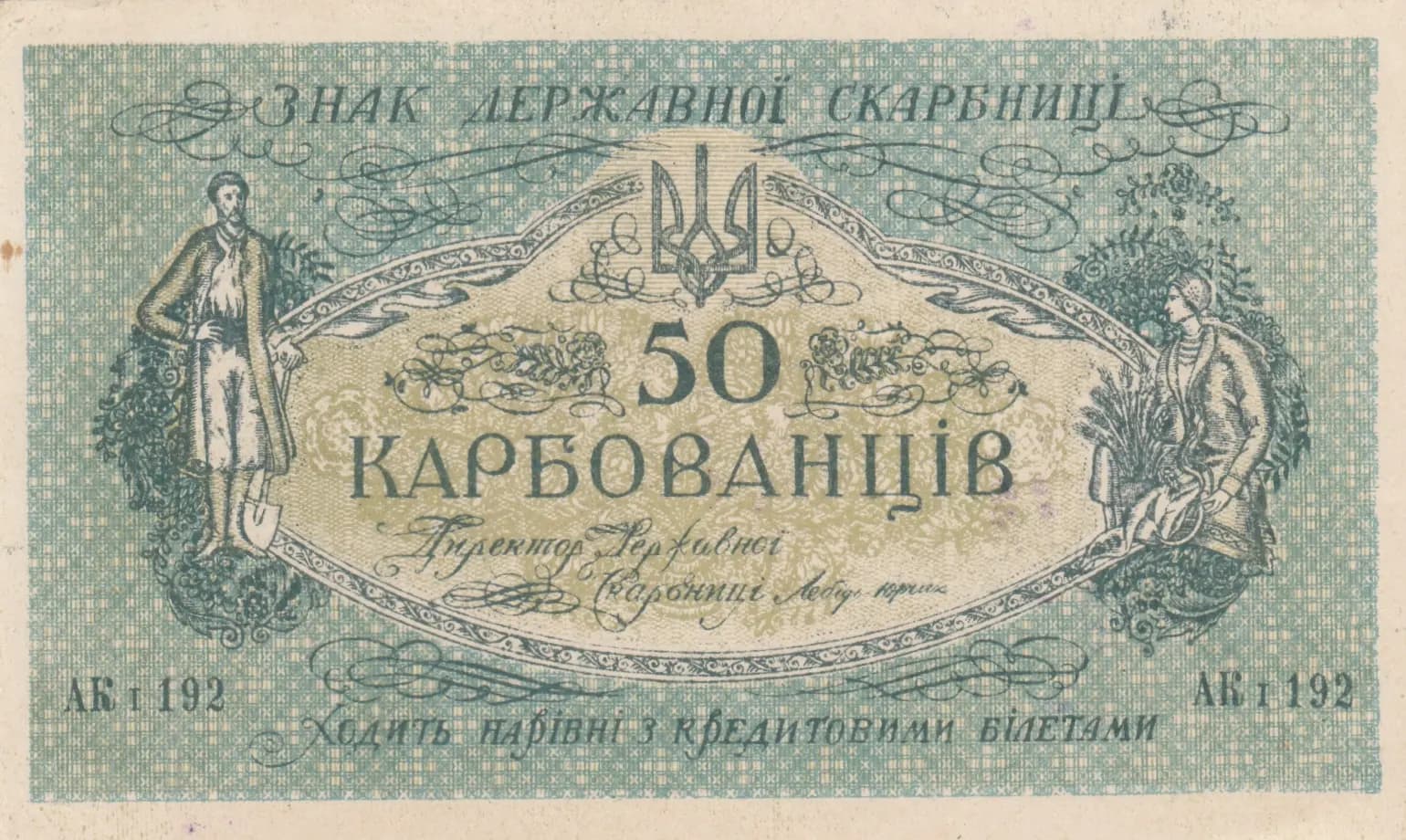
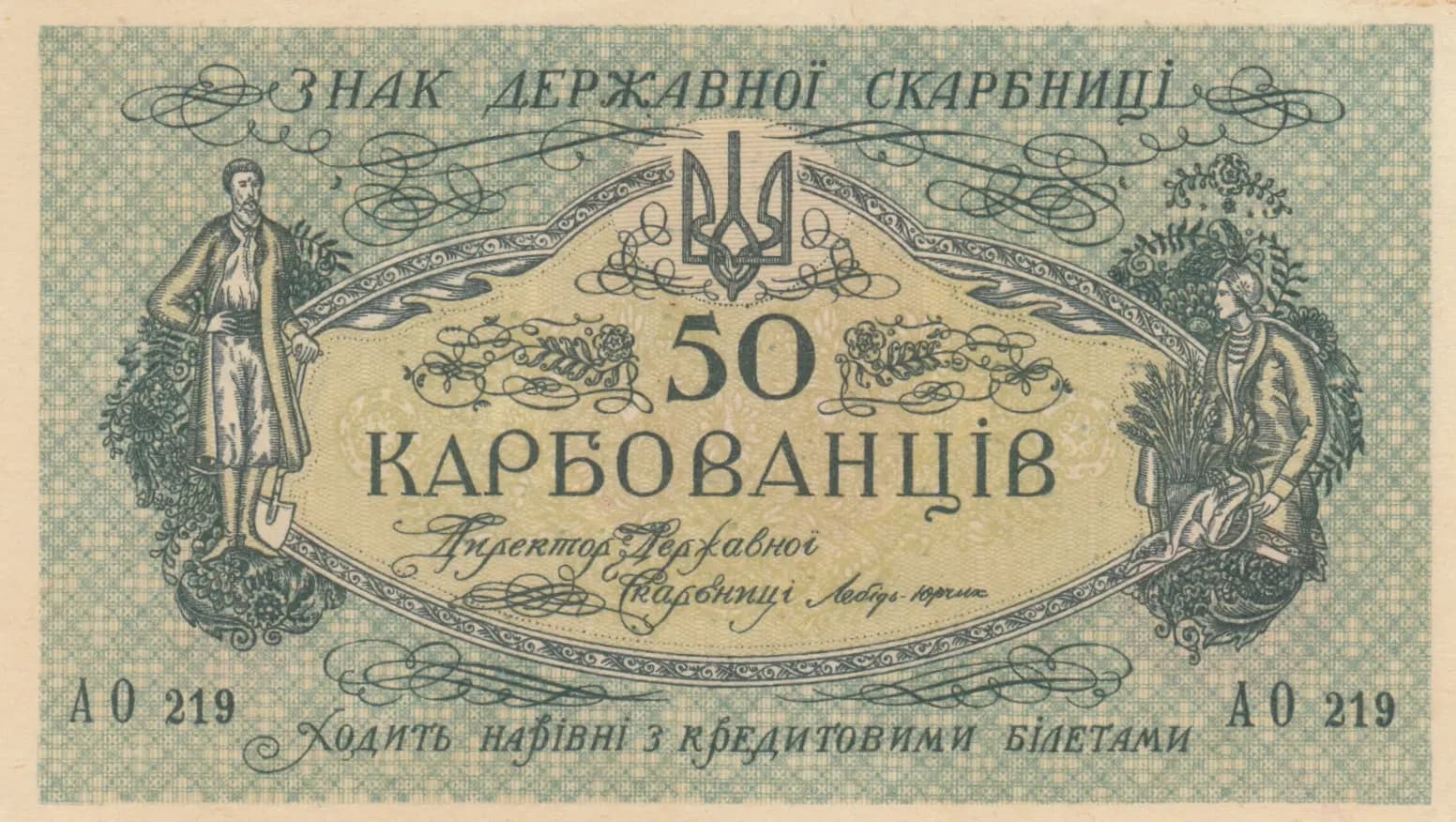
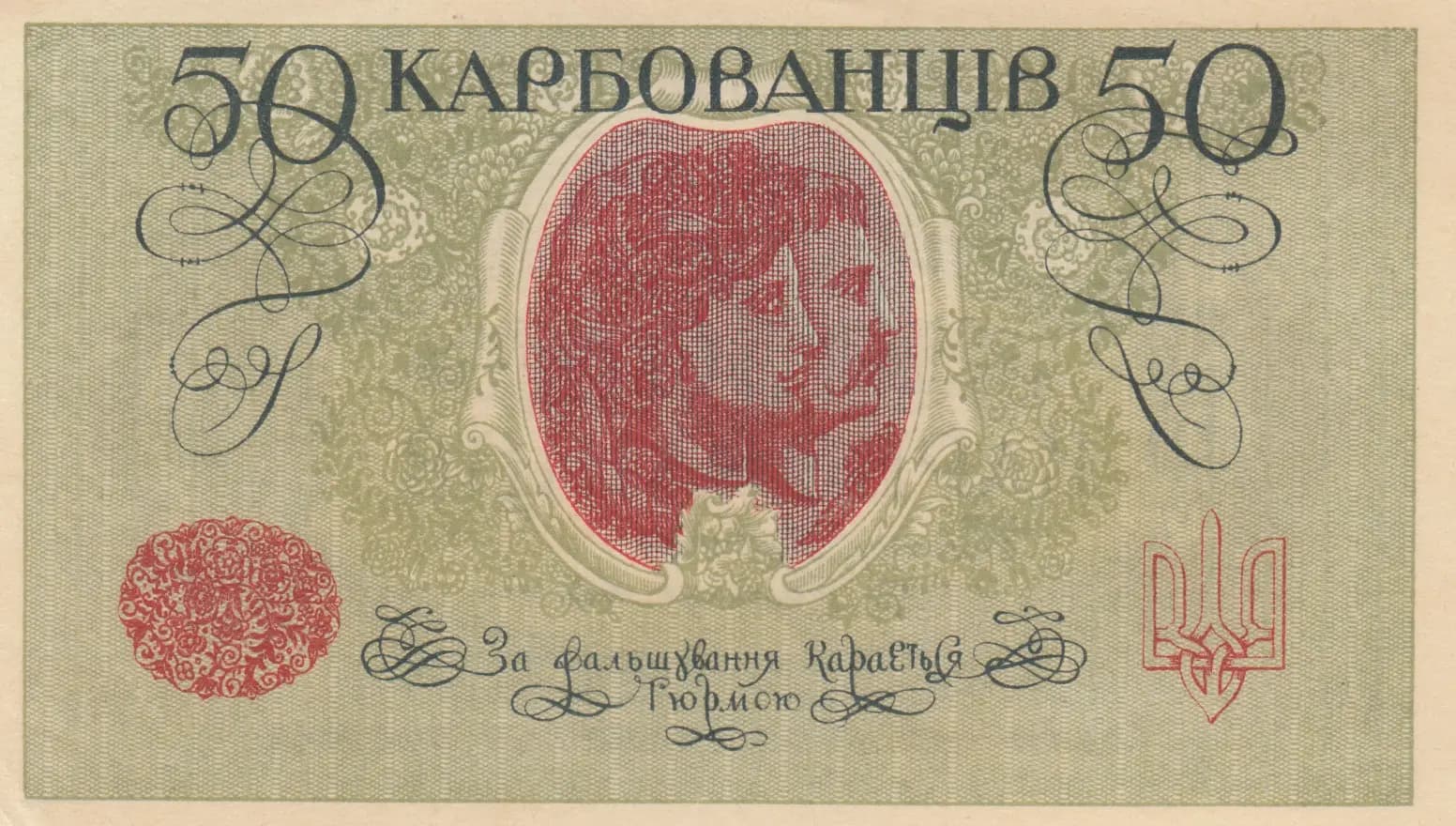
This is an AU-graded 1918 Ukrainian 50 Karbovantsev note issued during the Russian Civil War period by General Denikin's forces in Odessa. The note displays exceptional preservation with sharp printing, crisp margins, and no visible wear—a premium example of this scarce Civil War-era currency. The ornamental design features a striking dual-figure composition on the obverse with a central Ukrainian trident medallion, while the reverse showcases a portrait in red/crimson tones, exemplifying the fine engraving work characteristic of this issue.
Common. While these notes are from the Russian Civil War period and represent a short-lived Denikin-era authority, eBay market data shows consistent availability with prices in the $5-$60 range depending on grade and PMG certification. AU-graded examples have sold in the $10-$20 range without PMG certification and up to $122.50 when PMG graded as 63. The presence of multiple variants (P-6a and P-6b Odessa issues) in the PMG population report and the regular appearance of examples in the secondary market indicate these are not rare, though superior condition examples command modest premiums.
This banknote was issued in 1918 during the Russian Civil War when General Anton Denikin's White Army forces controlled southern Ukraine, with this specific Odessa variant representing the regional authority's attempt to establish independent financial control. The prominent Ukrainian trident symbol on both the obverse and reverse reflects the sovereignty aspirations of the period, while the inscription referencing the State Treasury (Знак Державної Скарбниці) emphasizes legitimacy during a time of political fragmentation. The note's existence testifies to the short-lived nature of these regional authorities before their eventual collapse by 1920.
The obverse presents an allegorical composition with male and female figures in formal dress flanking a central oval medallion containing the Ukrainian national trident (Тризуб). The design employs an ornamental border framework with flourishing scrollwork and botanical elements in the corners, rendered in light green and cream/beige tones with dark gray/black engraving lines. The reverse features a male profile portrait in red/crimson within an oval frame against the same light green background, with the trident symbol repeated in the lower right and a red circular decorative ornament in the lower left. The color scheme of red and green across both sides serves both aesthetic and security purposes, typical of the engraving standards maintained during the Russian Civil War period.
FRONT: 'ЗНАК ДЕРЖАВНОЇ СКАРБНИЦІ' (Sign of State Treasury); '50 КАРБОВАНЦІВ' (50 Karbovantsev); reference to 'Тимчасової Рядової Карбованці' (Temporary Regular Karbovantsev); 'Хочить нарівні з кредитовими білетами' (Equivalent to credit notes); Serial indicator 'А О 219' (block letters AO with serial number). BACK: '50 КАРБОВАНЦІВ 50' (50 Karbovantsev 50); Warning inscription 'За фальшування Карбованців' (For counterfeiting Karbovantsev—indicating legal penalties for counterfeiting).
Intaglio engraving (line engraving) on paper stock, evidenced by the fine detail work, sharp line definition, and the impressed quality visible in the portrait and border elements. The multi-color design employs separate color plates for the green background, red accent elements, and black/dark gray engraving, consistent with high-security banknote production standards of the 1918 period. The ornamental borders and scrollwork show the characteristic crisp detail and precise registration expected of professional security printing operations serving governmental authorities during this era.
This is cataloged as P-6b, the Odessa issue variant of the 50 Karbovantsev, distinguished from P-6a (also Odessa) and P-4 (Kiev issue with different block letter prefixes AKI or AKII). The observed serial indicator 'А О 219' confirms the 'AO' block letter prefix characteristic of the P-6b Odessa variant. Pick also notes that similar notes without block letters exist. The two-variant cataloging for the base Pick number (P-6a and P-6b both Odessa) reflects production or administrative distinctions within the same printing, though distinguishing characteristics between variants are not fully specified in standard references.