50 karbovantsev 1918
Market Prices
14 salesAbout This Note
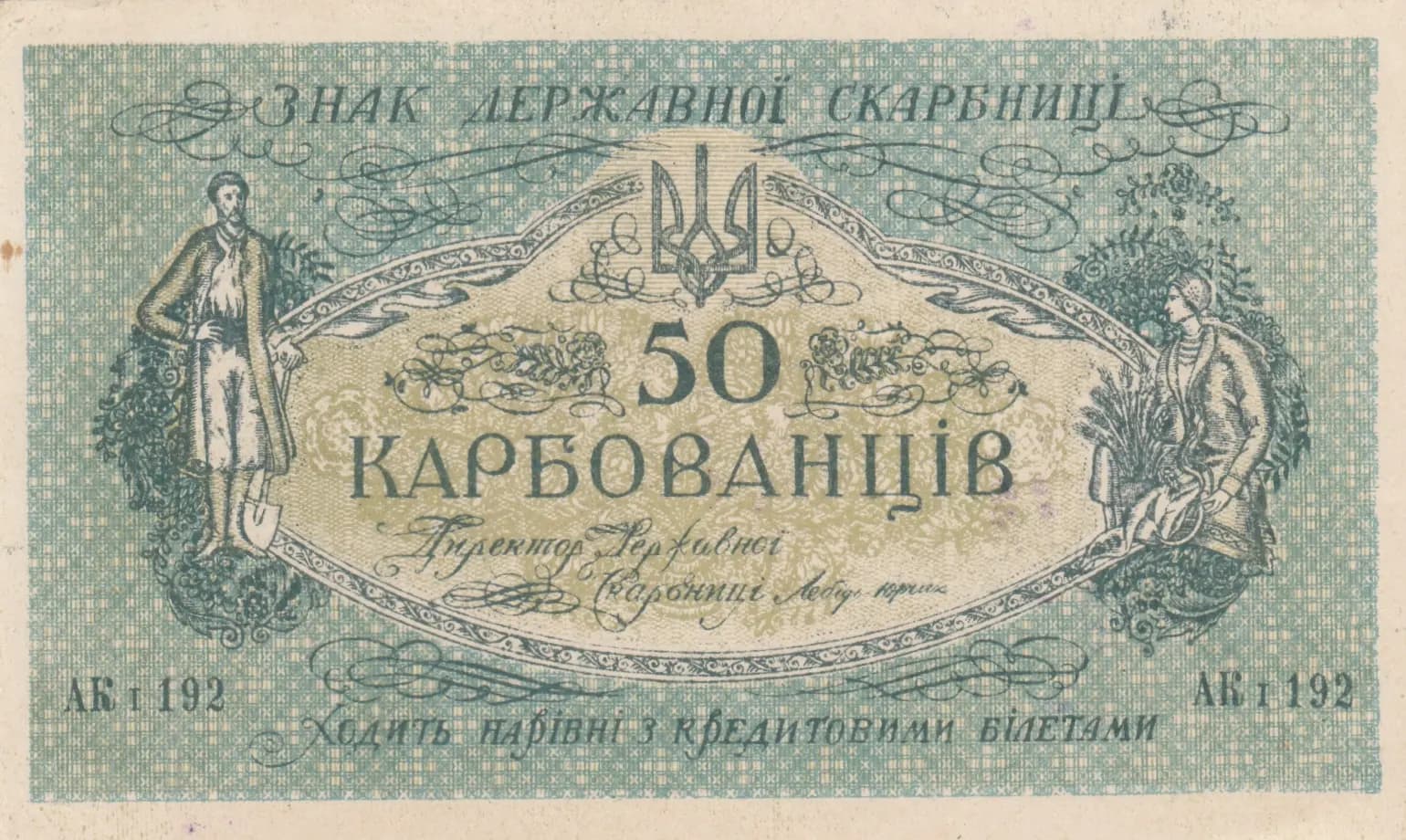
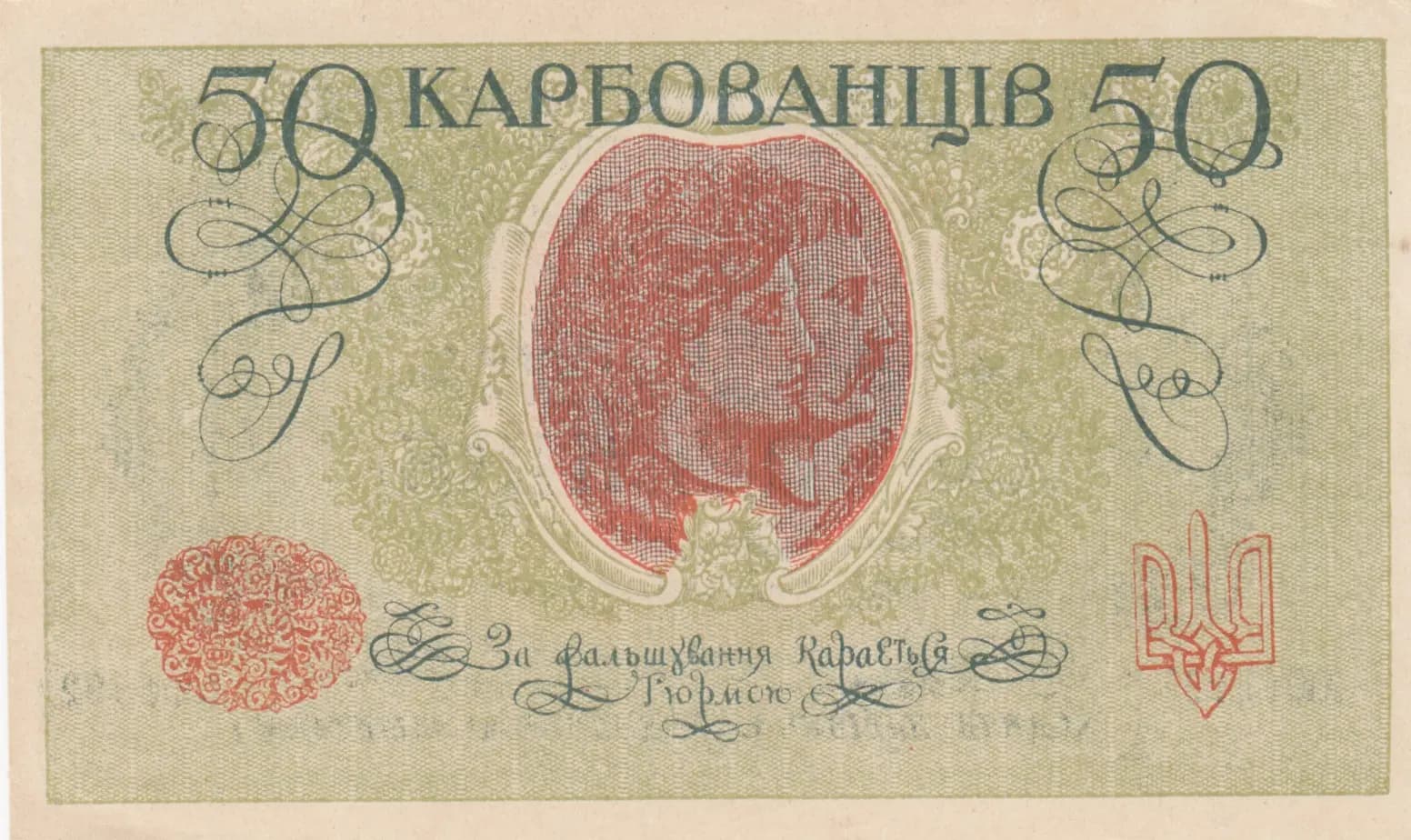
This Ukrainian 50 karbovantsev note from 1918 represents a fascinating piece of early Soviet-era currency from the brief period of Ukrainian independence. The note displays the characteristic art nouveau styling with ornate borders, allegorical figures representing peasant and civic themes, and the prominent Ukrainian trident (Tryzub) symbol. In AU condition, this example shows age-appropriate patina and foxing consistent with a century-old banknote that has seen moderate circulation, with the reverse side better preserved than the obverse.
Common. The eBay price history provided shows consistent sales across multiple condition grades ranging from $0.99 to $41 across an 8-year period (2009-2024), with most VF examples selling in the $6-$11 range and a 2016 catalog value of $10 for VF. The existence of multiple variant block letter prefixes (AK I, AK II, and AB documented) indicates substantial print runs. This is a standard circulating issue from a known series with no evidence of short print runs, government recall, or extreme scarcity. The AU condition grade specified is somewhat more desirable than average VF examples, but the denomination and type remain common within Ukrainian banknote collecting.
This banknote was issued during 1918 by the Ukrainian State Treasury during the chaotic period of Ukrainian independence following the Russian Revolution and World War I. The peasant couple depicted on the obverse reflects the revolutionary emphasis on agrarian workers and national identity, while the allegorical female figure on the reverse represents abstract concepts of state authority and prosperity. The inscription 'Worth equal to credit notes' indicates this was circulating as a temporary credit instrument during the period of political upheaval and currency instability in Eastern Europe.
The obverse features a turquoise/teal background with an ornate decorative border framing the central design. The Ukrainian trident (Tryzub) appears prominently at the top center as the national symbol. Two historical figures flank the central oval cartouche—a male peasant or laborer on the left wearing period costume with a cape, and a female figure on the right in historical dress, representing the revolutionary ideals of worker and citizen equality. The denomination '50' and 'КАРБОВАНЦІВ' occupy the center with scrollwork and floral ornaments throughout. The reverse presents a pale yellow-green background with a striking red/crimson central oval vignette containing an allegorical female head representing state authority or national prosperity. A red circular ornamental emblem appears on the lower left, with the trident symbol repeated in red on the lower right. The overall composition reflects Art Nouveau influences popular in Central European banknote design of the period.
Front side: 'ЗНАК ДЕРЖАВНОЇ СКАРБНИЦІ' (State Treasury Sign/Mark); '50 КАРБОВАНЦІВ' (50 karbovantsev); 'ХОСТІВ НАРІВНІ З КРЕДИТОВИМИ БИТАМИ' (Worth equal to credit notes); Serial number prefix 'АБ 192' (appears twice). Back side: '50 КАРБОВАНЦІВ 50' (50 karbovantsev 50); 'За фальшування карбатства' (For counterfeiting currency [warning text]). Note: Some cursive text in the front cartouche remains partially illegible in the visual analysis.
This note was produced using traditional intaglio engraving (copperplate printing), evidenced by the fine line patterns, complex scrollwork, and the detailed vignettes visible in both the visual analysis and the banknote's physical characteristics. The multi-color printing (turquoise, red, and black inks) and the quality of the fine crosshatch background textures are consistent with high-security engraved currency production of the period. The specific Kiev issue block letter prefix (AB) suggests this was produced at a Ukrainian printing facility under government control during 1918.
This note is cataloged as P-5a (Kiev issue) with block letter prefix AB 192 visible on the specimen. According to catalog references, the P-5a variety is distinguished by block letter prefixes (AK I and AK II noted for similar Kiev issues), and this AB prefix variant falls within that categorization. Related varieties include P-4 (Odessa issue without block letters), P-6a (Odessa issue with block prefix up to AO 209), and P-6b (General Denikin overprint, considered spurious). The specific block letter prefix should be documented as AB to distinguish from other Kiev issue variants. The serial number 192 within the AB prefix range is consistent with standard production sequences.