1 lire 1916
Market Prices
7 salesAbout This Note
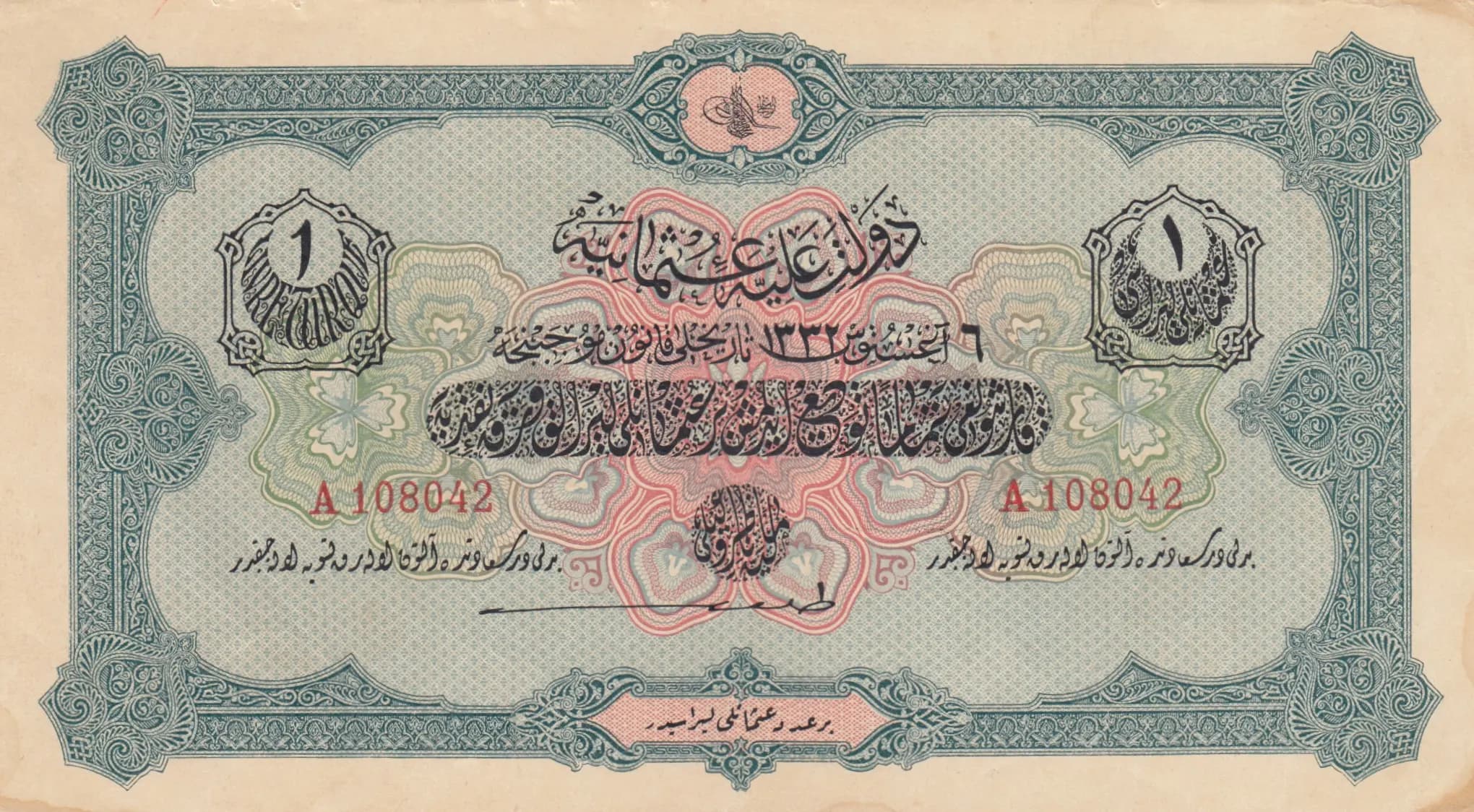
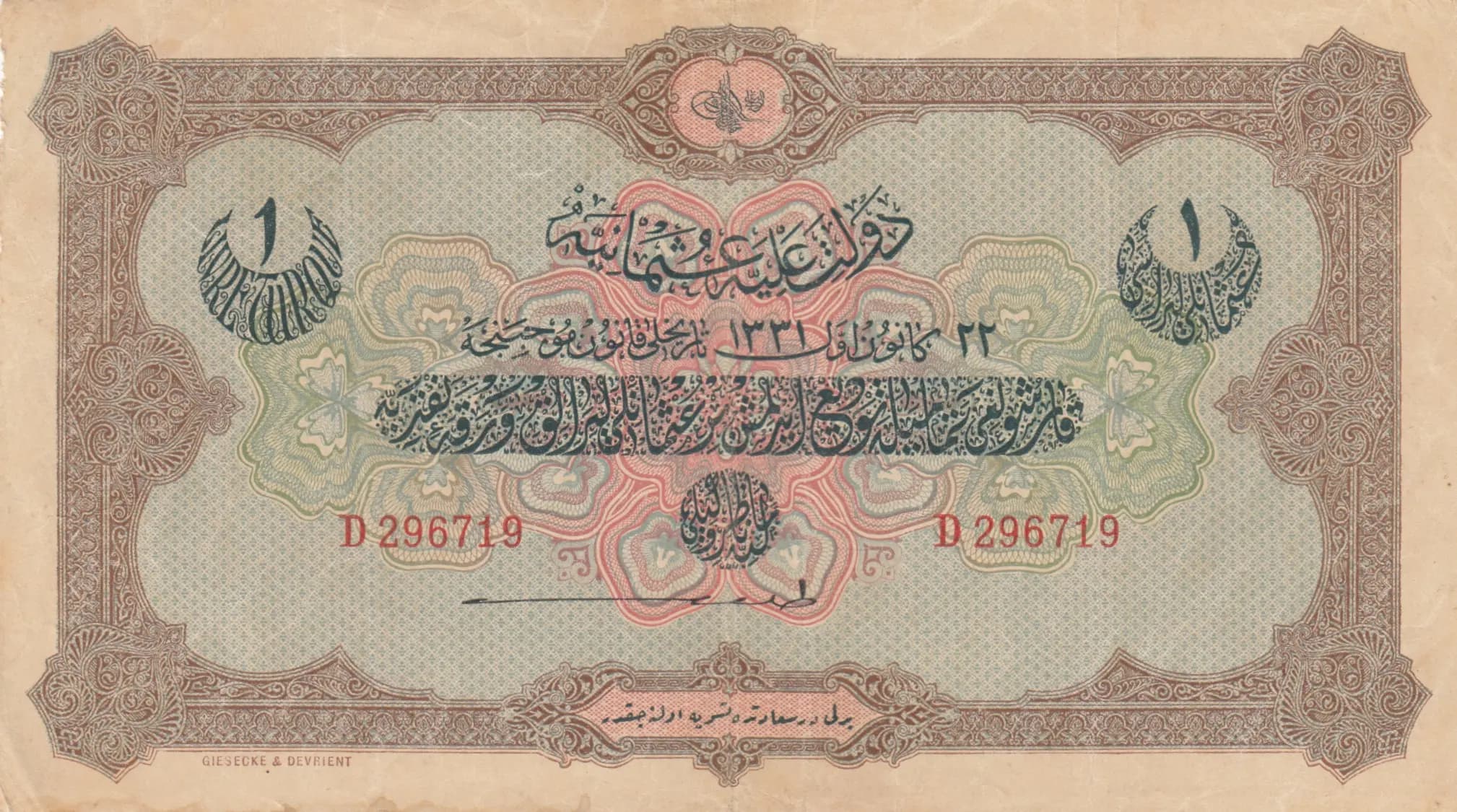
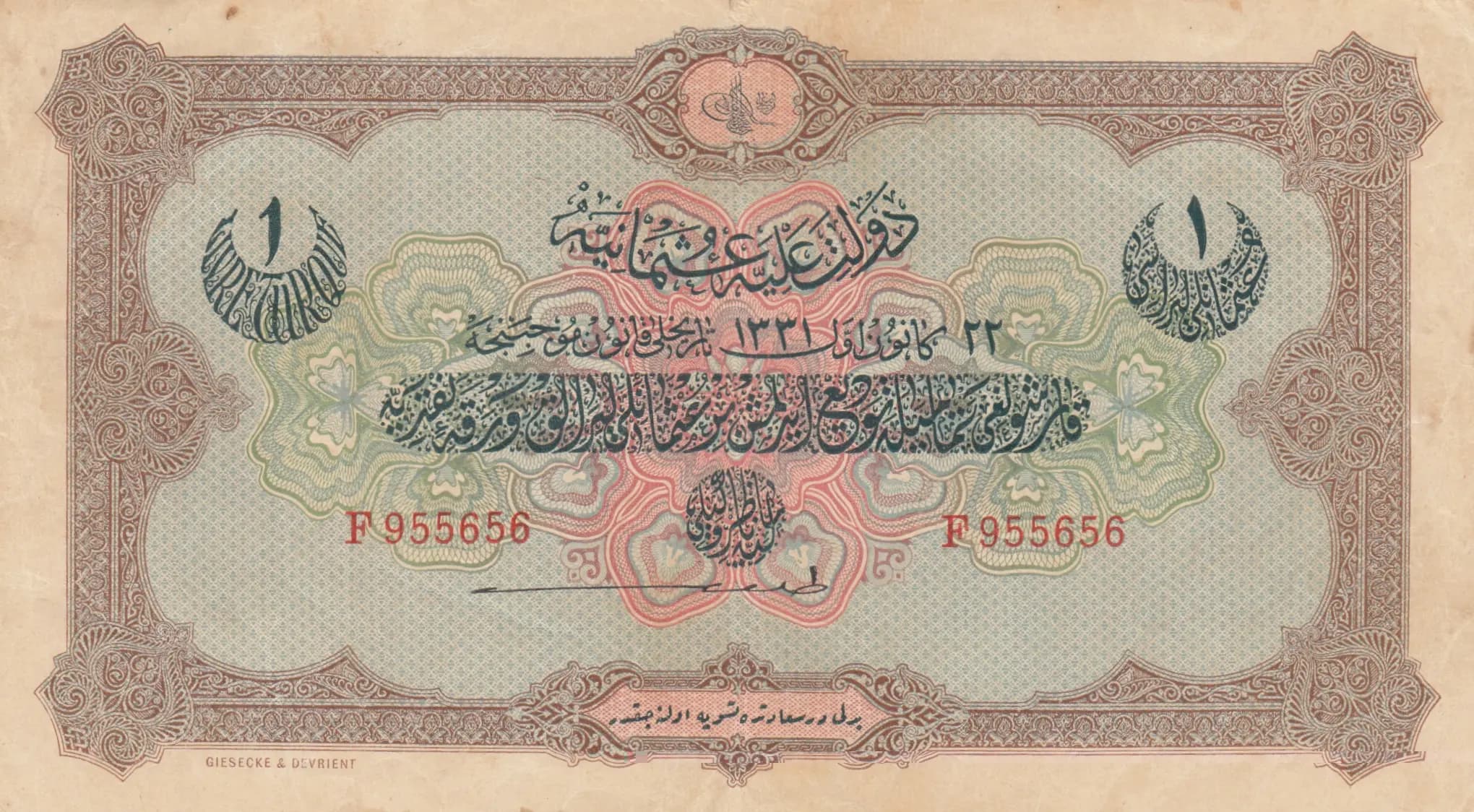
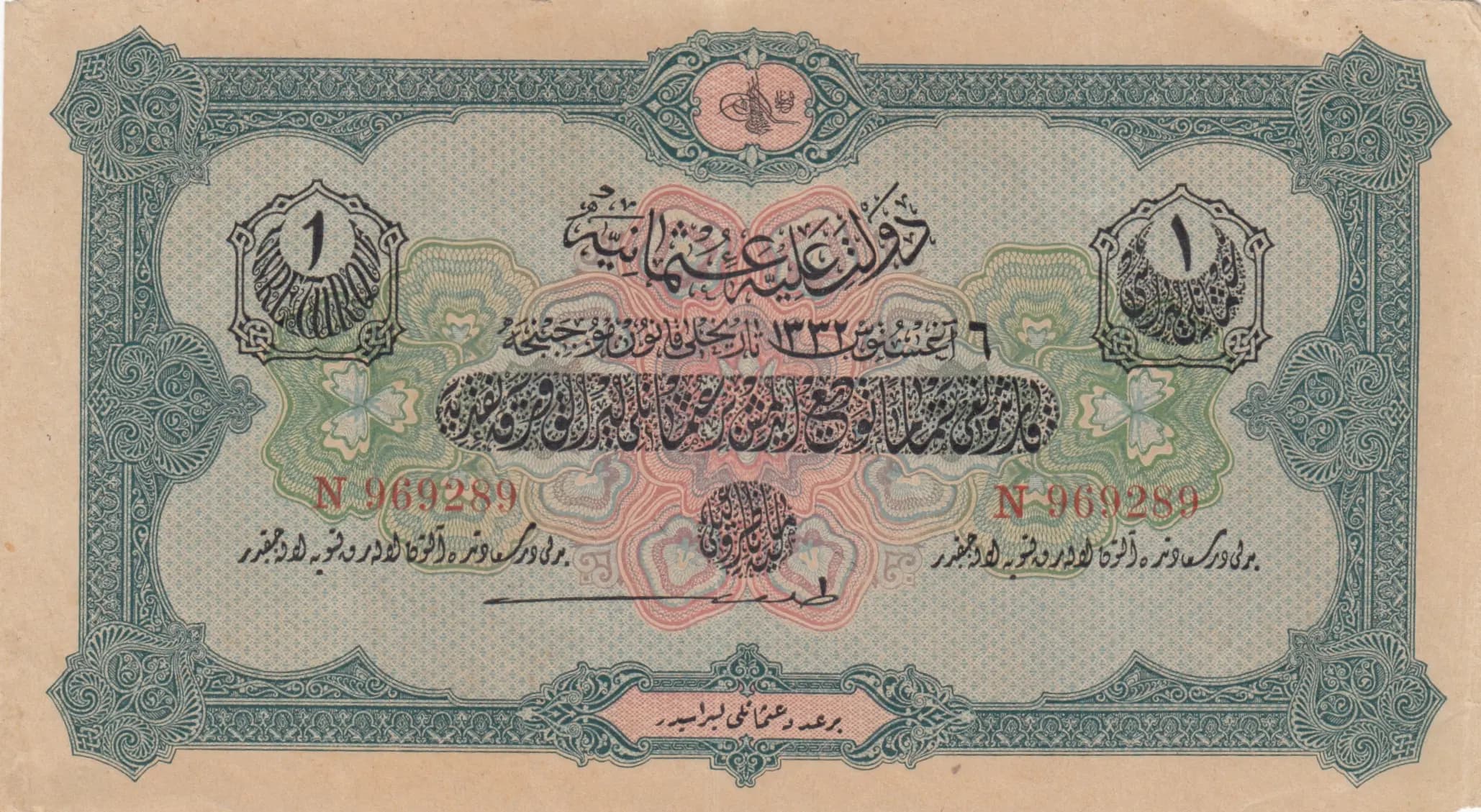
This is a VF-graded 1 Lira note from the Dette Publique Ottomane issued in 1916, representing a scarce piece of late Ottoman financial history. The note displays characteristic Belle Époque ornamental design with elaborate geometric and floral borders in green, blue, and pink on a tan background, featuring an Ottoman tughra (imperial seal) at the center. Despite showing age-related foxing and discoloration consistent with over a century of aging, the note retains good visual appeal with clear impressions and readable serial number N 960289 in red ink.
Common. eBay market data shows consistent sales in the $20-$100 range for VF examples over the past decade, with catalog values (2016) listing VF at $12 and UNC at $55. The note appears with reasonable frequency in the secondary market, indicating a reasonable print run and availability. While not modern currency, the Detta Publique Ottomane notes from this period are neither particularly scarce nor in high demand among specialist collectors, maintaining steady but modest market activity.
Issued during the final years of the Ottoman Empire (1916), this note represents the Dette Publique Ottomane, the Ottoman public debt administration that managed external borrowing and fiscal instruments. The ornate Islamic geometric and floral patterns reflect traditional Ottoman artistic conventions of the period, while the multi-language text and European-style security printing techniques demonstrate the Ottoman Empire's integration into European financial systems during the late 19th and early 20th centuries. The use of the RC (Rumi Takvim) calendar dating system, based on the solar rather than Islamic lunar year, underscores the fiscal modernization efforts undertaken during this era.
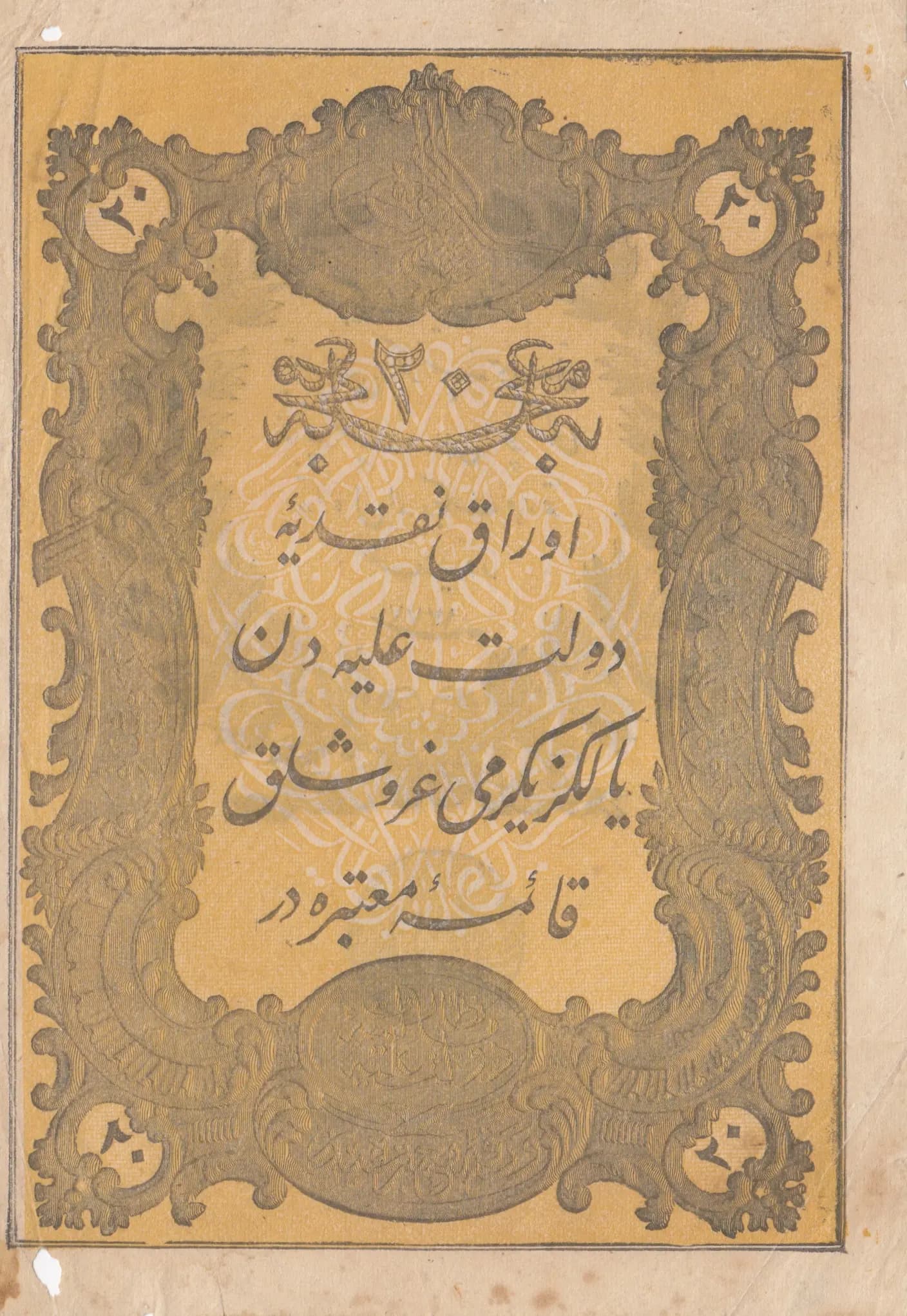
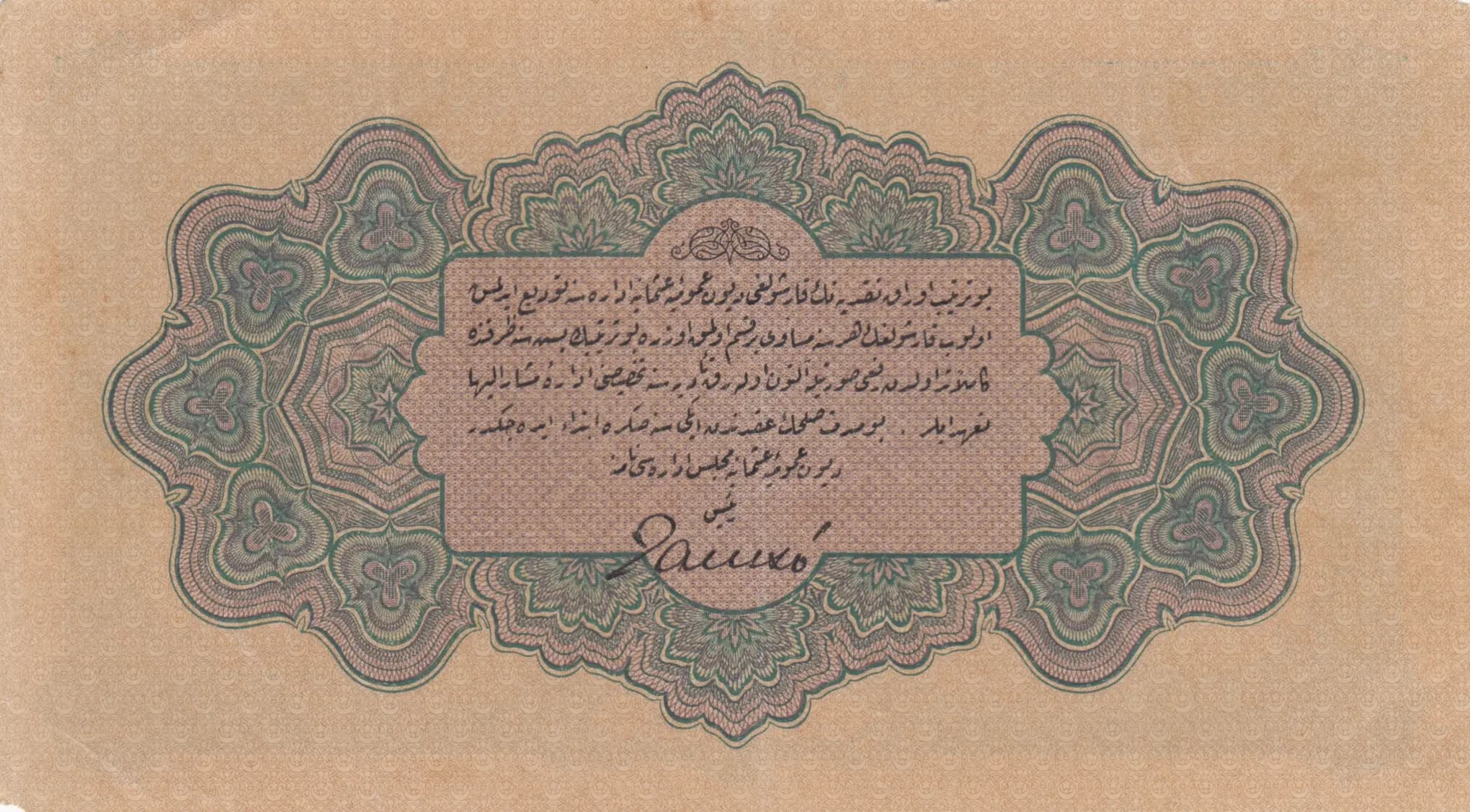
The obverse features a symmetrical design with elaborate corner and border ornaments composed of interlocking geometric medallions and stylized floral motifs in green and blue inks. Two large numeral '1' characters appear in ornate cartouches on the left and right sides. The centerpiece displays a complex multi-layered decorative frame containing the issuing authority text and denomination declaration, topped by the Ottoman tughra (imperial seal) in pink/red ink, representing the sovereign authority of the Sultan. The reverse presents an even more elaborate design with a dominant star-burst or blooming geometric frame occupying most of the surface, enclosing a central rectangular cartouche with pink/red background bearing official Ottoman Turkish text and an authorized signature. The overall aesthetic reflects late Ottoman design traditions merged with contemporary European printing techniques, creating a visually sophisticated security document.
FRONT SIDE: Central text in Ottoman Turkish declares the denomination and issuing authority of the Banknote (Dette Publique Ottomane / Ottoman Public Debt Administration). The word 'Millî' (National) appears on the note. Serial number 'N 960289' printed in red ink provides individual identification. BACK SIDE: Contains lengthy Ottoman Turkish text presenting legal conditions, promissory declarations, and official terms of the banknote as legal tender. A signature, likely that of an official or authorized signatory (possibly 'Palma' or a similar European official name), authenticates the document. The inscriptions emphasize the note's status as a debt instrument backed by Ottoman public revenues.
This note was produced using multi-color letterpress or intaglio printing, evidenced by the sharp, deeply impressed ornamental details and the precise registration of multiple color layers (green, blue, pink, and black inks). The complexity of the geometric borders and the fine line work characteristic of the decorative elements suggest professional security printing, likely by a European bank note printer contracted by the Ottoman government—possibly Waterlow & Sons or another established security printer of the era. The ornate engraving patterns served dual purposes as both aesthetic embellishment and anti-counterfeiting security features. The use of red ink for the serial number and tughra provided additional visual differentiation and security.
This note is identified as Pick P-90a (1 Livre variety). The serial number N 960289 and the signature visible on the reverse should be documented for variety cataloging purposes. No major overprints or date variations are apparent in the visual analysis. PMG records indicate P-90a as the cataloged variant for this Pick number. Future detailed examination of signature varieties, serial number prefix patterns, and any printer's marks would refine the specific variety classification within this Pick number.