100 francs 1939
Market Prices
11 salesAbout This Note
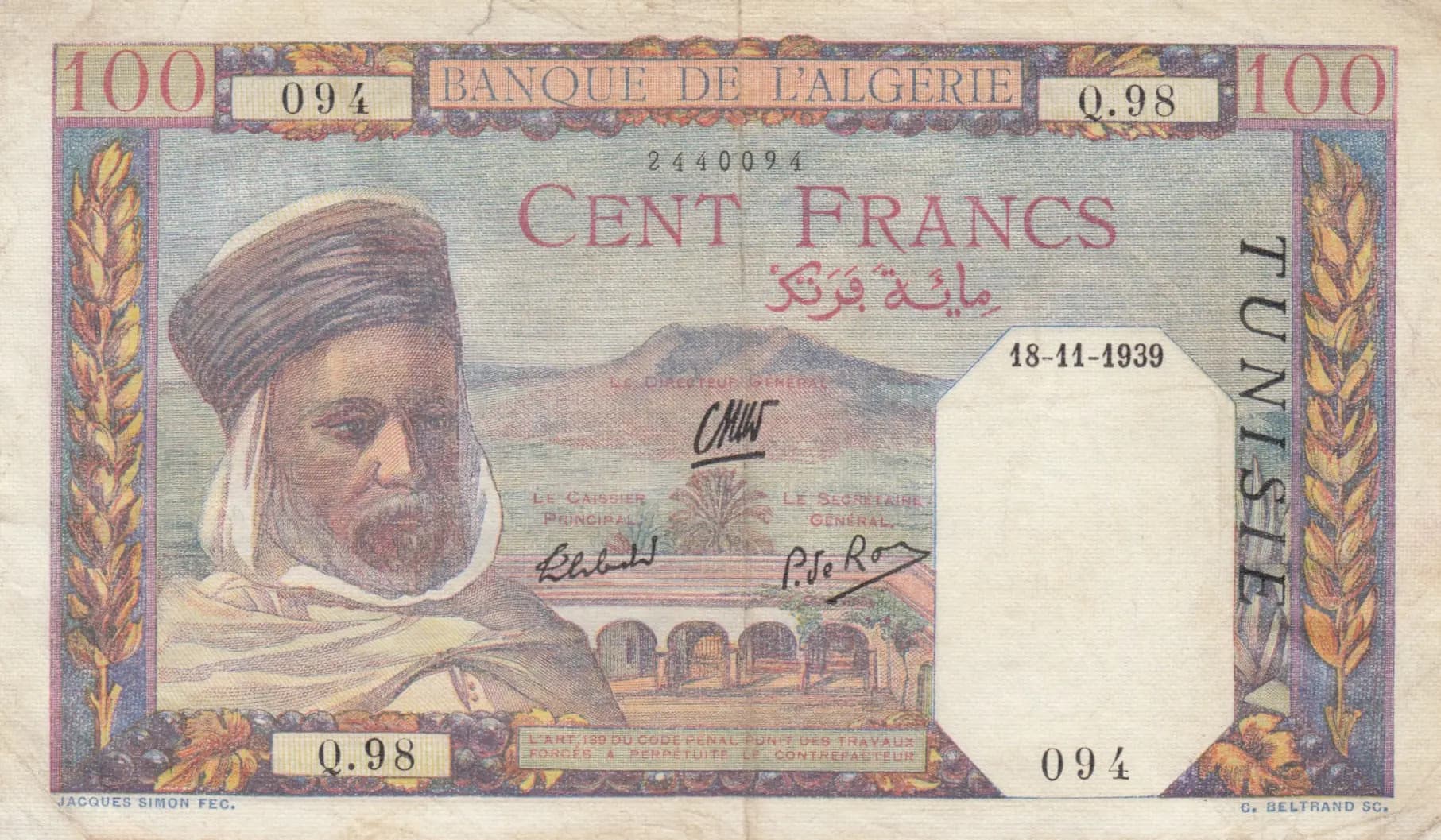
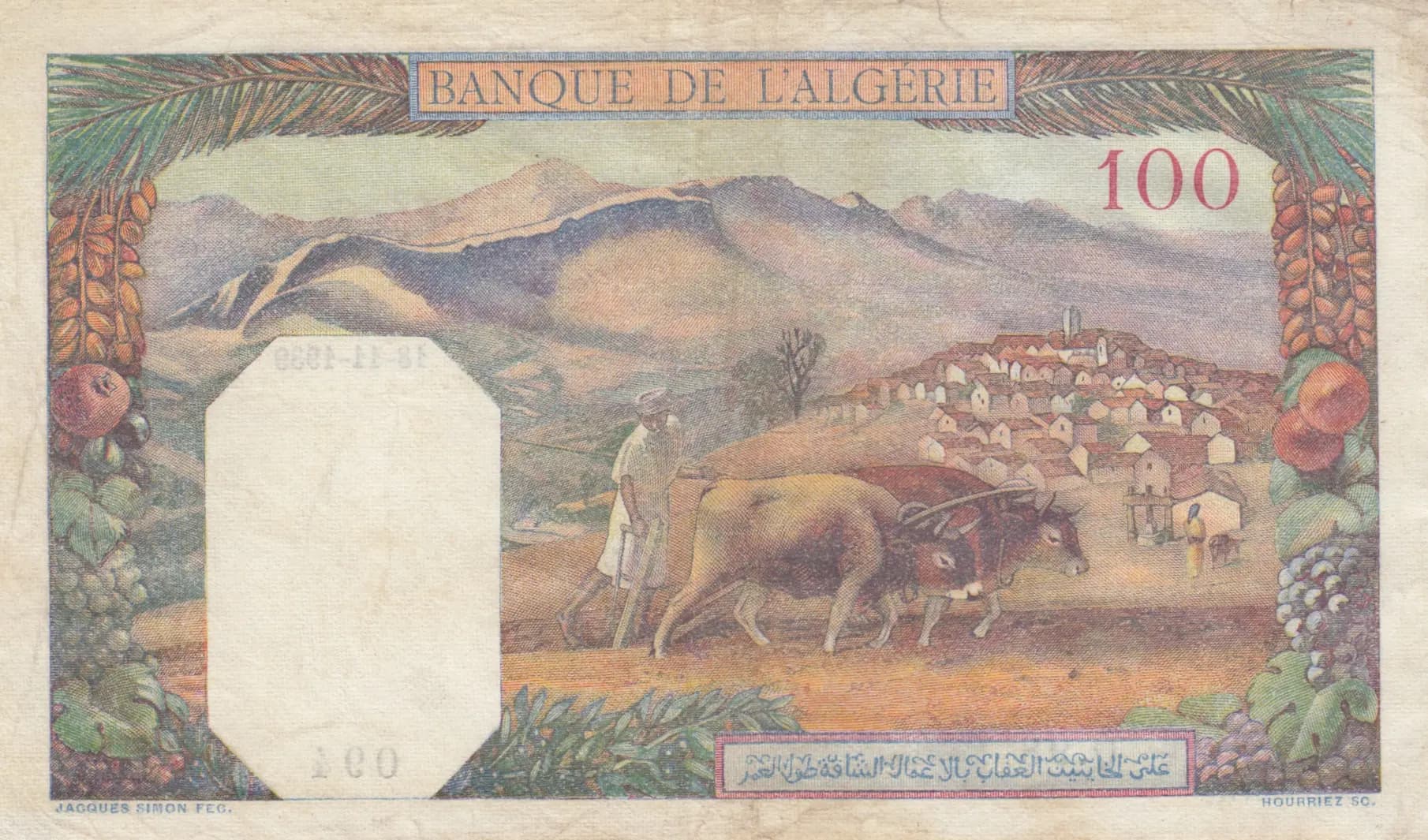
This is a VF-grade 100 Francs banknote issued by the Banque de l'Algérie on November 18, 1939, representing the colonial-era currency of French North Africa. The note features exceptional engraved artwork depicting a turbaned Algerian gentleman on the obverse and a pastoral agricultural scene with a plowman and oxen on the reverse, framed by decorative wheat and fruit motifs. While showing expected age-related wear and circulation marks including handwritten notations, the note retains strong color saturation and fine detail characteristic of quality intaglio printing from this period.
Common. eBay market data shows consistent sales ranging from $3.75 to $46 for VF-graded examples between 2009 and 2024, with most VF specimens selling in the $11-$32 range. The 2016 catalogue value for VF is listed at $50, but realized prices typically fall well below catalogue estimates. This suggests adequate supply in the market and regular circulation among collectors of colonial African currency. The note was issued during a full year of normal circulation before wartime disruptions, indicating a substantial print run.
This banknote was issued during the final years before World War II and the subsequent transformation of French colonial North Africa, making it a historically significant artifact of the pre-war Vichy and wartime period. The deliberate depiction of agricultural labor and rural North African life on the reverse reflects the colonial economy's emphasis on agrarian productivity and the romanticized vision of French colonial administration. The bilingual French-Arabic inscriptions and the portrait of a traditional North African figure represent the cultural synthesis attempted by French colonial authorities during this era.
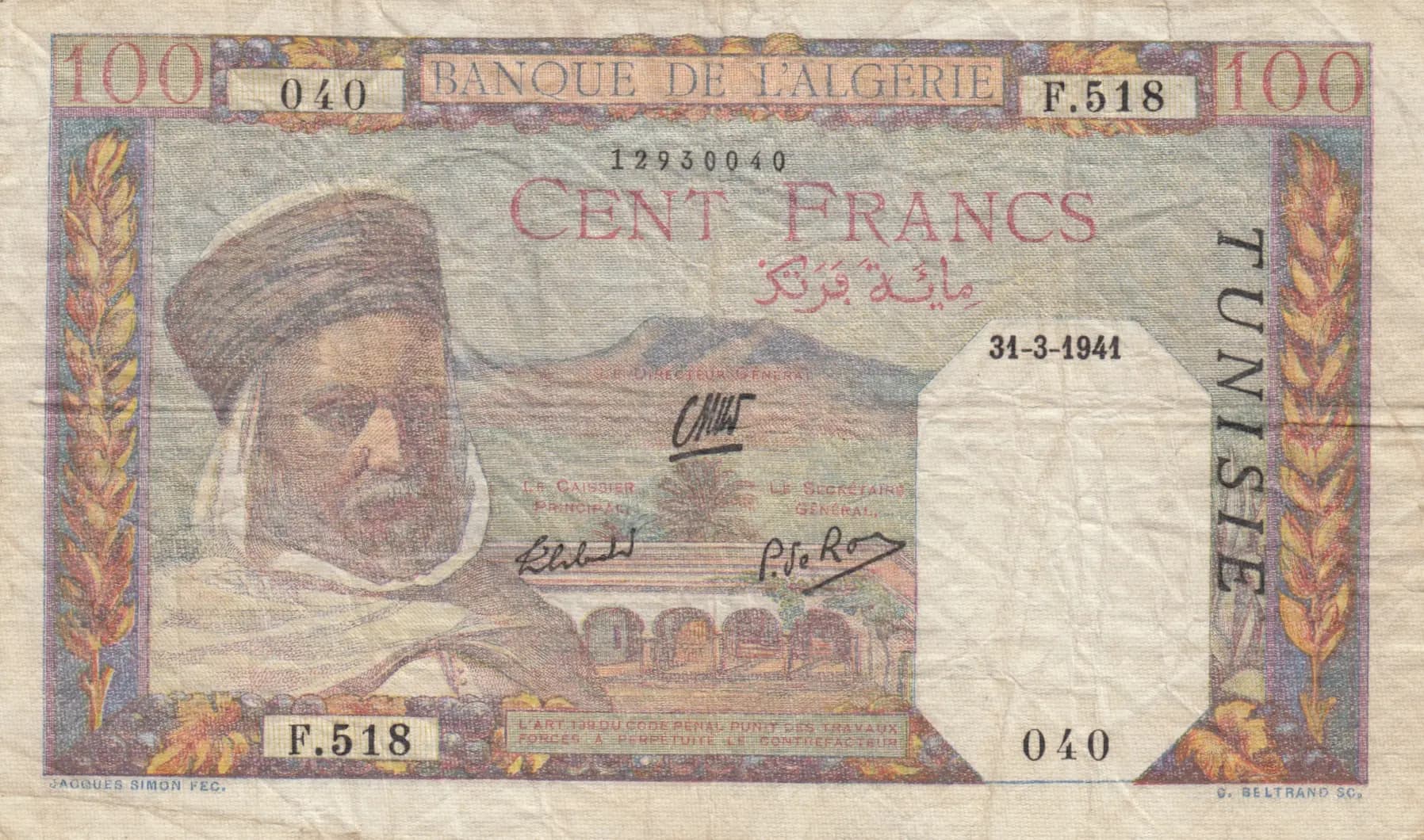
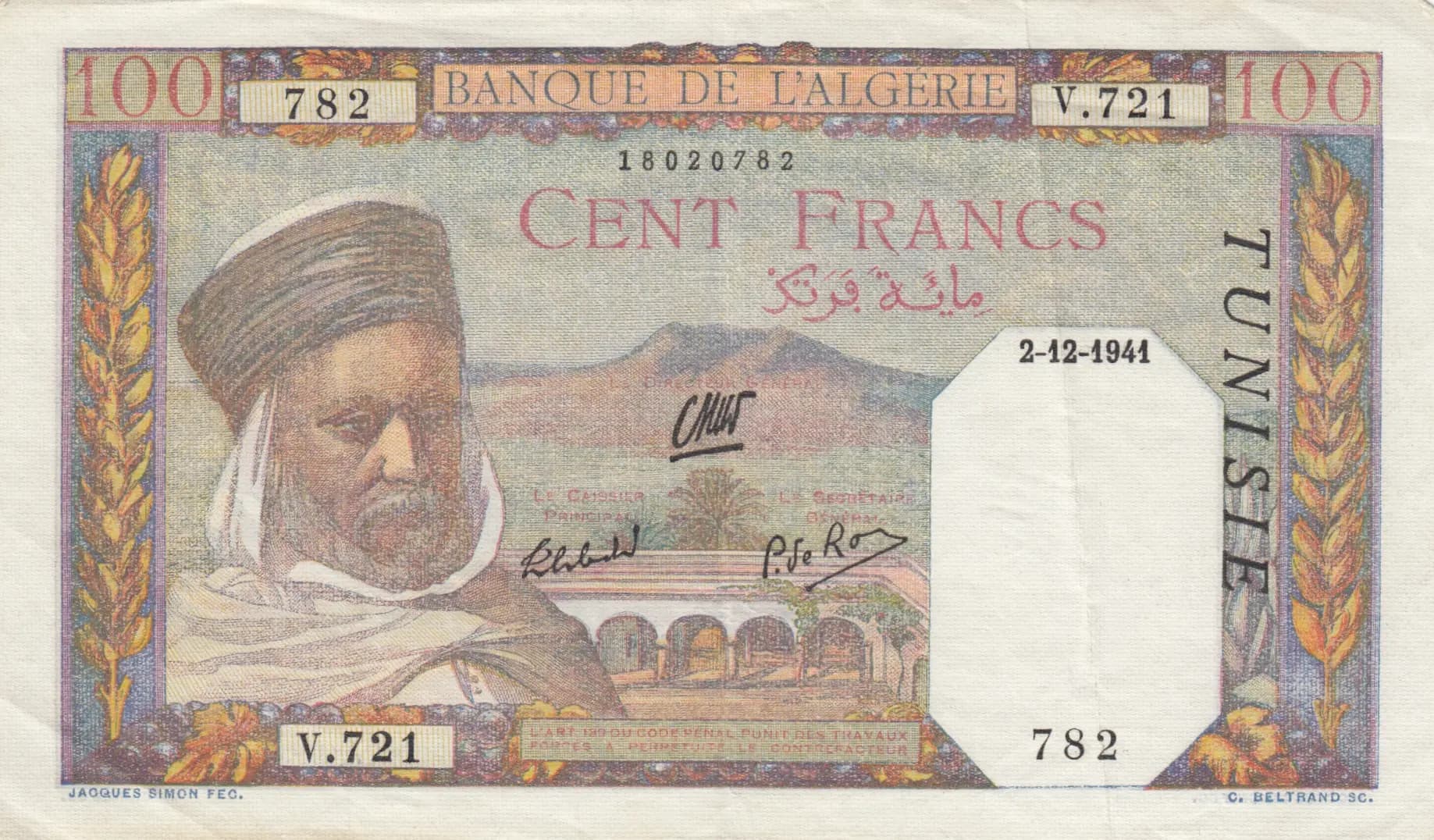
The obverse features a finely engraved portrait of an elderly bearded Algerian man wearing a traditional turban and flowing North African robes, positioned prominently on the left side of the note. Behind this portrait is a romanticized architectural landscape depicting an arched bridge or Roman-style aqueduct, referencing the classical heritage claimed by French colonial authorities. The reverse depicts a dynamic scene of agricultural labor: a man in traditional dress guiding a plow pulled by oxen across cultivated fields, with a hillside settlement featuring clustered vernacular buildings in the background and distant mountains completing the pastoral composition. Both sides are framed by decorative Art Deco-influenced borders featuring wheat sheaves, pomegranates, and floral botanical elements in the corners, emphasizing the agricultural wealth of the colonial territory. The color palette combines warm earth tones (beige, tan, golden brown) with cooler accents (blue-gray, purple) creating visual depth and security through color separation.
FRONT SIDE: 'BANQUE DE L'ALGERIE' (Bank of Algeria), '100' and 'CENT FRANCS' (One Hundred Francs), '18-11-1939' (Date: November 18, 1939), 'LE CAISSIER PRINCIPAL' (The Chief Cashier), 'LE SECRETAIRE GENERAL' (The Secretary General), 'L'ART. 139 DU CODE PENAL PUNIT DES TRAVAUX FORCES A PERPETUITE LE CONTREFACTEUR' (Article 139 of the Penal Code punishes counterfeiting with forced labor for life), 'JACQUES SIMON FEC.' (Engraver: Jacques Simon made it), 'C. BELTRAND SC.' (Engraver: C. Beltrand sculpted it), Serial number '2440094'. BACK SIDE: 'BANQUE DE L'ALGERIE' (Bank of Algeria), '100' (One Hundred), 'بنك الجزائر - مئة فرنك' (Arabic: Bank of Algeria - One Hundred Francs), 'JACQUES SIMON FEC.' (Engraver: Jacques Simon made it), 'HOURRIEZ SC.' (Engraver: Hourriez sculpted it).
Intaglio engraving (steel plate) with multicolor printing, typical of high-security banknote production of the 1930s-1940s era. The detailed fine-line work, subtle gradations of tone, and the crisp registration visible in the ornamental borders are characteristic of professional banknote printing from the Banque de l'Algérie's contracted security printer. The bilingual text and complex scenic compositions demonstrate the sophisticated engraving capabilities attributed to the master engravers Jacques Simon and the various sculptors credited (C. Beltrand, Hourriez).
This note is catalogued as Pick P-13a, distinguished by the watermark of a woman's head (as opposed to P-13b with bank title watermark). The visual analysis confirms the obverse portrait watermark variety. The serial number 2440094 and the specific date of 18-11-1939 are noted on this example. The handwritten marks and signatures visible on the obverse (including 'Q.98' notation) indicate post-issuance handling and possible institutional processing marks, typical of notes that passed through banking systems during the wartime period.