5 francs 1941
“6.02.41”
Market Prices
18 salesAbout This Note
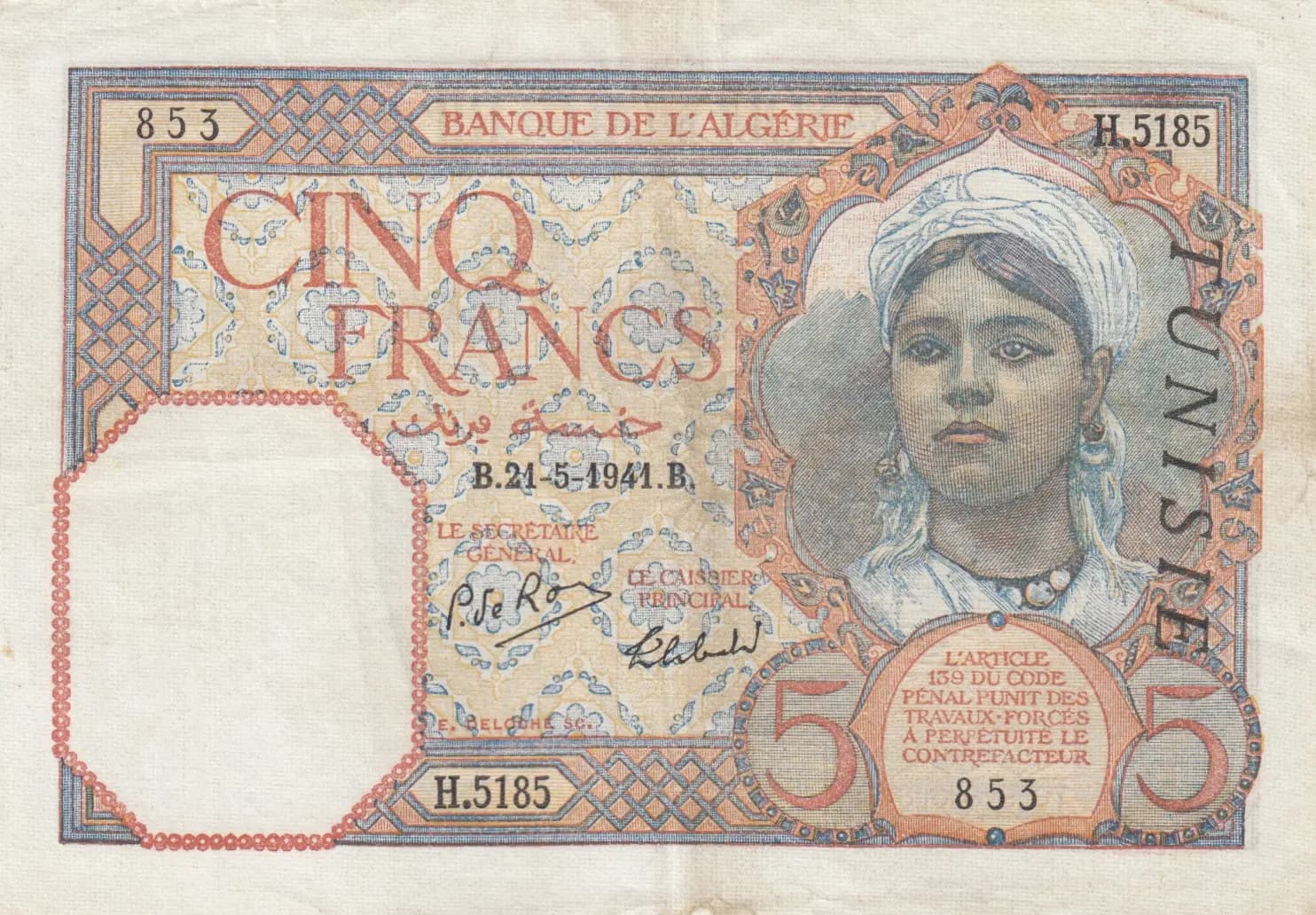
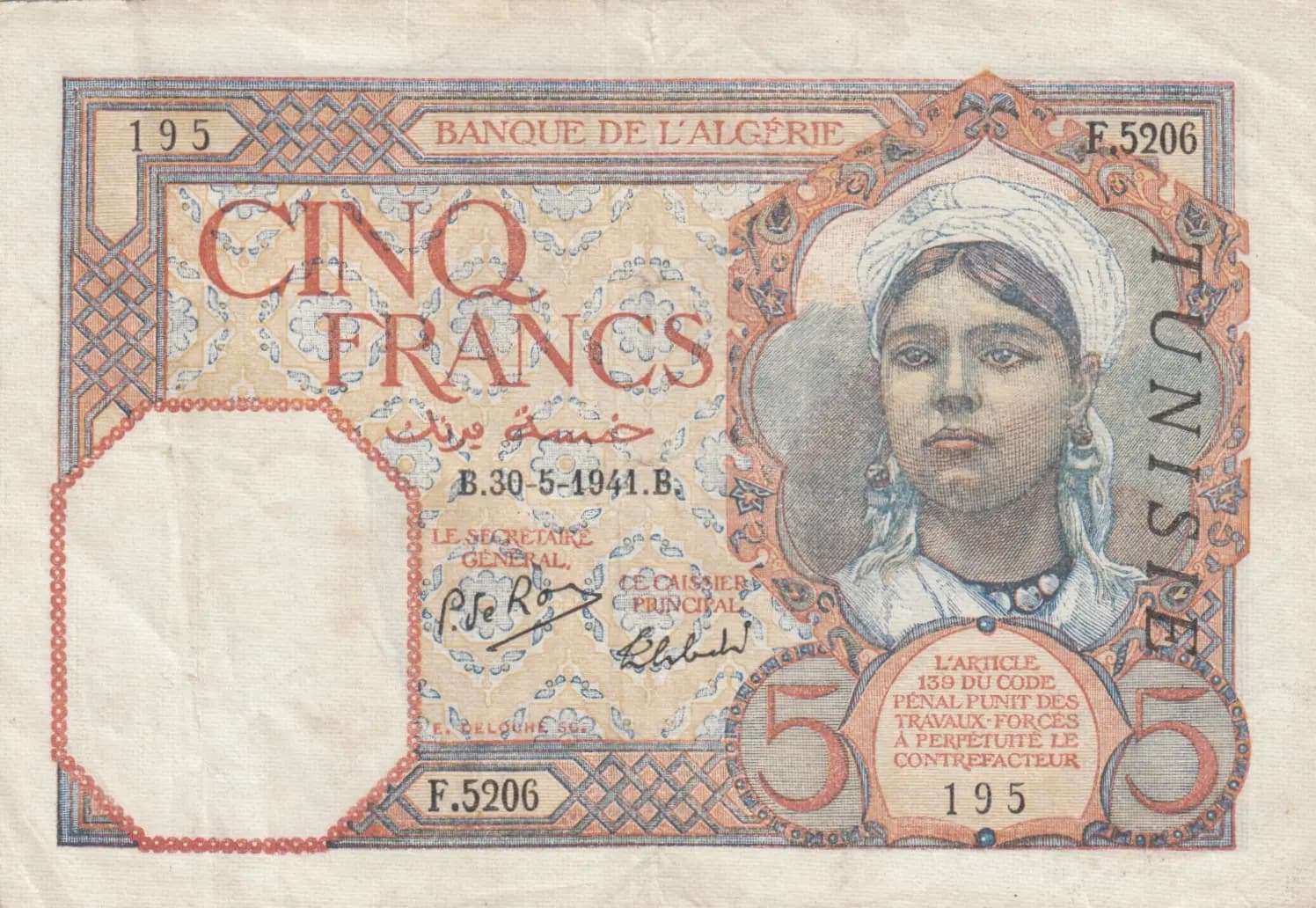
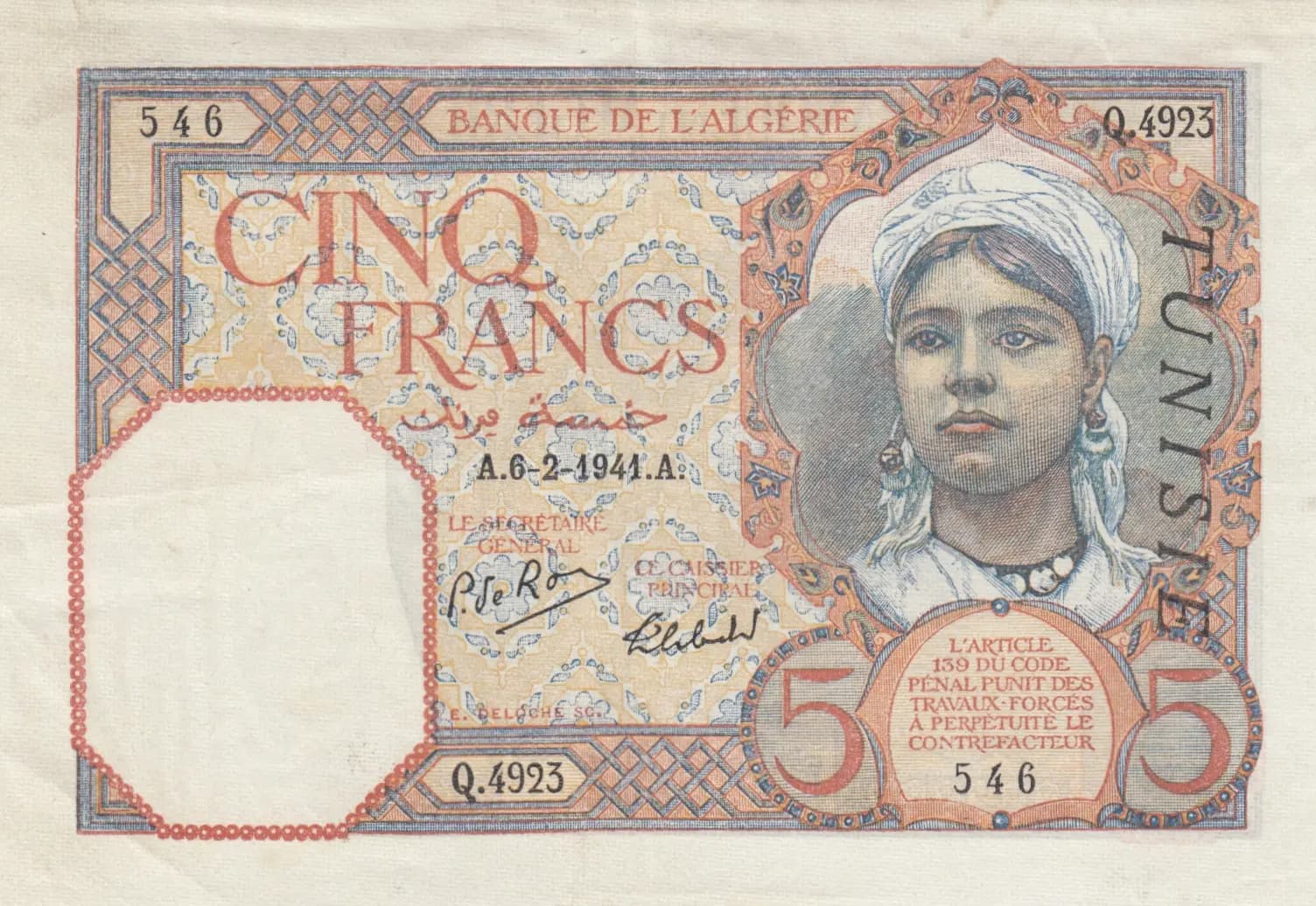
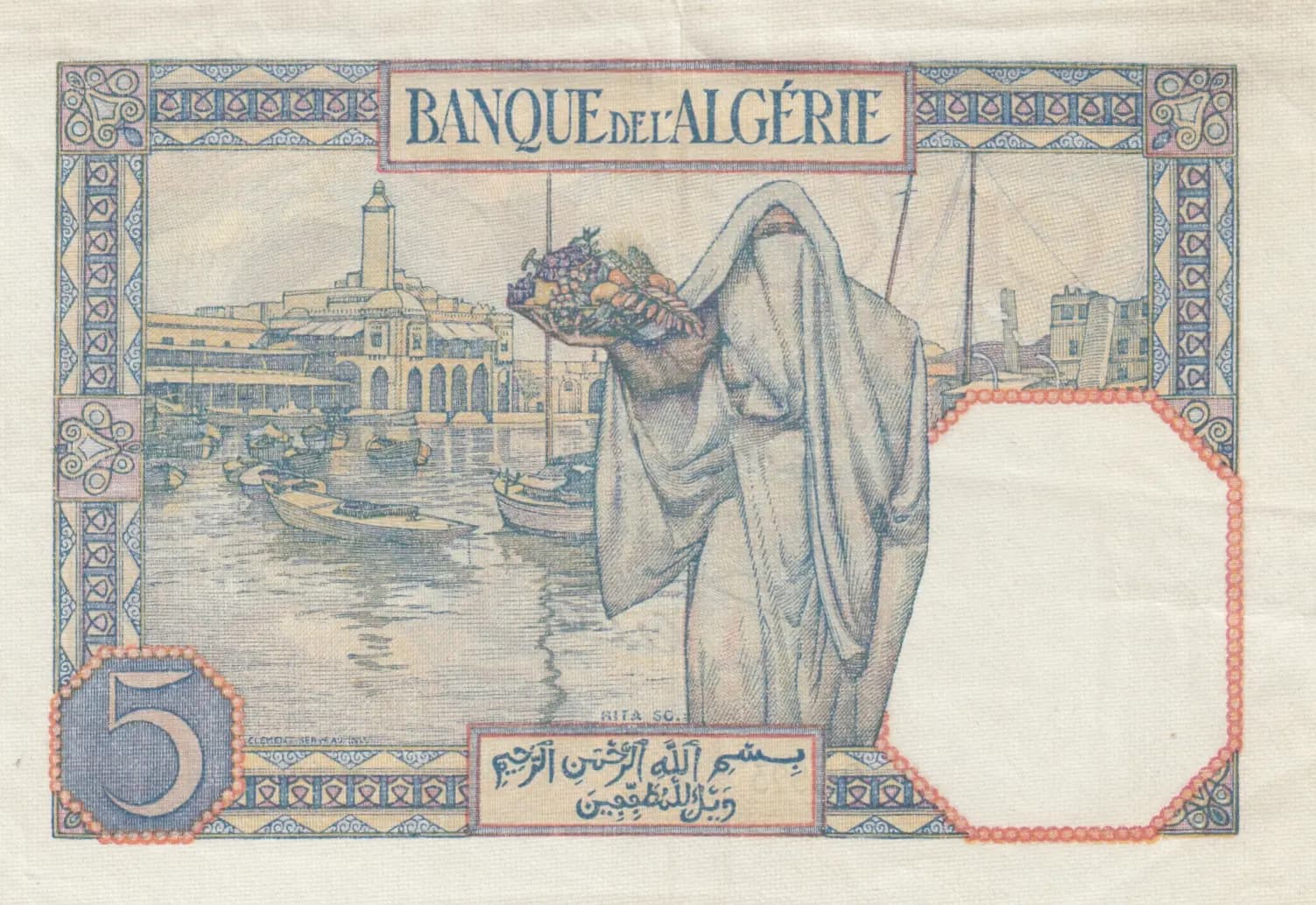
A handsome example of Tunisia's 5 Francs from the Banque de l'Algérie, dated 6 February 1941 (P-8b). The note features vibrant orange-red and blue decorative borders framing a portrait of a North African woman in traditional white head covering on the obverse, while the reverse depicts a harbor scene with Islamic architecture and a woman in traditional dress holding a produce basket. In VF condition, this note displays age-appropriate cream toning with no major damage, representing an attractive mid-grade specimen of this French colonial Tunisian issue.
Common. eBay auction data shows consistent sales activity across all condition grades from 2010-2025, with VF specimens typically realizing $4-21 USD, indicating a readily available note in the collector market. The print run for this 1941 issue was substantial, and survival rates remain good. No evidence of scarcity, recall, or limited production exists. This is a standard circulation issue from a five-year production period (1939-1941 variants exist), making it accessible to collectors at modest prices.
Issued during World War II under the Banque de l'Algérie's mandate in Tunisia, this 5 Francs note reflects the French colonial administration's control of North African finances. The iconography—featuring women in traditional Maghrebi dress and a Mediterranean harbor town with minarets—emphasizes the cultural and commercial life of French Tunisia during this period. The penal code warning against counterfeiting (Article 163) underscores the colonial authority's efforts to maintain monetary stability during wartime economic pressures.
The obverse features an ornately bordered frame in orange-red and blue containing a three-quarter portrait of a Maghrebi woman wearing a traditional white hijab and dangling earrings, positioned on the right side with a prominent oval watermark space on the left. The denomination 'Cinq Francs' appears in bold red text, with signature lines for the Secretary General and Principal Cashier. The reverse depicts a picturesque North African harbor scene—likely representing a Tunisian port city such as Tunis, Sfax, or Sousse—featuring white-washed buildings with minarets, sailing vessels in the harbor, and a fortified waterfront. A woman in flowing white traditional garments holding a basket of fruits or produce dominates the center-right of the reverse, symbolizing the region's agricultural and commercial prosperity. Both sides employ fine-line engraving with a cream and blue color palette accented by decorative geometric borders characteristic of French colonial banknote design.
FRONT: 'Banque de l'Algérie' (Bank of Algeria) | 'Cinq Francs' (Five Francs) | 'A.6-2-1941.A' (date reference: 6 February 1941) | 'Le Secrétaire Général' (The Secretary General) | 'Le Caissier Principal' (The Principal Cashier) | 'L'Article 163 du Code Pénal punit des travaux-forces perpétuité le contrefacteur' (Article 163 of the Penal Code punishes the counterfeiter with perpetual forced labor) | Serial number: Q.4923. BACK: 'Banque de l'Algérie' (Bank of Algeria) | Denomination: '5' | 'بسم الله الرحمن الرحيم ولي النظيفين' (In the name of God, the Most Gracious, the Most Merciful, Protector of the Pure) [Islamic invocation] | Artist signature: 'RITA SC.'
Steel-plate intaglio engraving (taille-douce), a standard technique for high-security banknote production employed by the Banque de l'Algérie and its contracted security printers during the 1930s-1940s. The fine line work, intricate border patterns, and portrait detail visible in the visual analysis are consistent with professional intaglio engraving. The specific printer for this series is not definitively documented in standard references but likely involved one of France's major security printers such as Bradbury Wilkinson or the Banque de France's own printing operations.
This specimen is dated A.6-2-1941.A with serial number Q.4923, representing a specific printing from February 1941. The catalog designation P-8b indicates this is a variant within the 5 Francs series; other varieties (P-8a, P-8c) exist with different dates or printing characteristics within the 1939-1941 production window. The 'A' markers flanking the date and the 'Q' prefix on the serial number are consistent with known varieties of this denomination. The artist signature 'RITA SC.' on the reverse is a standard feature of this design series.