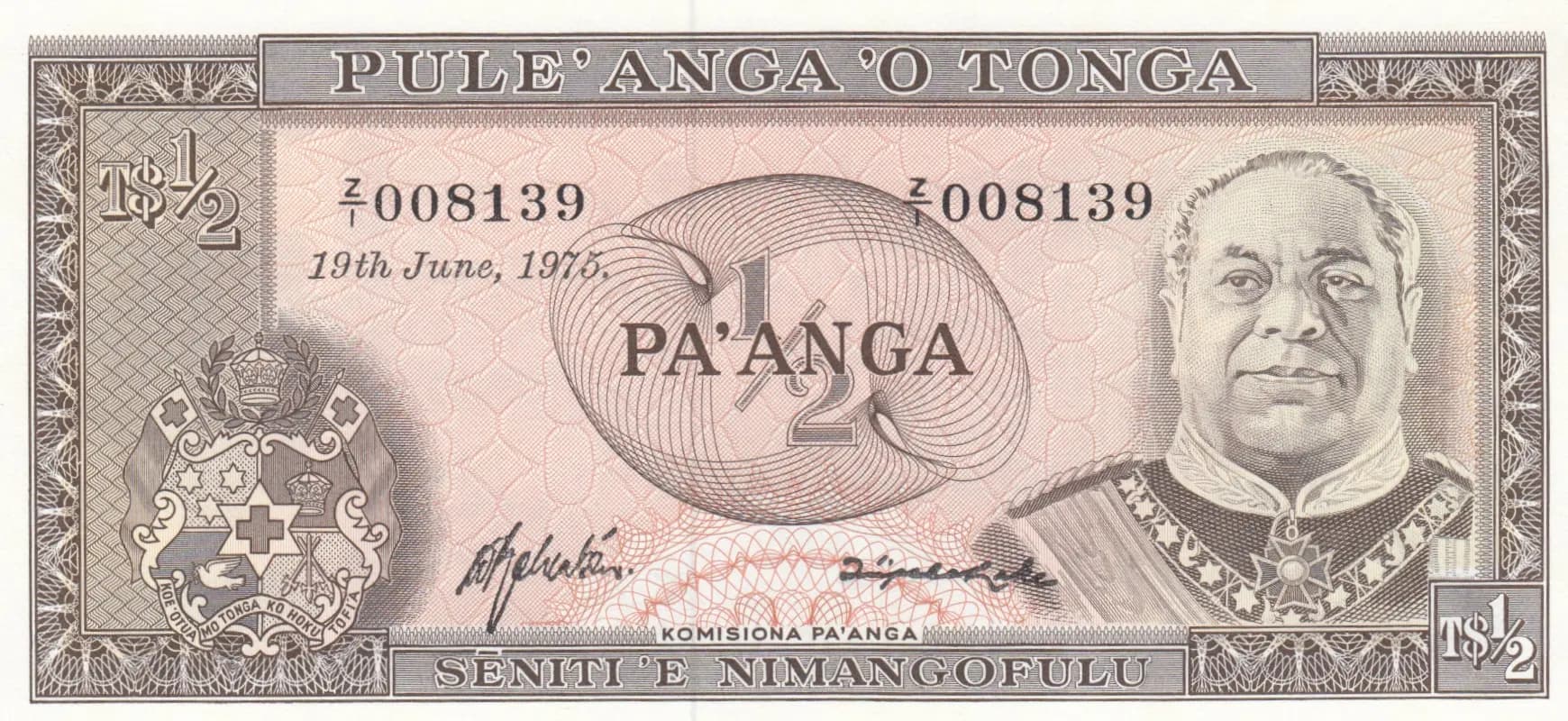
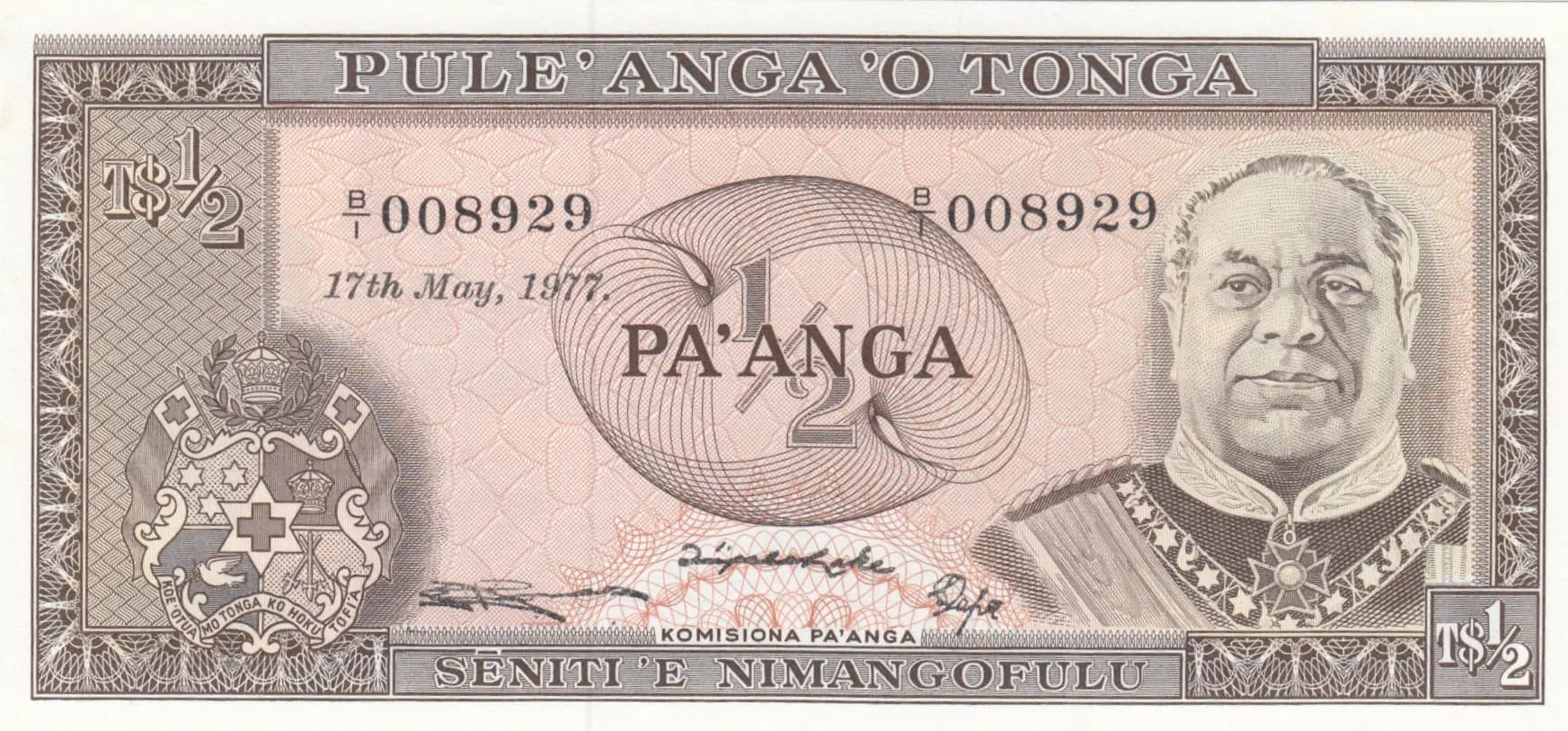
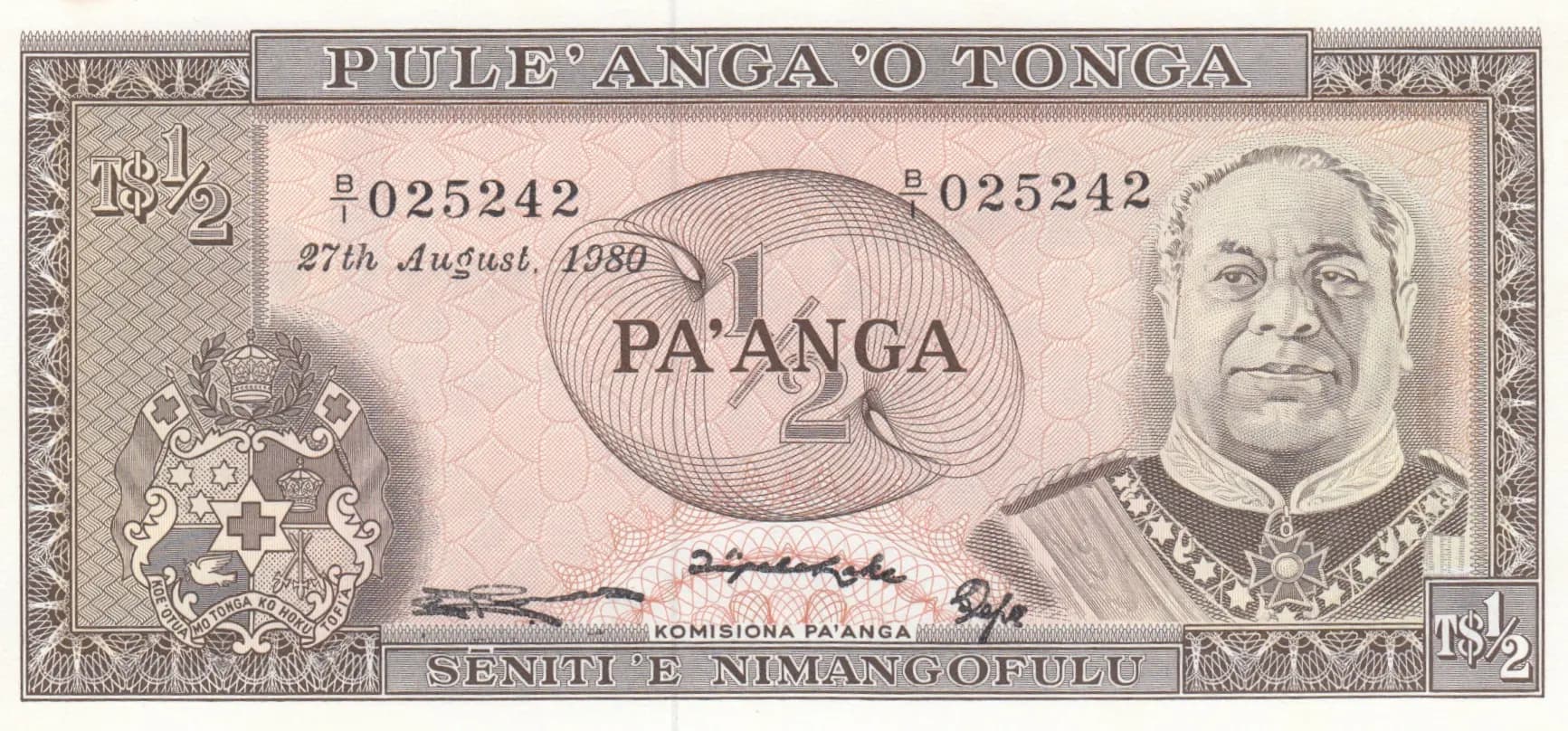
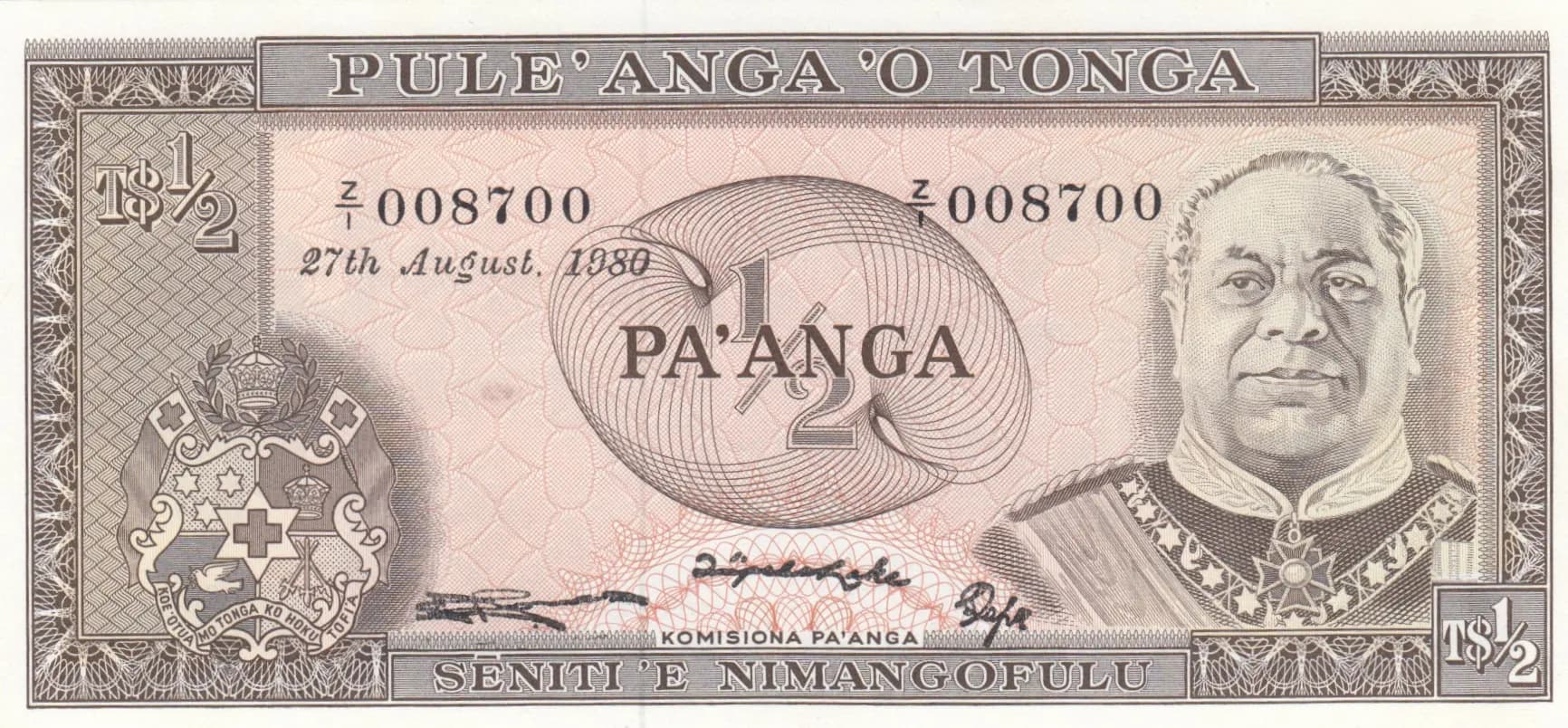
1/2 pa'anga 1979
Market Prices
9 salesAbout This Note
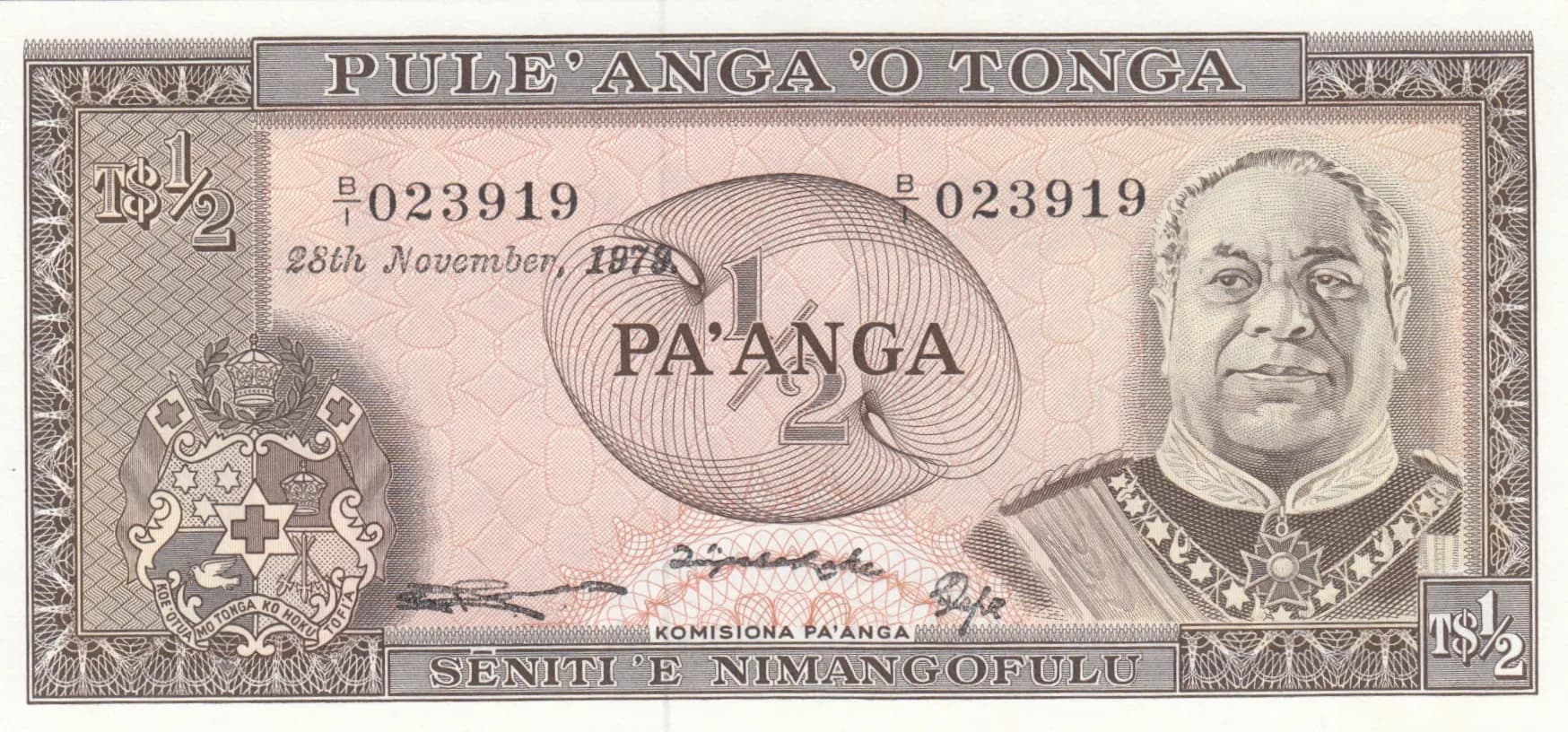
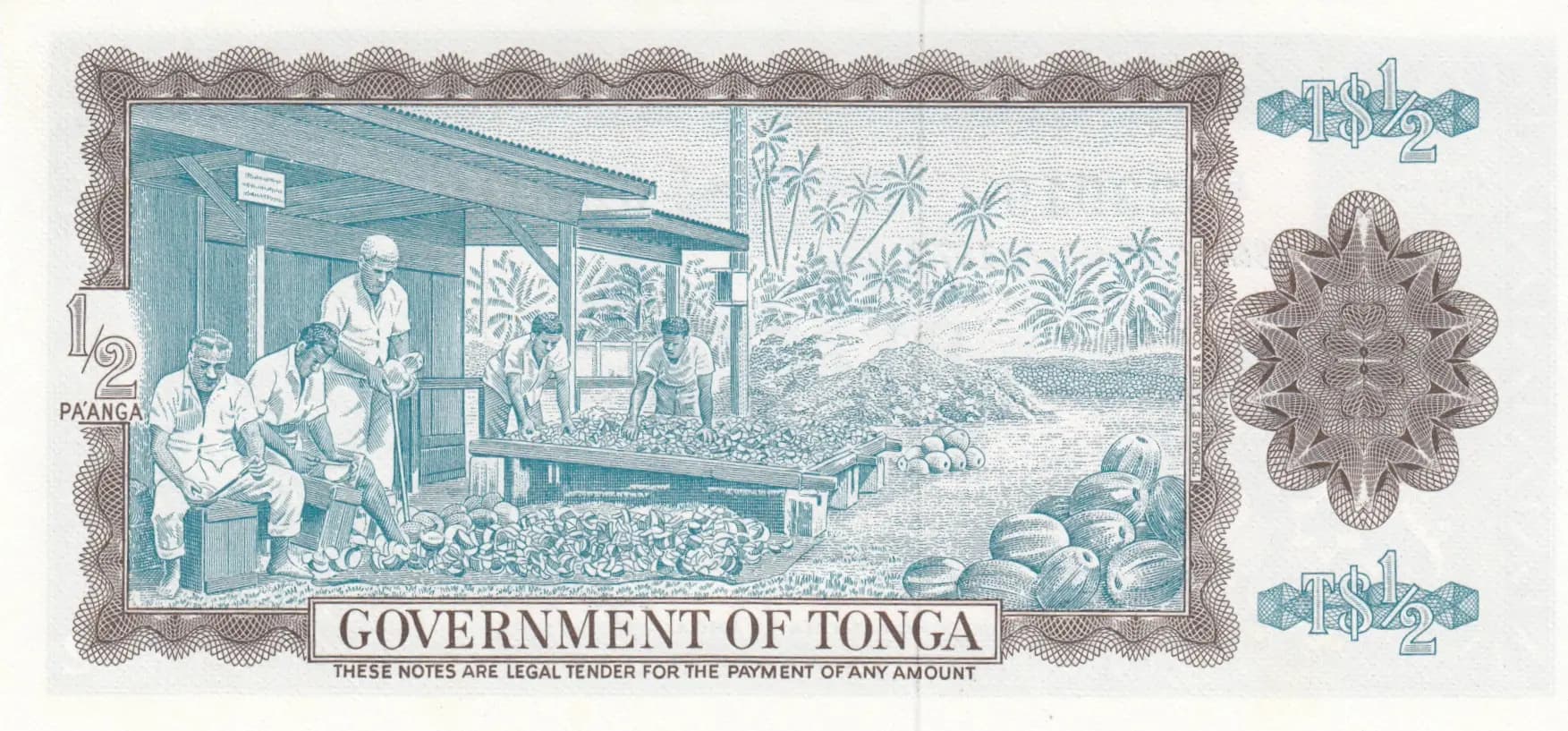
This is an uncirculated 1/2 Pa'anga note from Tonga dated 28th November 1978, representing the P-18c variety. The note features a striking portrait of King Siaosi (George) Taufa'ahau IV Tupou in formal dress with decorative embroidered collar on the obverse, complemented by the royal coat of arms on the left. The reverse depicts coconut workers engaged in processing activities with tropical palm trees, rendered in fine blue and brown engraving. The note exhibits pristine condition with no visible wear, sharp detail, and the characteristic light pink underprint and ornamental borders typical of this Thomas de la Rue design.
common. Market data from eBay sales indicates consistent pricing in the $5-$12 range for uncirculated specimens from 2017-2025, with recent sales of UNC notes at $10.99. The 2019 catalog value for UNC is listed at $12. These price points and transaction frequency indicate healthy collector circulation without scarcity premium. The 1/2 Pa'anga was a regular issue spanning 1977-1983 with multiple date varieties and signature combinations, suggesting substantial print runs typical of circulating denominations.
Issued during the reign of King Taufa'ahau IV (1965-2006), this note reflects Tonga's modernization period and the establishment of the Pule'anga 'o Tonga (Kingdom of Tonga) currency system. The reverse imagery of coconut workers illustrates Tonga's economy and primary agricultural industries during this era, emphasizing the nation's reliance on coconut and agricultural processing as economic foundations. The formal portraiture and British Commonwealth-influenced design reflect Tonga's historical ties to Great Britain and its status as an independent constitutional monarchy.
The obverse features a formal portrait of King Siaosi Taufa'ahau IV Tupou positioned on the right side, depicted in state dress with an ornately embroidered formal collar characteristic of Tongan royal regalia. The center contains an ornate oval wreath design framing the denomination '1/2' in a stylized numeral. The Tongan coat of arms—featuring a shield with cross and crown motifs representing the monarchy and Christian faith—is positioned prominently on the lower left. The reverse depicts a detailed engraved scene of coconut workers in a workshop facility engaged in processing activities, with coconut palm trees visible in the tropical background landscape. Both sides are framed by decorative borders with ornamental corner designs. The overall color scheme employs light pink/beige underprinting with brown and black line work on the obverse, and teal/blue-green engraving on the reverse.
Front side: 'PULE'ANGA 'O TONGA' (Kingdom of Tonga), 'T$1/2' (denomination), 'PA'ANGA' (currency unit), 'SENITI 'E NIMANGOFULU' (Fifty cents in Tongan), 'KOMISIONA PA'ANGA' (Currency Commission), 'B 023919' (serial number), '28th November, 1978' (issue date). Back side: 'T$1/2' (denomination), 'PA'ANGA' (currency unit), 'GOVERNMENT OF TONGA' (issuing authority), 'THESE NOTES ARE LEGAL TENDER FOR THE PAYMENT OF ANY AMOUNT' (legal tender declaration).
This note was printed using traditional intaglio (line engraving) techniques by Thomas de la Rue & Company, the renowned British security printer. The fine line engraving patterns visible throughout both obverse and reverse, the intricate geometric background patterns, the detailed portraiture, and the ornamental borders are all characteristic of intaglio printing. This method provides the note's security through the difficulty of reproducing fine-line detail and the tactile quality of raised ink on the note's surface.
This note is identified as P-18c, one of four cataloged variants for this base Pick number (P-18b, P-18b*, P-18c, P-18c*). The visual analysis shows this to be a standard issue variety (not a replacement note, as replacement notes carry Z/1 serial number prefix). The specific date of 28th November 1978 and serial number B 023919 indicate this falls within the 1977-1979 issue window. Additional signature varieties exist for this denomination across the 1977-1983 period. No overprints or replacement markings are evident on the observed specimen.