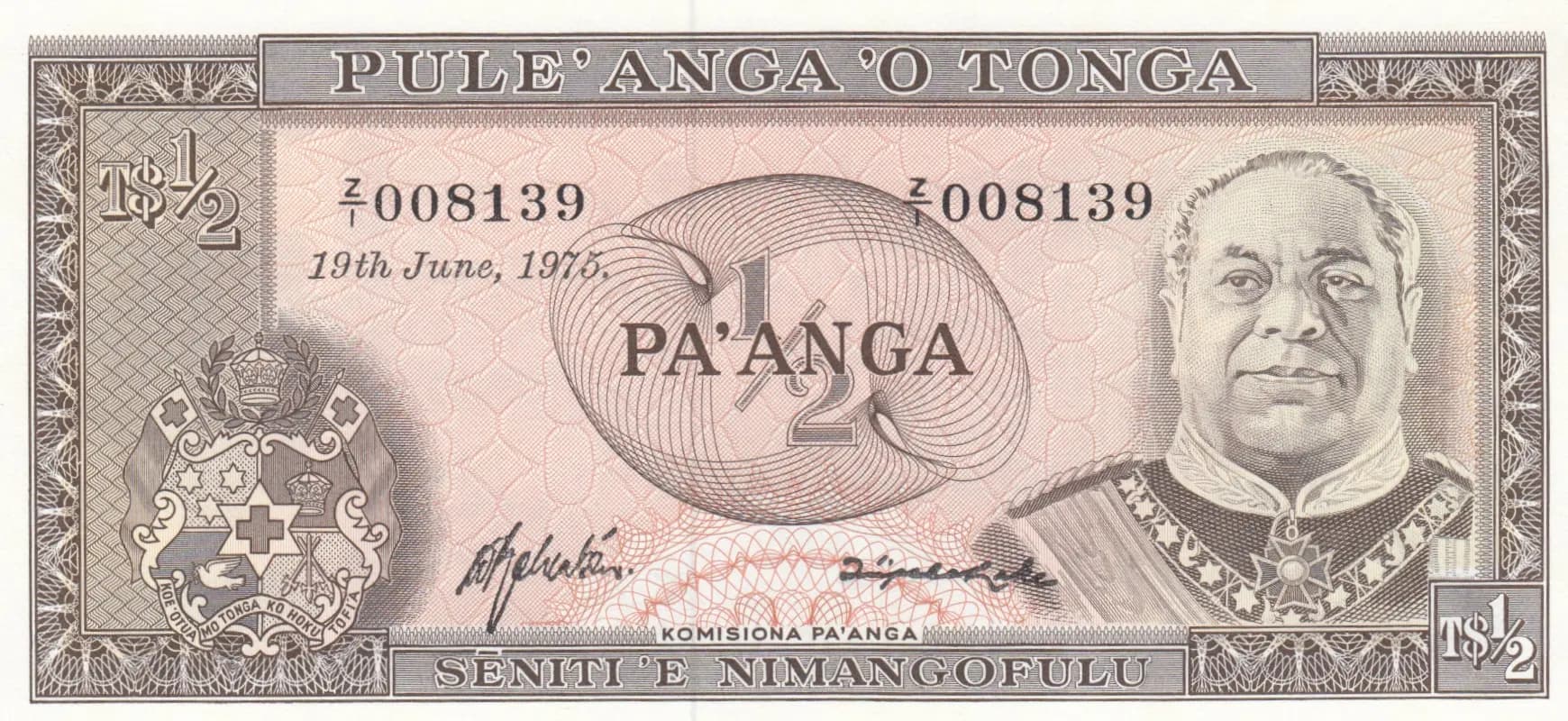
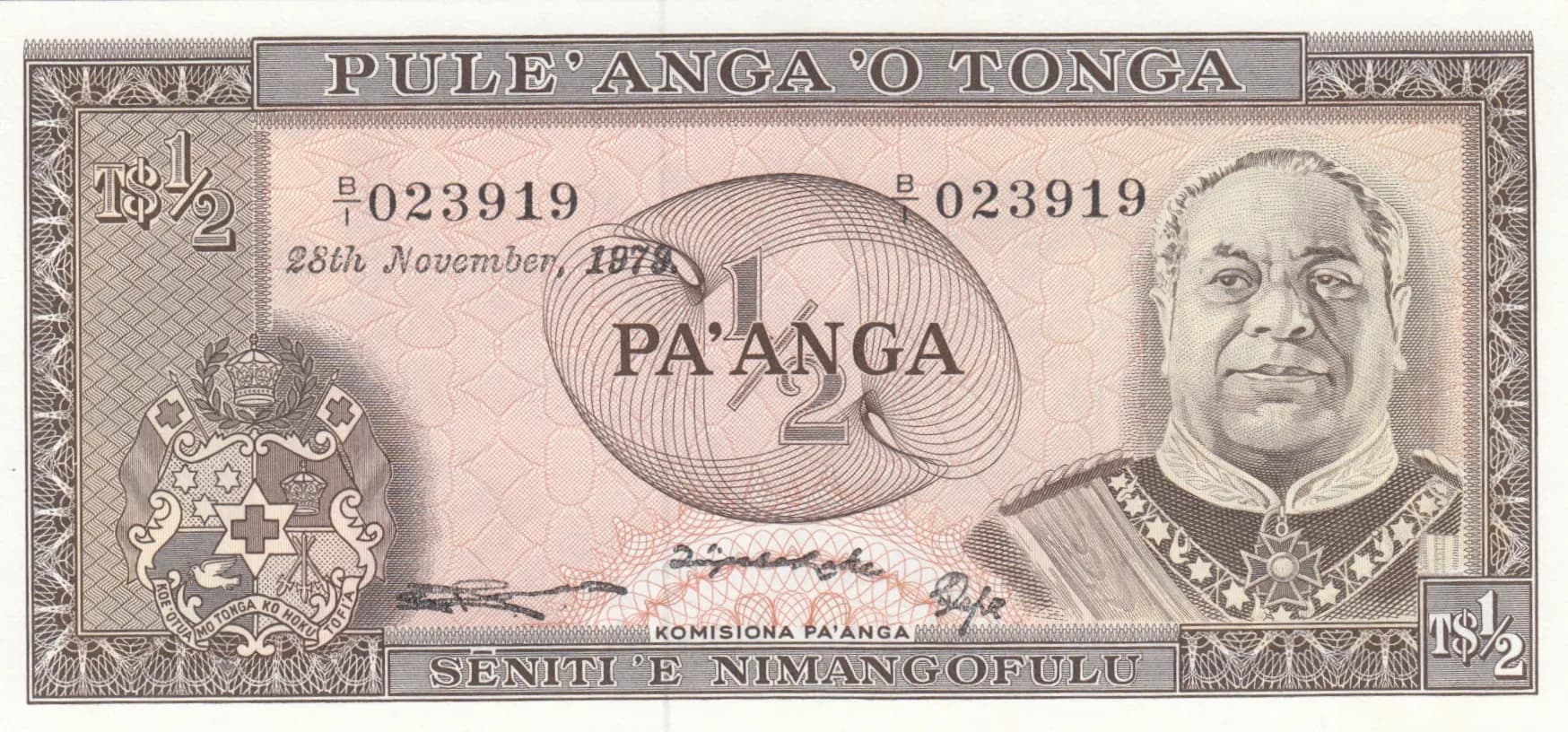
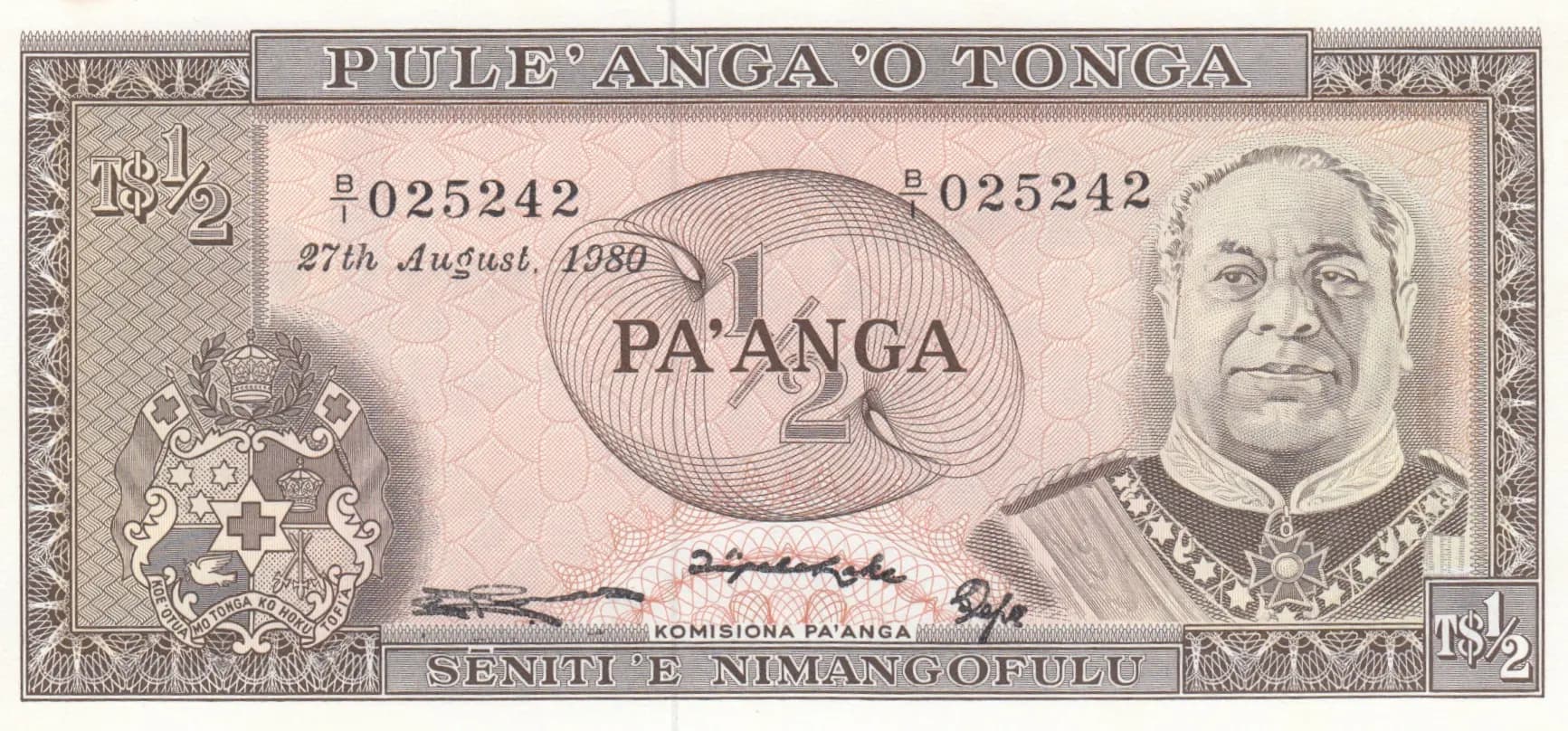
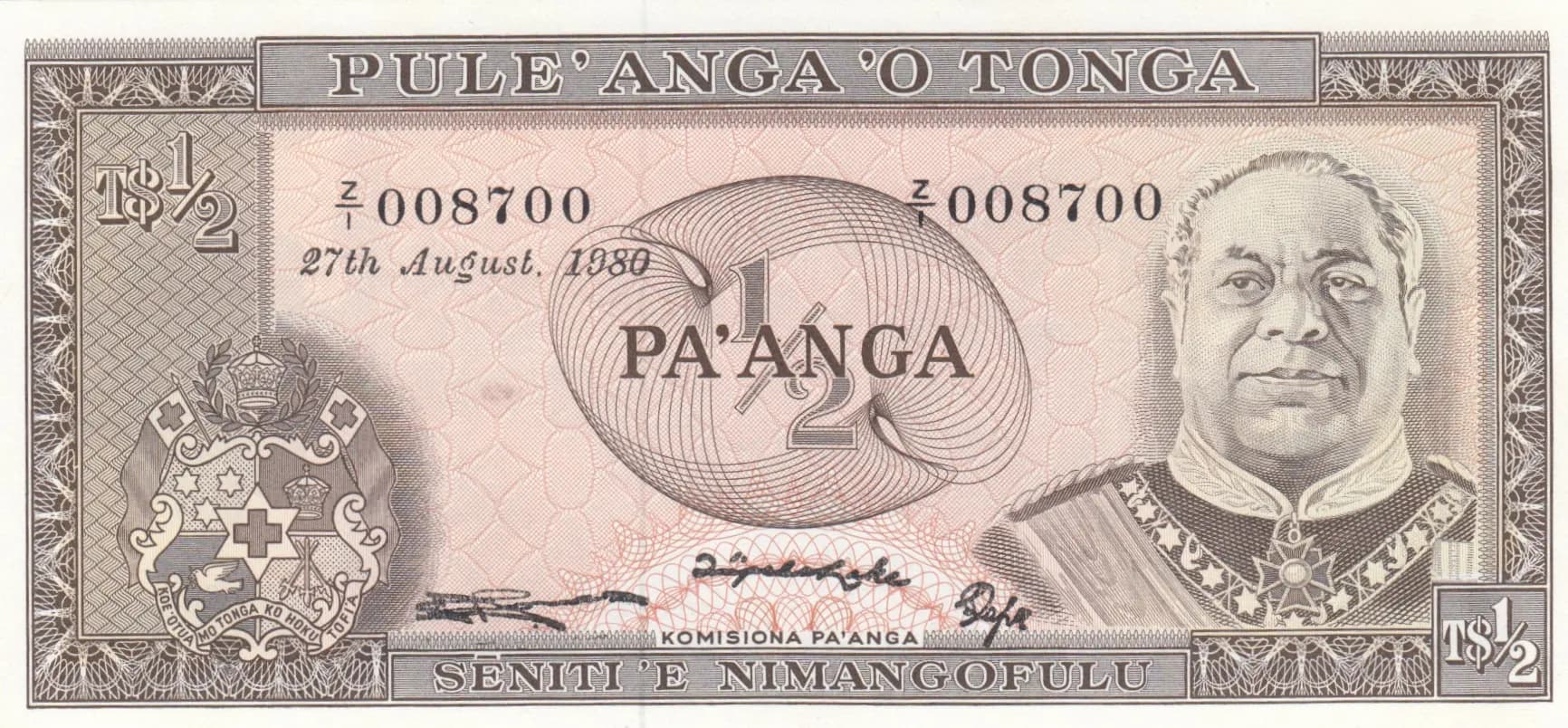
1/2 pa'anga 1977
Market Prices
3 salesAbout This Note
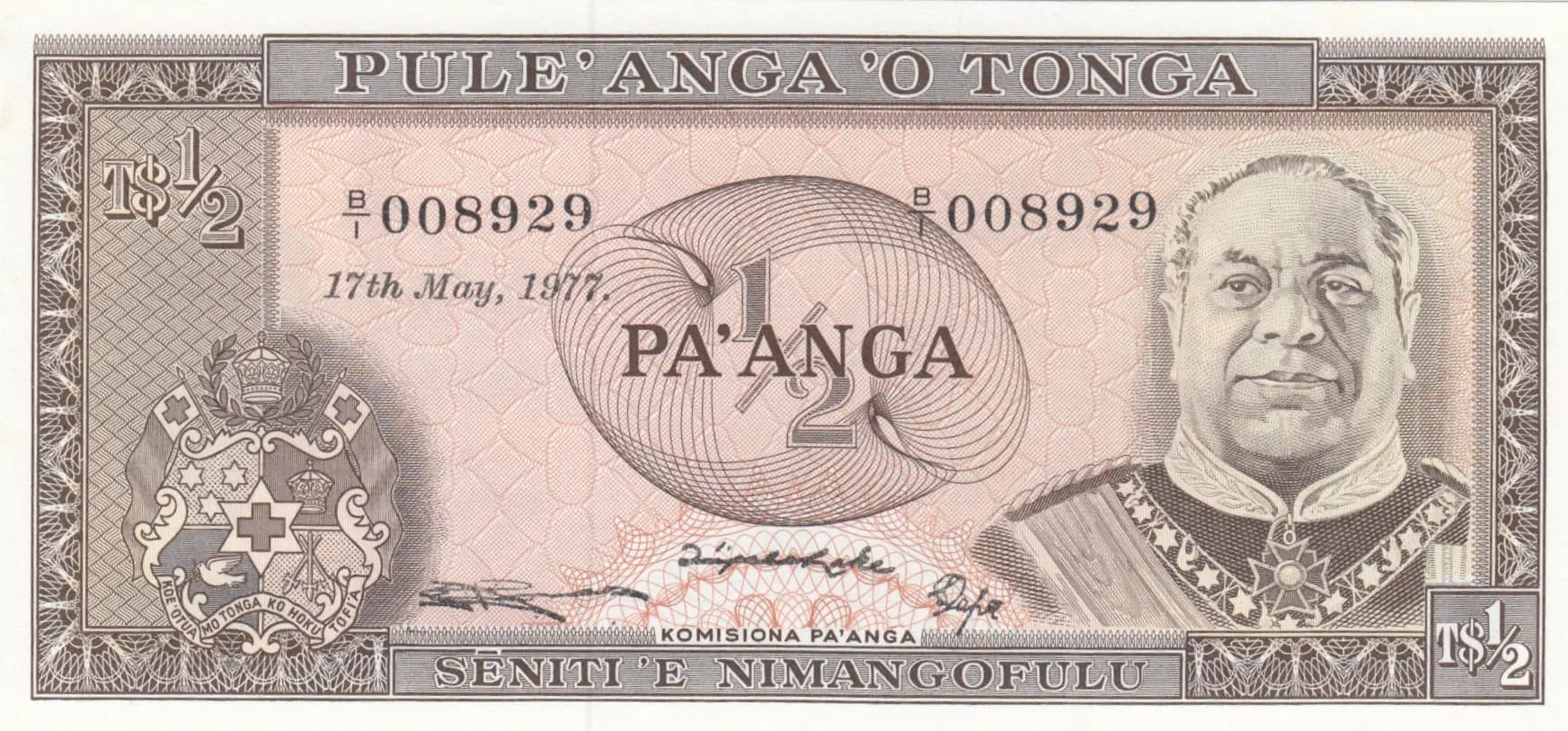
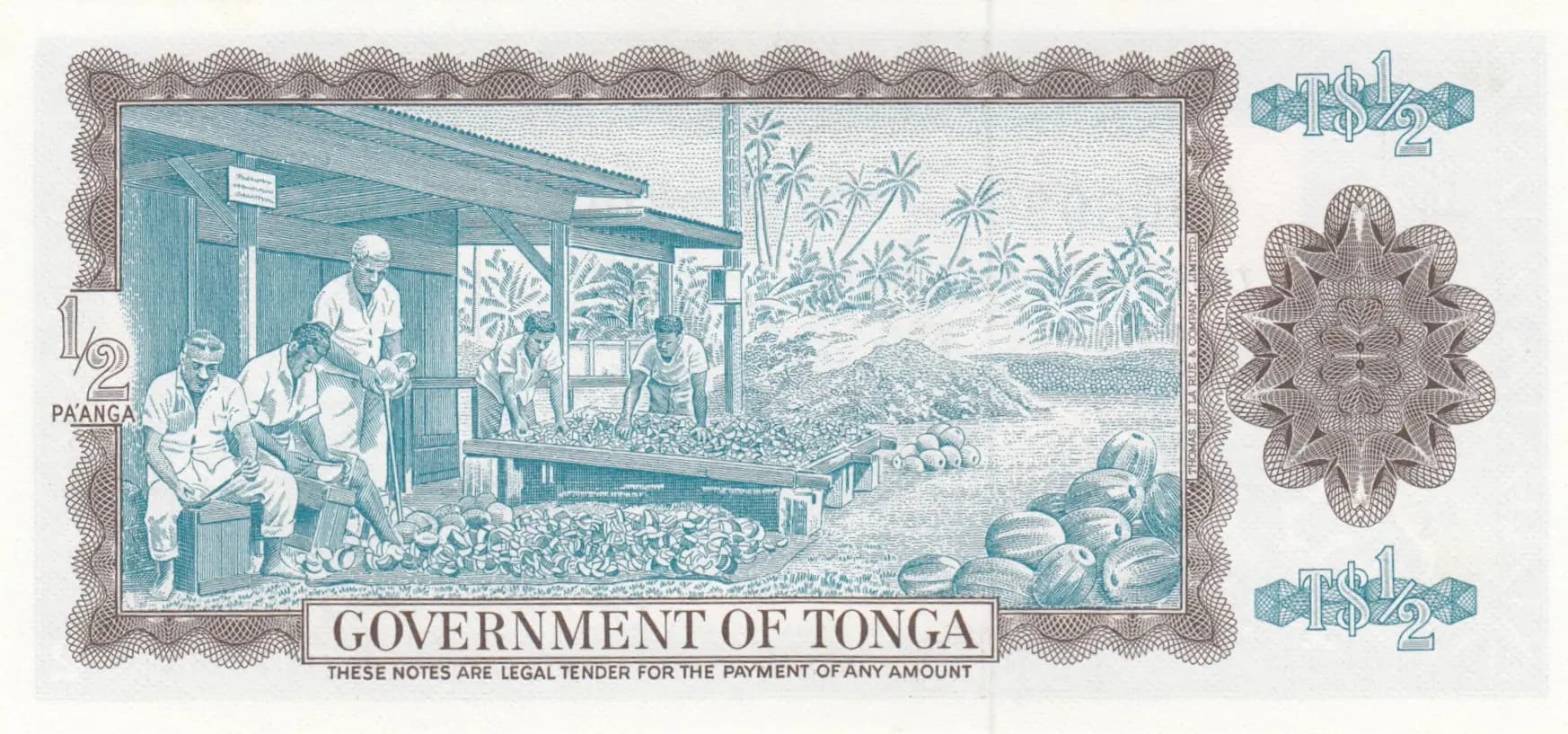
This is an exceptional example of Tonga's 1977 half pa'anga note, presented in uncirculated condition with pristine surfaces and vibrant original colors. The obverse features King Siaosi (George) Taufa'ahau IV Tupou in formal regalia on the right, set against a pink and beige background with ornate decorative elements and the national coat of arms. The reverse depicts workers engaged in coconut processing within a traditional tropical structure, rendered in teal, brown, and cream tones—a striking representation of Tonga's agricultural heritage.
Common. This note was part of a regular issue spanning 1974–1983 with substantial production quantities by Thomas de la Rue. Market evidence confirms this: eBay historical sales data shows UNC examples sold for approximately $21.66 in 2015, with catalog valuations around $15 UNC (2019)—price points consistent with common, readily available banknotes. Print runs for regular-issue Tongan currency of this era were not limited, and no historical documentation indicates scarcity or recall. The Pick number P-18b remains widely available in the collector market.
Issued during the reign of King Taufa'ahau IV by the Komisiona Pa'anga (Currency Commission), this note commemorates Tonga's modern monetary system in the mid-1970s. The deliberate choice to depict coconut workers on the reverse reflects the economic importance of agriculture and traditional industries to the Kingdom during this period of post-independence nation-building. The formal royal portrait on the obverse reinforces the constitutional monarchy's central role in Tongan identity and governance.
The obverse features a three-quarter portrait of King Siaosi (George) Taufa'ahau IV Tupou positioned on the right side, rendered in formal military dress with ornate collar insignia and decorative regalia befitting his royal station. The background employs a pink and beige color scheme with elaborate cross-hatched patterns and ornamental borders. A formal coat of arms incorporating crown and cross symbolism appears in the lower left, anchoring the note's authority. The denomination is presented within an ornately framed oval cartouche containing intricate linework. The reverse depicts a scenic composition of coconut workers in a sheltered tropical structure with palm trees visible in the background landscape, rendered in teal and brown tones. An ornamental rosette medallion appears on the right margin. The entire composition demonstrates the high engraving standards characteristic of Thomas de la Rue's security printing.
Front: 'PULE'ANGA 'O TONGA' (Kingdom of Tonga), '1/2' (denomination), 'PA'ANGA' (currency unit), 'SENITI 'E NIMANGOFULU' (Fifty cents—Tongan language equivalent of half pa'anga), 'KOMISIONA PA'ANGA' (Currency Commission), '17th May, 1977' (issue date), 'B008929' (serial number). Back: '1/2' (denomination), 'PA'ANGA' (currency unit), 'GOVERNMENT OF TONGA' (issuing authority), 'THESE NOTES ARE LEGAL TENDER FOR THE PAYMENT OF ANY AMOUNT' (legal tender declaration).
Intaglio engraving (line engraving and cross-hatching) as executed by Thomas de la Rue, London, the renowned British security printer. The fine linework, intricate background patterns, ornamental borders, and detailed scenic rendering are all hallmarks of intaglio security printing techniques. No additional security features beyond traditional engraving are evident in the visual analysis.
This specific example is Pick 18b, one of four cataloged variants under the base Pick number 18 (also including 18b*, 18c, and 18c*). The visual analysis indicates this is a standard 1977 issue dated '17th May, 1977' (17.5.1977) with serial number B008929. The note exhibits the standard obverse design with King Taufa'ahau IV and reverse coconut-worker scene. The catalog reference notes signature varieties exist for this issue; the 'b' designation indicates this is the second variant within the base Pick number grouping. Replacement notes are identified by serial number prefix Z/1, which does not apply to this example. No additional overprints or special markings are apparent from the visual analysis.