50 satang 1942
Market Prices
30 salesAbout This Note
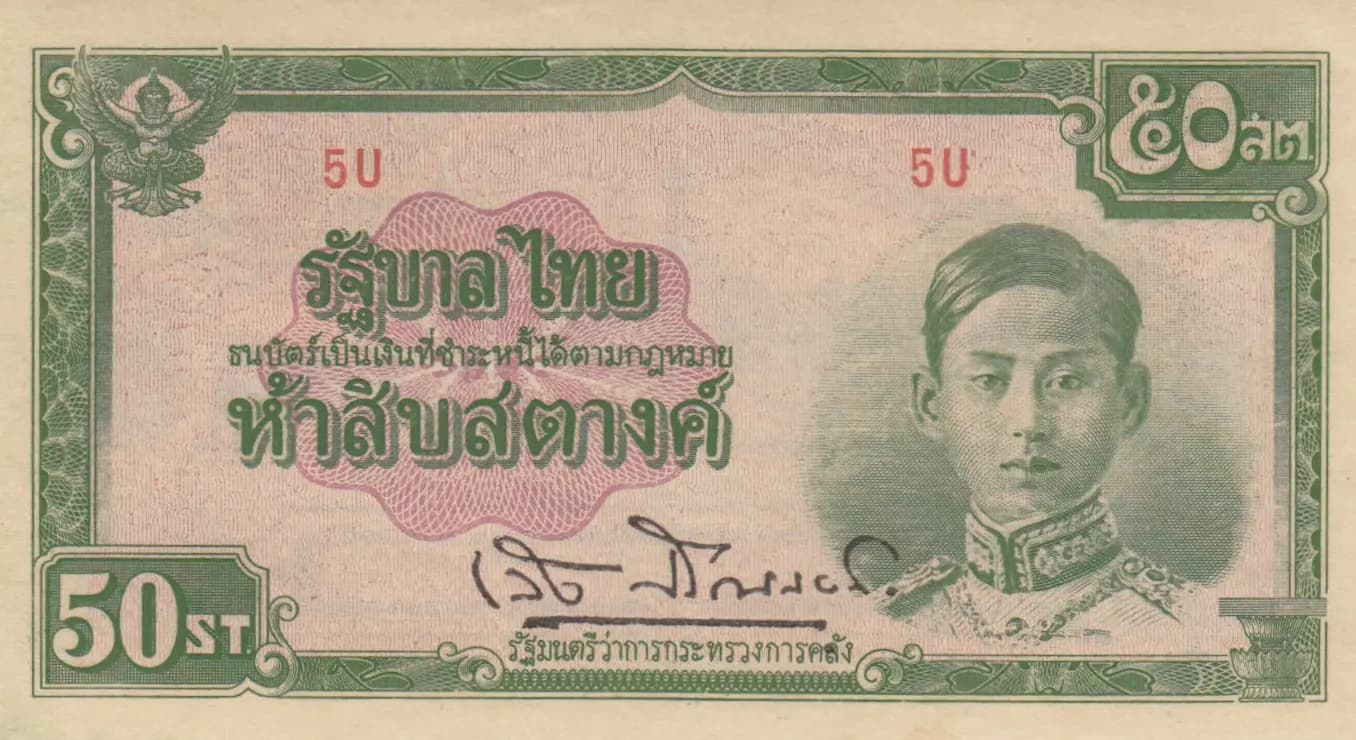
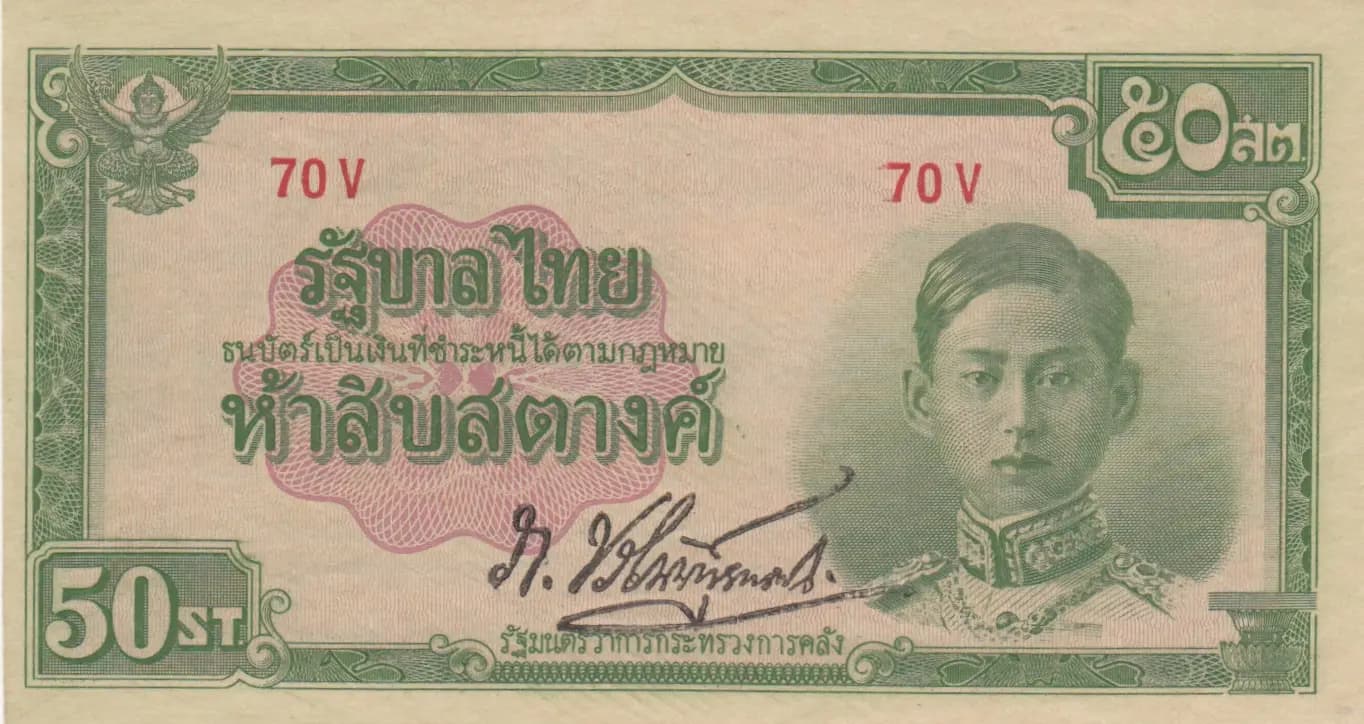
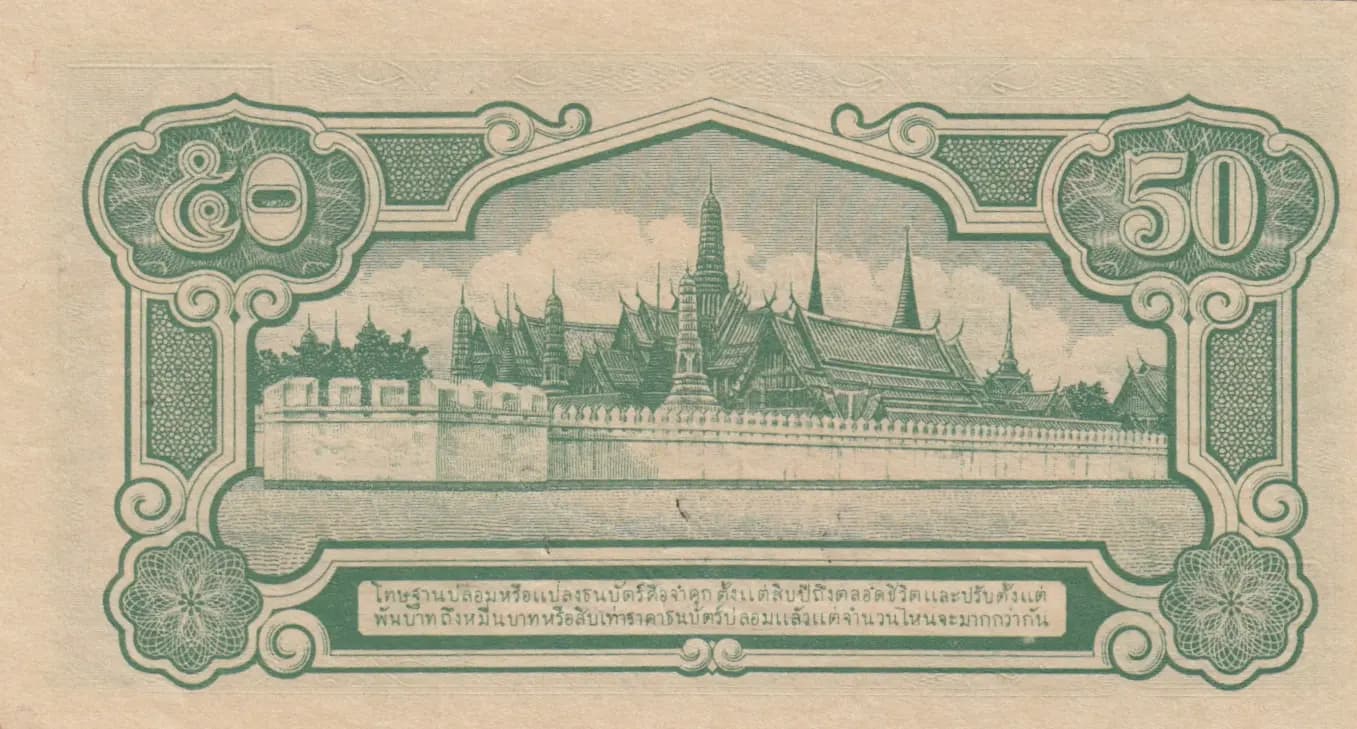
This 1942 Thai 50 satang note presents an exceptional example of early Thai banknote design, featuring a striking portrait of King Rama VIII Ananda Mahidol in formal military dress on the obverse and an intricate rendering of the Thai Royal Palace complex on the reverse. The note exhibits AU-grade condition with well-preserved color—cream beige background with green and pink elements—and shows no significant wear, tears, or creasing, with crisp engraving lines throughout.
Common. While this is a pre-war Thai banknote with historical significance, market data from realbanknotes.com shows consistent sales activity across multiple grades with notes in VF condition regularly selling in the $20-40 range and even AU/UNC examples typically ranging $50-190 at auction. The catalogue value for UNC condition is listed at only $15 (2016 pricing), and the frequency of eBay sales over the documented period indicates adequate supply in the collector market. Print runs from the government issue were substantial enough to maintain common status despite the age.
Issued in 1942 during the reign of King Rama VIII (Ananda Mahidol), this note reflects a pivotal period in Thai monetary history when the government sought to modernize its currency design. The prominent portrayal of the young king and the detailed depiction of the Royal Palace complex on the reverse served both as nationalist symbols and as visual assertions of Thai sovereignty during World War II, a period of significant political transition in Southeast Asia.
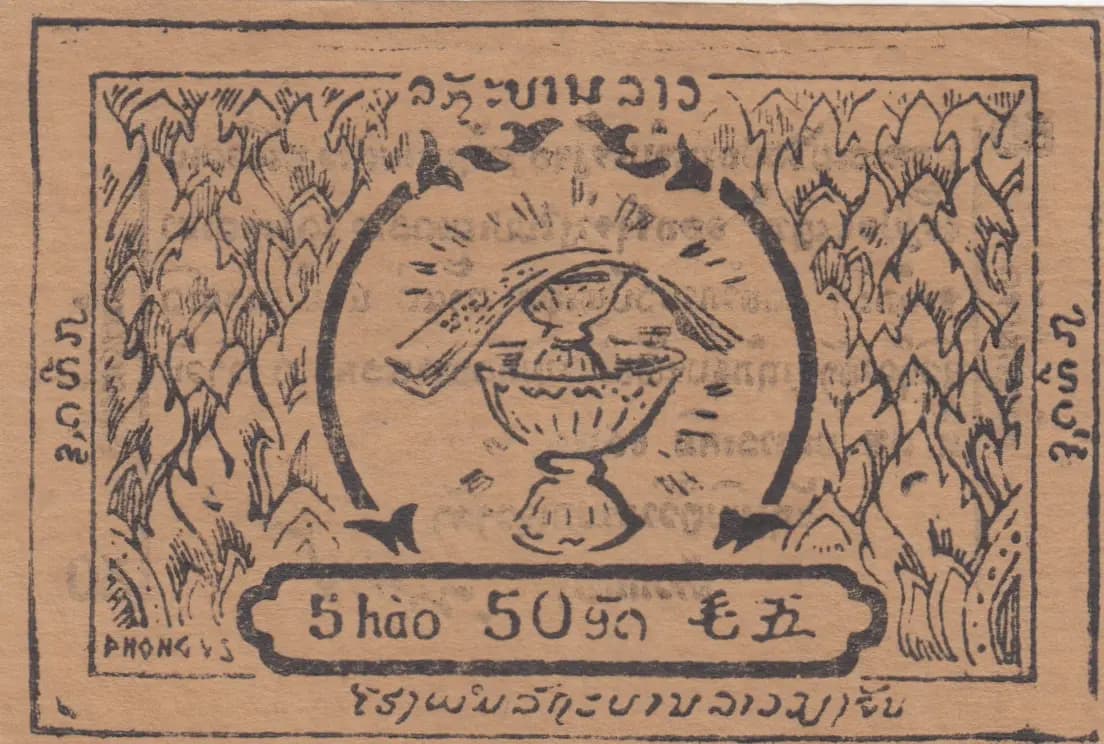
The obverse features King Rama VIII Ananda Mahidol depicted in three-quarter profile facing right, shown in formal military uniform with ornate decorated collar—appropriate for the young monarch's role as supreme commander. The portrait is placed on the right side of the note within an elaborate composition featuring a cream/beige background with decorative pink cartouche at center. The design incorporates a winged emblem with circular center in the upper left corner (representing Thai sovereignty or national symbols) and extensive ornamental corner flourishes and border designs in Thai traditional style. The reverse presents an architecturally precise rendering of a Thai Buddhist temple complex—identified as the Royal Palace complex with multiple pointed chedis (stupas), characteristic multi-tiered rooflines with upturned eaves, protective walled enclosures, and landscaped grounds. This architectural scene is framed within an elaborate decorative border featuring ornamental corner elements and curved frame design, rendered entirely in green on the cream background.
Front side: Thai text reading 'ธนาคารไทย' (Bank of Thailand), 'ธนบัตรเป็นเงินที่ถูกระหนึ่งได้ตามกฎหมาย' (This banknote is legal tender under the law), and 'หนึ่งสิบสตางค์' (Fifty satang). English/Roman numeral inscriptions include '70 V', '50 ST' (50 satang), '80 สต' (80 satang), and signature of 'R. Bhannurod'. Back side: Contains Thai descriptive text relating to the Royal Palace and its significance, though the exact classical Thai inscription requires specialized linguistic expertise for complete translation. Denomination markers '50' appear in decorative cartouches on both sides.
Intaglio engraving (line engraving) executed with fine detail work and complex guilloché patterns, as evidenced by the crisp definition of all design elements, the intricate border ornamentation, and the detailed rendering of both portraiture and architectural elements. The note was produced by the Mitsui Trading Company, a known security printer for Asian governments during this period. The use of watermarked paper provided additional security features characteristic of professional government banknote production.
Based on PMG population data, this Pick number exists in at least two documented variants: P-43r and P-43s1. The observed note appears to be a regular issued variety (P-43r) based on standard design characteristics. The specific signature visible ('R. Bhannurod') may identify this as belonging to a particular issue batch, though without access to detailed Thai banknote signature catalogs, precise variety classification cannot be definitively stated. The presence of watermarked paper and Mitsui Company production mark confirms this as an official government issue rather than a specimen or presentation note.