1 baht 1948
Market Prices
23 salesAbout This Note
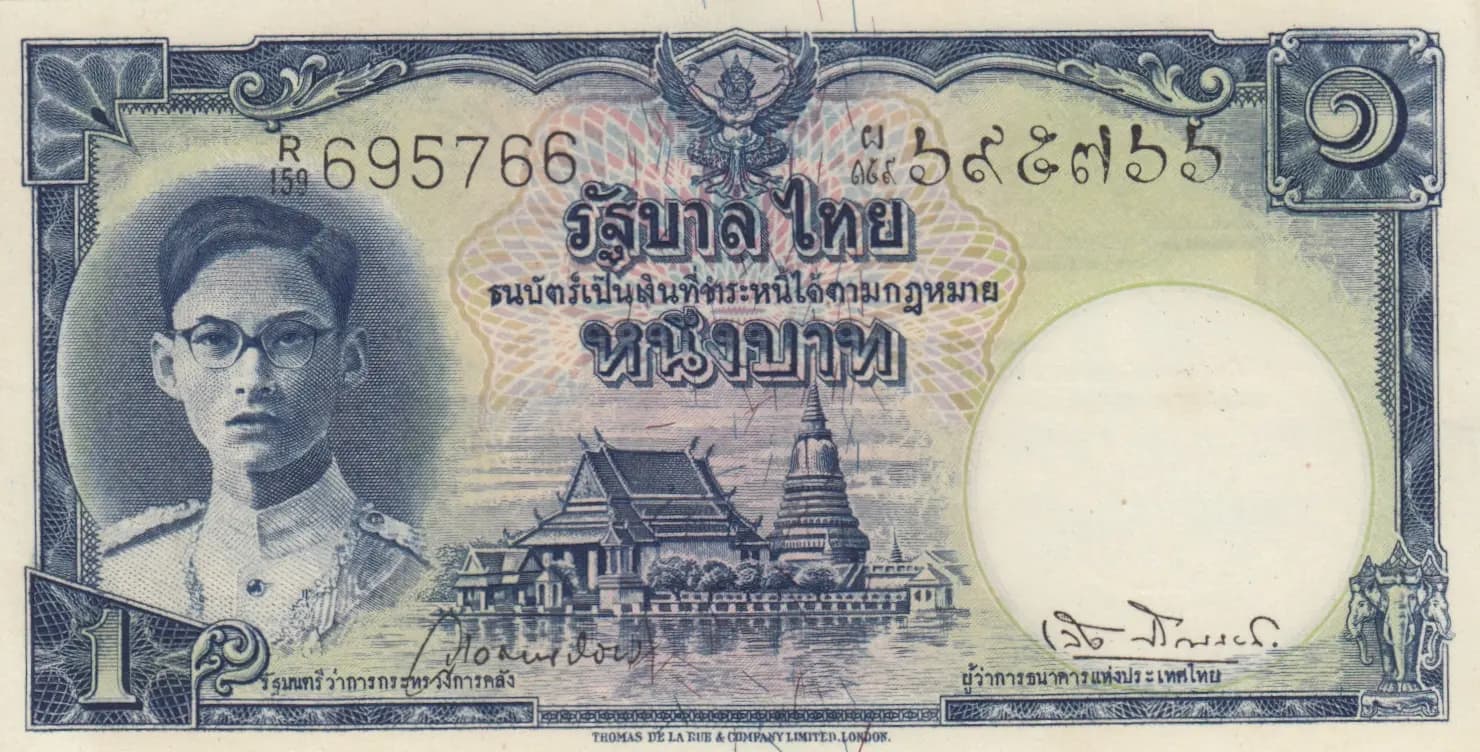
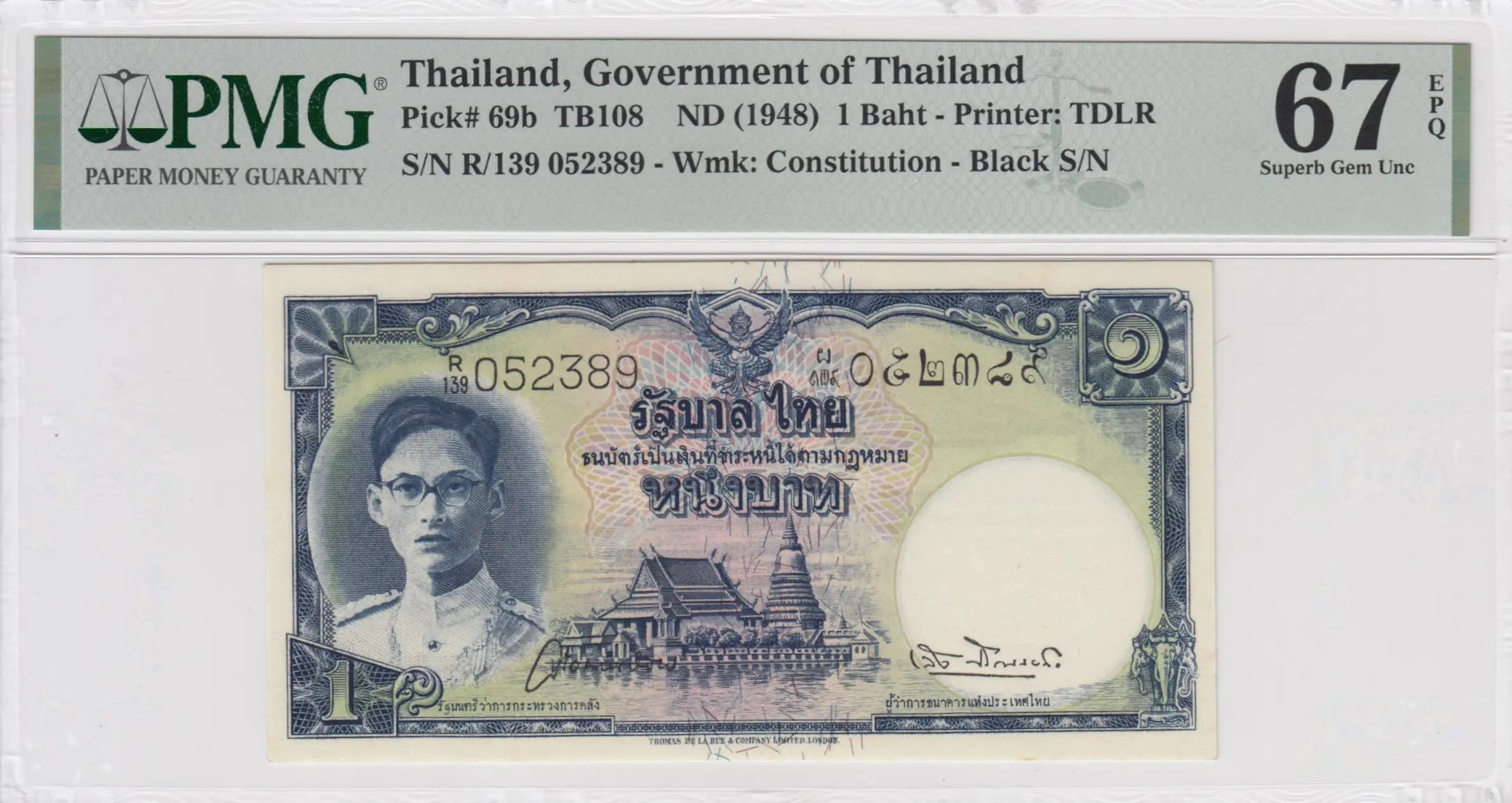
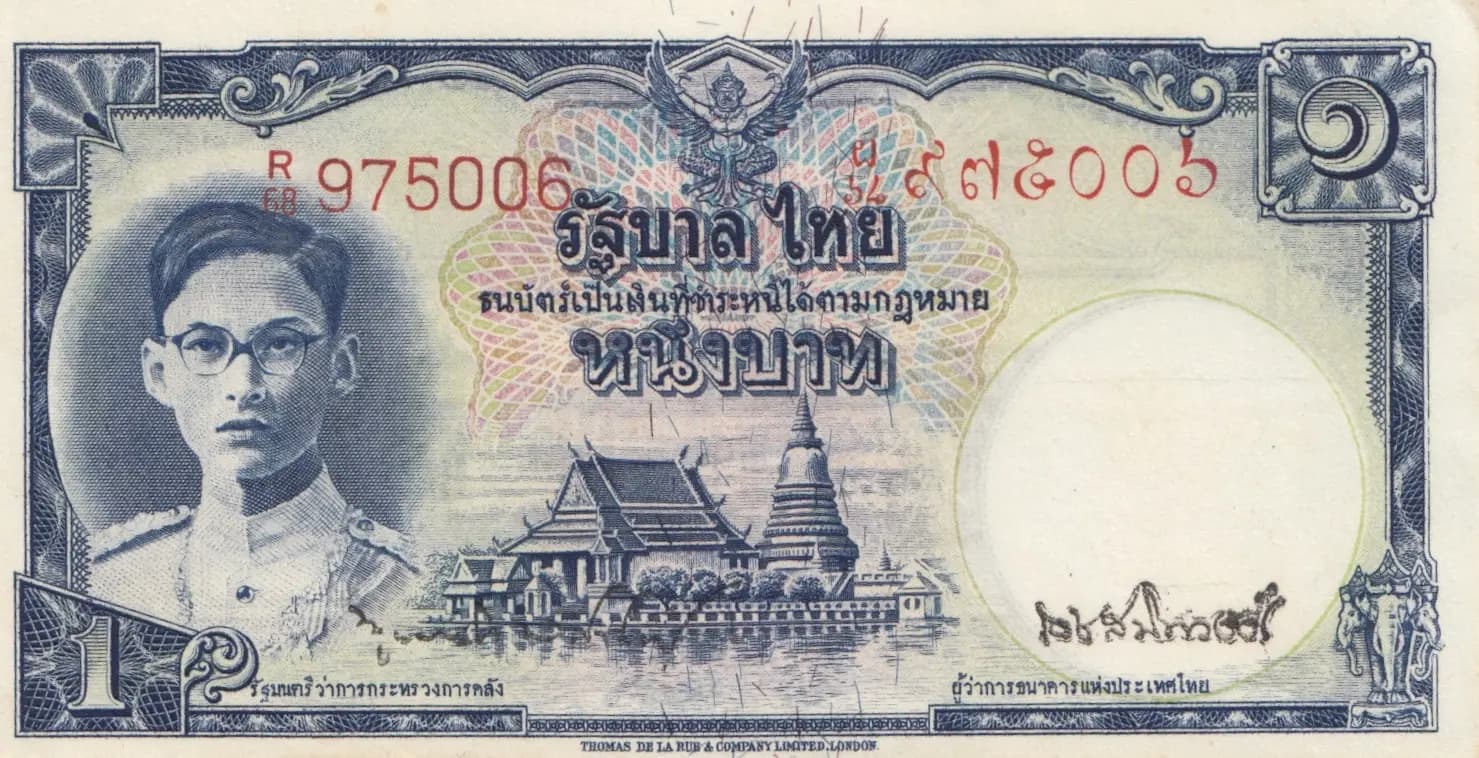
This Thailand 1 Baht note from 1948 (Pick-69a) presents a fine example of early post-war Thai currency featuring King Rama IX in military uniform on the obverse. The note displays characteristic design elements of the Thomas de la Rue printing house, with intricate engraving work visible throughout. In AU condition, this specimen shows light age-related foxing typical of notes from this era while maintaining strong structural integrity and clear impressions of both portraiture and architectural imagery.
Common. This note remains readily available in numismatic markets, as evidenced by consistent eBay sales ranging from $3-$355 USD depending on condition and certification grade. The 2016 catalog values list UNC specimens at $10, and regular sales activity across multiple condition grades indicates substantial surviving examples. The print run for this Pick-69a issue was sufficient to maintain its status as a common collectible Thai banknote despite its age. AU condition examples such as this are moderately desirable but not scarce.
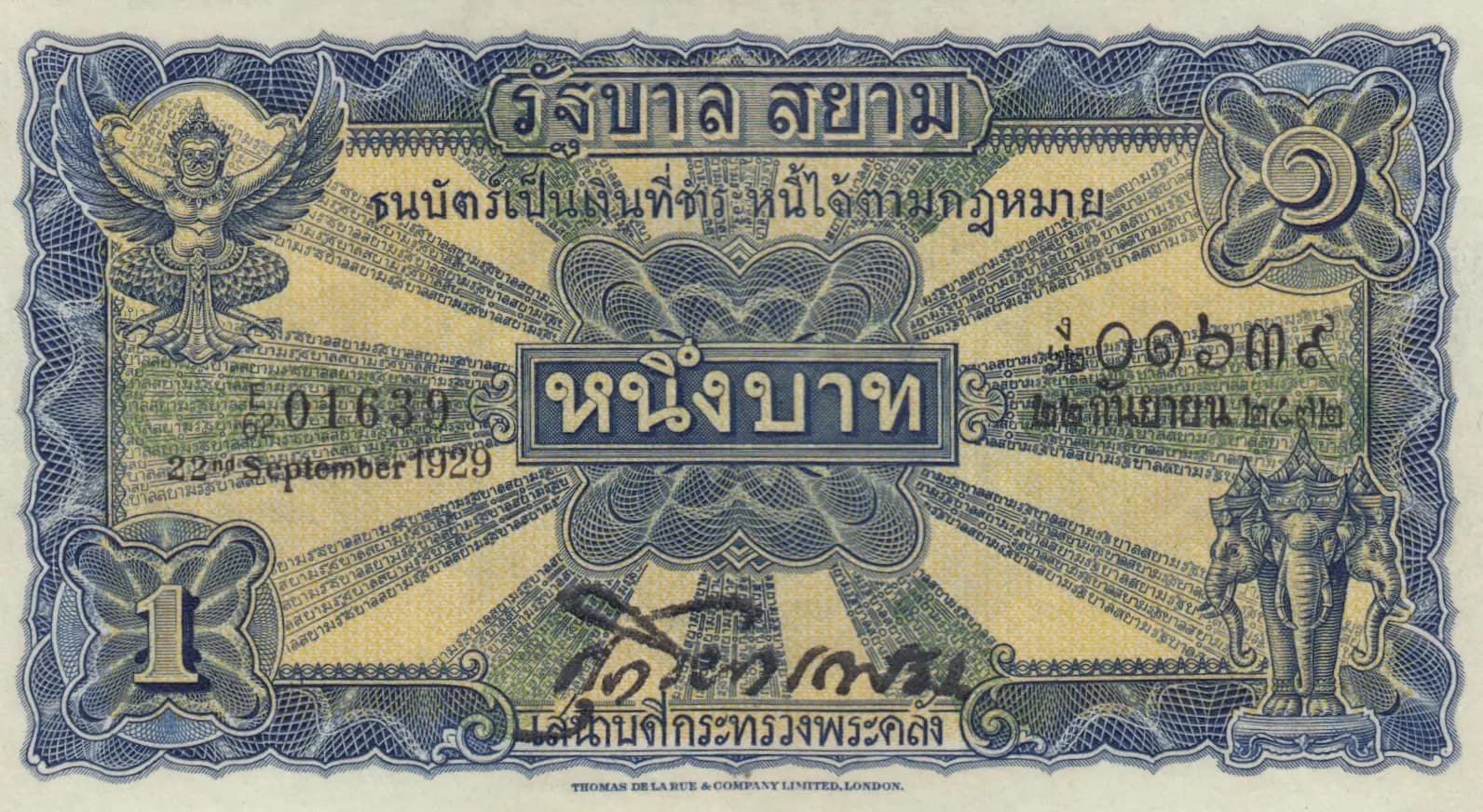
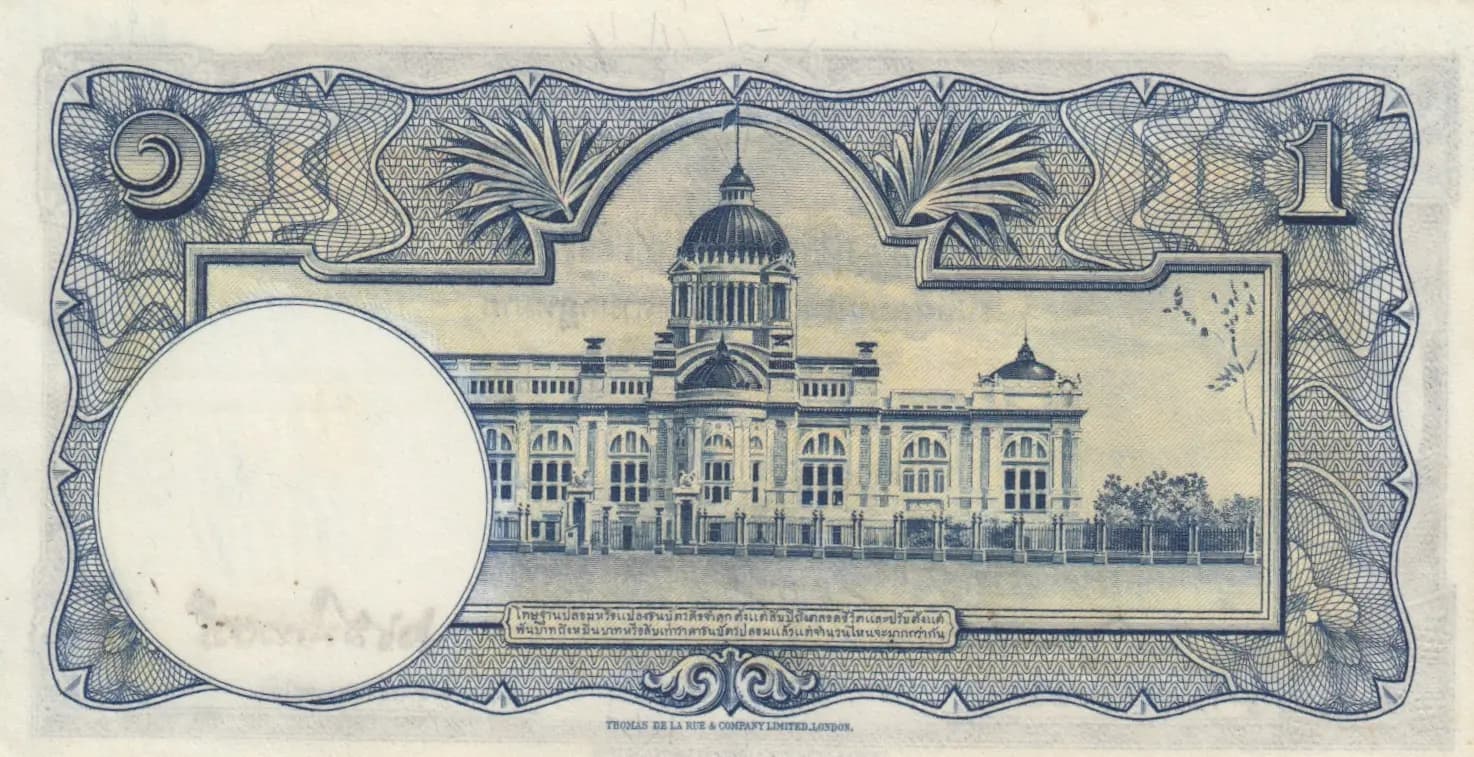
Issued in 1948 during the early reign of King Bhumibol Adulyadej (Rama IX), this banknote reflects Thailand's post-World War II monetary reorganization and the government's desire to establish stable currency under the new monarch. The obverse depicts King Rama IX in military dress, symbolizing his role as supreme protector of the Thai state, while the reverse features a grand neoclassical government building (likely the Royal Throne Hall or similar state institution) representing institutional authority and national governance during this formative period of the reign.
The obverse features a three-quarter portrait of King Bhumibol Adulyadej (Rama IX) positioned on the left side, depicted wearing military dress uniform with visible insignia and eyeglasses, lending an air of modern statesmanship. The center of the note showcases an ornamental cartouche with Thai text beneath a decorative crown and winged Garuda emblem (representing Thai royal and national power). To the right stands the Phra Samut Chedi temple complex, identifiable by its characteristic Thai Buddhist architecture with multiple spires, upturned roof eaves, and a tall central pagoda positioned near water. The reverse presents a neoclassical institutional building with a prominent central dome and cupola, symmetrical architecture with multiple arched windows, and a waterfront setting with railings—likely representing the Royal Throne Hall or similar seat of government. Both sides feature elaborate ornamental borders with scrollwork, geometric mesh patterns for security, and palm frond motifs characteristic of high-quality bank note design.
Front side: Serial number 'R 975006' (red, upper left); 'ธรรมชาติไทย' (Thai nature/Thai essence); 'ธนบัตรโดยสนพระราชกฤษฎาฯ' (Banknote issued by royal decree); 'หนึ่งบาท' (One baht); 'THOMAS DE LA RUE & COMPANY LIMITED, LONDON' (printer attribution). Back side: 'THOMAS DE LA RUE & COMPANY LIMITED, LONDON' (printer attribution); additional Thai inscriptions present but not clearly legible in provided image analysis.
Intaglio engraving (recess printing) executed by Thomas de la Rue & Company Limited, London, one of the world's premier security printers. The visual analysis reveals fine line engraving throughout with intricate scrollwork, complex geometric lattice patterns used for security purposes, and detailed portrait work—all hallmarks of the intaglio process. Multiple color printing (blue, red, green, cream underprints) indicates multicolor intaglio or combination printing techniques. Security features include fine line work in borders, ornamental designs, and color-shifting elements visible in the detailed engraving.
This specimen is cataloged as Pick-69a, distinguishing it from other denominations or varieties of Thai 1 Baht notes issued during this period. The serial number 'R 975006' visible on the obverse indicates this particular example within the production run. Known varieties for 1948 Thai 1 Baht notes may include different serial number prefixes, signature variations, or security thread configurations, though the visual analysis confirms this as a standard production example featuring the red security thread and red serial number characteristic of P-69a. No overprints or special variety markers are evident on the observed specimen.