1 baht 1935
Market Prices
36 salesAbout This Note
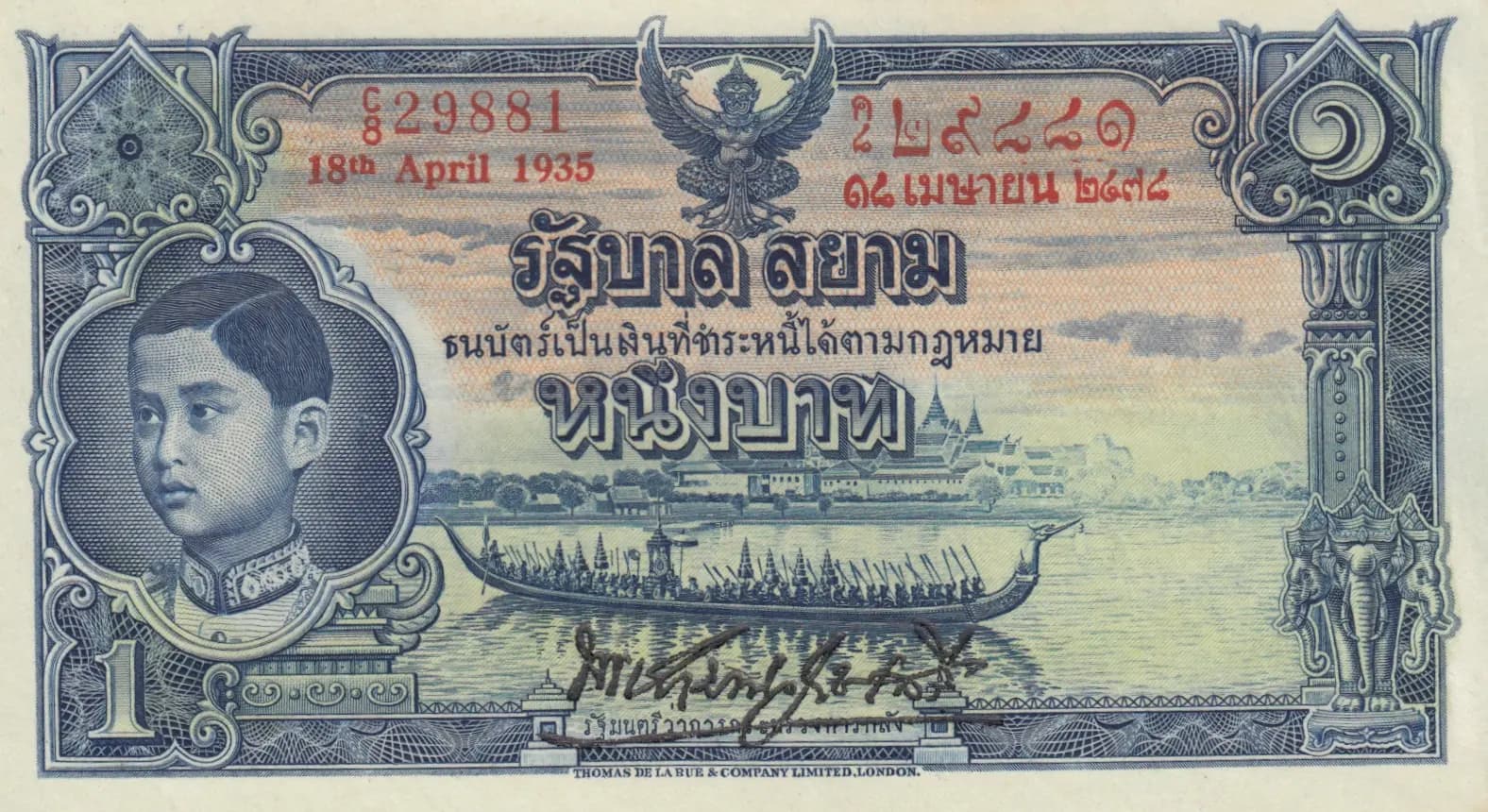
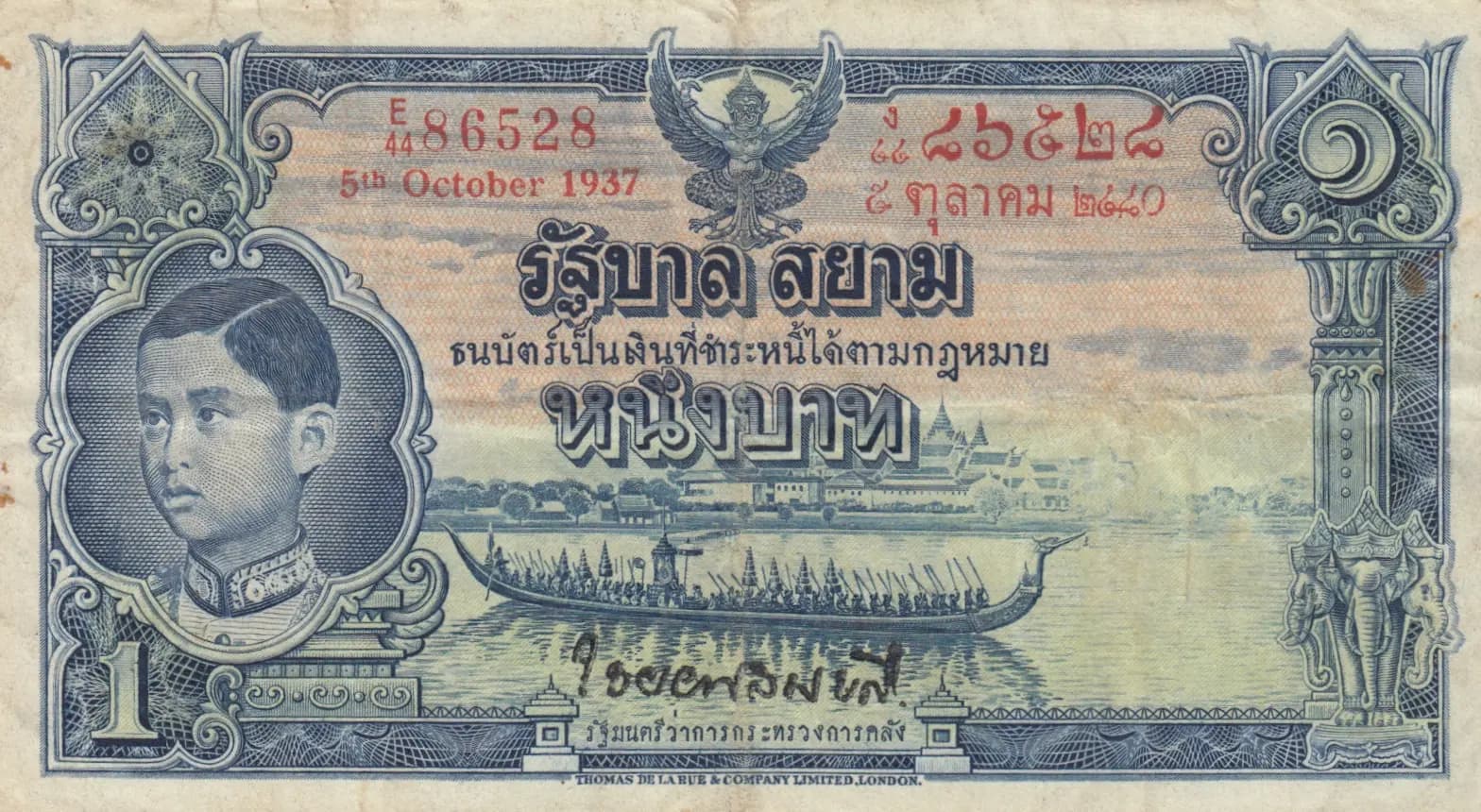
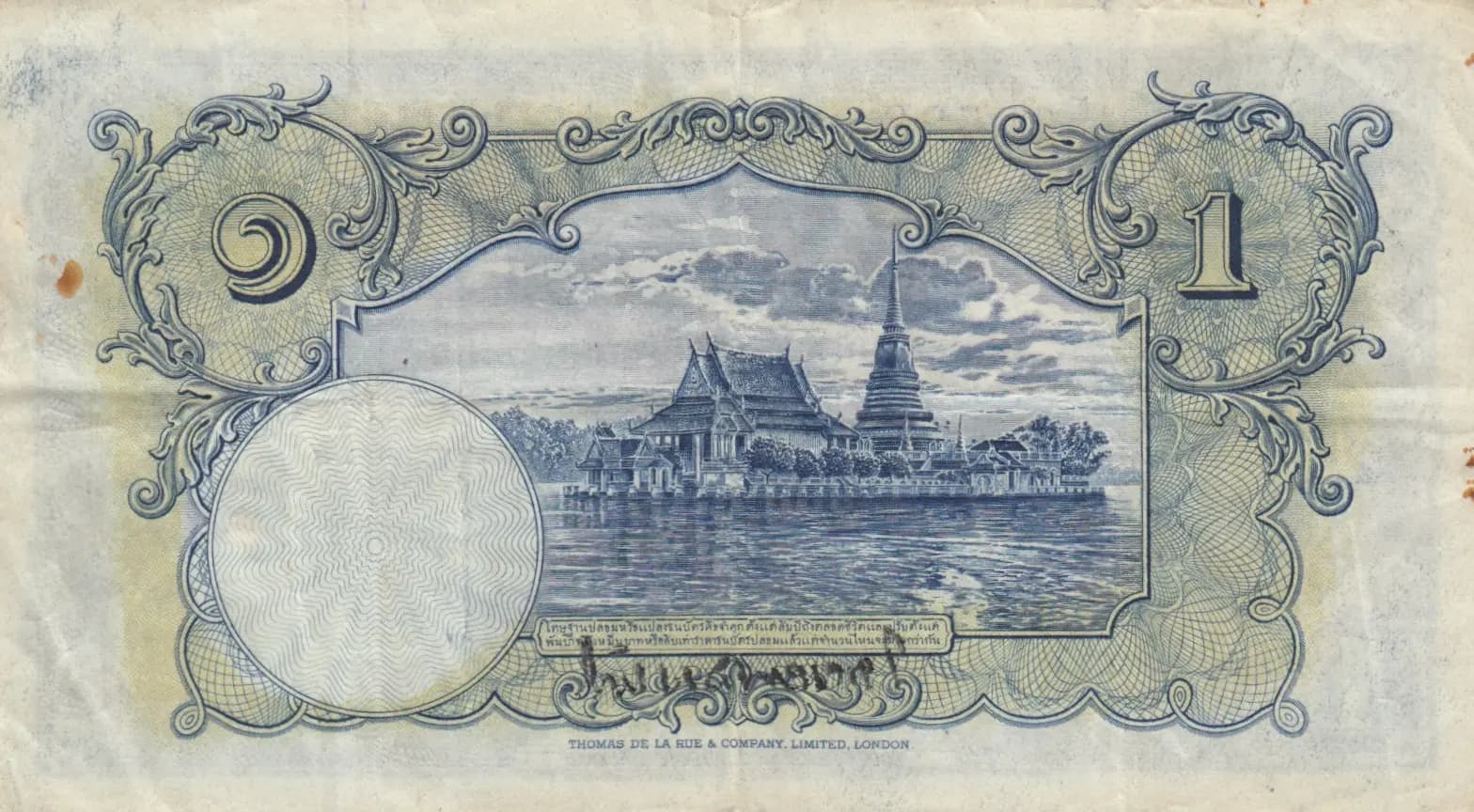
This is a Thai Government of Siam 1 baht note from 1935 (Pick P-26), printed by Thomas de la Rue & Company in London. The note features a young King Rama VIII Ananda Mahidol in formal dress on the obverse and the notable Phra Samut Chedi temple complex on the reverse, both rendered in delicate blue and green tones with fine engraving work. In Fair condition, this nearly 90-year-old note shows expected aging with foxing, yellowing, and edge wear, yet retains good detail visibility and represents an important early-period Thai banknote from the reign of one of Thailand's most significant monarchs.
Common. The eBay price history provided shows consistent sales of this note in Fair condition ranging from $26 to $58, with an average around $30-35 for F-graded examples. The substantial transaction volume over more than a decade, the wide range of grades available on the market, and the relatively low price points all indicate this is a commonly encountered note among collectors. While it represents an important historical issue from 1935-1938, no evidence of restricted print runs or rarity is present in the market data or catalog information.
Issued during the reign of King Rama VIII (Ananda Mahidol), who ascended the Thai throne in 1935 at a young age, this banknote reflects the modernization and international confidence in Siam's currency during the mid-1930s. The depiction of the young king in formal royal attire on the obverse and the prominent placement of Phra Samut Chedi—a historically significant Buddhist temple—on the reverse underscore the intertwining of monarchy and religious authority in Thai national identity. The engagement of London's prestigious Thomas de la Rue printing house demonstrates Siam's commitment to world-class currency production during this transitional period in Southeast Asian history.
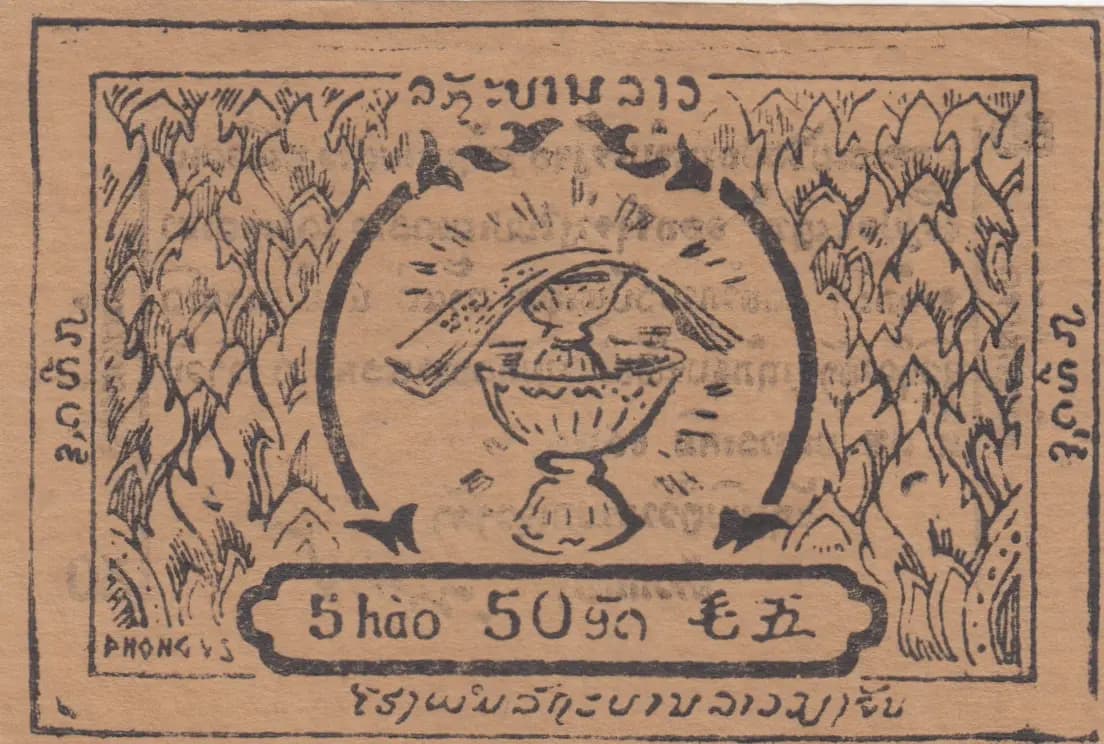
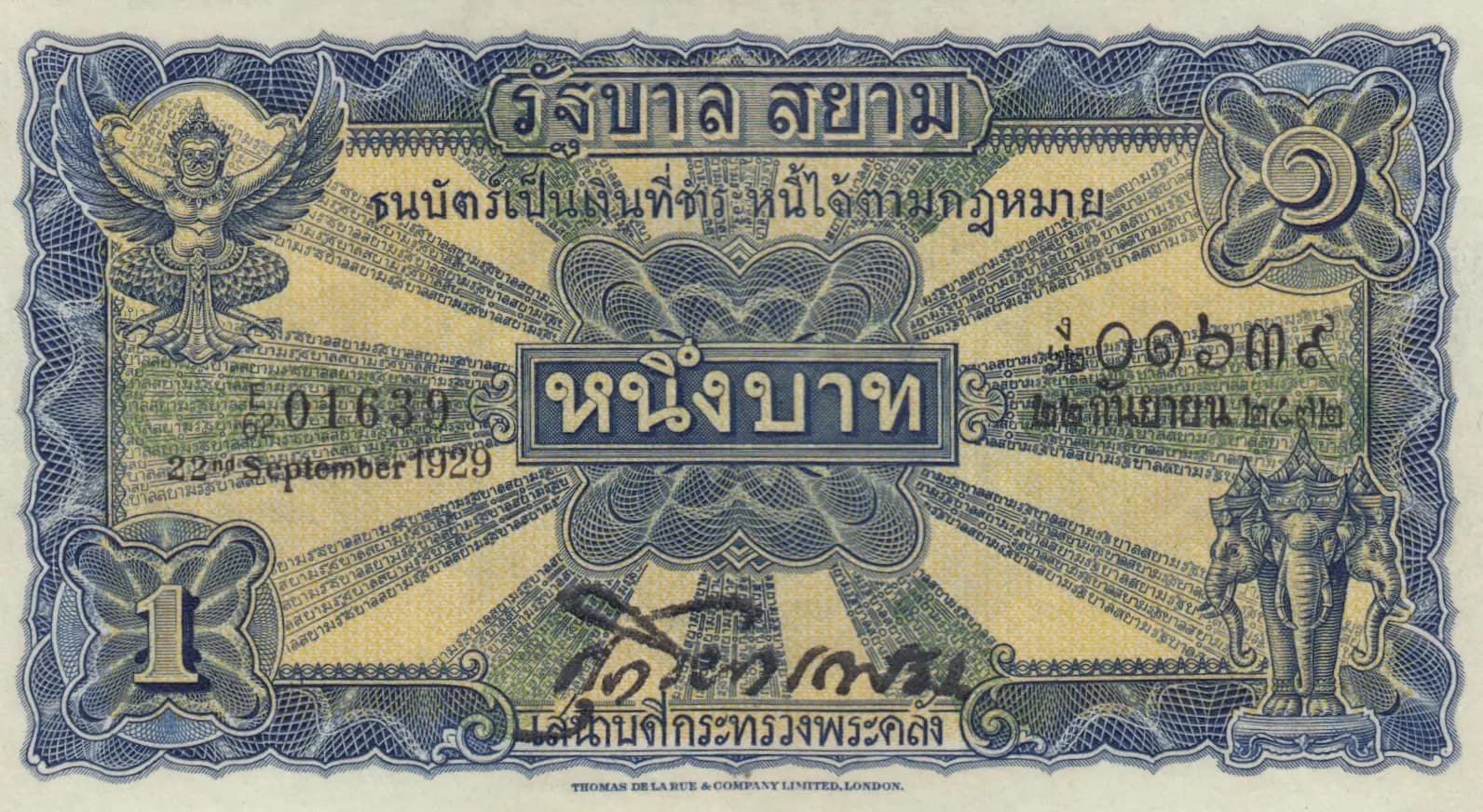
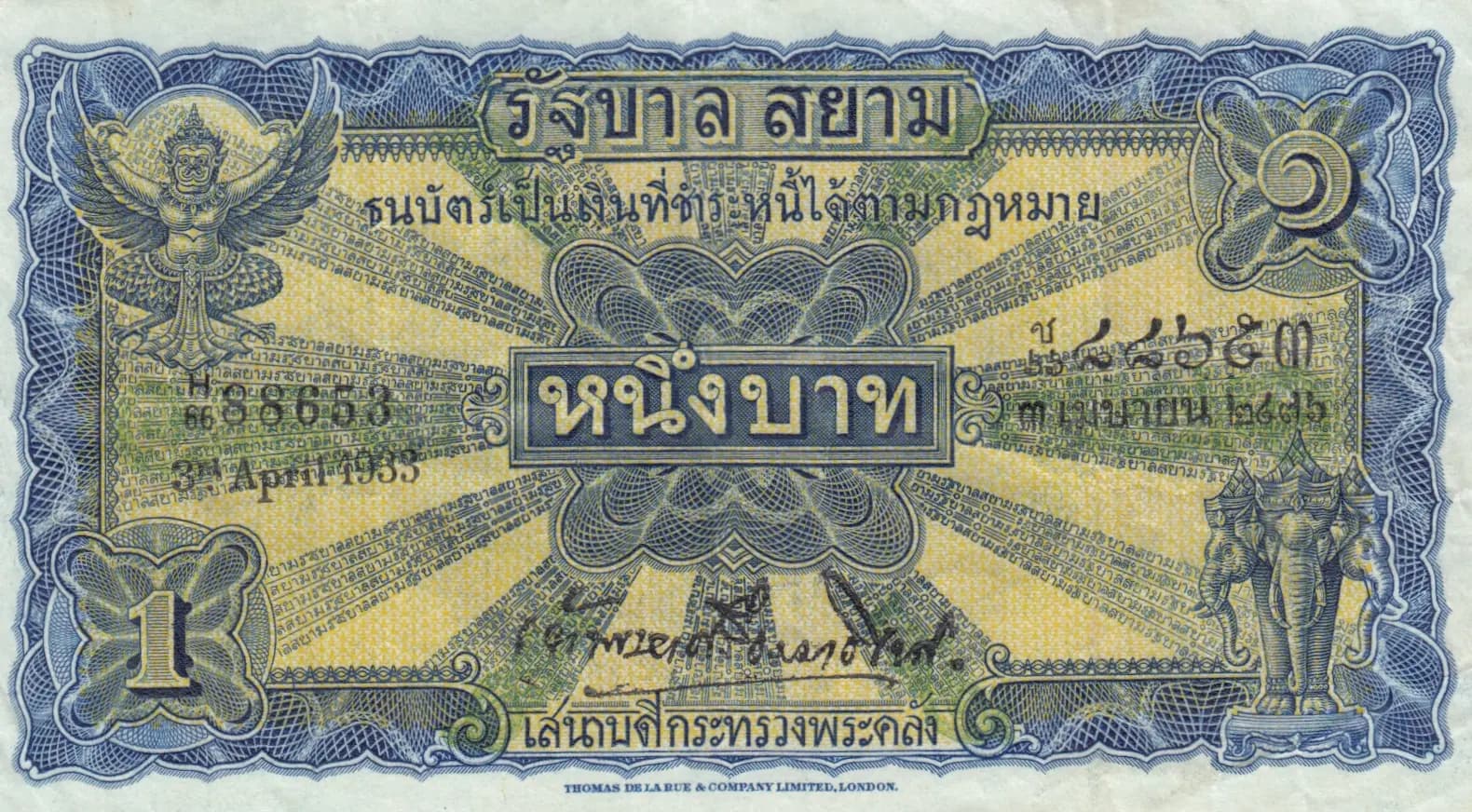
The obverse features a left-facing three-quarter portrait of the young King Rama VIII (Ananda Mahidol) in formal royal dress, seated within an elaborate oval frame adorned with ornamental scrollwork. The portrait is flanked by a detailed landscape vignette depicting a Thai temple complex with multiple spires reflected in water, with traditional boats and riverside vegetation visible. The reverse is dominated by a larger temple vignette of Phra Samut Chedi, a historically significant Buddhist monument, rendered in a contemplative landscape setting beneath a cloudy sky and enclosed within decorative borders. A large circular guilloche pattern occupies the lower left of the reverse. Throughout both sides, the design employs ornate Garuda symbols, floral motifs, and intricate Thai artistic corner pieces. The color palette of blue, green, cream, and black engraving creates a harmonious and distinctly Thai aesthetic.
Front side: Serial number 'E 886528'; Date '5th October 1937' (corresponding to Thai Buddhist Era 2480); Thai text 'จุลบุคล สยาม' (Siam); Thai text 'ตุลาคม 2480' (October 2480 Buddhist Era); Thai legal tender declaration 'ธนบัตรเป็นสินที่ระหนึ่งได้ตามกฎหมาย' (This note is legal tender); Printer credit 'THOMAS DE LA RUE & COMPANY LIMITED, LONDON'. Back side: Denomination numeral '1'; Thai text 'ประเทศไทย' (Thailand); Printer credit 'THOMAS DE LA RUE & COMPANY, LIMITED, LONDON'.
Intaglio engraving (line engraving and steel engraving), executed by Thomas de la Rue & Company Limited of London. The visual analysis confirms the characteristic fine line work, complex guilloche patterns, and intricate decorative borders typical of intaglio printing. The precision of the portrait rendering, the delicate detail in the temple architecture vignettes, and the elaborate security-oriented guilloche work in the oval denomination frame all indicate the high-security printing standards for which Thomas de la Rue was renowned during this period.
This specific note is dated 5th October 1937 with serial number E 886528, placing it within the documented 1935-1938 issuance period. The 'E' serial prefix and the specific date variant (1937) represent one of the varieties within the broader P-26 issuance. PMG's population report indicates one cataloged variant for Pick P-26, and this note's blue color, King Rama VIII portrait, and temple reverse design are consistent with the standard variety. No overprints, rare prefix combinations, or error characteristics are observed in this example.