10 yen 1945
Market Prices
1 saleAbout This Note
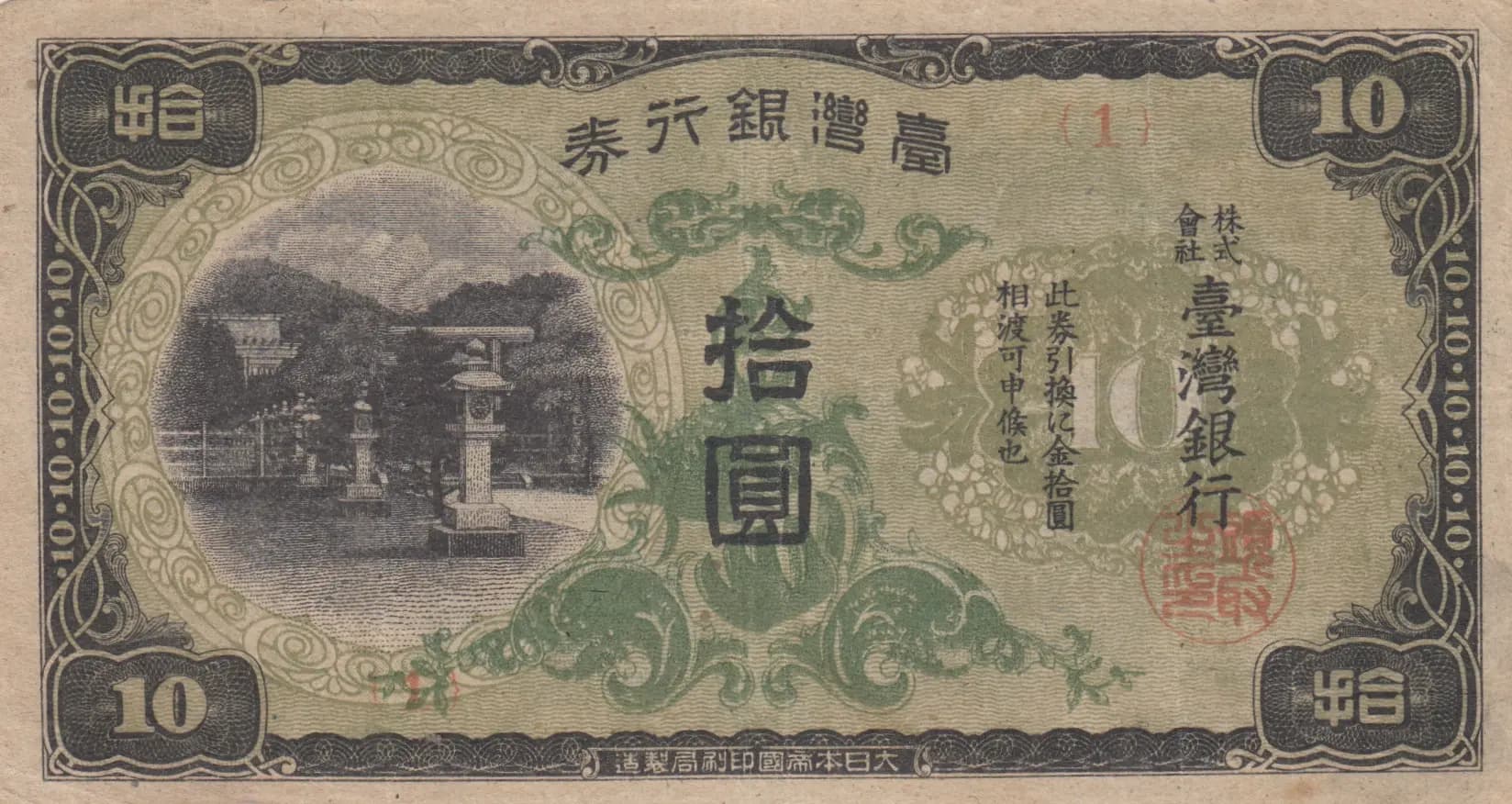
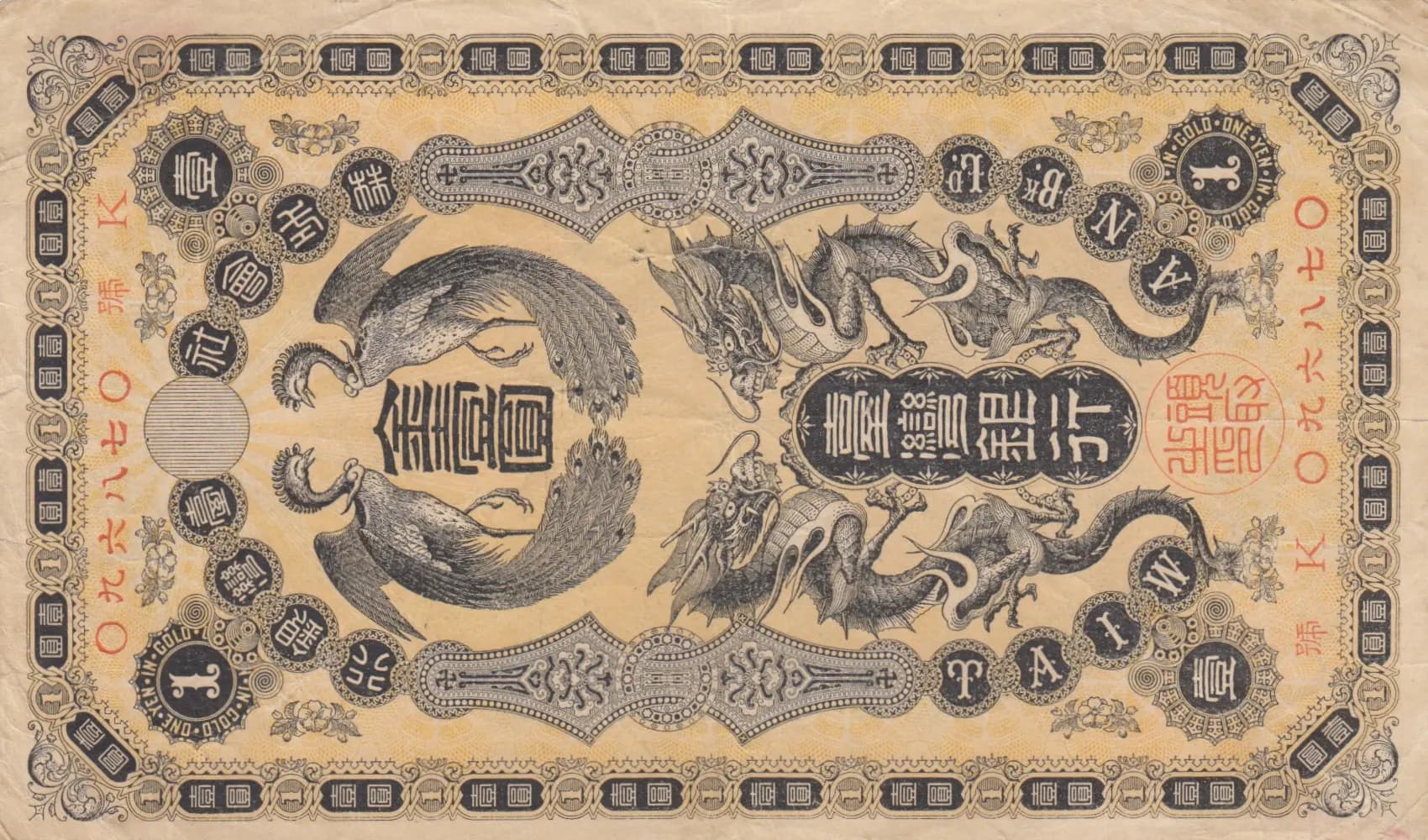
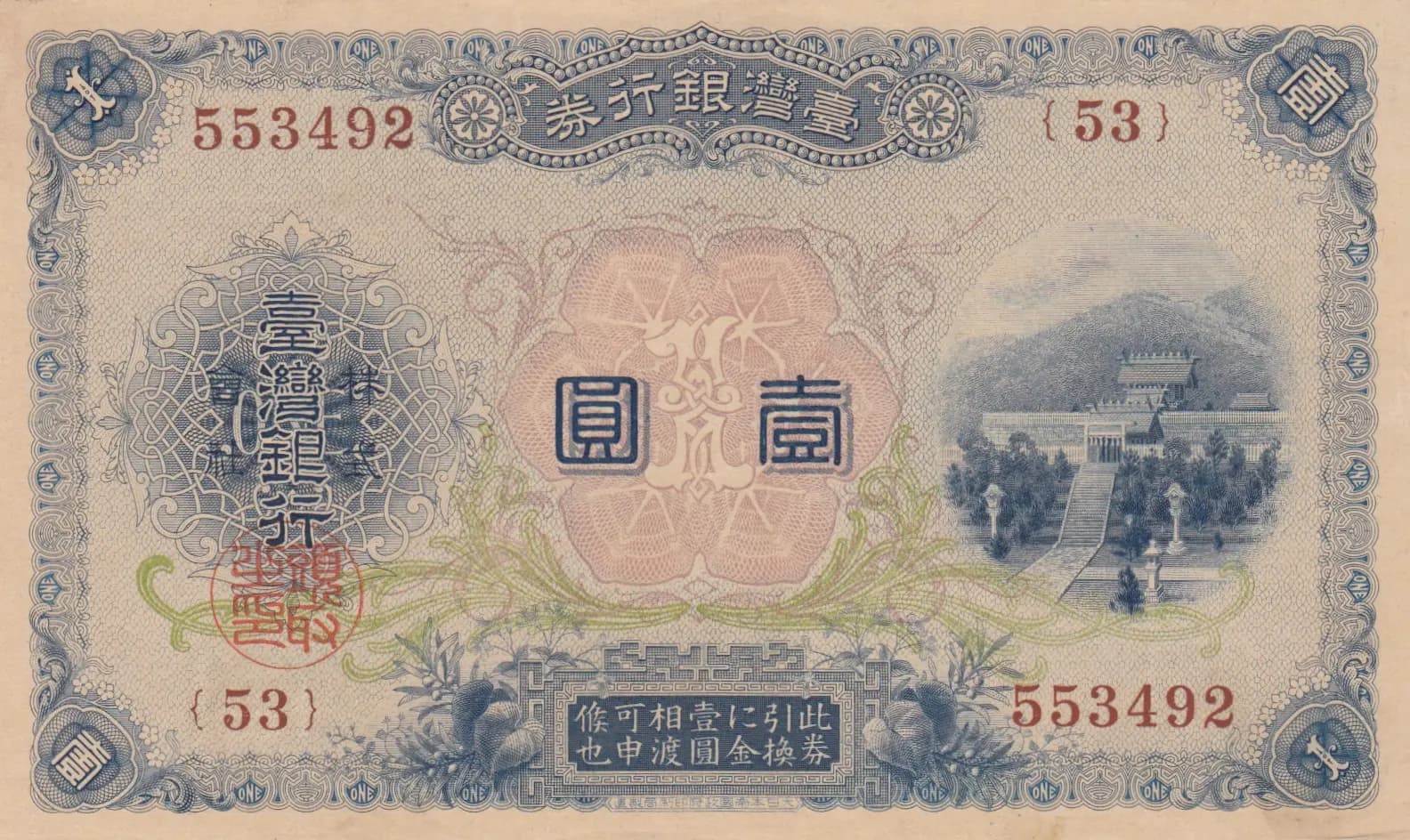
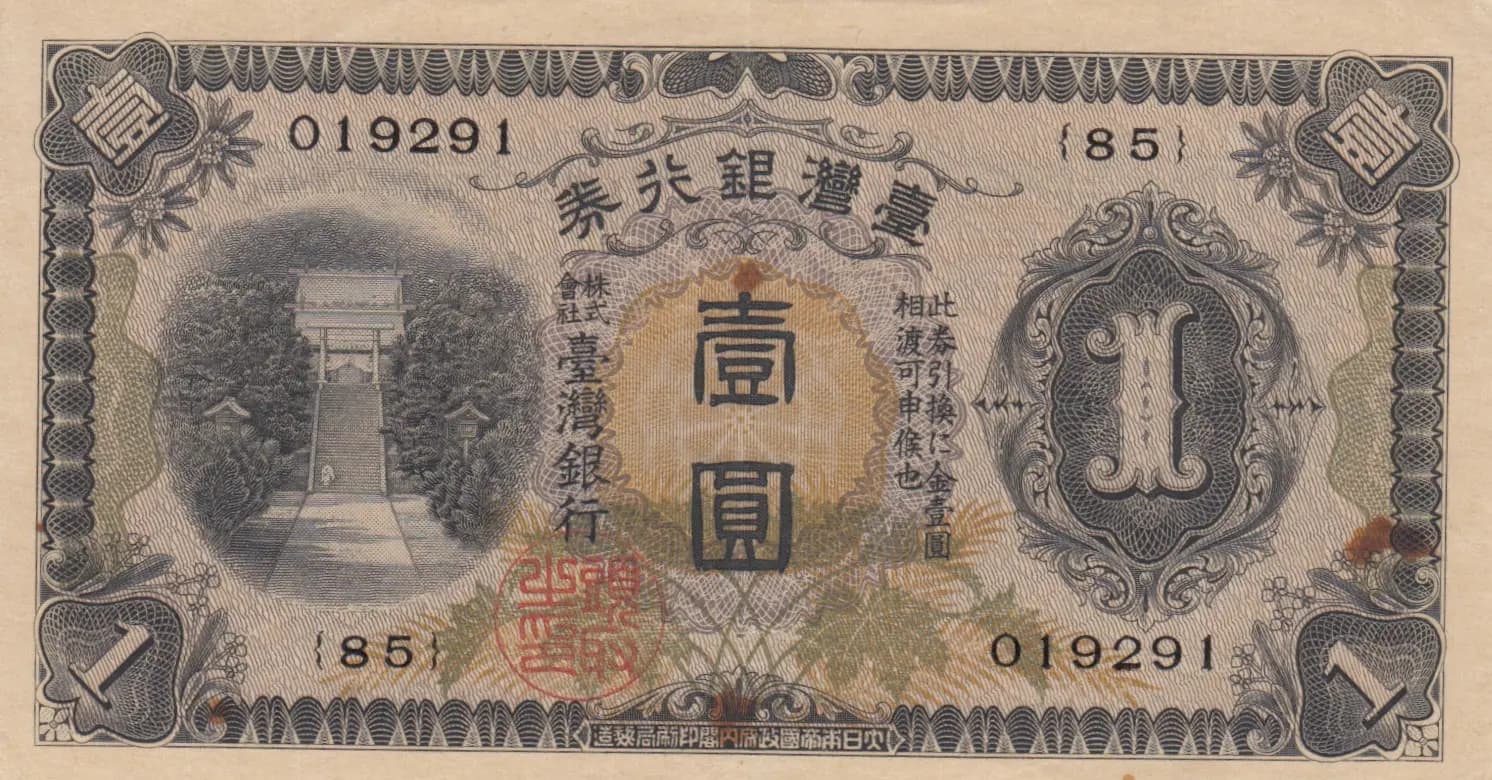
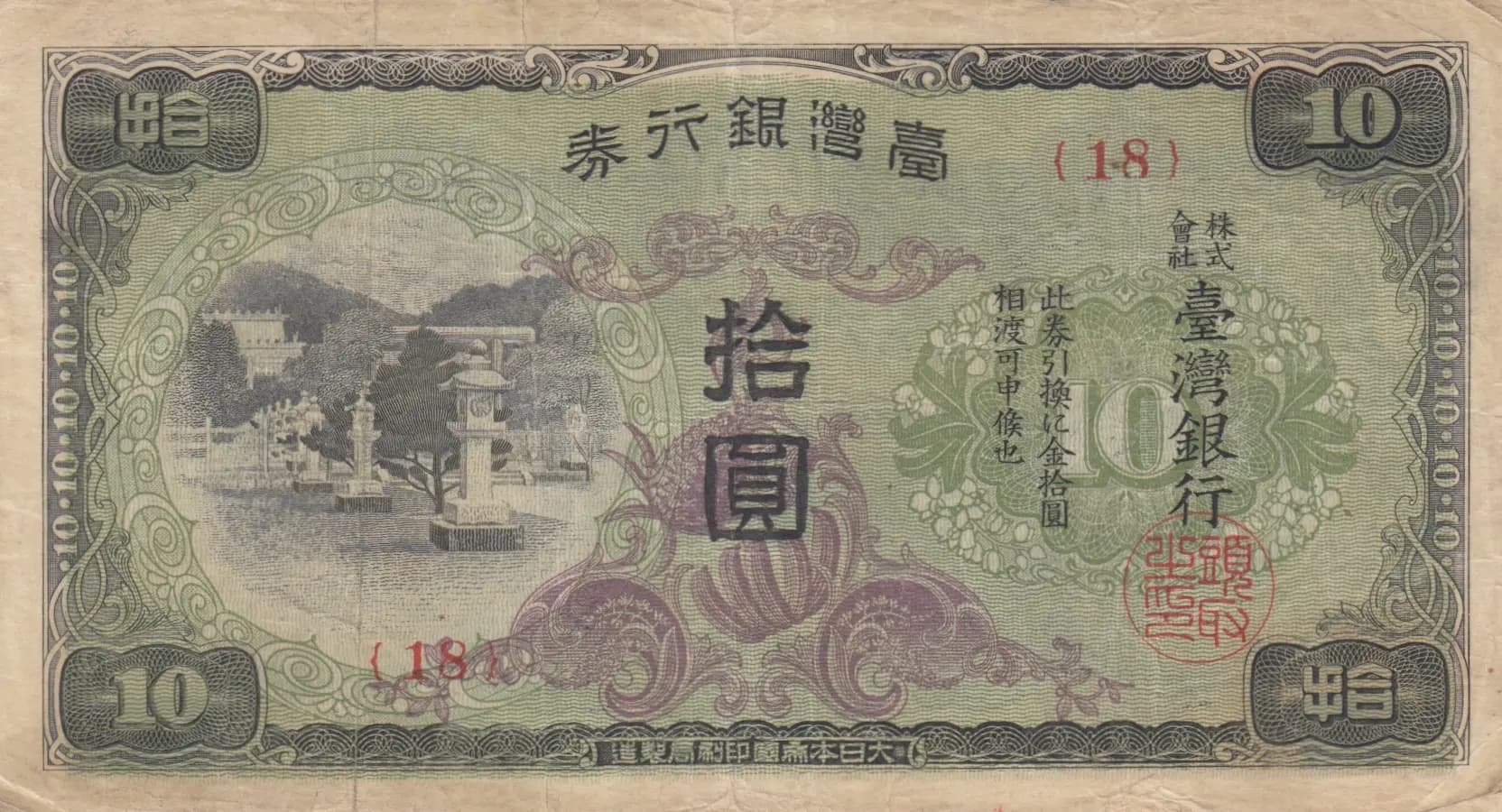
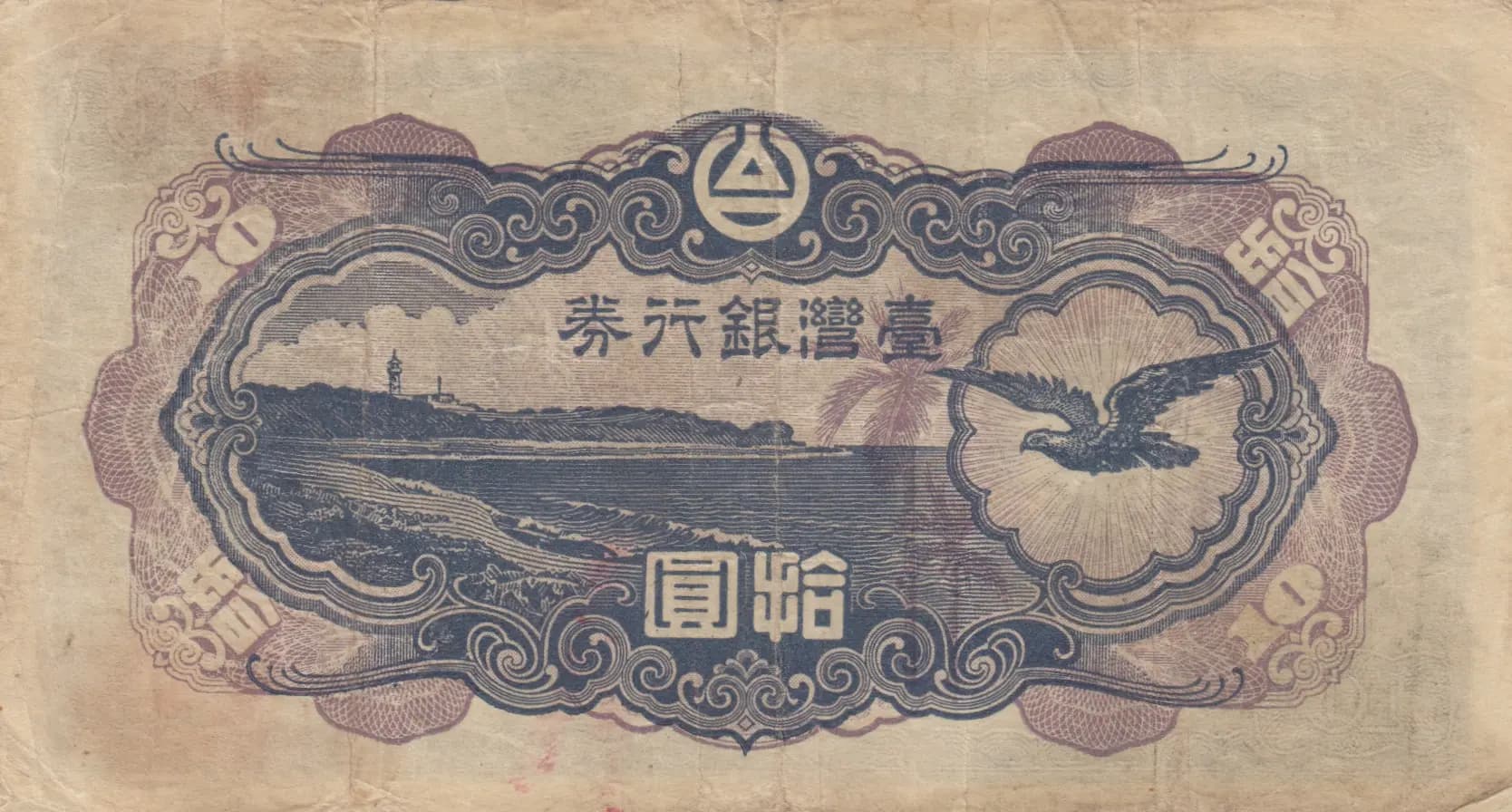
This is a Bank of Taiwan 10 Yen note from 1945 (Pick P-1930b) in Fine condition, featuring a distinctive lilac flower underprint and ornate East Asian design elements. The obverse depicts a traditional landscape scene with temple or shrine architecture, pagodas, and landscaped grounds rendered in green and brown tones with decorative scrollwork borders. The reverse presents a dramatic coastal seascape with mountains, water features, and a prominent eagle in flight, printed in blue and purple tones. The note shows expected circulation wear consistent with its 1945 issuance, including creasing, foxing, and light discoloration typical of wartime Japanese colonial-era currency.
Common. This note sold on eBay in Fine condition for $21.50 as recently as 2018, indicating steady but modest collector demand and regular market availability. Catalog values list Fine grade at approximately $10-20 range. The 1944-1945 Bank of Taiwan 10 Yen series was part of regular wartime production, and while no specific print run figures are available, the presence of these notes in the collector market at accessible price points and the established catalog values suggest this is a commonly encountered issue for serious collectors of Japanese occupation currency.
This note was issued during the final year of Japanese colonial rule in Taiwan (1895-1945), reflecting the Japanese occupation period's cultural and administrative integration of the island. The Taiwan Jinja (Great Shrine of Taiwan) depicted on the front, along with the eagle symbolism on the reverse, represent Japanese imperial iconography prominent during this era. The Bank of Taiwan, as the colonial period's official financial institution, issued this denomination as part of the wartime currency series, making it a tangible artifact of Taiwan's complex 20th-century history.
The obverse features a landscape vignette of the Taiwan Jinja (the Great Shrine of Taiwan, also known as Jiantan), a major Shinto shrine constructed during the Japanese occupation. The composition shows traditional East Asian architectural elements including pagodas, temple buildings, and carefully landscaped grounds with trees and water features, rendered in a fine engraving style. Ornate decorative borders with elaborate scrollwork and floral vine patterns frame the design in green, brown, and cream tones. The reverse depicts a coastal maritime landscape, likely representing Taiwan's scenic shoreline, with mountainous terrain, seascape with waves, and a prominently featured golden eagle in flight—a symbol of imperial Japanese power. The eagle serves as a focal point on the right side of the composition, with the landscape rendered in blue-gray and light lilac tones. Both sides employ fine line engraving with complex geometric and ornamental border designs typical of security printing from this period.
Front side: 台灣銀行 (Bank of Taiwan), 拾圓 (10 Yen), 民國 (Republic of China era designation). Back side: 臺灣銀行券 (Bank of Taiwan Note), 圓拾 (10 Yen, written in reverse order as was common on reverses). Additional markings include serial number indicators and red seal stamps characteristic of the period's security features.
Intaglio (engraved) printing, evidenced by the fine line work, detailed scrollwork patterns, complex ornamental borders, and the dimensional quality visible in both the landscape vignettes and decorative elements. The precise geometric complexity and security-oriented design features are characteristic of Bank Note Company or similar Japanese security printers of the 1940s period. The use of multiple colors (green and lilac underprint on obverse; blue-gray and lilac underprint on reverse) indicates multi-plate color printing typical of high-security banknote production.
This is specifically Pick P-1930b, which is distinguished by the presence of a lilac flower on the front and lilac underprint on the back. The related variety P-1931 differs by featuring a green flower on front without the lilac underprint on back. Serial number block marking (18) is visible, and red seal stamps appear to be present. The note shows standard signatures and printing characteristics consistent with 1945 production, with no evidence of overprints or unusual serial number features that would distinguish it as a rare variety.