1 yen 1933
Market Prices
37 salesAbout This Note
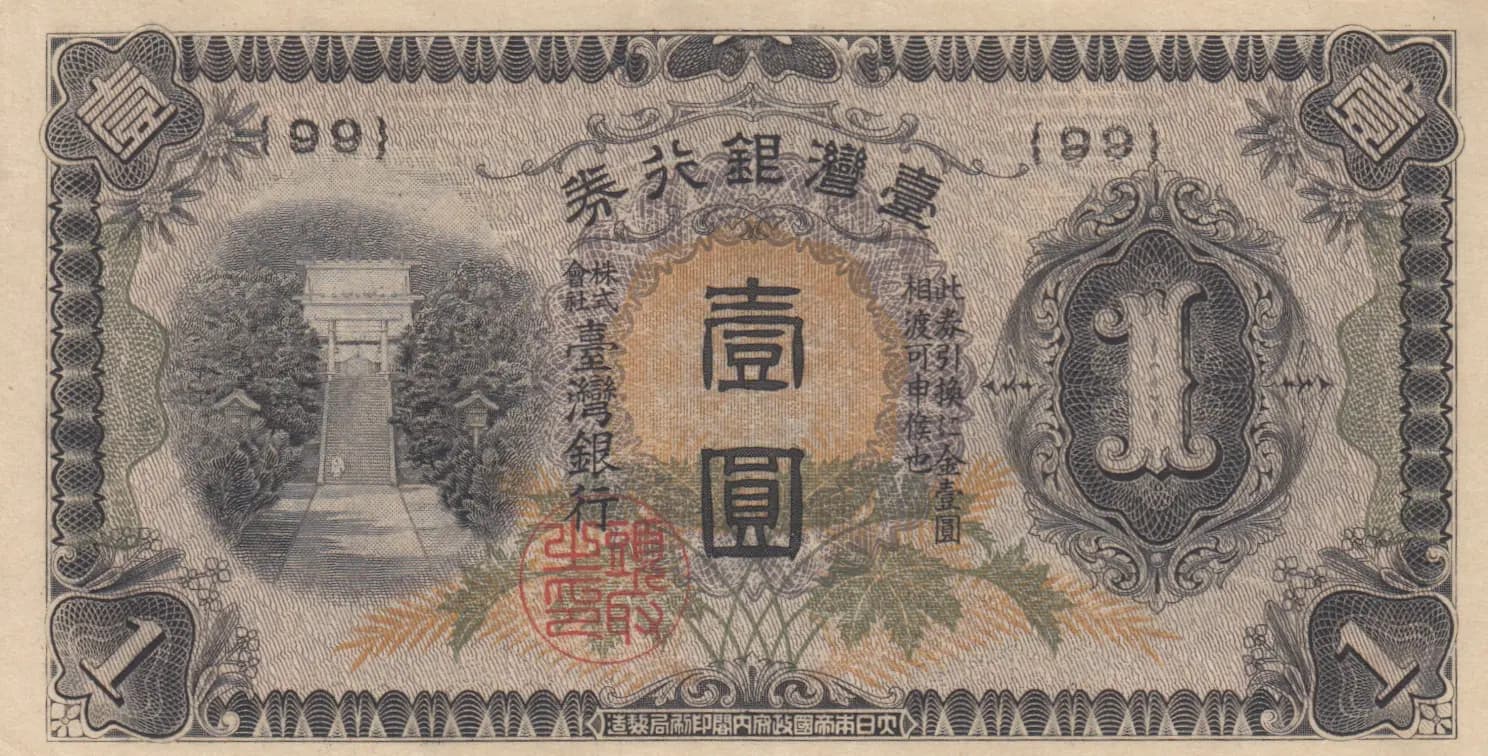
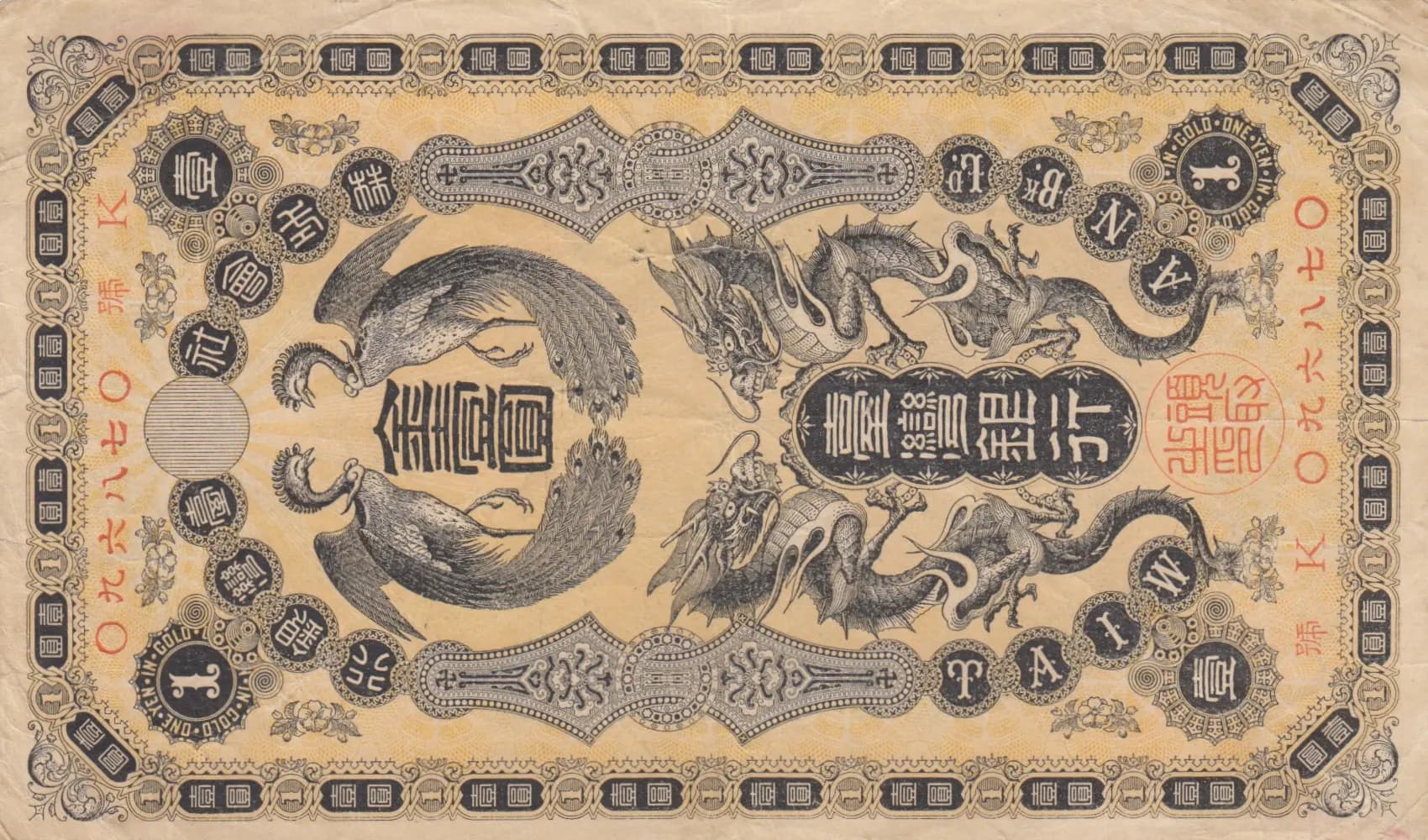
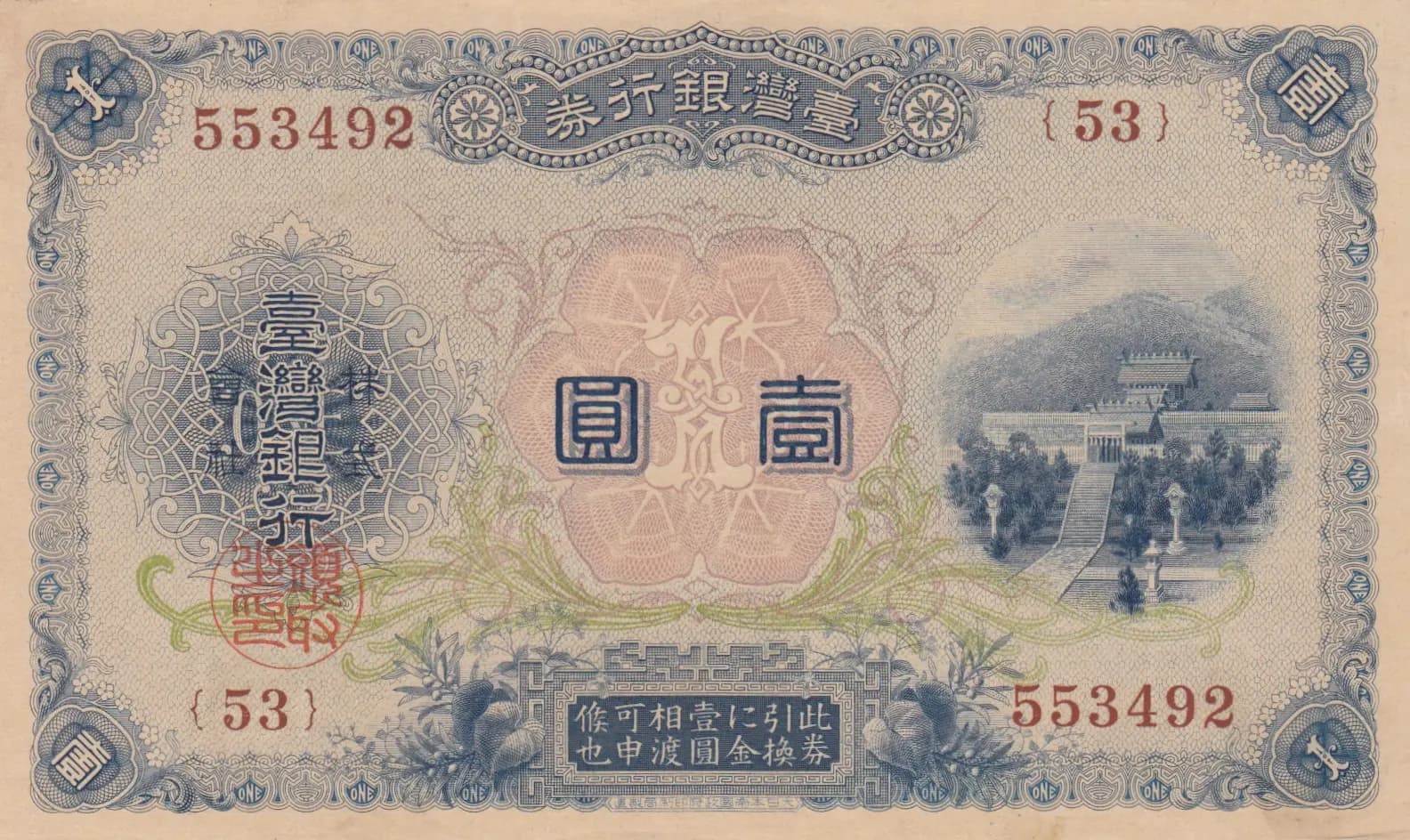
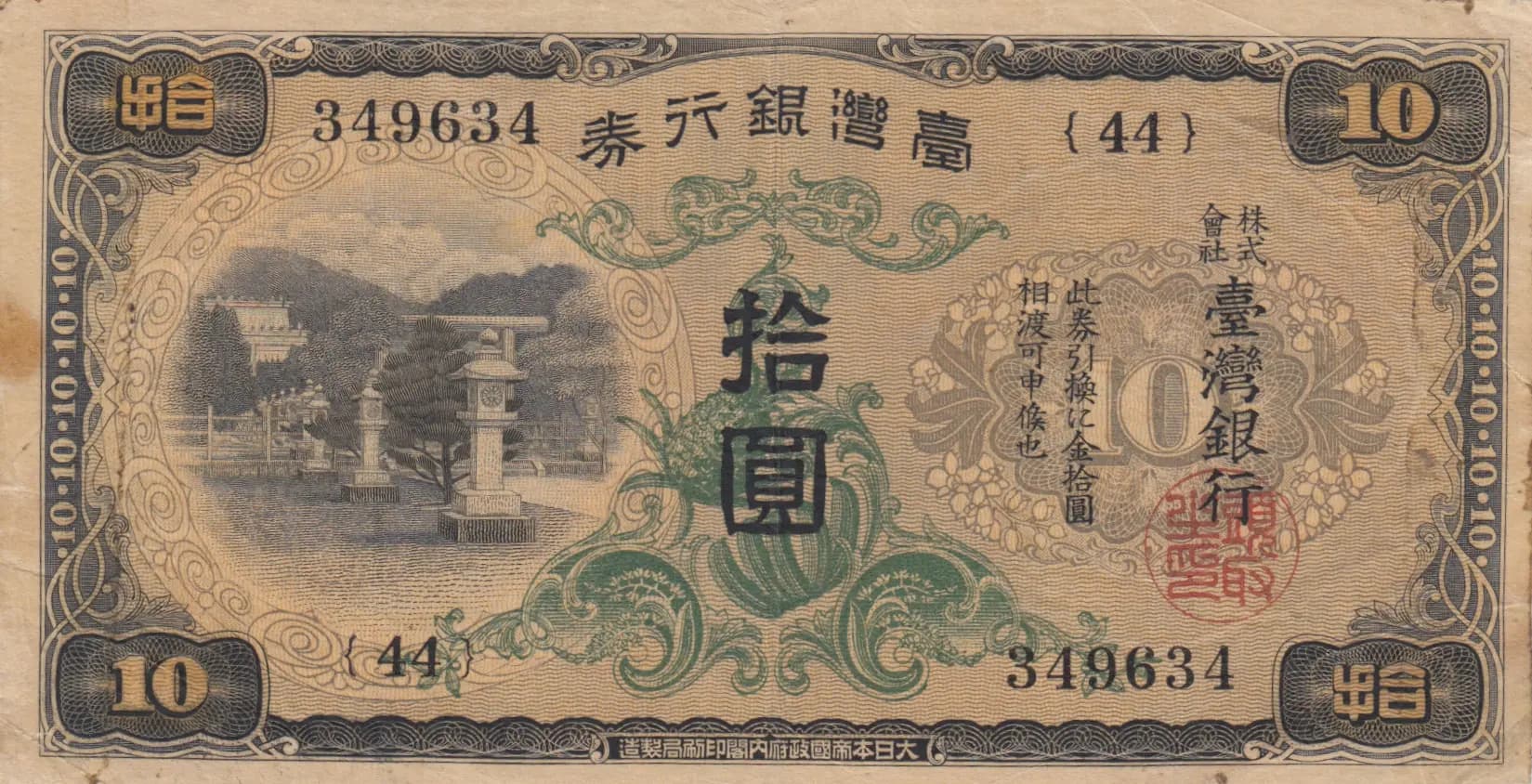
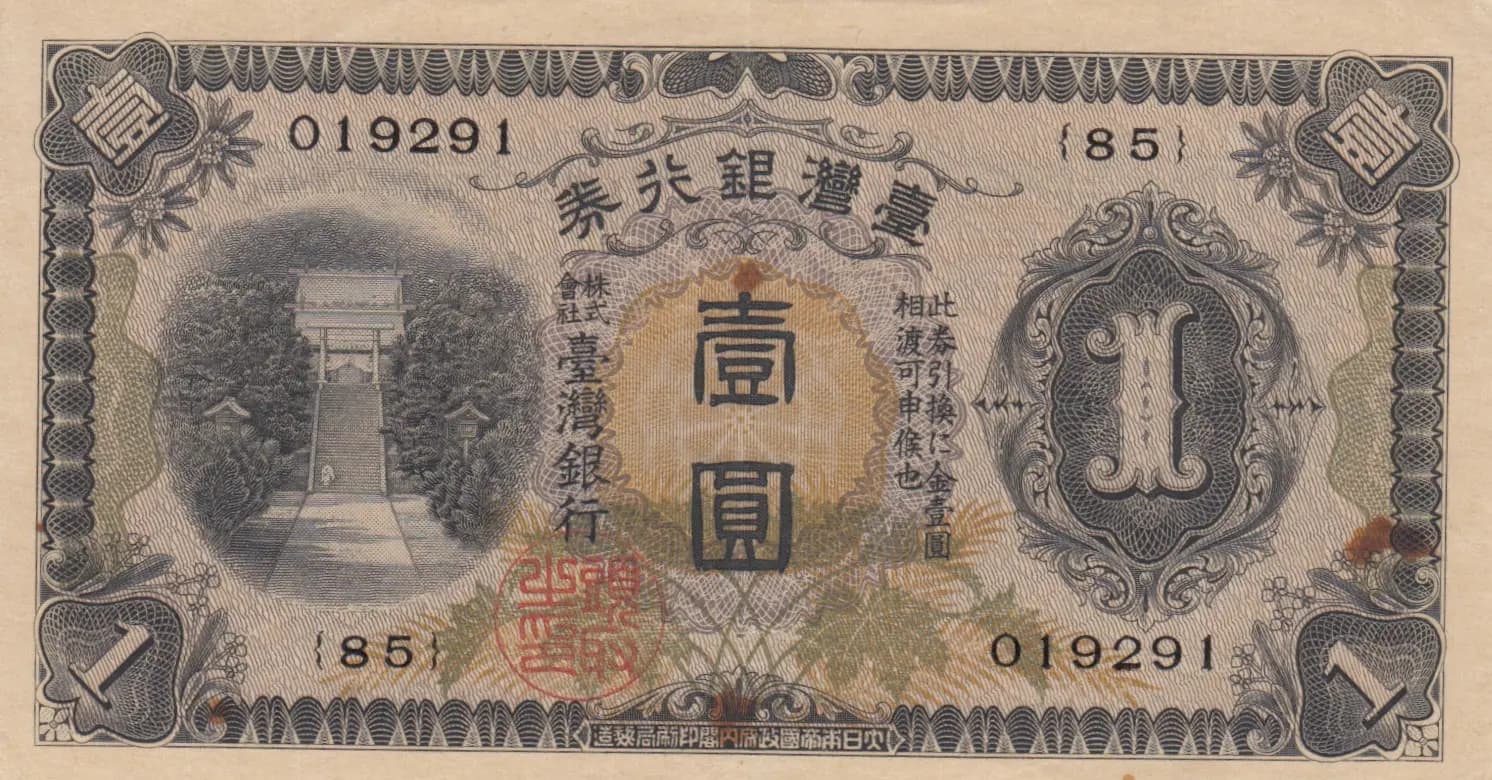
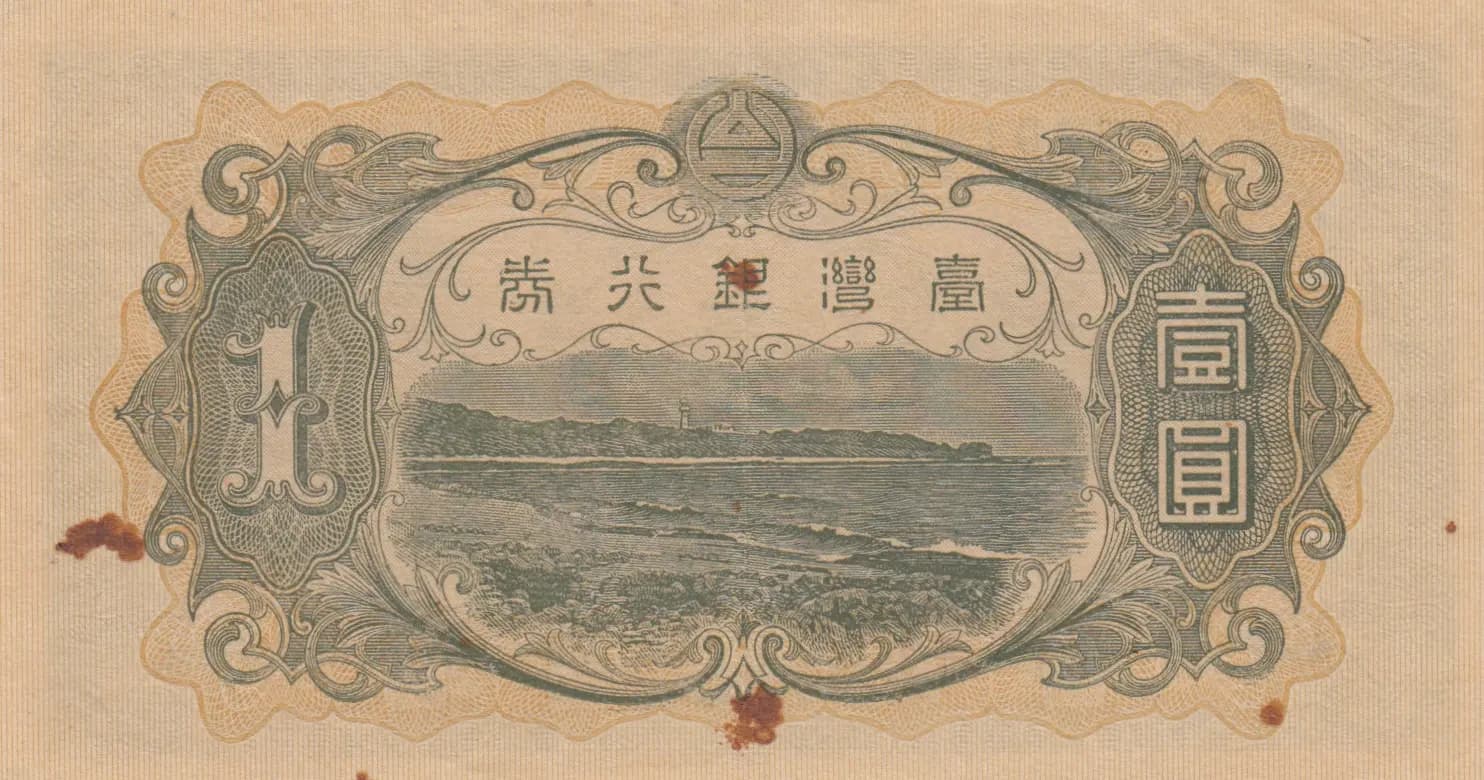
This 1 Yen note from the Bank of Taiwan (1933) presents in VF condition with characteristic age-related patina and foxing typical of early 20th-century Japanese-era Taiwan currency. The obverse features an ornate temple/pagoda structure with decorative gateway and tree-lined pathway rendered in fine engraving, while the reverse depicts a coastal landscape with distant hills and settlements, both enclosed within elaborate scrollwork cartouches. Despite minor discoloration and browning, the note retains excellent detail in its fine line engraving and remains a visually attractive example of Taiwan's pre-WWII monetary history.
Common. eBay market data provides strong evidence: VF-graded examples consistently sell in the $5-$20 range (most VF sales $5-$11.50), with PMG-graded higher condition specimens reaching $70-$112. The note was issued in substantial quantities during a 12-year period (1933-1944), and surviving examples are readily available in the numismatic market. The denomination (1 Yen) as a fractional/lower-value note would have circulated extensively. Market frequency and pricing consistency indicate this is a standard collectible rather than a scarce or rare issue.
This note was issued during Taiwan's Japanese colonial period (1895-1945), when the Bank of Taiwan served as the primary currency issuer under Japanese imperial authority. The architectural imagery—a pagoda or temple with formal approach and the prosperous coastal landscape on the reverse—reflects both Japanese aesthetic sensibilities and Taiwan's role as an economically important colonial possession. The inscription '臺灣富貴' (Taiwan Prosperity/Wealth) on the reverse explicitly emphasizes the colonial administration's development narrative for the territory.
The obverse features a sophisticated architectural vignette depicting a Japanese-influenced temple or religious structure with ornamental gateway ('torii'-style entrance) and symmetrical approach lined with stylized trees, occupying the left-center composition. An ornamental medallion with floral and geometric scrollwork is positioned to the right. The reverse showcases a detailed landscape engraving of a coastal or waterfront scene with mountains or hills in the background, water features in the foreground, and distant settlements or structures on the shoreline—possibly representing a significant port or coastal development area in colonial Taiwan. Both sides are framed by intricate scrollwork borders with decorative cartouches typical of high-security banknote design of the period. The dominant color scheme combines black and dark gray line engraving on cream/tan paper with olive-green and ochre underprints, creating visual depth and security complexity.
Front side: '臺灣銀行' (Taiwan Bank/Bank of Taiwan), '壹圓' (One Yuan/Yen), Serial number '0192291', and '[85]' (series or denomination indicator). Back side: '臺灣富貴' (Taiwan Prosperity/Wealth) and '圓圓' (Yuan/Yen, denomination marker). All inscriptions are in Traditional Chinese characters as used during the Japanese colonial administration of Taiwan.
Intaglio engraving (line engraving/steel plate engraving), the standard security printing method for banknotes of this era. The fine detail observable in the architectural elements, landscape vignette, and border scrollwork, combined with the multiple color layers (black engraving, green and ochre underprints), indicates professional security printing typical of Japanese imperial currency production. The serial numbers and stamps appear to have been applied through separate printing stages. No specific printer attribution is documented in the provided catalog data for Pick P-1925a.
This specimen represents the 1933 issue variety (as opposed to the 1944 reissue noted in the ND dating convention). The serial number prefix and block number correspond to Shafer-Mishler catalog number T70-30. The observed serial number '0192291' with '[85]' block designation helps identify the specific printing stage. Two main varieties are documented for this Pick number: the 1933 and 1944 issues, with potential variations in serial number formats and block designations. No overprints or significant modifications are evident on this example.