1 gold yen 1904
Market Prices
4 salesAbout This Note
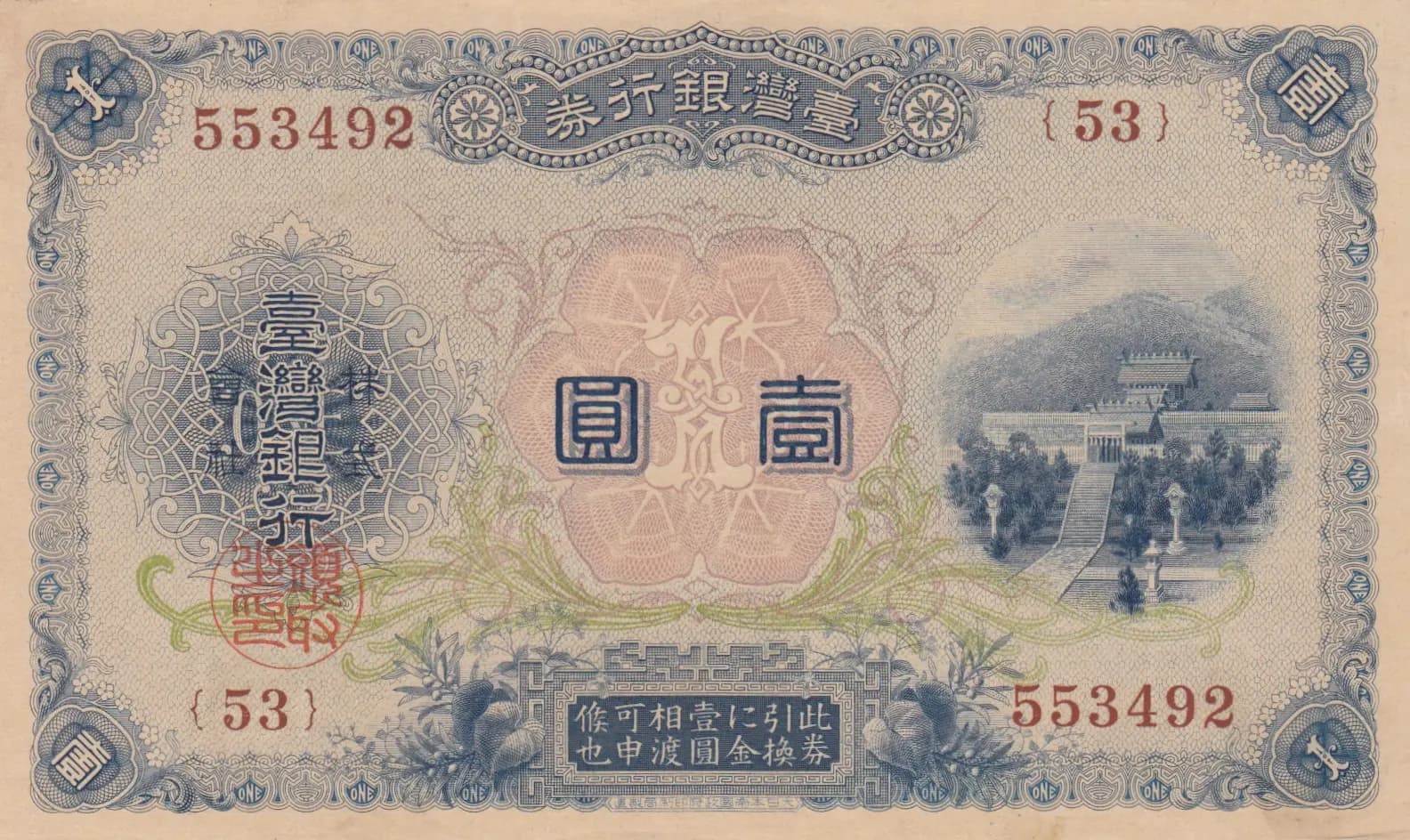
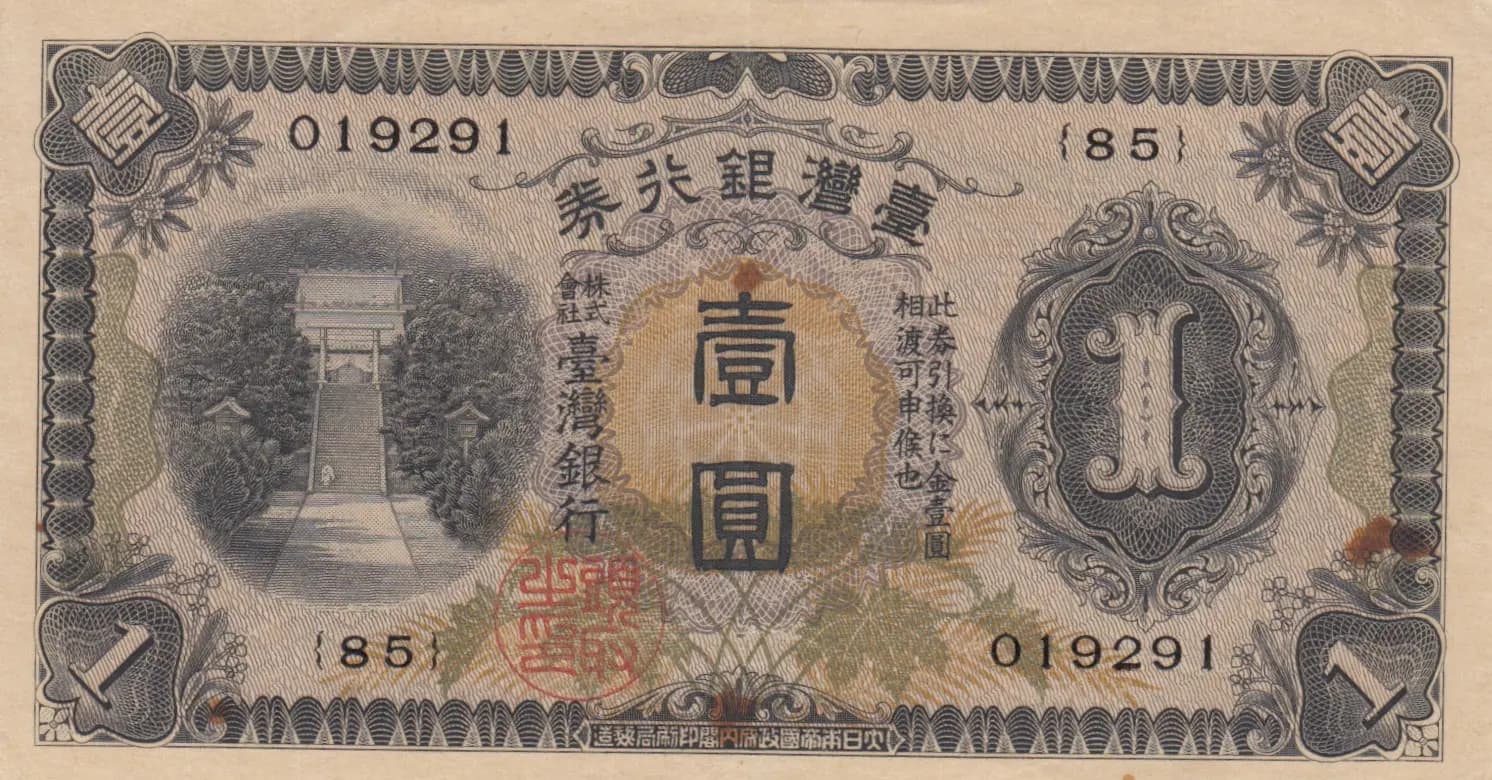
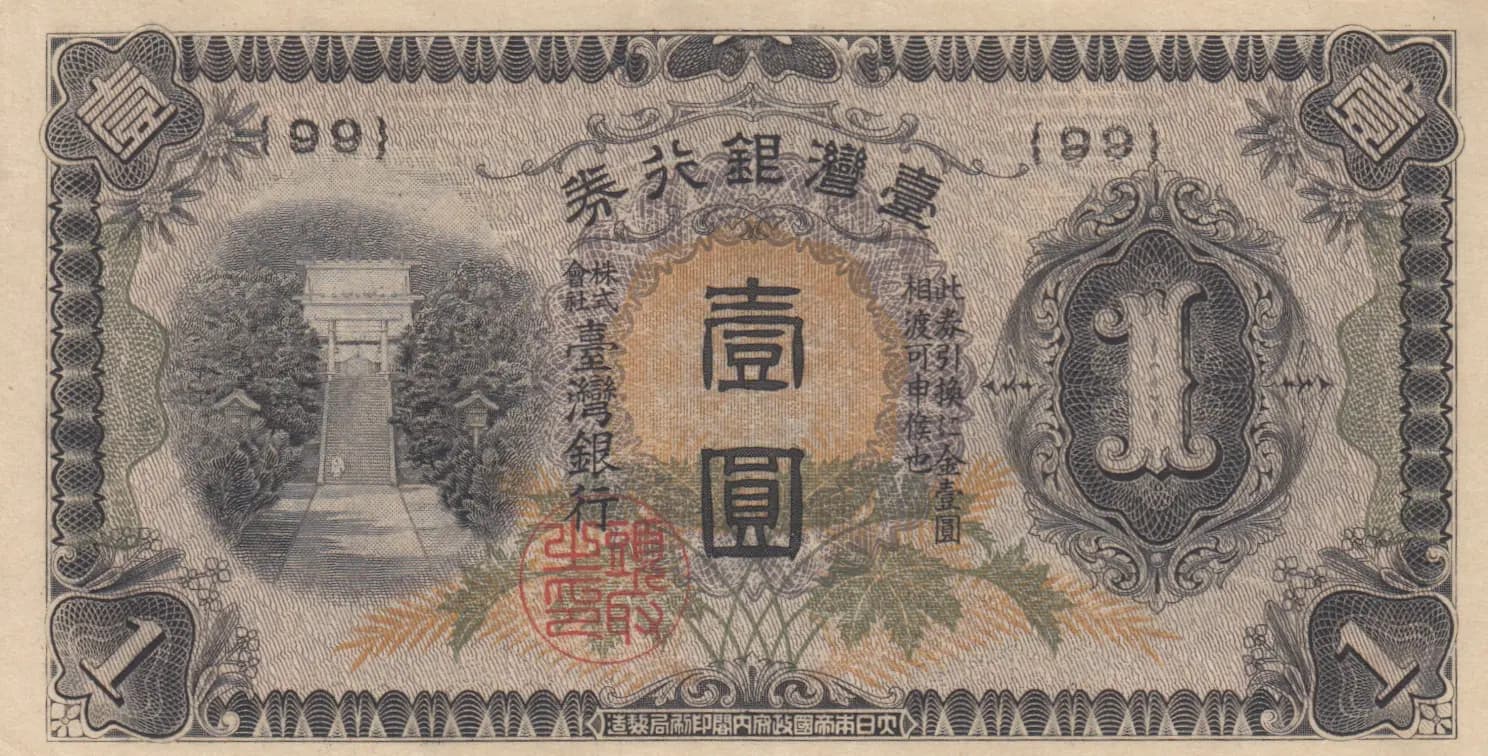
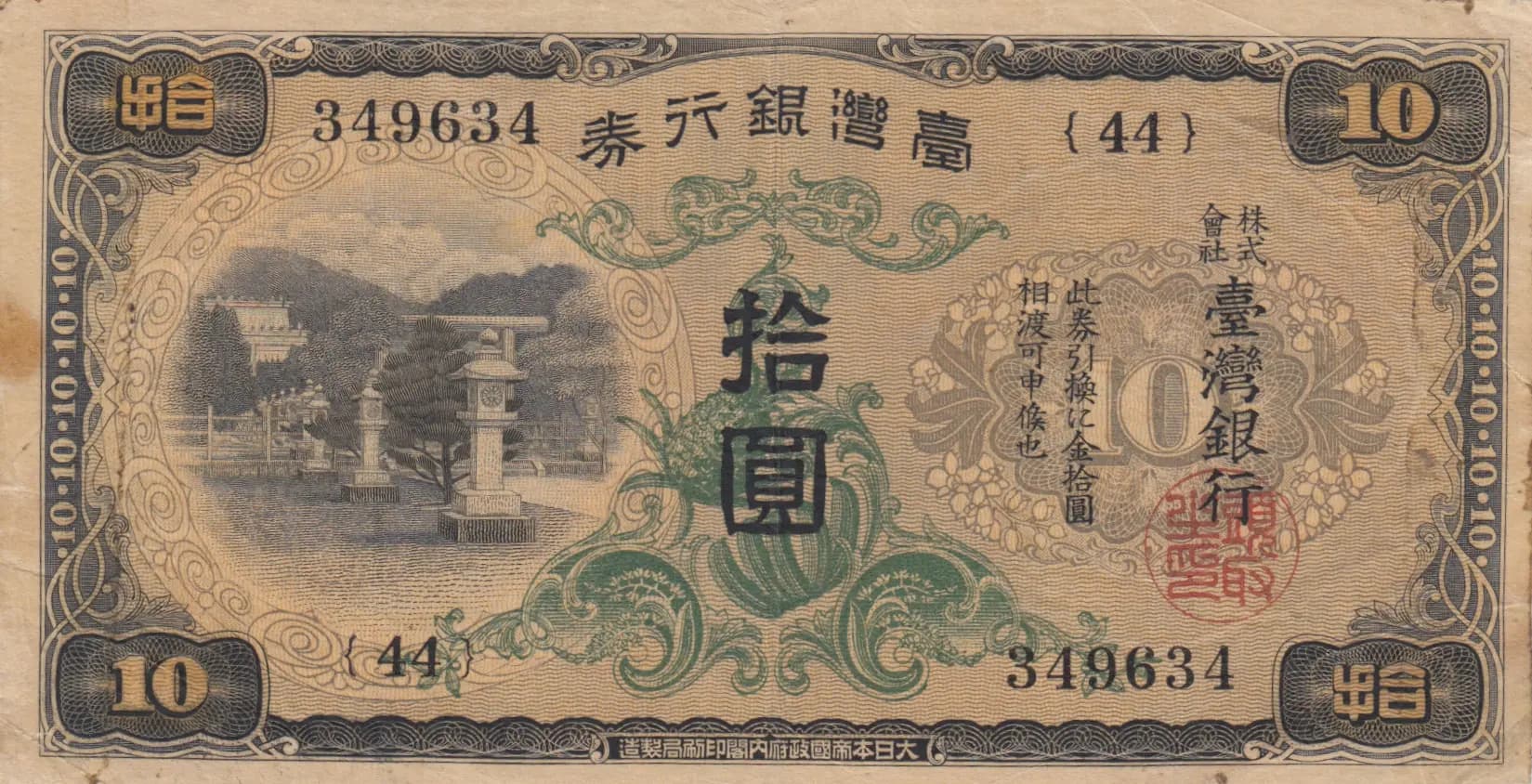
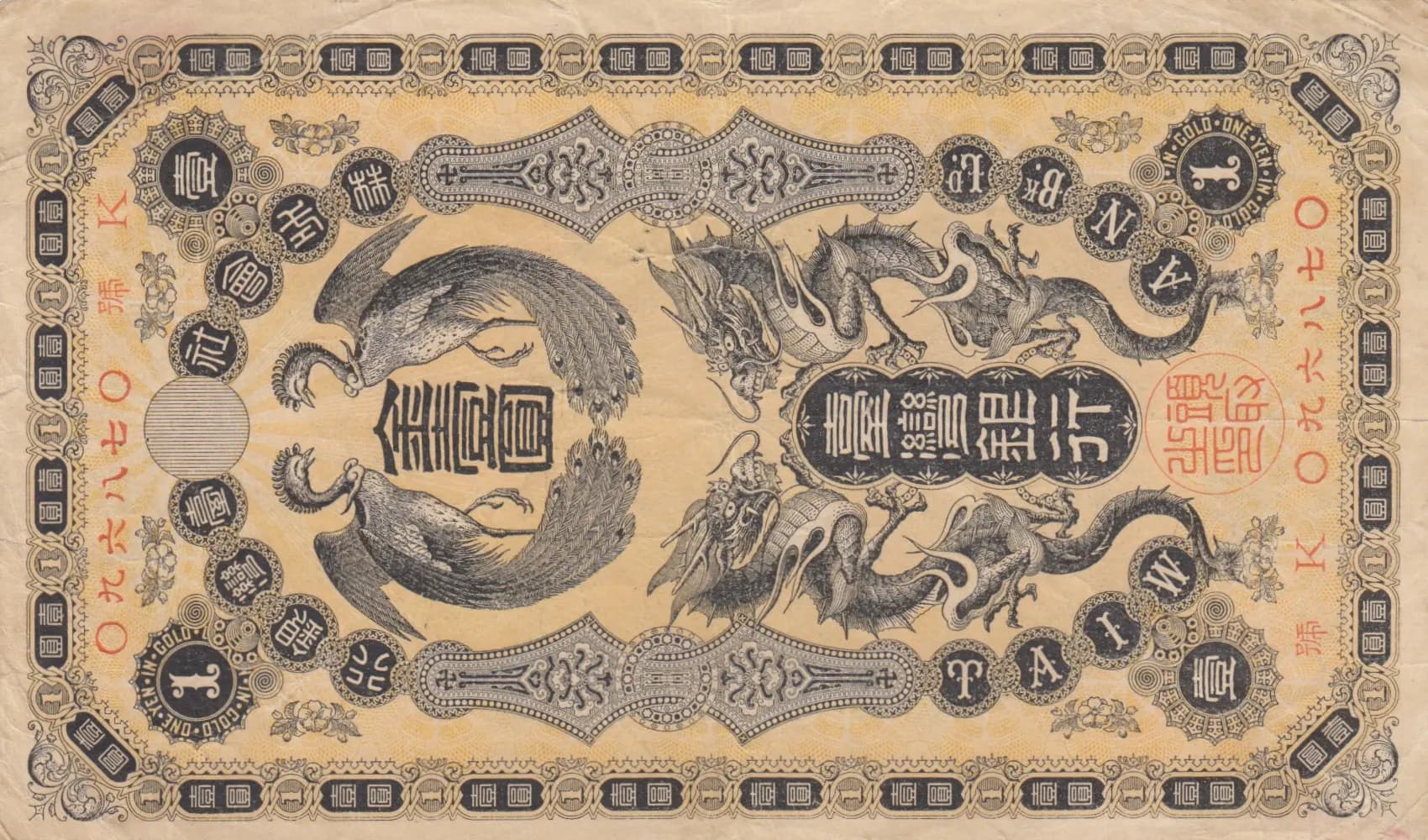
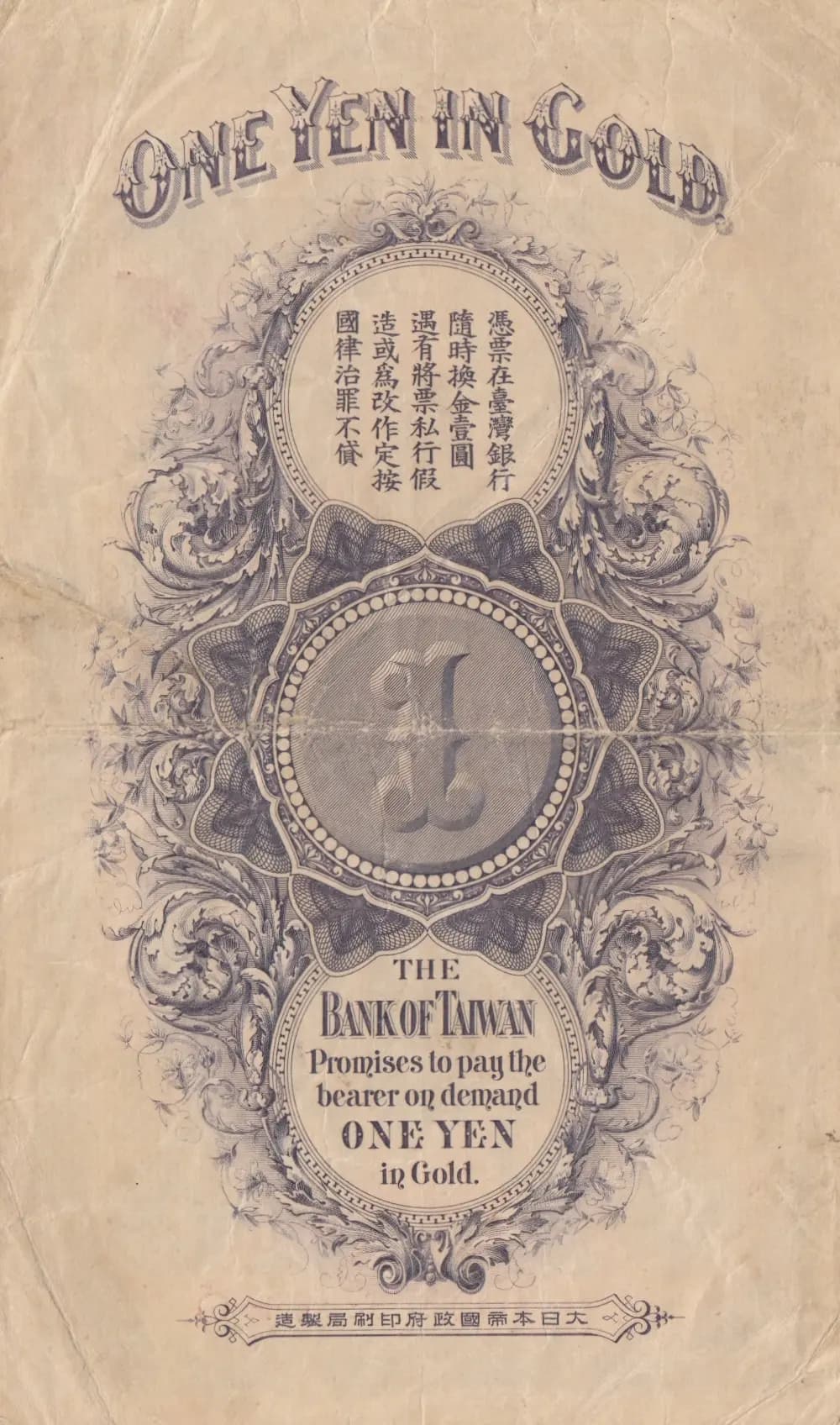
This is a Bank of Taiwan 1 Gold Yen note from 1904, presented in Very Fine condition with the characteristic cream/beige aging patina typical of early 20th-century Japanese-era Taiwan currency. The obverse features an impressive dragon curled around a central pearl motif with three overlapping circular seals, while the reverse displays Victorian-style baroque scrollwork surrounding an ornate cartouche with the denomination clearly marked in both English and Chinese characters. This is a visually striking example of early colonial-era monetary design, combining Japanese printing sophistication with classical ornamental banking aesthetics.
Common. This denomination and issue was produced in substantial quantities by the Bank of Taiwan during the early colonial period (1904-1910s). Historical eBay sales data shows consistent transactions with VF examples selling for $110-$200 range, and even lower grades (F, G) achieving sales regularly at modest prices ($70-$100). The 2016 catalogue value of $100 for F-grade and $200 for EF-grade, combined with multiple documented sales across various grades, indicates healthy market liquidity and abundant supply. Print runs during this period were designed to meet circulating demand across Taiwan's colonial economy, resulting in reasonable survival rates.
Issued during the early Japanese colonial period in Taiwan (1895-1945), this note represents the Bank of Taiwan's role as the primary currency authority under Japanese imperial administration. The inclusion of both English and Chinese inscriptions, along with the reference to 'The Great Japan Imperial Government Printing Bureau,' reflects Taiwan's position as a modernizing colonial territory with international trade obligations. The gold-backed denomination and ornate security design reflect early 20th-century standards for high-security banknote production, when intricate engraving and complex layouts served as the primary anti-counterfeiting measures.
The obverse features a prominent dragon (symbolizing imperial authority and power in East Asian tradition) curled protectively around a pearl or moon element, representing prosperity and celestial mandate. Three overlapping circular seals in the central panel contain Chinese characters denoting official authorization and denomination. The reverse employs Victorian-era baroque aesthetic with ornate scrollwork, floral flourishes, and ribbon elements typical of Western security printing standards of the period. The large numeral '1' in a circular seal reinforces the denomination. Ornamental borders with repeating rectangular patterns containing Chinese characters frame all four edges, combining East Asian regulatory traditions with Western banknote design conventions. The overall layout reflects the influence of the Imperial Japanese Government Printing Bureau (Insatsu Kyoku), which was responsible for producing colonial Taiwan's currency.
Front: '鳳陸一' (One Fenglu/One [Dragon/Phoenix] denomination marker in classical Chinese numeration). Various Chinese characters appear in circular seals along the borders representing regulatory and issuing authority marks. Back: 'ONE YEN IN GOLD' (English denomination); 'THE BANK OF TAIWAN' (issuing authority); 'Promises to pay the bearer on demand ONE YEN in Gold' (promise to pay clause); '大日本帝國政府印刷局製造' (Made by the Great Japan Imperial Government Printing Bureau); Central cartouche contains Chinese characters representing legal authorization and currency redemption terms under Japanese colonial administration.
Intaglio engraving (line engraving), the standard security printing method for high-denomination currency of this era. The fine detail work visible in the dragon figure, scrollwork, and ornamental borders, along with the subtle shading and complex cross-hatching patterns, is characteristic of steel-plate intaglio printing. The Imperial Japanese Government Printing Bureau, which produced this note, was one of Asia's most advanced security printing facilities and employed master engravers specializing in this technique. No evidence of lithography or other supplementary processes is visible.
Standard regular issue (S/M 70-10 per realbanknotes.com reference). No overprints, date variations, or signature varieties are indicated by the visual analysis. The note appears to be from the primary 1904 issue of the Bank of Taiwan's one yen denomination. Specific serial numbers, if visible in the images, would indicate individual note identity but do not constitute a distinct variety for this Pick number. The consistent design elements across documented examples suggest minimal varieties within this Pick number.