5 pounds 1978
Market Prices
5 salesAbout This Note
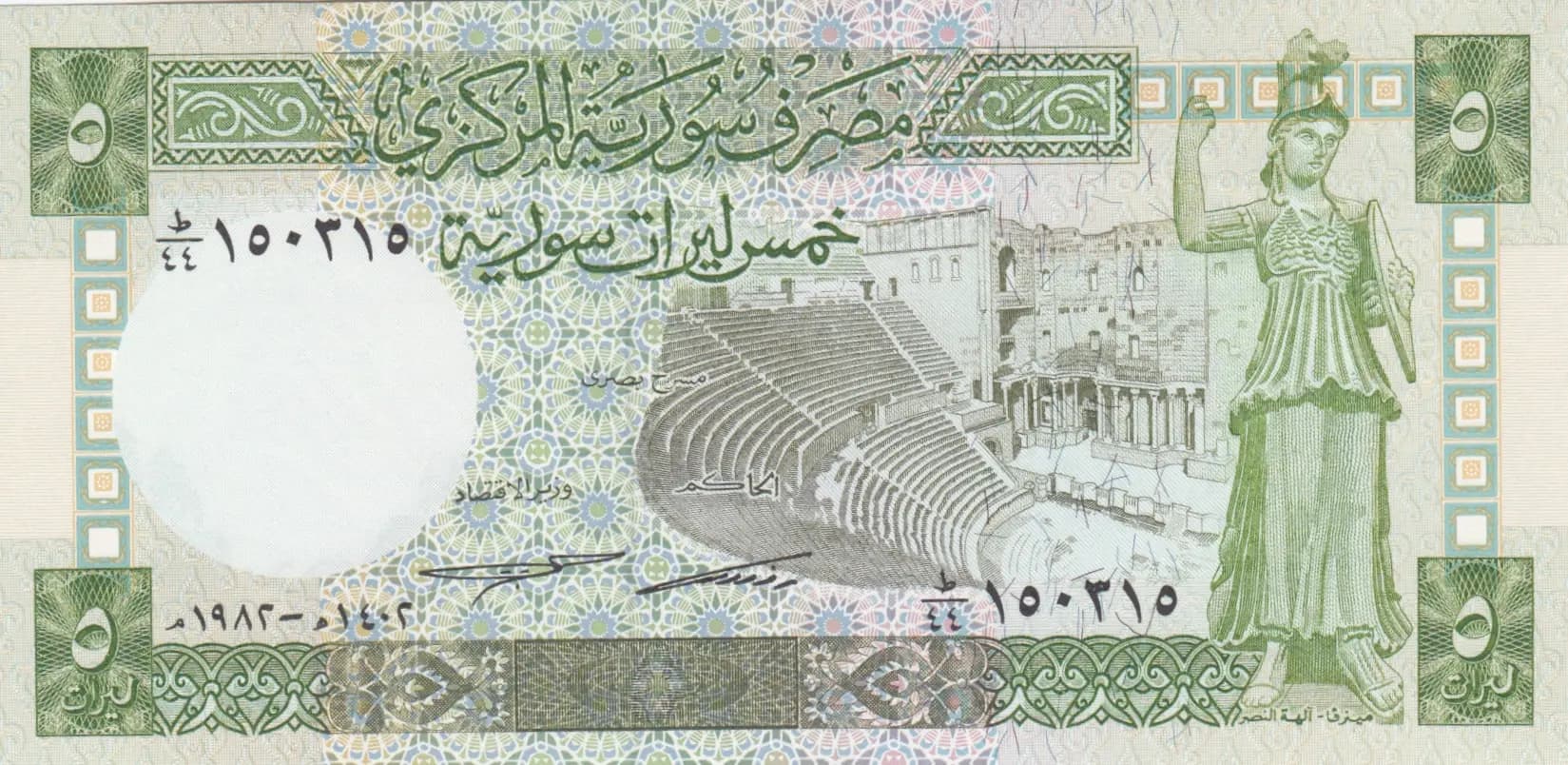
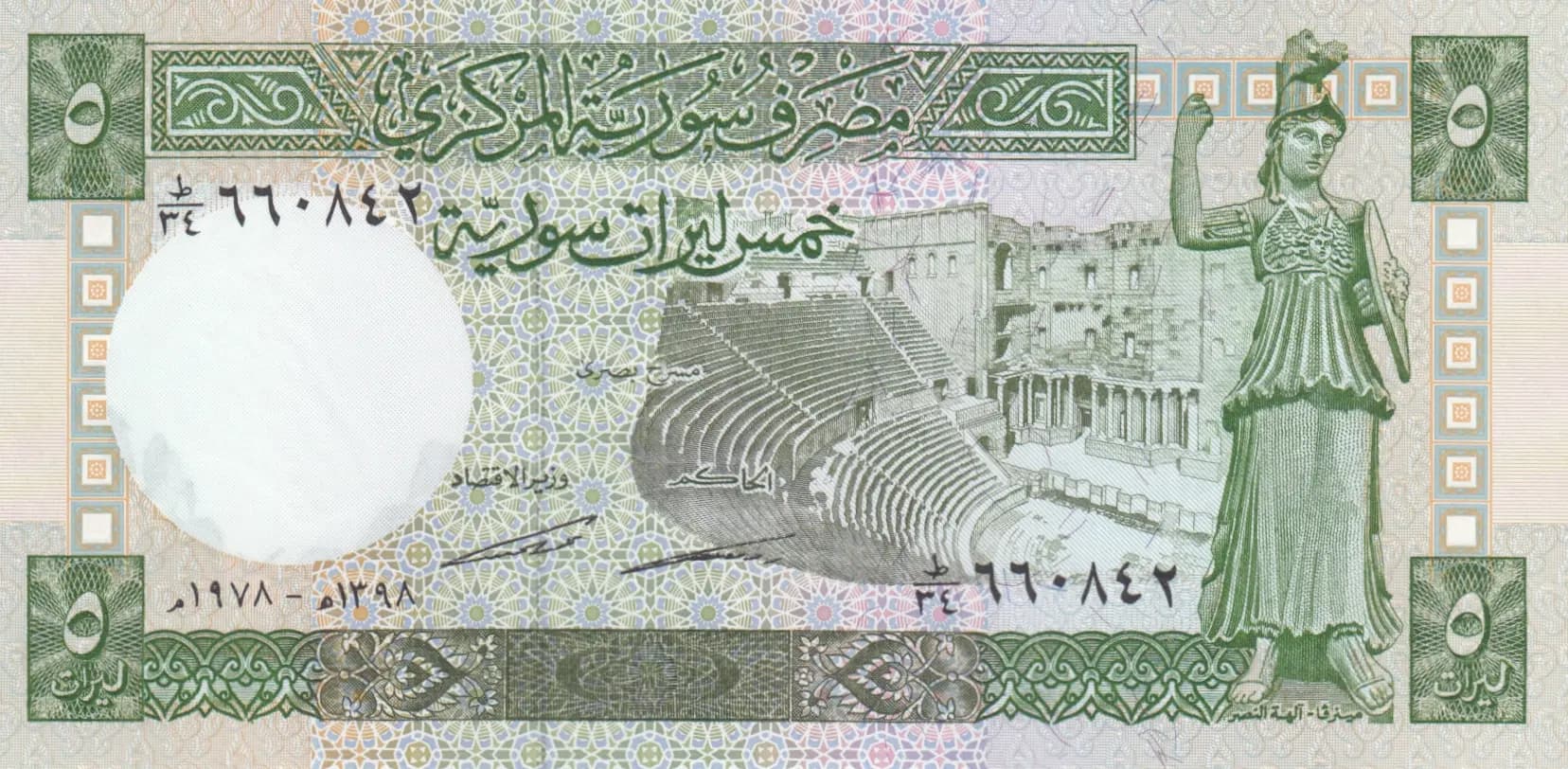
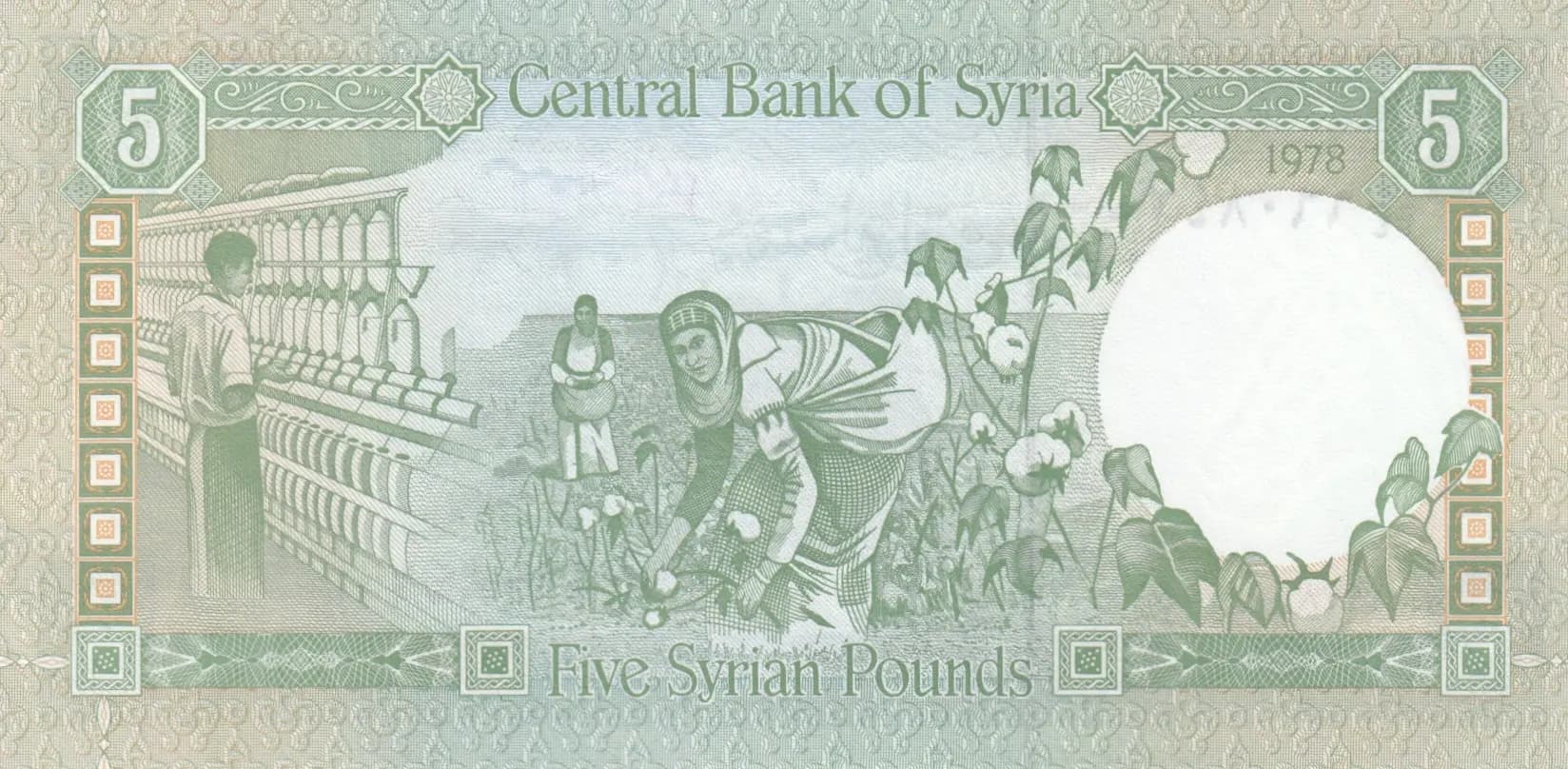
A stunning UNC example of the 1978 Syrian 5 Pound note (Pick P-100b), displaying sharp printing and vibrant green and tan coloration throughout. The obverse features the magnificent Bosra amphitheater alongside a portrait of Allāt, the pre-Islamic Arabian goddess/warrior figure, while the reverse depicts traditional cotton harvesting and spinning scenes reflecting Syria's agricultural heritage. This note exhibits excellent preservation with no visible wear, creases, or stains, making it an attractive example for both political history and Middle Eastern currency collectors.
Common. The 1978 5 Pound note (P-100b) was part of a regular issue series that circulated for over a decade (1977-1991 series dates). eBay market data shows UNC examples selling for approximately $4-10 USD, indicating steady but modest collector demand consistent with common-grade modern Middle Eastern currency. Print runs for this denomination during this period were substantial, and the note has not been recalled or withdrawn from circulation under unusual circumstances.
Issued during the late Ba'athist era of Syria (1978), this banknote commemorates the nation's classical heritage and contemporary economic activities. The Bosra amphitheater, a 2nd-century AD Roman structure in southern Syria, represents the country's deep historical roots, while the cotton harvest imagery celebrates Syria's significant agricultural production during this period. The inclusion of Allāt, a pre-Islamic Arabian deity associated with fertility and protection, reflects Syria's broader Levantine cultural identity and nationalist narrative of the late 1970s.
The obverse features a classical architectural centerpiece depicting the well-preserved Bosra (Busra) amphitheater with its distinctive tiered semicircular seating and fortified walls—one of the finest Roman theaters surviving in the Middle East. To the right is an engraved portrait of Allāt (referred to in some references as Allāt-Minerva), the pre-Islamic Arabian warrior goddess from the National Museum of Damascus collection, shown in profile wearing traditional Syrian/Arabian formal military dress with ornate headdress. The reverse presents scenes of agricultural labor with multiple figures engaged in cotton harvesting and spinning activities, depicting both the labor force and processing infrastructure central to Syria's economy. Both sides employ intricate Islamic geometric patterns, arabesques, and decorative corner medallions characteristic of Syrian currency design of this era. The color scheme of dark green on multicolor underprint provides sophisticated contrast while maintaining traditional aesthetic conventions.
Front: 'جمهورية سورية' (Syrian Republic), 'البنك المركزي السوري' (Central Bank of Syria), '٥ جنيهات سورية' (Five Syrian Pounds), with Islamic calendar date '١٤٢٠' and Gregorian date '١٩٩٩' notation (reflecting AH 1398/AD 1978 issue), and serial number. Back: 'Central Bank of Syria' and 'Five Syrian Pounds' in English, denomination '5', and '1978' in Arabic numerals and English text.
Intaglio (line engraving) printing, as evidenced by the fine detail work, sharp lines, complex geometric patterns, and the characteristic crisp appearance visible throughout both obverse and reverse. The security features include integrated watermark areas (circular spaces on left and right sides respectively) and sophisticated line-engraved backgrounds. The printer for this series is consistent with Central Bank of Syria's contracted security printing facilities of the 1970s-1990s era, though specific attribution would require archival confirmation.
This note is cataloged as Pick P-100b (1978 date variety). The PMG population report indicates P-100c exists as an alternate variant, likely representing a different date within the same series run. Serial number variation is standard across all notes from this printing. No overprints, security thread position changes, or signature varieties are apparent in the visual analysis. The date notation showing both Islamic calendar (1420) and Gregorian (1999) reflects standard Syrian printing practice, though the actual issue date is 1978 per catalog data.