1 livre 1939
Market Prices
7 salesAbout This Note
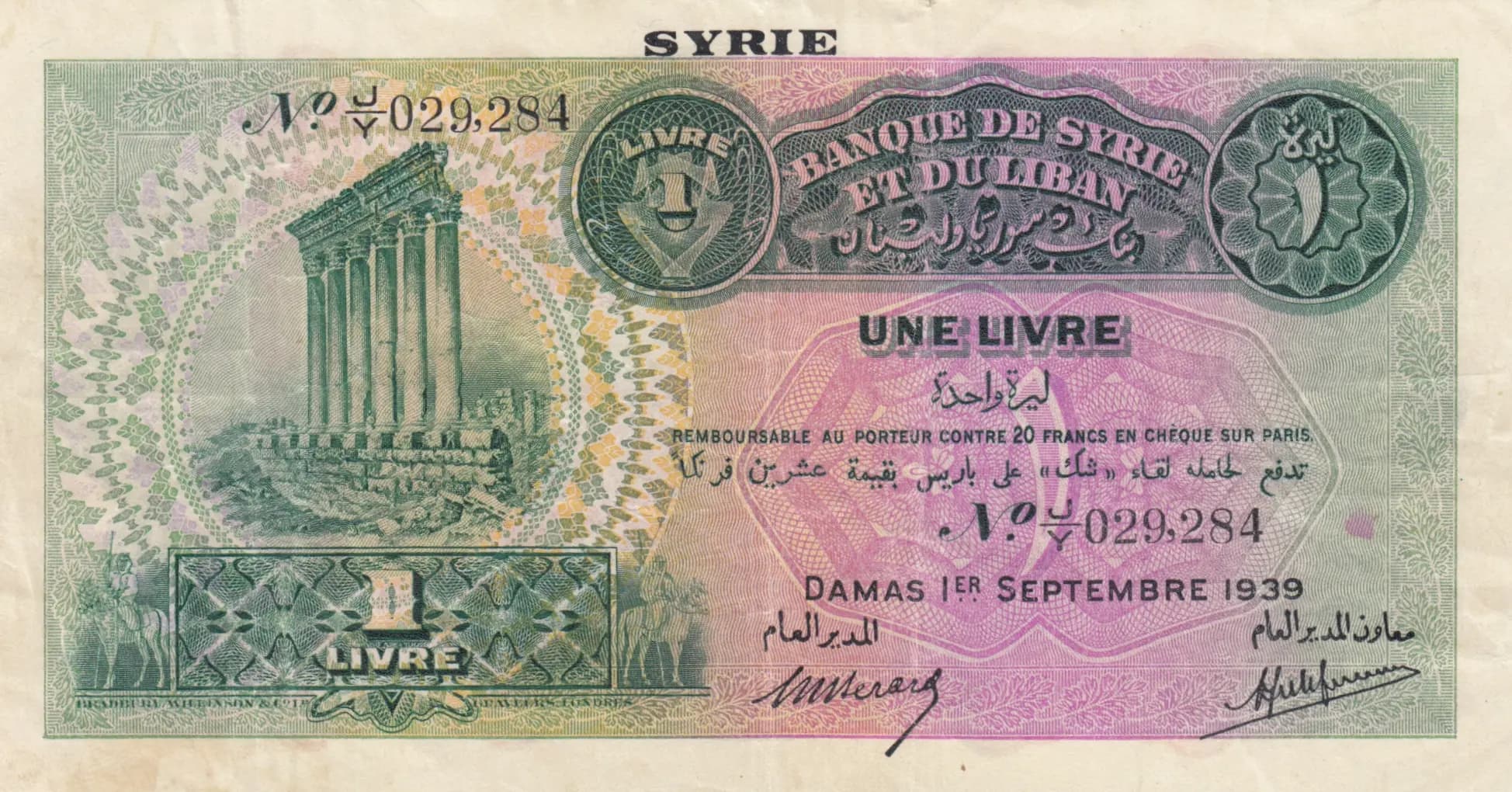
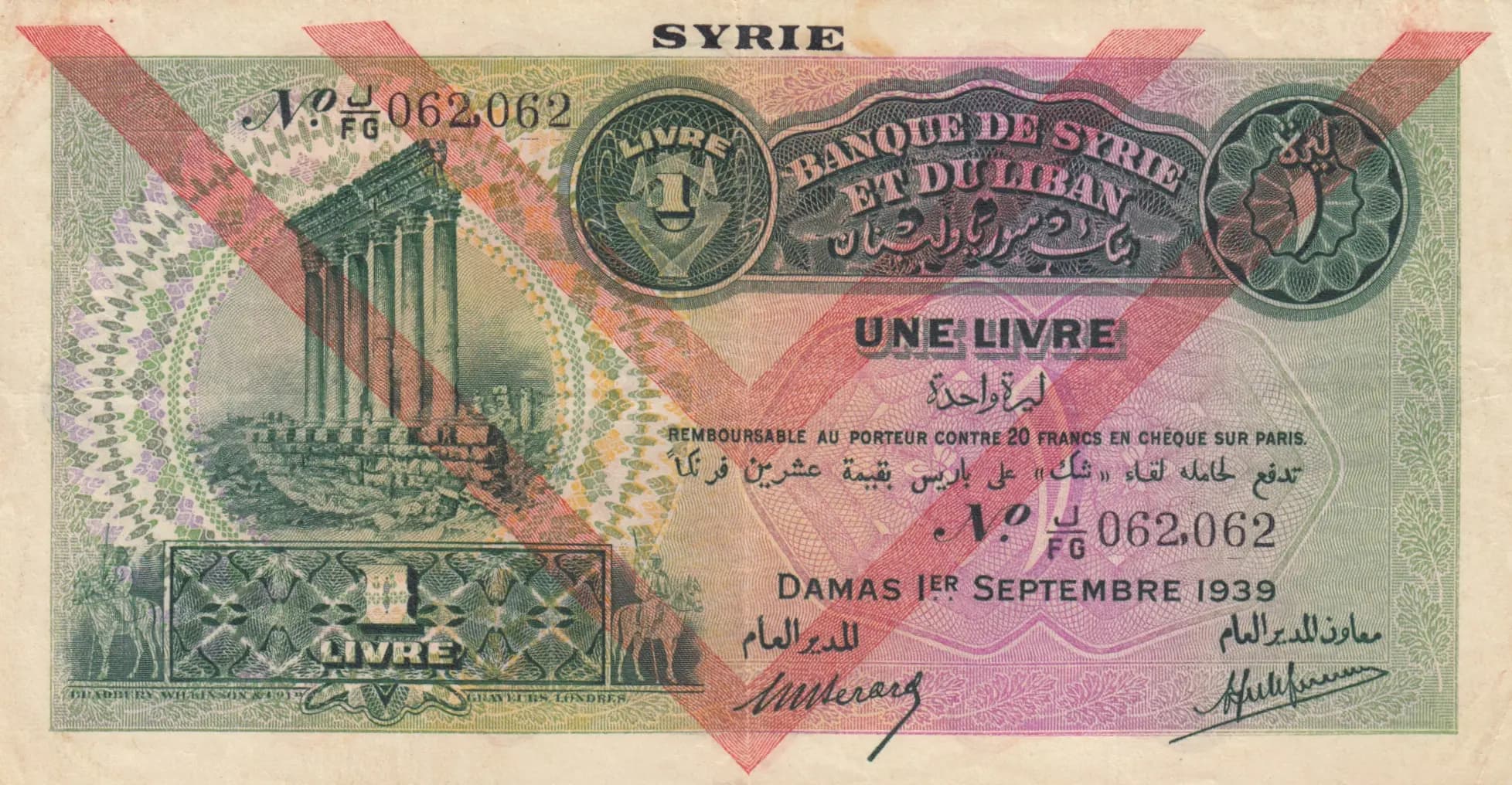
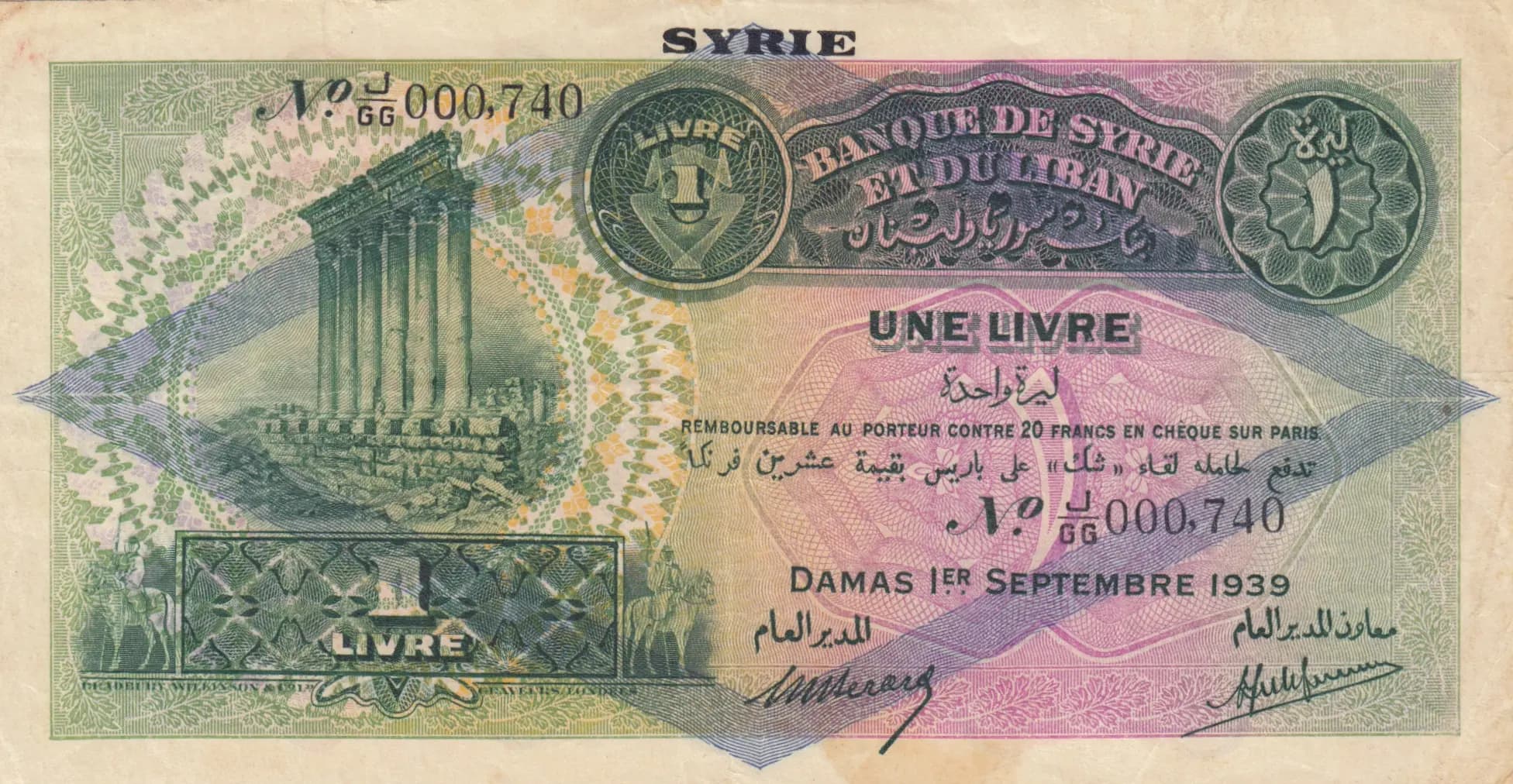
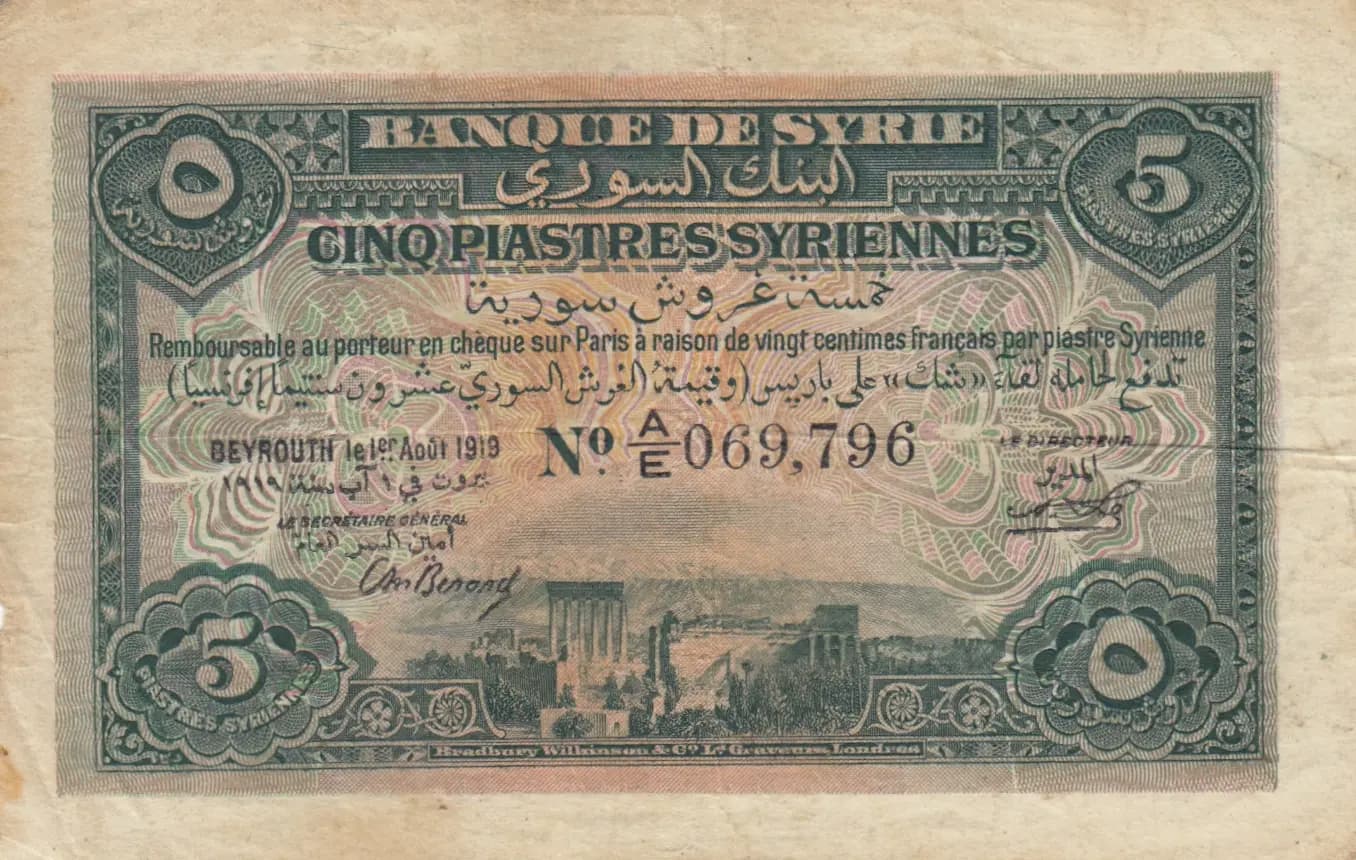
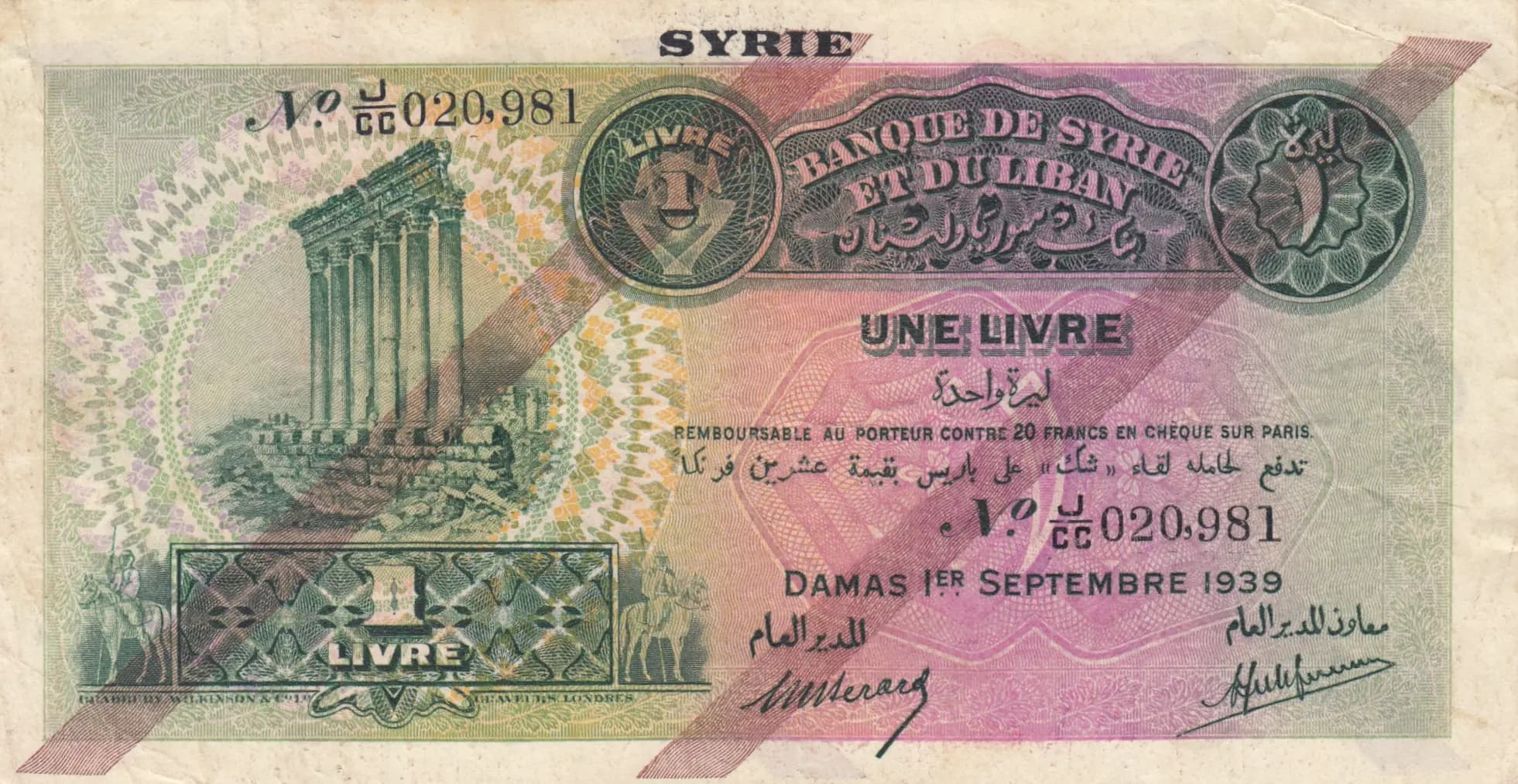
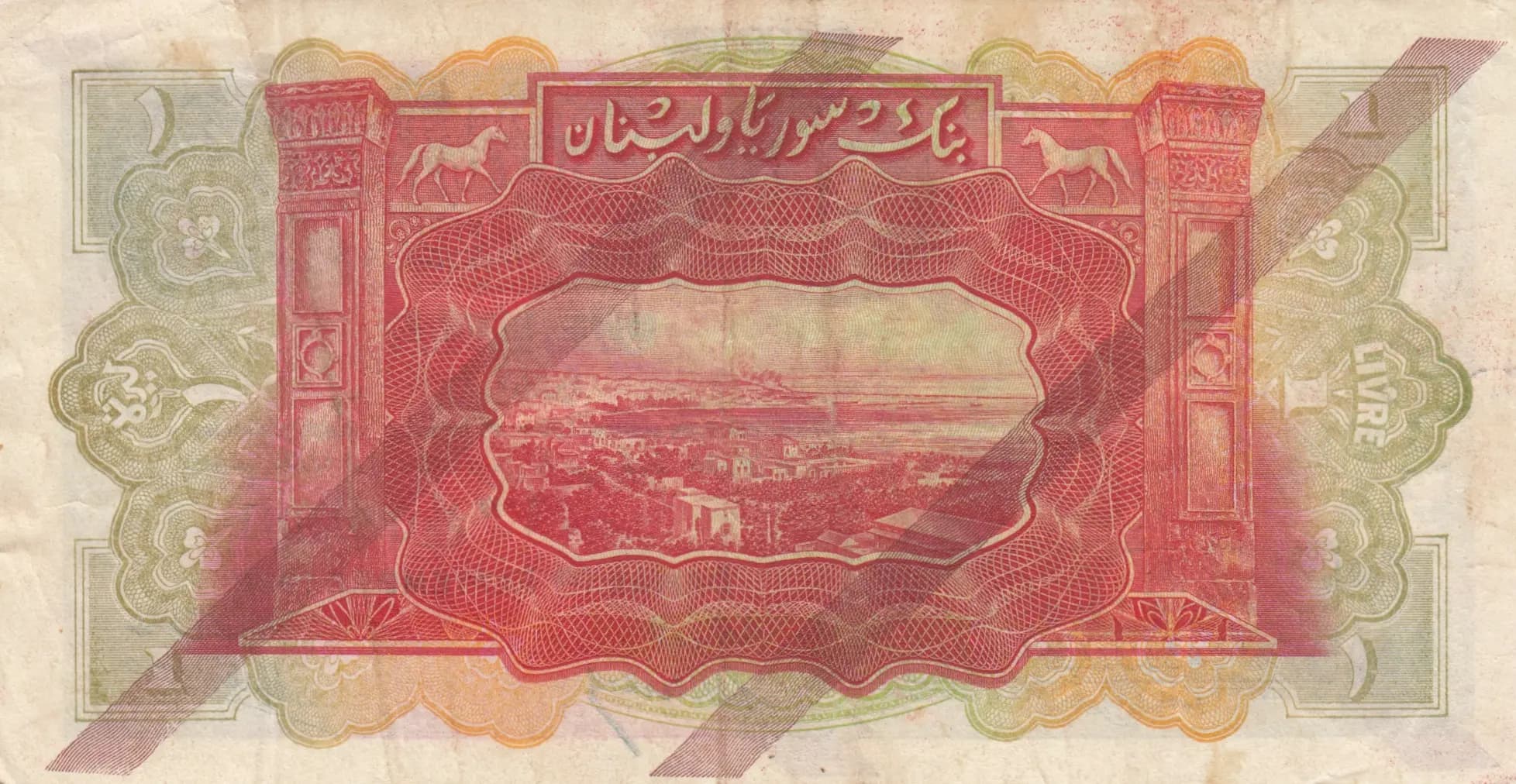
This is a VF-graded example of the iconic 1939 Syrian 1 Livre note issued by the Banque de Syrie et du Liban, featuring the famous Columns of Baalbek on the obverse and a panoramic view of Beirut on the reverse. The note displays characteristic green and multicolor toning on the front with notable creasing and age-related discoloration consistent with circulation, while the reverse exhibits the crimson-red cityscape vignette with period foxing and patina typical of notes from this era.
Common. The eBay price tracking data shows regular sales across multiple grades from 2015-2019, with VF examples selling in the $45-62 range and reaching catalog values of $45 for VF grade. The consistent appearance of this note in auction results, combined with 2016 catalog values and ongoing eBay activity, indicates this is a standard issue note with adequate circulation survival. The existence of five cataloged Pick varieties (P-40a through P-40f) further suggests significant original print quantities. Notes trading under $100 in standard grades are typical of common issues.
Issued on 1 September 1939—the very date Nazi Germany invaded Poland and World War II commenced in Europe—this banknote represents Syria's monetary sovereignty during the late French mandate period. The Columns of Baalbek depicted on the obverse symbolize the classical Greco-Roman heritage of the Levantine region, while the Beirut cityscape on the reverse reflects the economic importance of Lebanon's capital as a financial and mercantile center. The dual French and Arabic inscriptions, including the redemption clause against French francs, document the transitional economic relationship between Syria-Lebanon and the French colonial administration during this critical geopolitical moment.
The obverse features the Temple of Jupiter at Baalbek on the left side, rendered with classical architectural precision showing the distinctive tall Corinthian columns that characterize this UNESCO World Heritage site. A male profile portrait appears in a circular medallion in the upper center, flanked by ornamental circular seals and botanical elements (oak leaf motifs) in circular wreaths. The right side contains decorative circular emblems and floral/geometric patterns characteristic of Belle Époque security printing. The reverse presents a panoramic landscape vignette in crimson-red tones depicting an aerial or elevated perspective of Beirut's urban expanse, framed by an ornate Persian-style border featuring stylized horses or similar heraldic animals, quadrilateral corner cartouches, and intricate geometric scrollwork in gold and tan tones. Both sides employ elaborate guilloche patterns and fine-line engraving throughout as anti-counterfeiting measures.
FRONT SIDE: 'SYRIE' (Syria); 'BANQUE DE SYRIE ET DU LIBAN' (Bank of Syria and Lebanon); 'UNE LIVRE' (One Pound); 'ليرة واحدة' [One Pound in Arabic]; 'REMBOURSABLE AU PORTEUR CONTRE 20 FRANCS EN CHÈQUE SUR PARIS' (Redeemable to bearer against 20 francs by check on Paris); 'تحرير طالبة لقبول شيك بمية عشرين فرنك على باريس' [Redeemable for a check of 20 francs on Paris in Arabic]; 'DAMAS 1ER SEPTEMBRE 1939' (Damascus 1st September 1939); '1 LIVRE' (1 Pound); Serial number 'No 020,981'; 'للدولار الام' [appears to reference currency designation]. BACK SIDE: 'بنك سوريا ولبنان' (Bank of Syria and Lebanon in Arabic); Additional Arabic text present but not fully legible in provided images. Both sides include two signature lines at bottom.
Engraved intaglio printing by Bradbury Wilkinson & Co. (BWC), New Malden, Surrey, England—the premier security printer of the era. The note exhibits characteristic fine-line engraving, multiple color layering, and complex guilloche background patterns typical of BWC's security work. The vivid green obverse and crimson reverse indicate careful color separation and professional multi-plate engraving. The lilac-colored 'SYRIE' overprint visible in collections represents a Type B variety applied post-printing, consistent with the currency's designation.
This note is cataloged as Pick 40c, one of five known varieties for the base 1939 Syrian 1 Livre. All varieties were printed by Bradbury Wilkinson. The variants likely reflect different printing runs or signature varieties. The observed lilac-colored Type B 'SYRIE' overprint is consistent with the P-40c designation noted in catalog references. Serial number 020,981 and the visible signature lines should be documented, though specific signature identification would require expert comparison to known signature varieties of this issue.