5 kronor 1979
Market Prices
68 salesAbout This Note
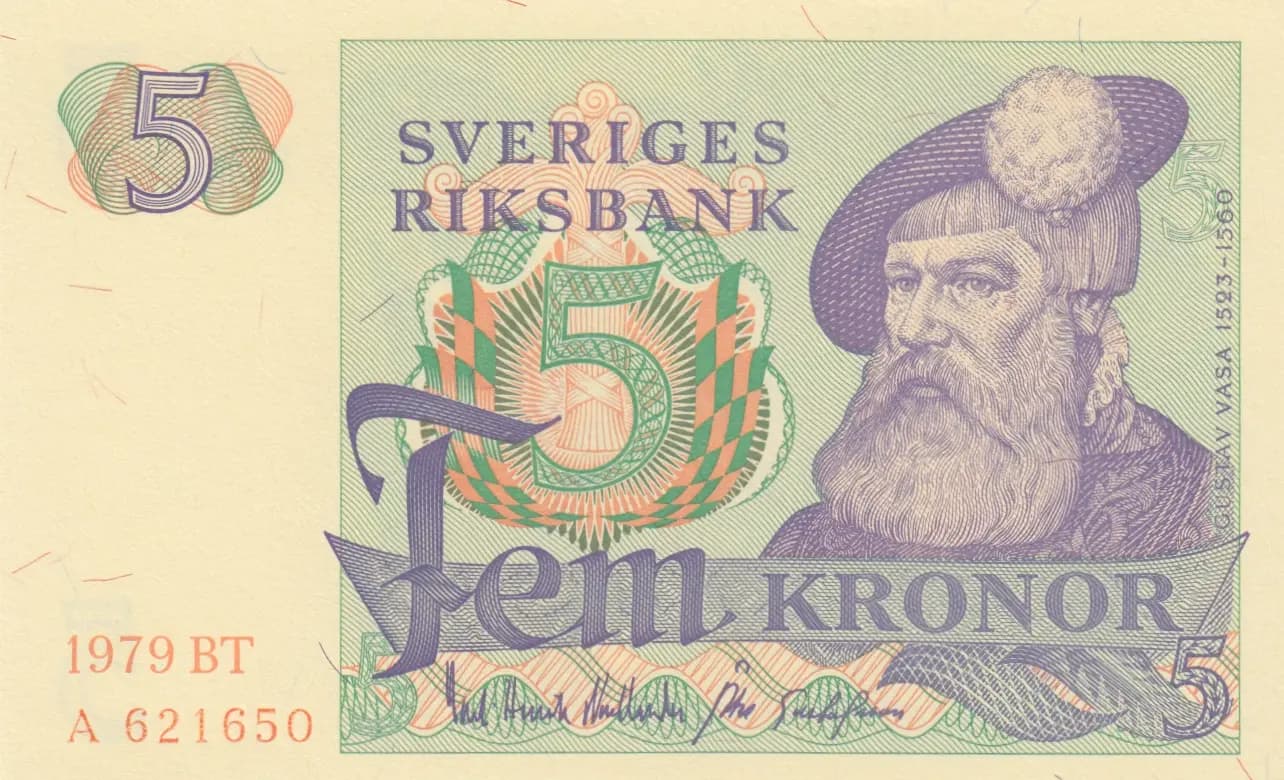
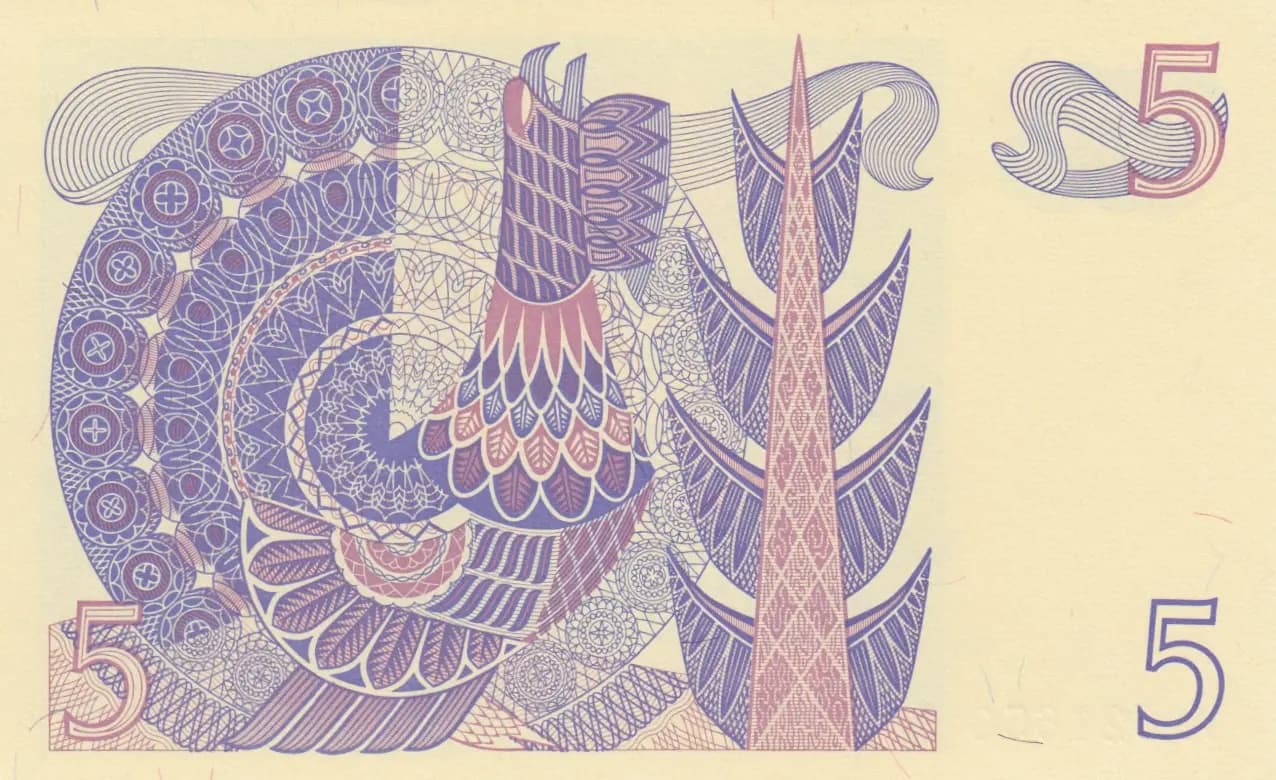
This is a Swedish 5 kronor note from 1979 (Pick P-51d), issued by Sveriges Riksbank during the final years of this series' circulation. The note displays the characteristic purple, green, and orange color scheme with an ornate portrait of King Gustav Vasa on the front and an elaborate decorative rooster design on the reverse. In the observed circulated condition with visible creasing, foxing, and handling marks, this note represents a typical example of late-1970s Swedish currency that saw moderate circulation before the eventual modernization of the Swedish kronor series.
Common. This is a regular issue note from a 17-year production run (1977-1981) with substantial print quantities. eBay market data shows consistent sales across numerous auction records from 2012 to 2024, with UNC examples typically selling in the $2-4 range and even graded PMG specimens selling well below the $25 threshold that would indicate true scarcity. The abundance of available examples and modest market prices confirm this as a common circulating issue with no rarity premium.
This banknote was issued during the late 1970s, a period when Sweden maintained traditional intaglio-printed currency designs celebrating national heritage. King Gustav Vasa, depicted on the obverse, was the 16th-century founder of the modern Swedish state and a central figure in Swedish national identity, making him an appropriate choice for the nation's currency. The ornamental rooster on the reverse exemplifies the decorative security printing standards of European central banks during this era, reflecting both artistic tradition and anti-counterfeiting concerns of the period.
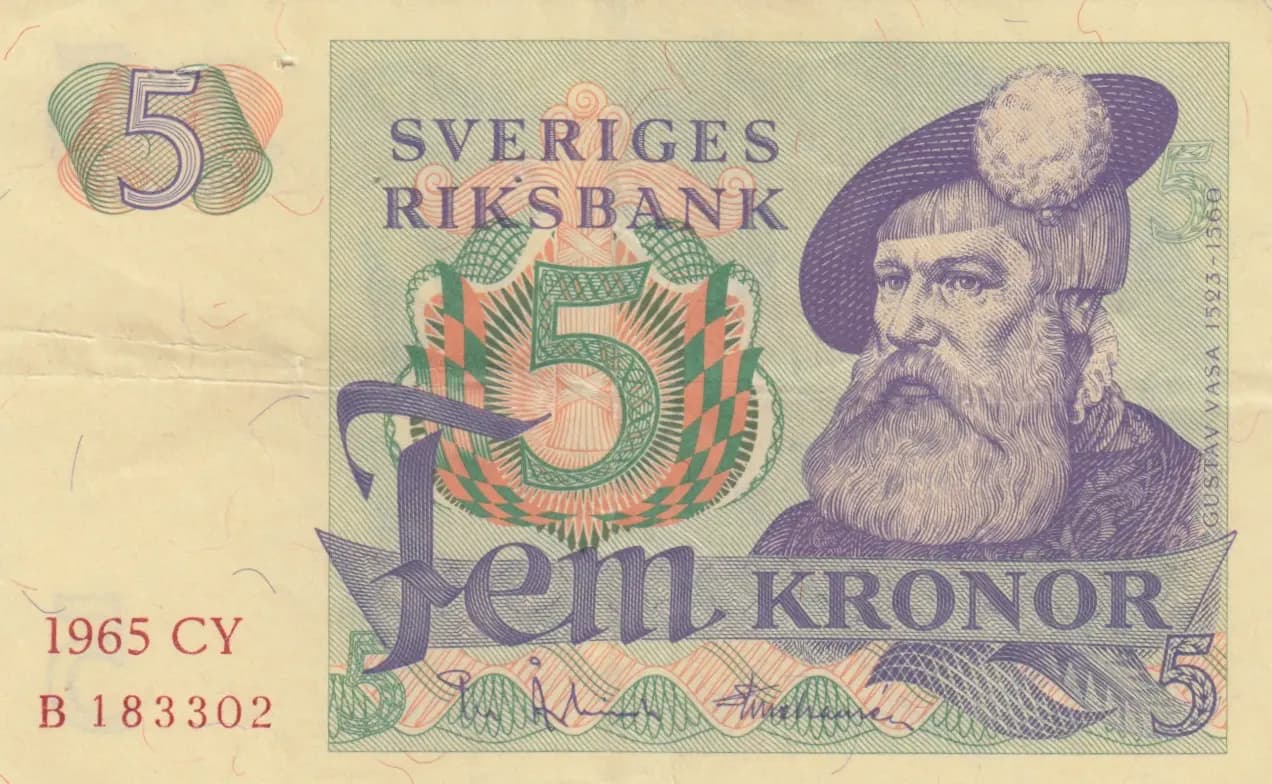
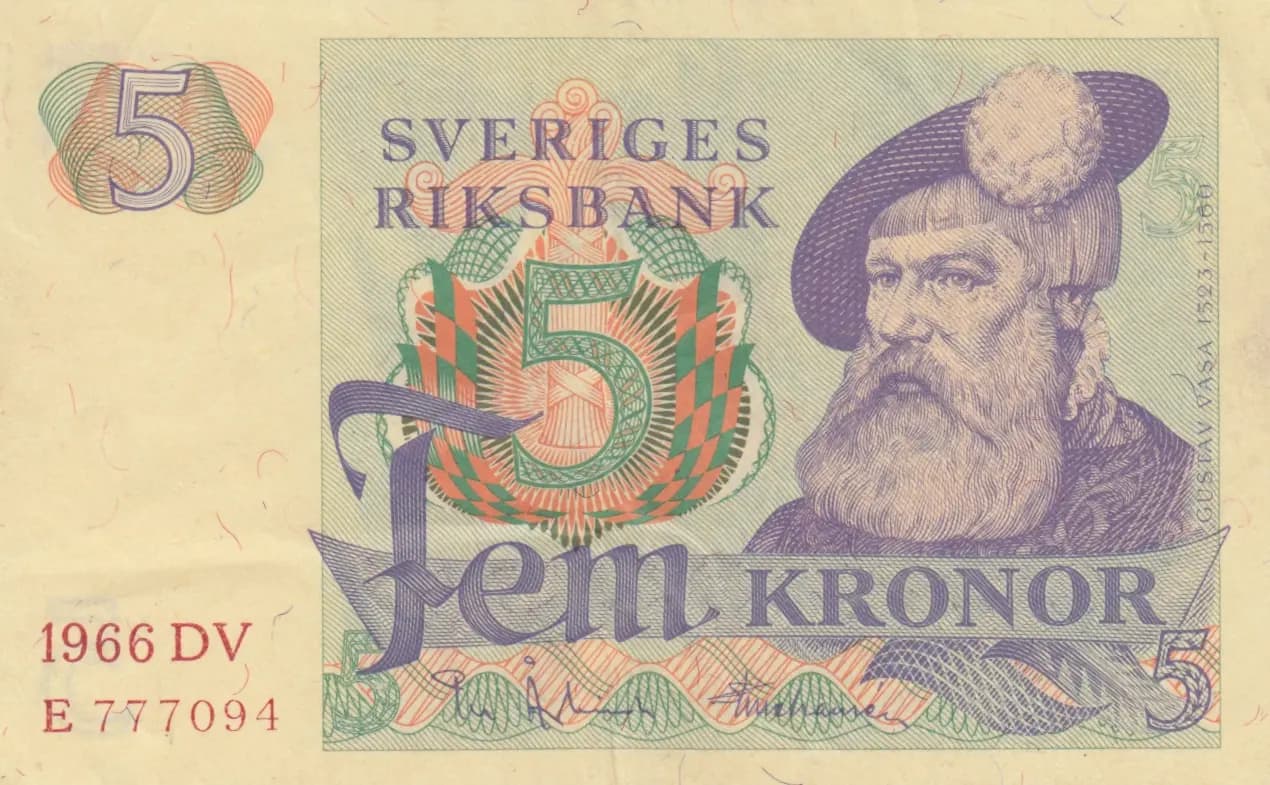
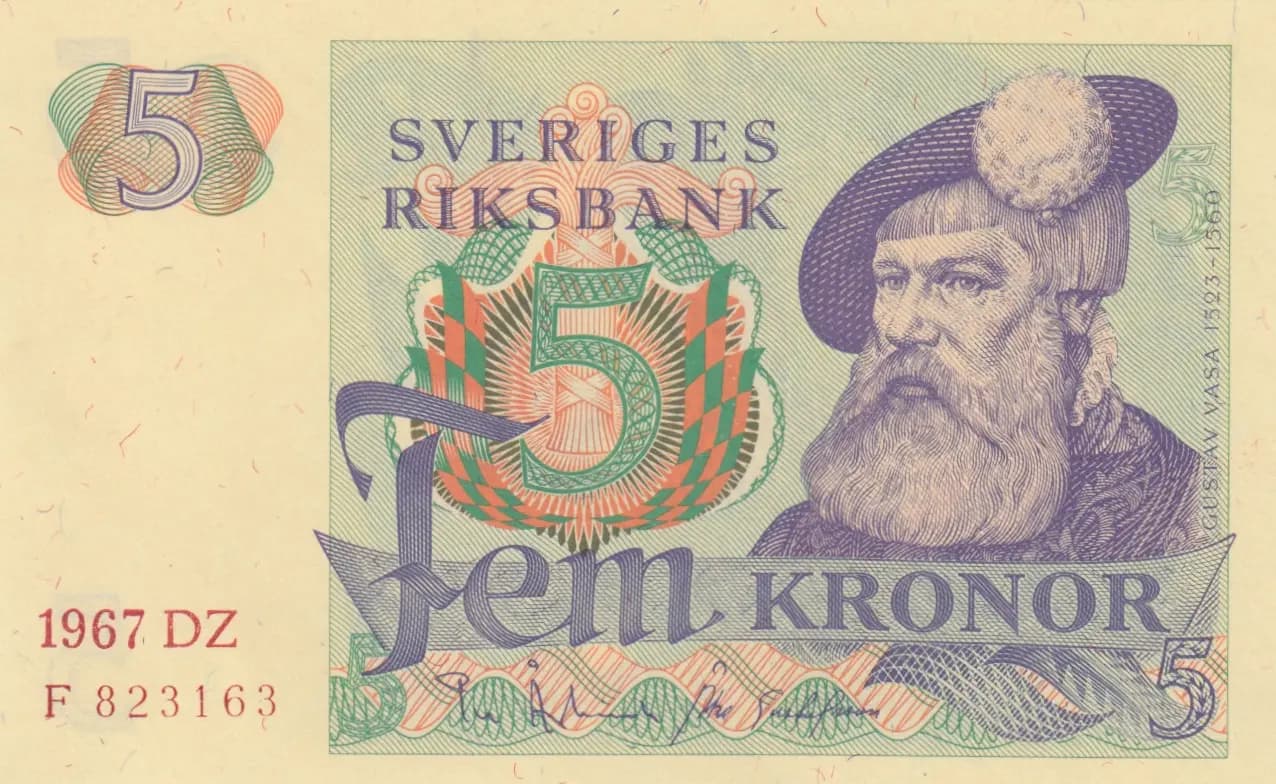
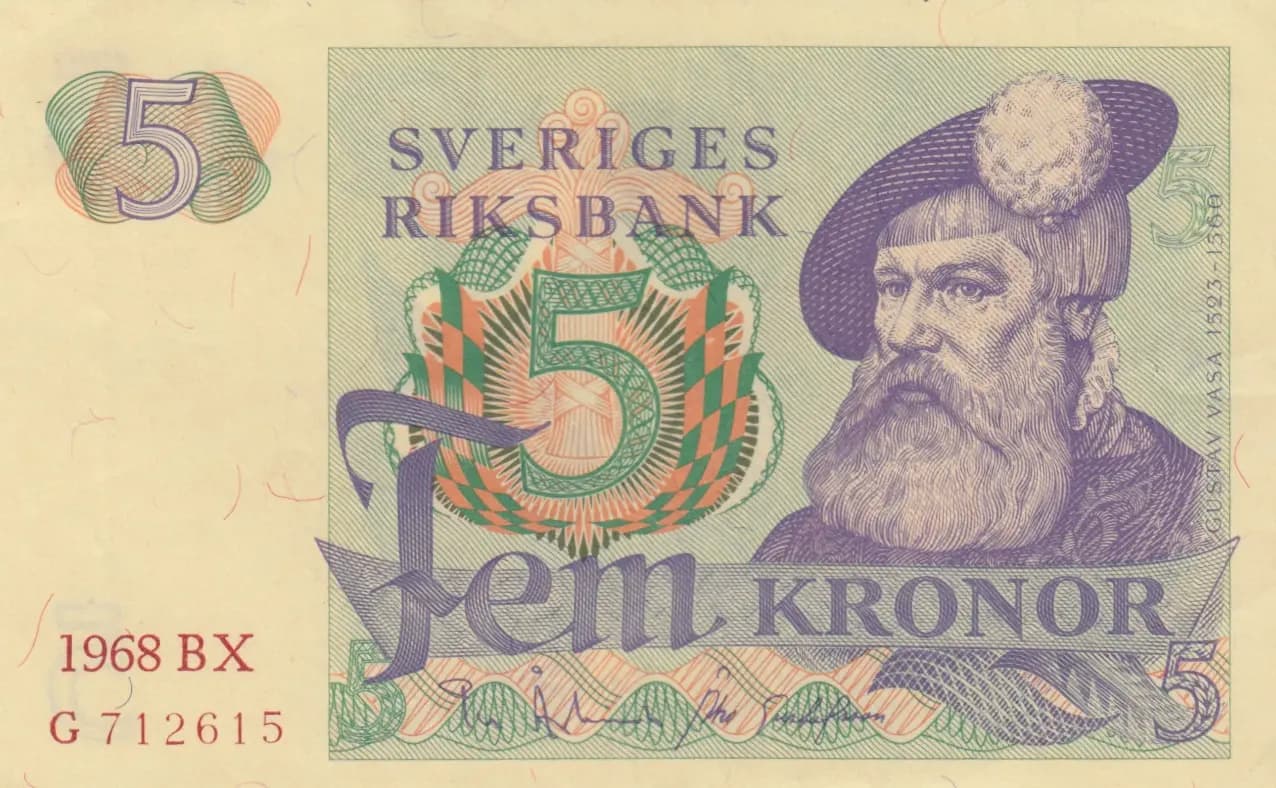
The obverse features a formal portrait of King Gustav Vasa (1496-1560), rendered in purple and dark blue tones, positioned on the right side of the note. He is depicted as a bearded man wearing a distinctive hat with a tassel or pom-pom, characteristic of 16th-century Swedish royal regalia. The left side displays an ornamental decorative '5' within an elaborate frame using green and orange coloring. The center features the coat of arms of Sweden (a heraldic shield with crown) surrounded by ornamental security patterns. The reverse showcases an intricate ornamental design dominated by a large stylized peacock or rooster with elaborate feathered fan motif in purple and pink/red tones, surrounded by complex geometric and floral medallion patterns in the finest tradition of intaglio engraving. The entire design demonstrates sophisticated guilloche patterning and micro-detail work characteristic of high-security currency printing.
Front side: '5' (denomination), 'SVERIGES RIKSBANK' (Swedish National Bank/Sveriges Riksbank - the issuing authority), 'fem KRONOR' (five crowns - verbal denomination), '1979 BT' (year of issue 1979 and printer initials), 'A 621650' (serial number). Back side: '5' (denomination appears twice in upper right and lower right corners). All inscriptions are in Swedish except for the alphanumeric serial number.
Intaglio printing (engraved line printing) using multiple color passes. The note exhibits the characteristic fine line work, guilloche security patterns, and detailed engraving typical of Swedish Riksbank currency production from this era. The multiple color separation visible (purple, green, orange, pink, red, and blue) indicates multi-pass intaglio printing. The printer initials 'BT' on the note likely indicate Bergströms Boktryckeri or another authorized Swedish security printer, though exact attribution to a specific printer would require additional research into Swedish banknote production records for 1979.
This specific note is identified as the 1979 issue within the broader P-51d classification. The serial number prefix 'A 621650' suggests standard production from the early-to-mid range of the issue run. The visual analysis confirms this is from the 1977-1979 variant (as opposed to the 1981 reprint) based on the date marking. No major varieties (such as overprints, significant signature variations, or error notes) are apparent in the observed specimen. Collectors of Swedish currency would note the year of issue as relevant for completing a chronological series, though all years within this issue are equally common in the current market.