5 kronor 1967
Market Prices
24 salesAbout This Note
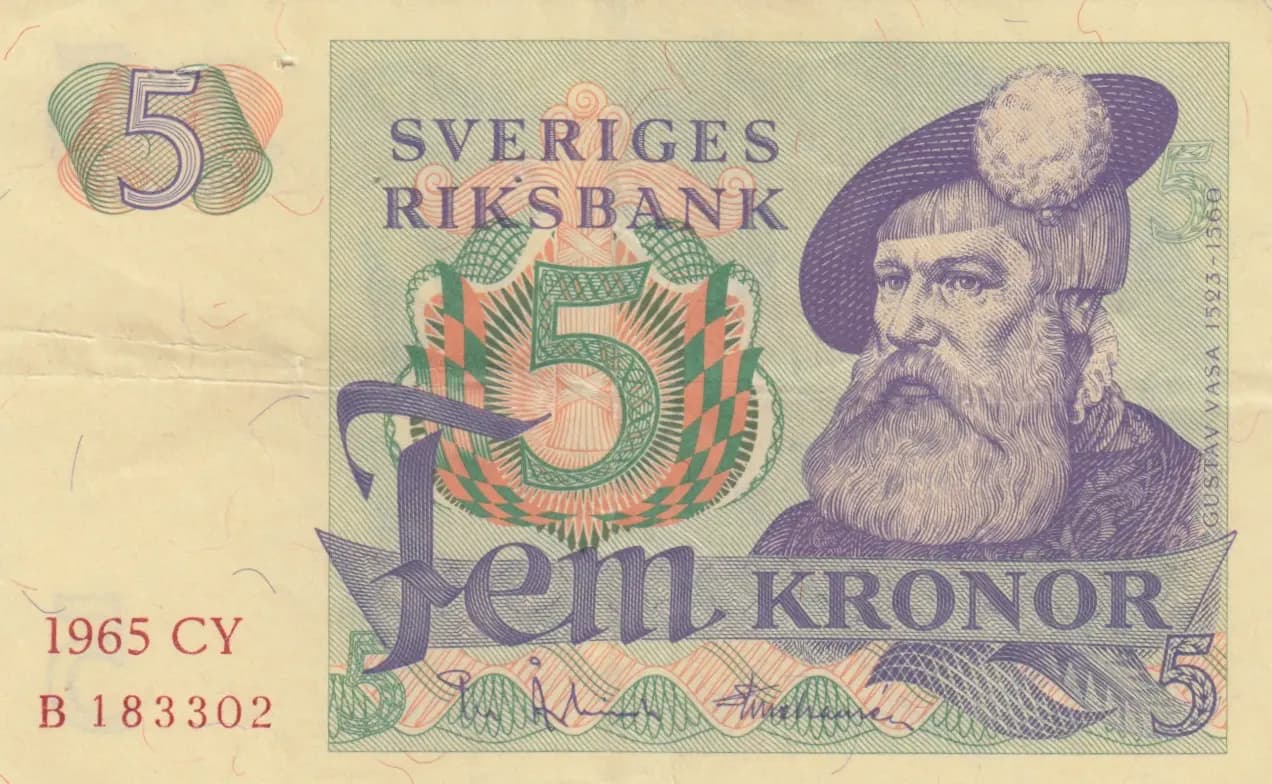
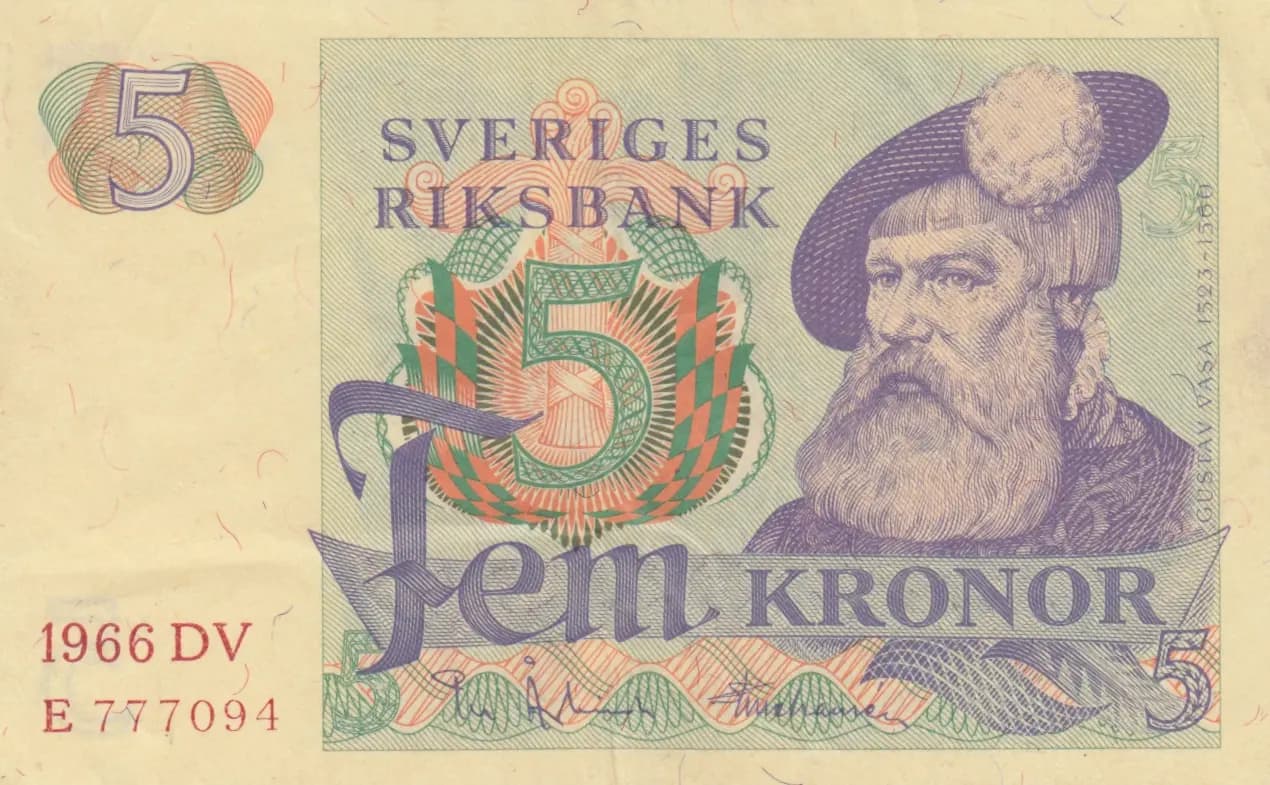
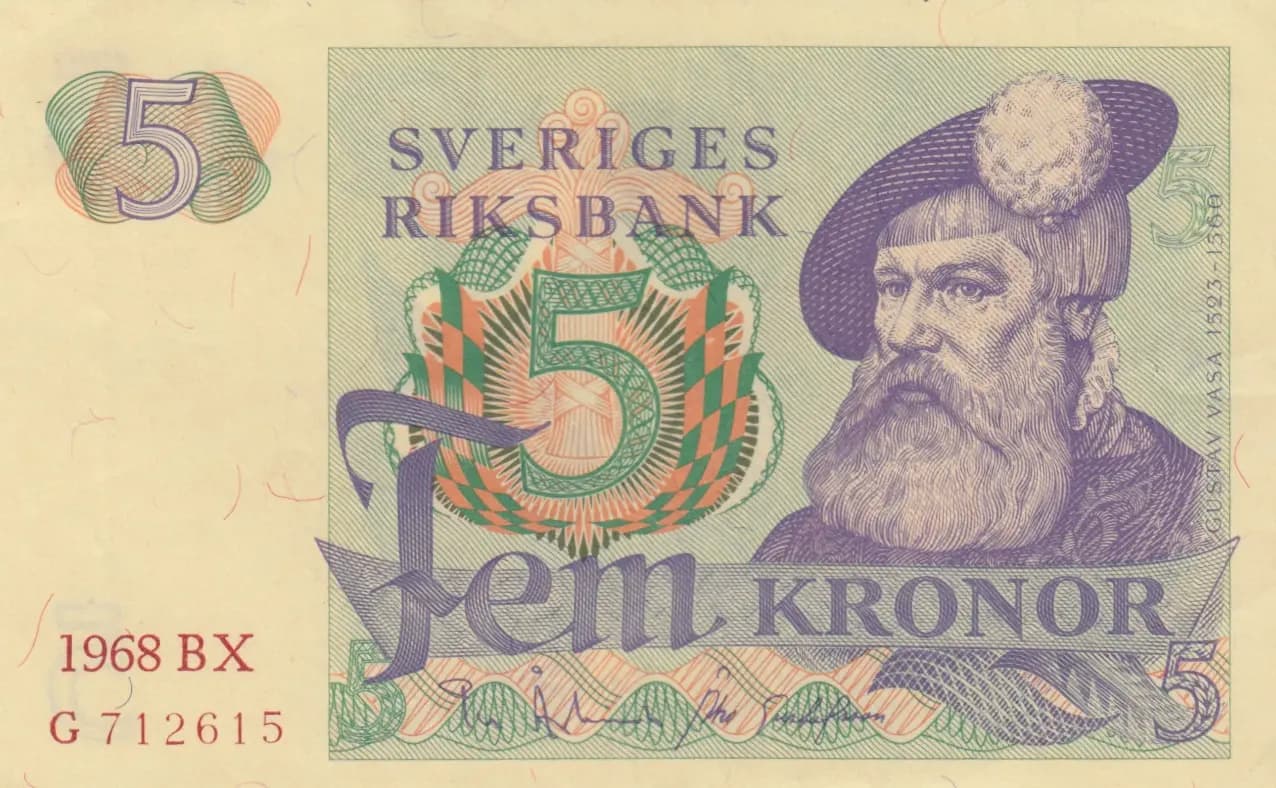
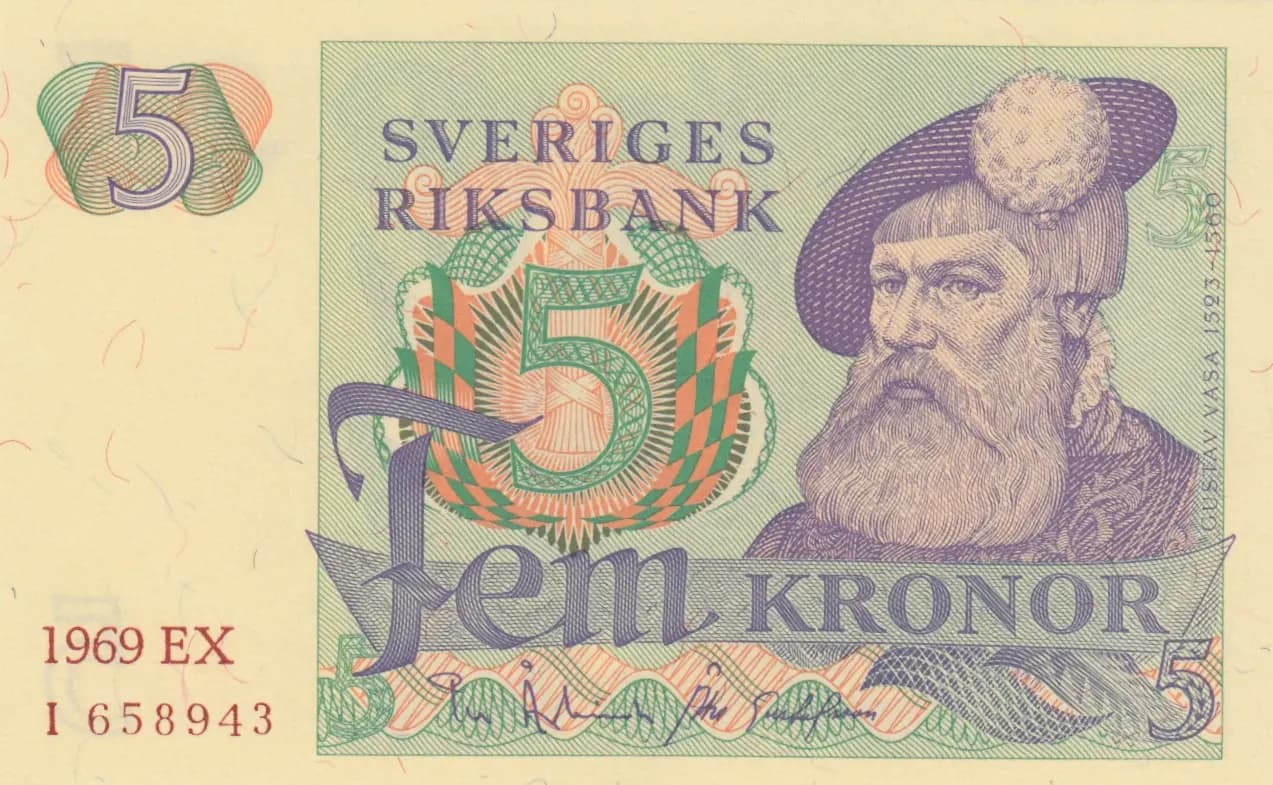
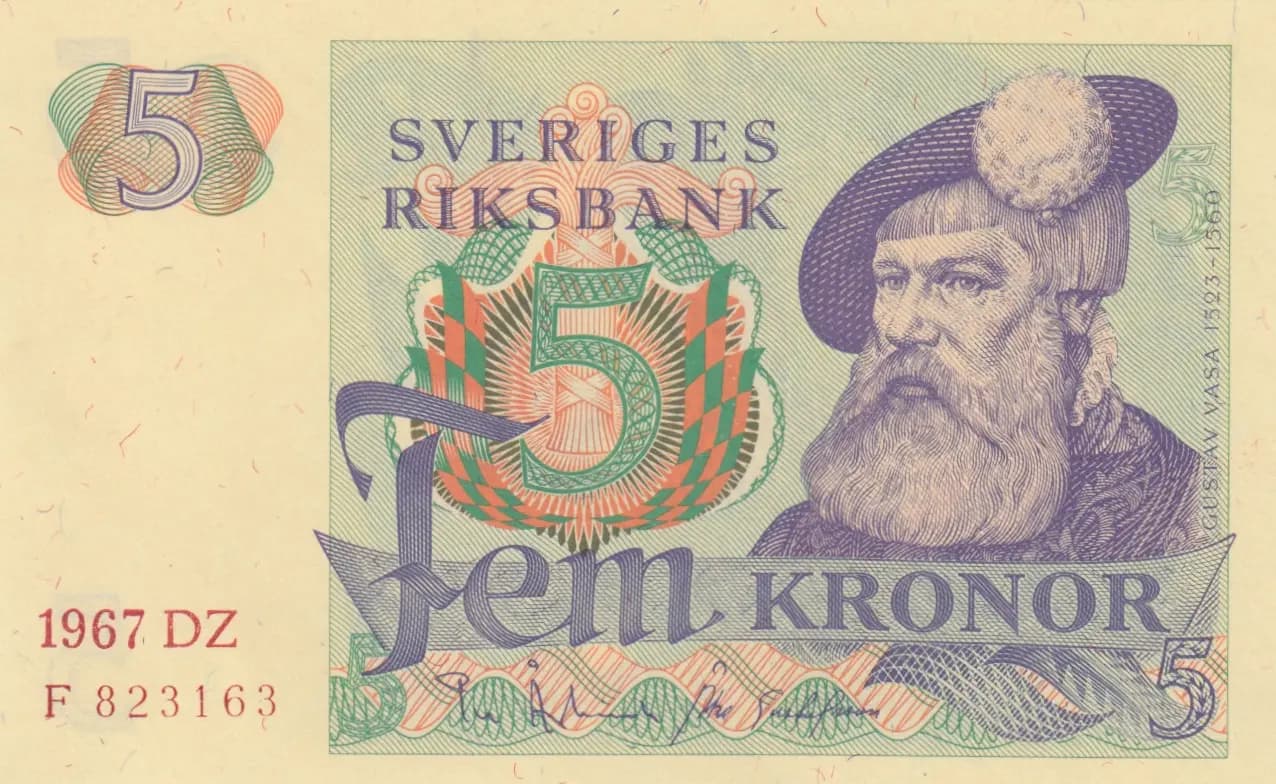
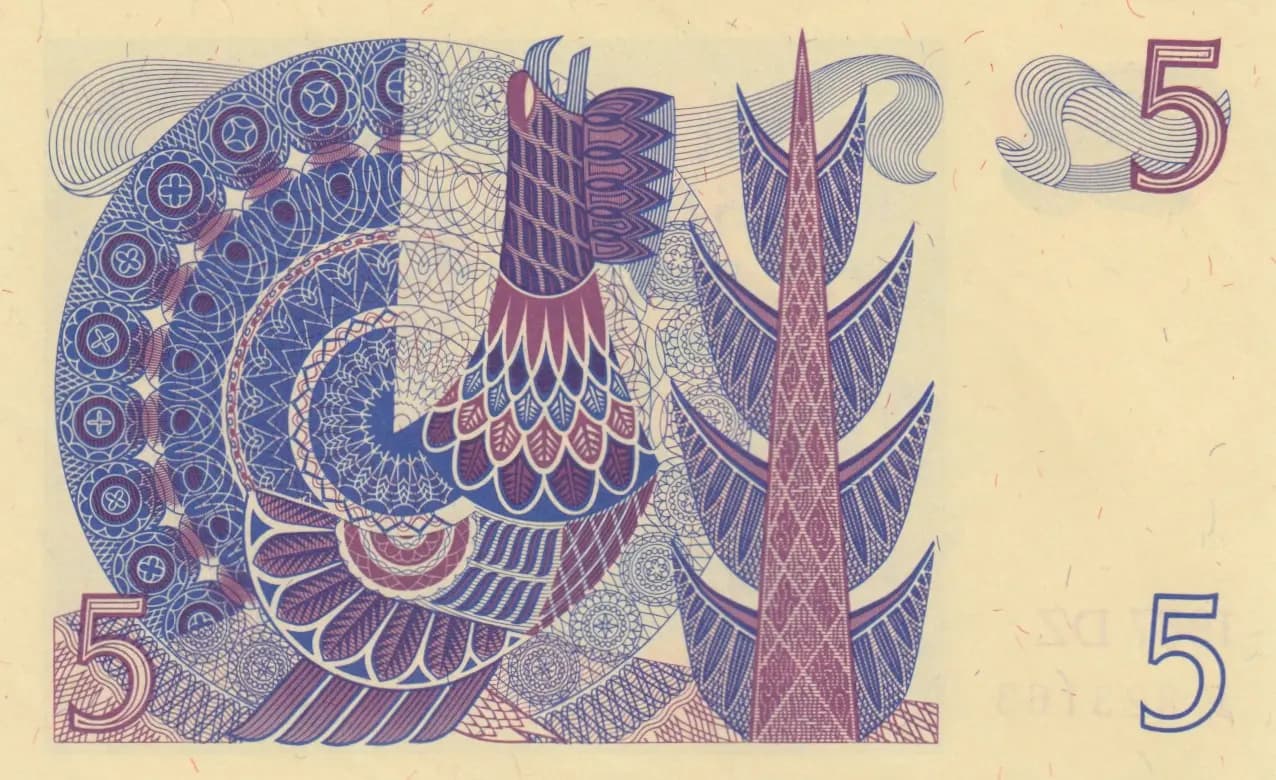
This is a Swedish 5 kronor banknote from 1967 (Pick P-51a), featuring King Gustav Vasa in profile on the obverse and an ornate floral design on the reverse. The note displays characteristic period coloring with cream/beige, green, purple, and red/orange tones throughout. In the observed condition, the note shows significant aging with visible foxing, staining, and creasing consistent with circulation wear, placing it well below the stated UNC grade in actual condition.
Common. This note represents a regular issue with a 17-year circulation period (1965-1981), ensuring substantial print runs. Secondary market pricing data shows consistent sales in the $2-$15 range across multiple condition grades, with UNC examples historically selling for $2.58-$5.51. Even professionally graded examples (PMG 66) have sold for $16-$49, indicating solid collector interest but typical availability for this denomination and period. The observed specimen's heavy circulation wear further confirms this was a widely circulated note.
Issued by Sveriges Riksbank during 1965-1981, this note depicts King Gustav Vasa, the 16th-century founder of the Swedish realm and national independence. The rooster imagery on the reverse is an abstract heraldic reference to Swedish national symbolism. This denomination served as everyday currency during Sweden's post-war economic period and represents the bank's mid-century security printing standards.
The obverse features a right-facing profile portrait of King Gustav Vasa, identified by his characteristic long beard and distinctive hat, positioned on the right side of the note. The center displays an ornate heraldic coat of arms with the denomination '5' prominently featured, surrounded by decorative flourishes and scrollwork. The background employs diagonal guilloche patterns in green and blue tones. The reverse presents an elaborate ornamental design centered on a stylized flower or plant motif rendered in purple/burgundy and blue with intricate geometric patterning, complex fine-line engraving, and large denomination numerals in the corners. The overall design reflects classical engraving techniques typical of mid-20th century Scandinavian currency.
Front side: 'SVERIGES RIKSBANK' (Sweden's National Bank), 'fem KRONOR' (five kronor), '1967 DZ' (year and series designation), 'F 823163' (serial number). Back side: '5' (denomination marker, appears twice in corners). The watermark contains repeated '5' with the year in dark red letterpress according to catalog reference.
Intaglio (engraved) printing, evidenced by the fine line work, detailed guilloche patterns, precise portraiture, and complex geometric designs visible throughout both sides. The depth of detail in the heraldic elements and background patterns is characteristic of security printing by established European printers of the period. Sveriges Riksbank's primary security printer during this era was Tumba Bruk, Sweden's official banknote printer.
The specific variety can be partially identified as series 'DZ' from the 1967 dating observed in the visual analysis. The serial number prefix 'F' indicates a particular printing batch. The 1967 date places this note within the first three years of the 1965-1981 issue cycle. Catalog data indicates variations exist within the 1965-1969 print sequence (purple, green, and orange coloring as observed). Complete variety identification would require comparison against detailed Swedish catalog references documenting all prefix letters and series designations for this Pick number.