50 piastres 1981
Market Prices
13 salesAbout This Note
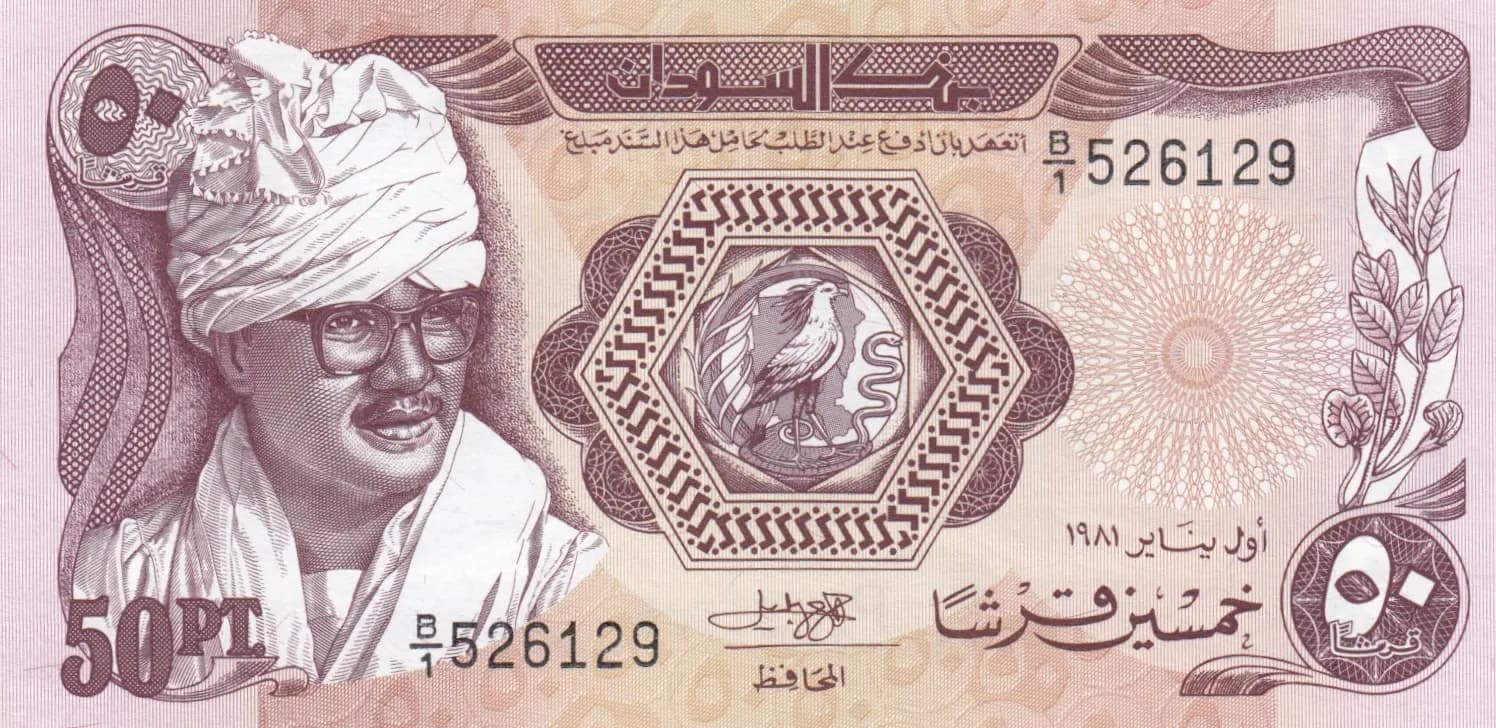
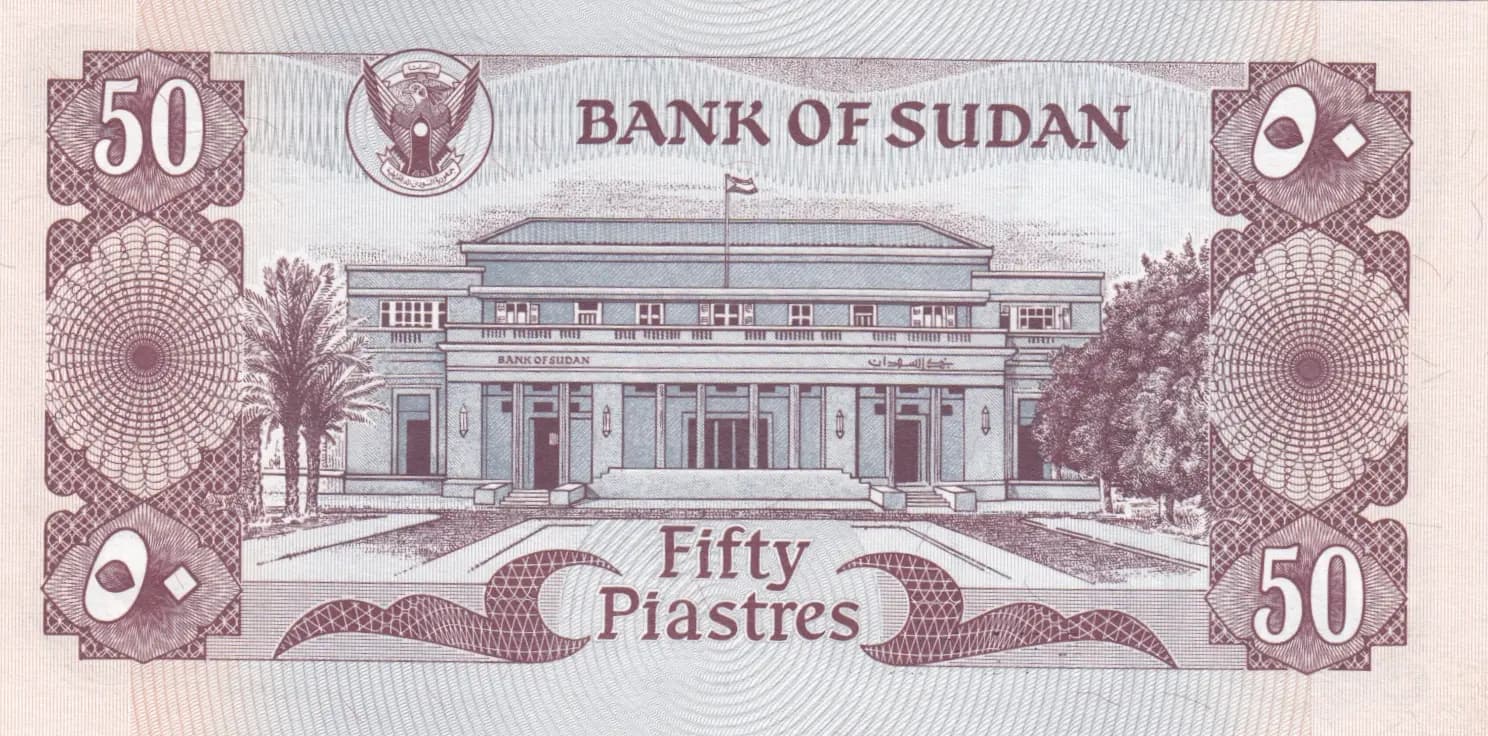
This is an uncirculated 1981 Sudan 50 Piastres note (Pick P-17) featuring President Jafar Muhammad an-Numeiri in traditional dress on the obverse and the Bank of Sudan building on the reverse. The note exhibits excellent condition with crisp intaglio printing in pink/mauve and brown tones, displaying no wear, creases, or damage. While common in the market based on eBay sales data ranging from $3–$16 USD depending on exact condition, this note represents an accessible example of early post-independence Sudanese currency design.
Common. The eBay sales data demonstrates consistent market availability with numerous UNC examples selling between $2.80 and $16.17 from 2012–2023, with an average around $9–$12 for UNC specimens. The 2019 catalogue value of $6 UNC further confirms this is a readily available note in the secondary market. No evidence of restricted print runs, recalls, or scarcity exists for Pick P-17.
Issued on January 1, 1981, this note was released during the regime of President Jafar Muhammad an-Numeiri, whose portrait in traditional Sudanese headwear adorns the obverse. The reverse depicts the Bank of Sudan headquarters in Khartoum, symbolizing the nation's monetary authority and institutional stability during this period of Sudan's economic development. The bilingual (Arabic and English) presentation reflects Sudan's post-colonial position as an independent nation establishing its own currency identity.
The obverse features a three-quarter profile portrait of President Jafar Muhammad an-Numeiri positioned on the left, depicted wearing glasses and a traditional white turban/headwear characteristic of formal Sudanese dress. The center-upper portion contains a hexagonal vignette framing an eagle or falcon symbol, reinforcing national identity. Decorative geometric patterns, circular ornamental elements, and botanical flourishes frame the composition. The reverse depicts the Bank of Sudan building in Khartoum as the dominant architectural element—a classical structure rendered in detailed line engraving with multiple columns, regular window patterns, a central entrance, and a flag pole on the roof. Palm trees flank the building on both sides, and circular ornamental mandala-like patterns occupy all four corners, providing additional security design elements.
Front: 'جمهورية السودان' (Republic of Sudan), '50' (denomination in Arabic numerals), 'أول يناير 1981' (First of January 1981), 'المحافظ' (The Governor), Serial number 'B/1 526129'. Back: 'BANK OF SUDAN' (English), 'بنك السودان' (Bank of Sudan in Arabic), '50' (denomination), 'Fifty Piastres' (English denomination text).
Intaglio printing (engraving), evidenced by the fine line patterns, sharp geometric borders, intricate circular ornamental designs, and detailed architectural rendering. The multi-color composition using pink/mauve, brown, purple, and white inks indicates the use of traditional banknote engraving techniques characteristic of Bank of Sudan issues from this era. Security features are integrated through geometric and decorative patterns inherent to the intaglio process.
The observed specimen carries serial number B/1 526129. PMG has catalogued this as P-17s (one known variant for this Pick number). The note is dated January 1, 1981, the official issue date. No significant varieties (such as signature variations or overprints) are apparent in this example, though collectors should note that later related issues exist (reference Pick P-24) with different design elements.