2 rupees 1979
Market Prices
75 salesAbout This Note
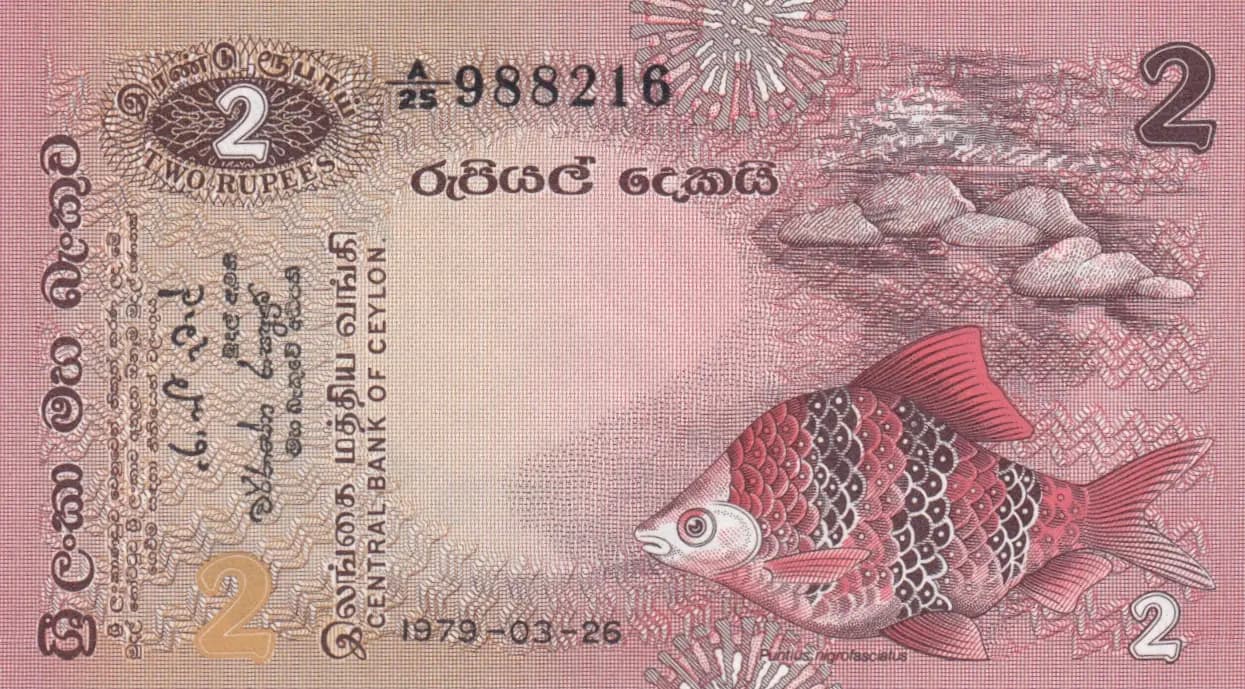
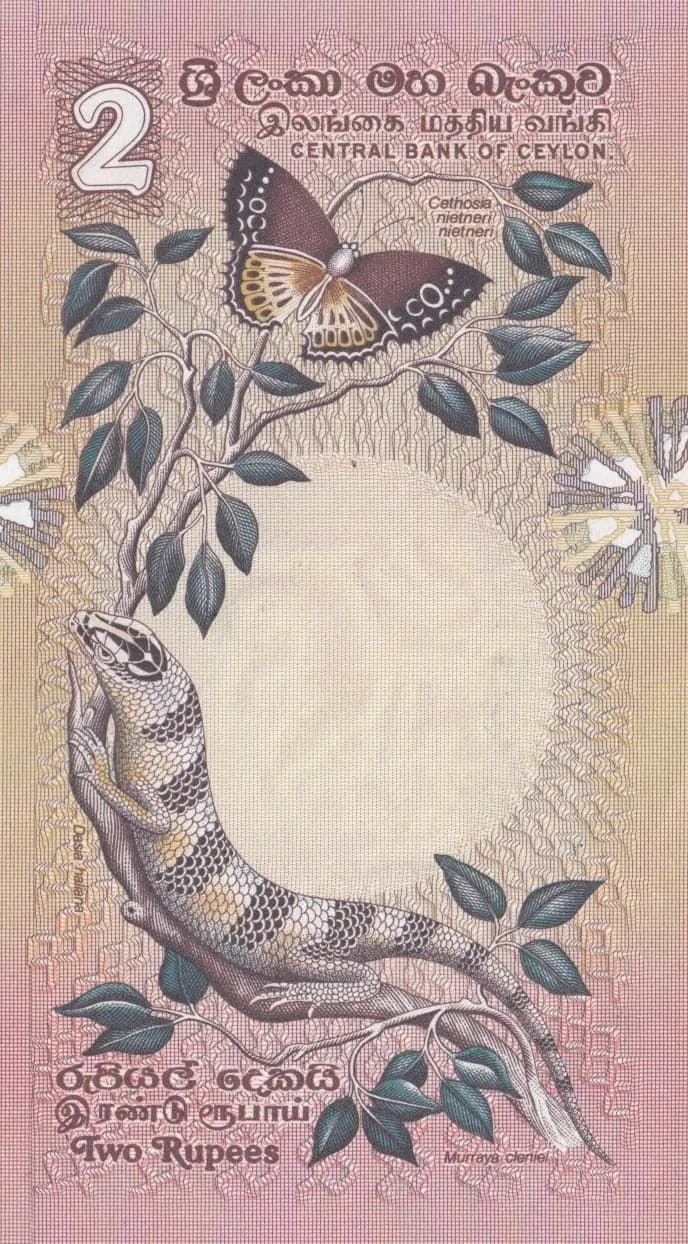
This is a 1979 Central Bank of Ceylon 2 Rupees note (Pick-83) in uncirculated condition, featuring a detailed engraved pinkish-mauve design with a central fish motif on the obverse. The reverse displays naturalistic imagery of Sri Lankan wildlife including a butterfly, lizard, and flowering plant, reflecting Ceylon's biodiversity focus during this period. The note exhibits sharp printing, crisp paper quality, and no visible wear, making it an attractive example of this denomination.
Common. This note appears frequently in the secondary market with consistent eBay auction activity spanning over a decade. UNC examples typically sell for $4-$10, with PMG-graded specimens (65-68) ranging from $12-$67. The high volume of sales transactions and modest price point (well under $20 for ungraded UNC) indicates a substantial print run with ready availability. No evidence of rarity factors such as limited print runs, recalls, or short-lived issuer status.
Issued on March 26, 1979, by the Central Bank of Ceylon during a period when the island nation was emphasizing its natural heritage and biodiversity in currency design. The inclusion of endemic fish species (Puntius nigrofasciatus) and other wildlife such as the Ceylon lacewing butterfly (Cethosia nietneri nietneri) on banknotes reflected Sri Lanka's commitment to conservation awareness and national pride in its unique flora and fauna. This design philosophy was characteristic of Commonwealth nations' currency programs during the 1970s-1980s.
The obverse features a meticulously engraved black-spotted barb (Puntius nigrofasciatus), a freshwater fish species native to Sri Lanka, rendered in fine detail with carefully executed scale patterns. The reverse showcases a naturalistic composition of three distinct wildlife elements: a Dasia haliana lizard at the base, a Ceylon lacewing butterfly (Cethosia nietneri nietneri) positioned on flowering Murraya cleniei plant foliage in the upper center, and decorative botanical elements. Both sides feature ornamental circular denomination markers bearing the numeral '2' in opposite corners, with decorative scrollwork and flourishes throughout the design. The color scheme employs a pinkish-mauve primary tint with cream/tan backing, brown detailing, and subtle blue-grey and gold accents. A rocky landscape element is visible in the background of the obverse at upper right.
FRONT: 'TWO RUPEES' (English denomination), 'CENTRAL BANK OF CEYLON' (issuing authority), 'ශ්රී ලංකා' (Sinhala: 'Sri Lanka'), '1979-03-26' (issue date: March 26, 1979), Serial number '25 988216'. BACK: 'CENTRAL BANK OF CEYLON' (issuing authority), 'ශ්රී ලංකා' (Sinhala: 'Sri Lanka'), 'Two Rupees' (English denomination), 'Cethosia nietneri nietneri' (scientific name of Ceylon lacewing butterfly), 'Murraya cleniei' (scientific name of plant species), with reference to 'Dasia haliana' (lizard species).
Intaglio engraving (recess printing), evidenced by the fine line work, intricate scale patterns on the fish, detailed wing patterns on the butterfly, and crisp impression quality visible throughout. The security printer for Central Bank of Ceylon notes from this period was typically Waterlow & Sons or similar Commonwealth banknote printers, though specific attribution for Pick-83 requires archival records. The watermark area visible in background portions indicates traditional security watermark integration.
Serial number '25 988216' observed on this example. The catalog reference indicates replacement note variety exists with serial number prefix 'Z/1', which would represent a distinct variety. Regular issue 1979-dated examples appear to use standard serial numbering without the Z/1 prefix. This particular note uses standard numbering and is a regular issue variant. The specific date of March 26, 1979 matches the official issue date documented in catalog references.