1 rupee 1918
About This Note
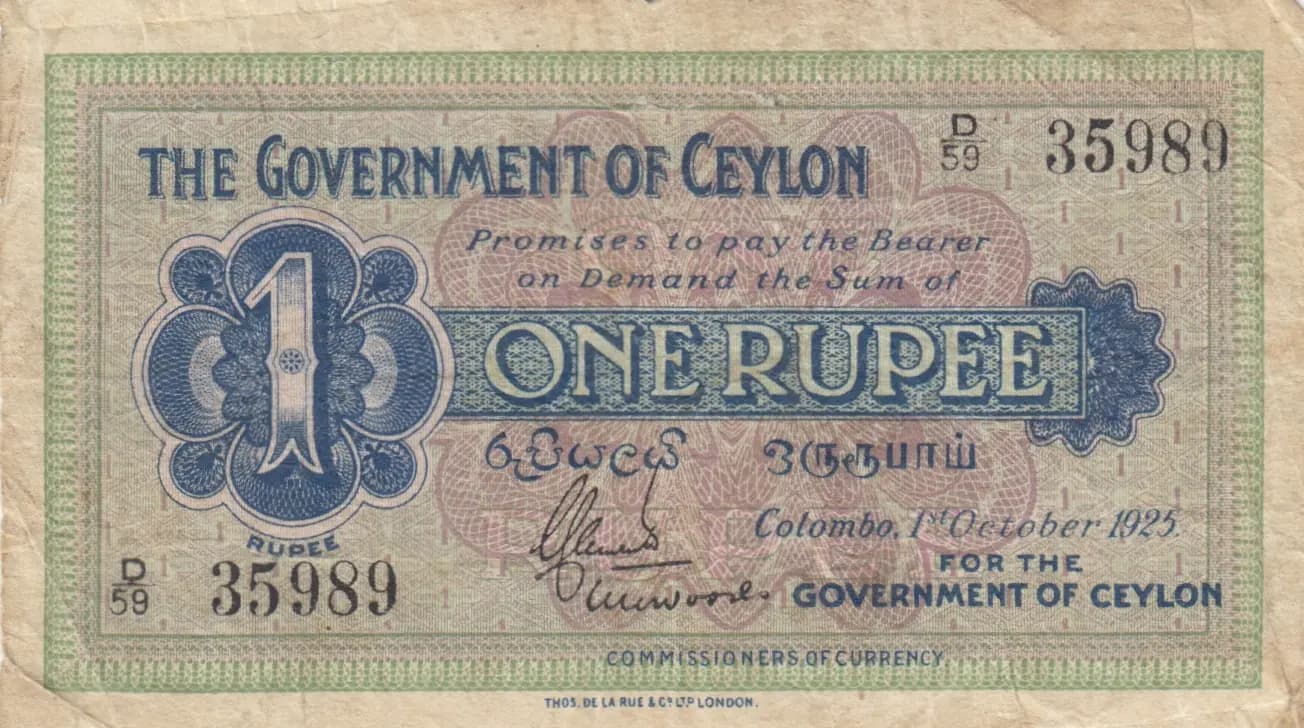
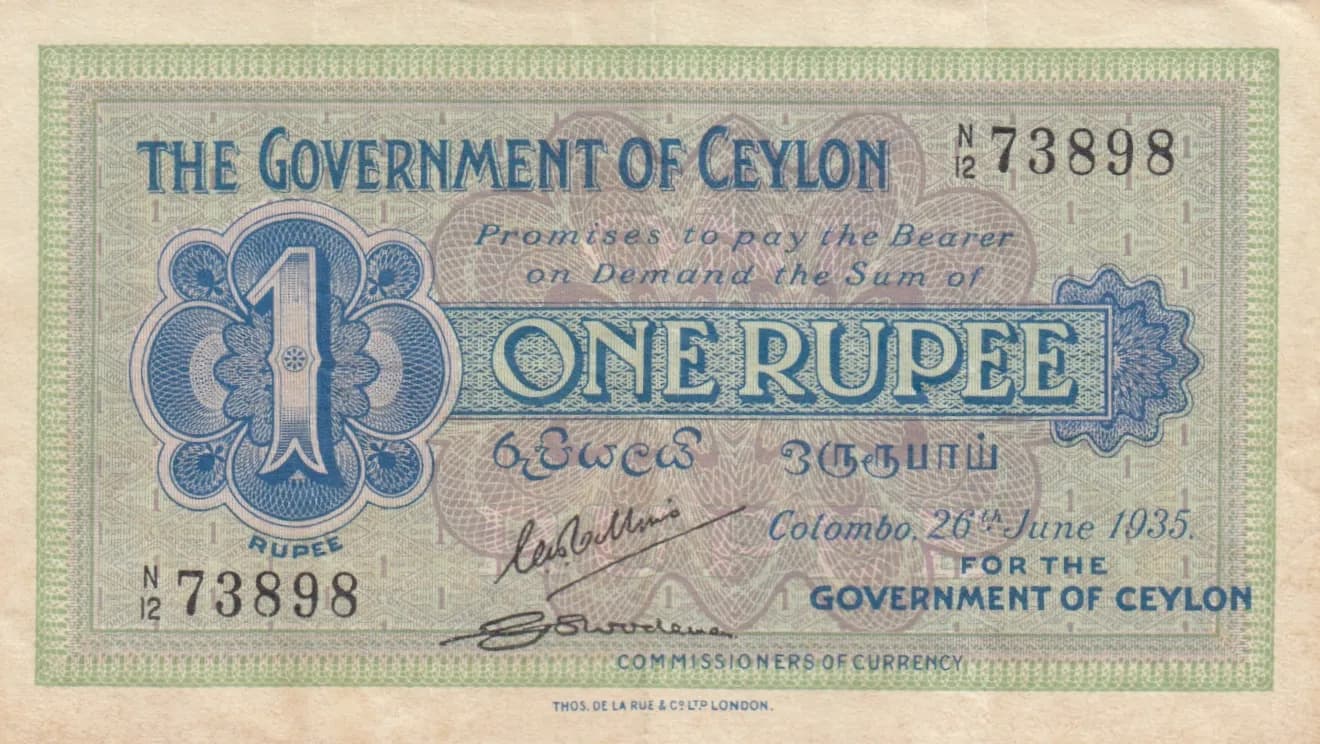
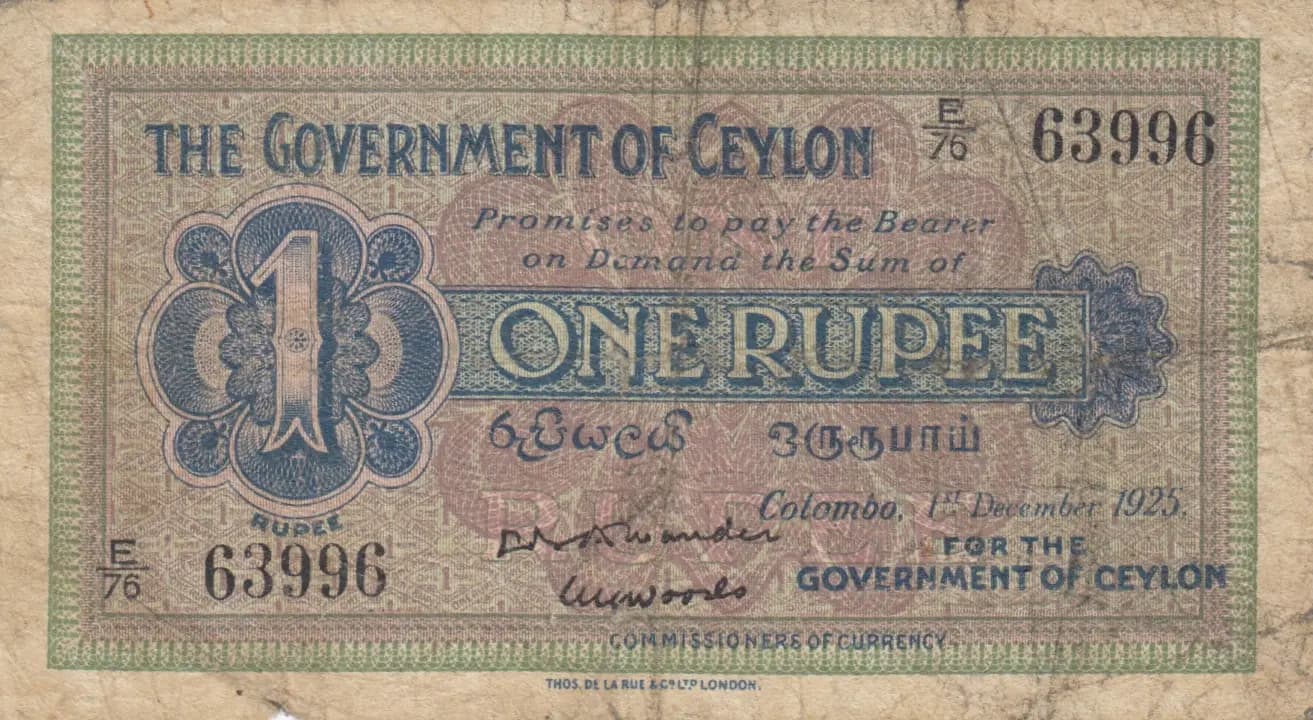
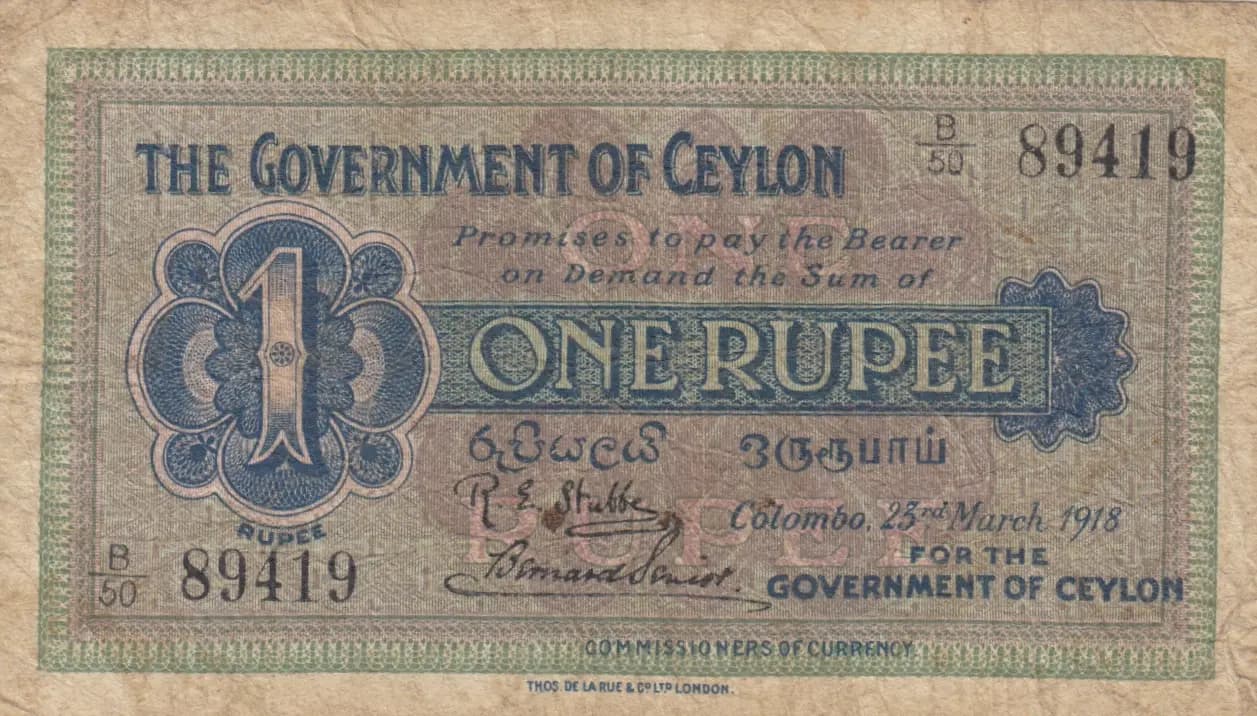
This 1918 Government of Ceylon 1 Rupee note (Pick P-16a) is an early 20th-century example of Ceylon's currency from the British colonial period, printed by the prestigious Thomas de la Rue of London. The note displays characteristic period design elements including ornamental four-lobed flower motifs, scalloped frames, and fine line engraving in blue and green on a tan background. In VG condition, the note shows honest aging with creasing, foxing, and color darkening consistent with over a century of circulation, yet the fine engraved details remain crisp and legible.
Common. Early Ceylon Government notes from the 1917-1939 issue period, particularly lower denominations like the 1 Rupee, were printed in substantial quantities to serve daily commerce in the colony. While all notes from this era are now over 100 years old and naturally scarcer than modern currency, the 1 Rupee denomination with this Pick number shows no indicators of exceptional rarity such as limited print runs, short issuing periods, or collector premiums. VG condition examples remain available to collectors at accessible price points.
This note was issued during Ceylon's period as a British Crown Colony, specifically dated 23rd March 1918, during the final years of World War I. The denomination promise 'The Government of Ceylon' and inscriptions in both English and Sinhala reflect the colonial administration's dual-language policy. The fine engraving and Thomas de la Rue production represent the high security standards maintained by the imperial currency authorities of the period.
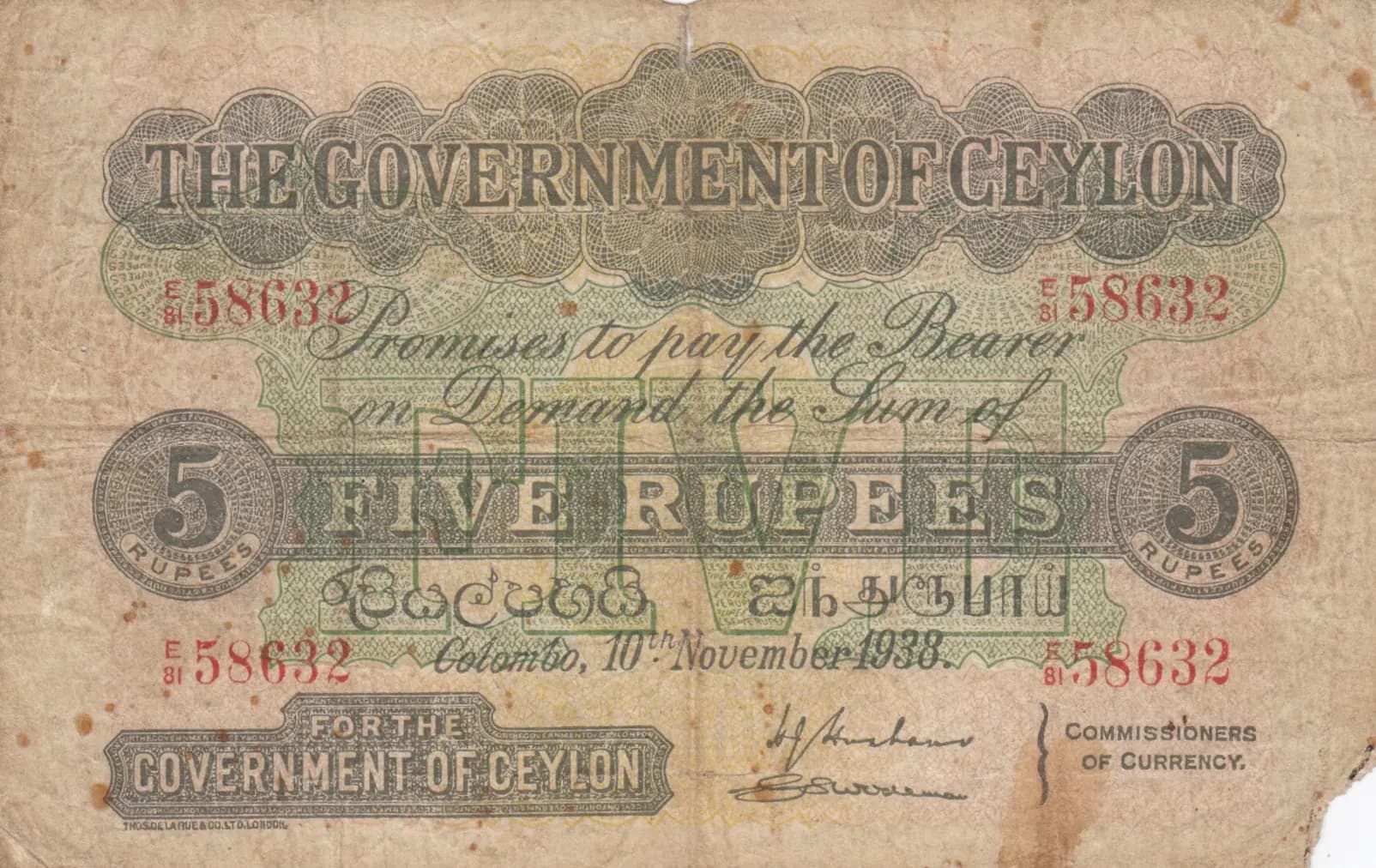
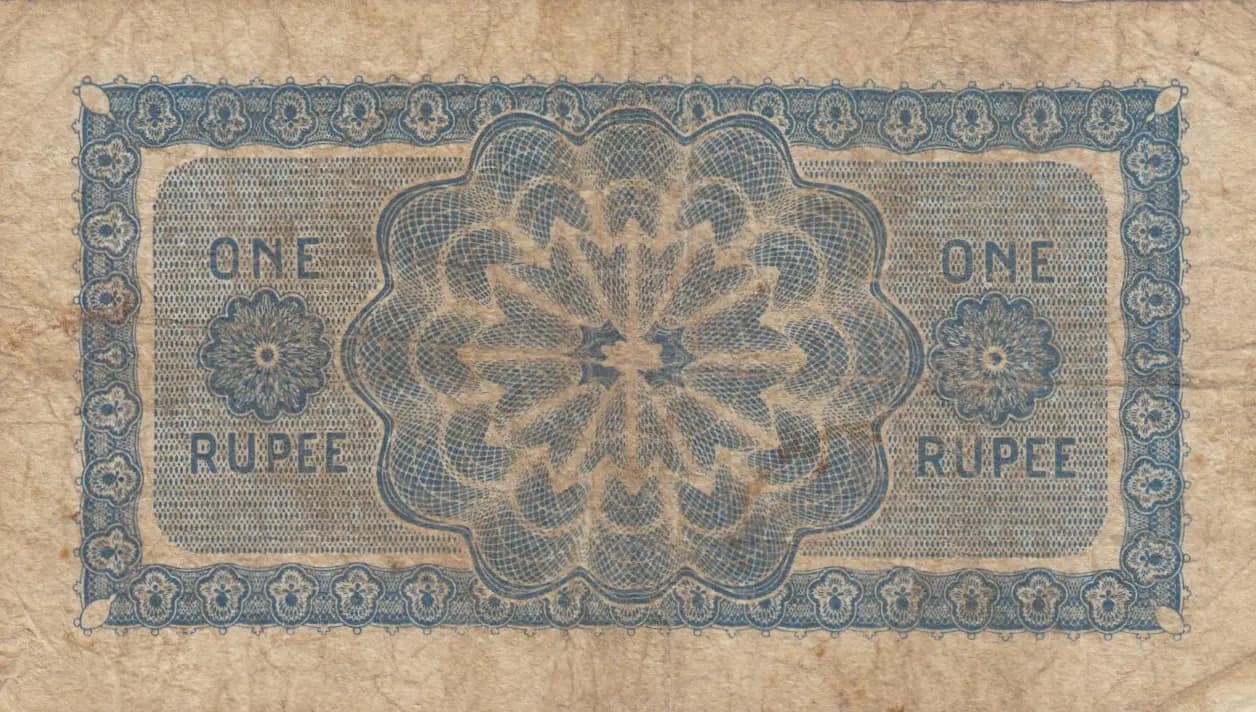
The front features the standard promise-to-pay clause centered between ornamental four-lobed flower designs that frame the numeral denomination, characteristic of De la Rue's early 20th-century colonial currency designs. The denomination appears in multiple formats (word and numeral) within scalloped quatrefoil frames, a security design element that helps prevent counterfeiting. The border consists of repeating geometric motifs in a decorative pattern. The reverse displays a large central medallion with complex geometric and floral patterns enclosed within a scalloped border, surrounded by a perimeter of repeating flower or coin-like motifs. Handwritten signatures of government officials appear on the front. The bilingual inscriptions in English and Sinhala reflect the multi-ethnic administration of Ceylon during the colonial period.
FRONT SIDE: 'THE GOVERNMENT OF CEYLON' | 'Promises to pay the Bearer on Demand the Sum of ONE RUPEE' | 'RUPEE' (large denomination marking) | 'Colombo, 23rd March 1918' (place and date of issue) | 'FOR THE GOVERNMENT OF CEYLON' | 'COMMISSIONERS OF CURRENCY' | 'THOS DE LA RUE & CO LTD LONDON' (printer identification) | Serial numbers: 'B 50 89419' and 'B 89419' | Sinhala text: 'ශ්රී ලංකා' (Sri Lanka) and 'රුපියල්' (Rupee). BACK SIDE: 'ONE' and 'RUPEE' flanking the central ornamental medallion.
Intaglio engraving (line engraving and cross-hatching), characteristic of Thomas de la Rue's security printing methods of the era. The fine line work, geometric security patterns, and detailed cross-hatching in the central medallion are visible evidence of high-quality engraved plates. The ornamental borders and complex denomination frames were produced using the same intaglio process, creating the raised tactile quality typical of currency from this period.
This specimen carries the serial number prefix 'B' with the series number '50' and sequential number '89419', consistent with the 1918 issue dated 23rd March. The handwritten signatures visible on the front may vary by individual issuing official, which could create minor varieties among notes from this printing. Collectors should note the specific date (23rd March 1918) as the printed issue date; other dates within the 1917-1939 series may represent different printings or currency commissioners.