2 rupees 1964
About This Note
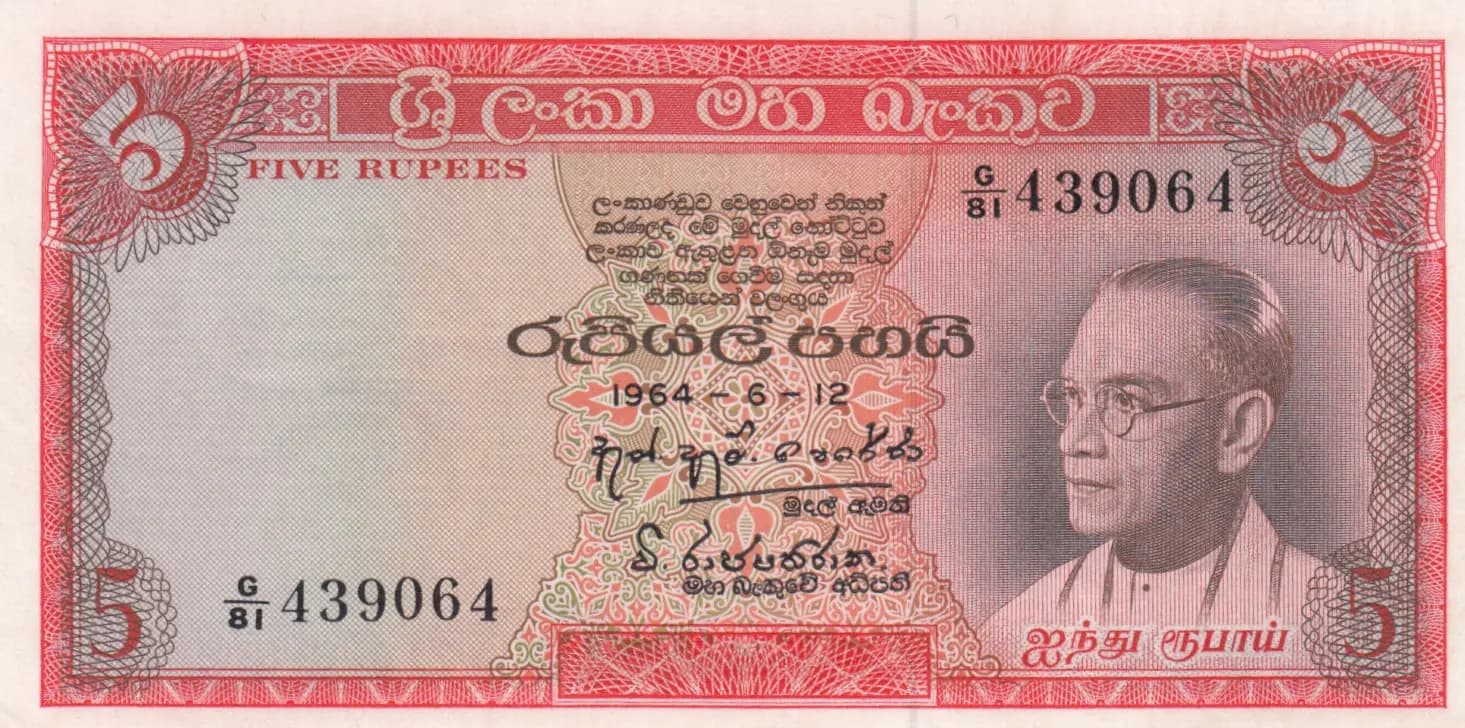
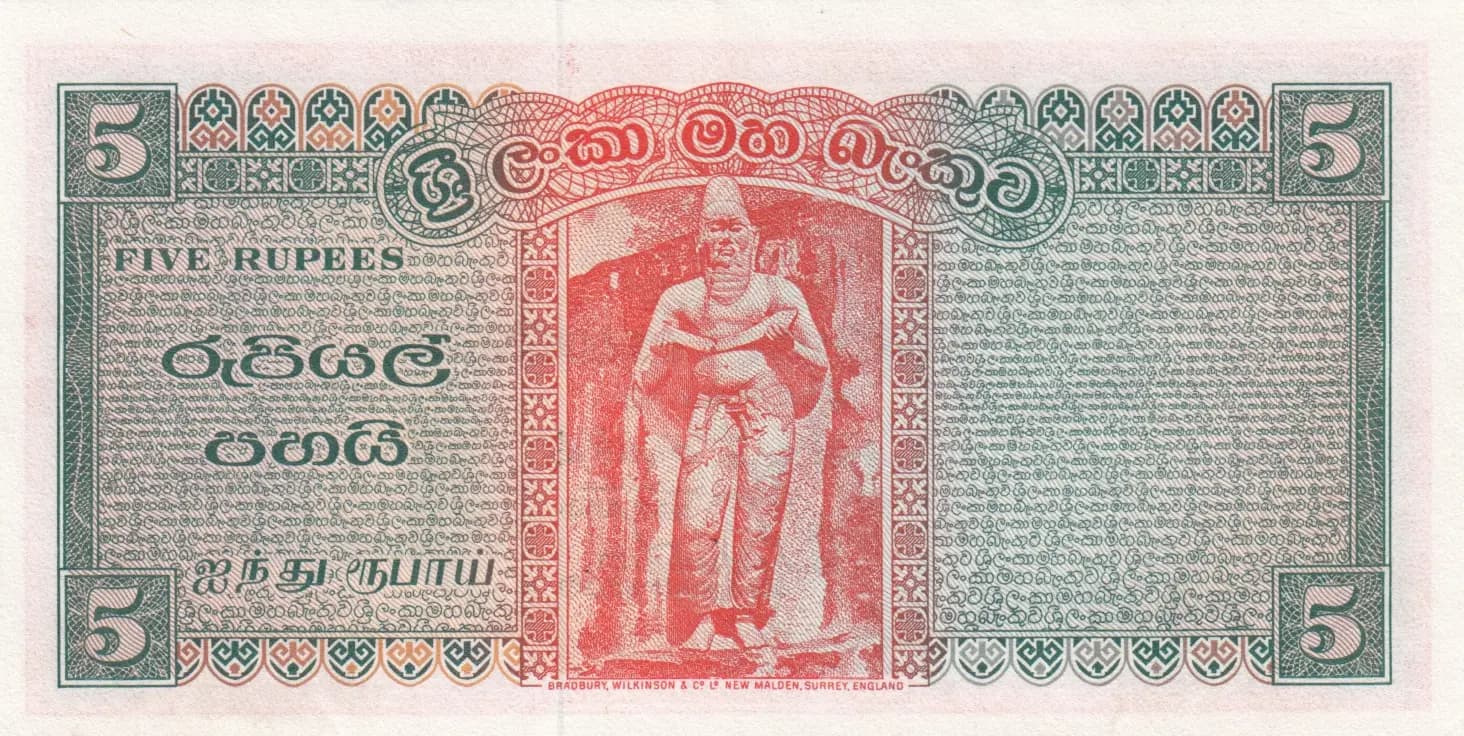
This is a 1964 Central Bank of Ceylon 2 rupees banknote (Pick 62b) displaying exceptional condition that appears to be uncirculated or near-uncirculated. The note features a striking pink/red obverse with a portrait of a bespectacled gentleman in profile and an ornate central emblem, while the reverse showcases a standing figure in ceremonial pose within elaborate green and red decorative frames. The sharp, clear printing and complete absence of wear, creases, or stains make this a desirable example for collectors of Ceylon currency from the early independence period.
Common. The 1964 2 rupees note (Pick 62b) from the Central Bank of Ceylon is a standard circulating denomination from a major issue with substantial print runs. While attractive in this exceptional uncirculated condition, the note itself is not rare or scarce — Ceylon's early independence currency issues are readily available to collectors. The VF condition grade noted in the catalog, combined with the straightforward nature of this regular-issue banknote, indicates this is a common piece that, while desirable in high grade, does not command premium pricing relative to common banknotes.
This 2 rupees note was issued during the early years of the Central Bank of Ceylon's independence, following Sri Lanka's (then Ceylon's) transition to a sovereign monetary authority. The bilingual inscriptions in Sinhala and Tamil reflect the multi-ethnic composition of the newly independent nation, while the formal portrait and ceremonial standing figure depicted on the reverse suggest the note's connection to Ceylon's post-colonial national identity and institutional prestige during this formative period.
The obverse features a formal portrait of a middle-aged gentleman wearing spectacles, shown in right profile wearing formal attire, positioned on the right side of the note. The design is dominated by intricate pink and red tones with ornamental borders featuring spiral and shell-like corner designs and geometric patterns. A large ornate circular emblem or coat of arms is centrally positioned. The reverse depicts a standing figure in red/coral coloring posed in a formal, ceremonial stance with one arm extended, framed by an elaborate decorative border. The back employs a palette of green, red, and cream tones with symmetrical interlocking geometric patterns and decorative bands. Inscriptions appear in English, Sinhala, and Tamil scripts, reflecting Ceylon's multicultural identity.
FRONT SIDE: 'FIVE RUPEES' (English denomination) — Note: Visual analysis indicates denomination text reads 'FIVE RUPEES' though catalog lists this as a 2 rupees note, suggesting possible discrepancy in visual transcription or this may be a related denomination. Serial number: G 81 439064. Date: June 12, 1964. 'රුපිය' (Sinhala: Rupees). 'யூறு' (Tamil: Rupees). BACK SIDE: 'FIVE RUPEES' (English denomination). '5' (numeral denomination). 'ශ්රී ලංකා' (Sinhala: Sri Lanka, appears multiple times). 'BRADBURY, WILKINSON & CO LTD, NEW MALDEN, SURREY, ENGLAND' (Printer attribution).
This banknote was produced using traditional intaglio engraving and multi-color letterpress printing techniques, characteristic of high-security currency production of the 1960s. The fine line engraving patterns, detailed guilloche designs visible throughout the borders, and the precision of the ornamental elements are consistent with Bradbury, Wilkinson & Co Ltd's renowned security printing standards. The layered color printing (pink/red on obverse, green/red on reverse) demonstrates sophisticated multi-plate printing techniques employed by this elite English security printer.
This example bears the serial number G 81 439064 with a date of June 12, 1964. Pick 62b denotes a specific variety of the 1964 2 rupees issue; varieties of this note may be distinguished by signature combinations, serial number prefixes, or minor design variants. The 'G' prefix on the serial number and the specific date of issue may help distinguish this from other print batches. Collectors should note whether signature varieties exist for this Pick number, though such information requires reference to specialized Ceylon currency catalogs.