2 rupees 1944
About This Note
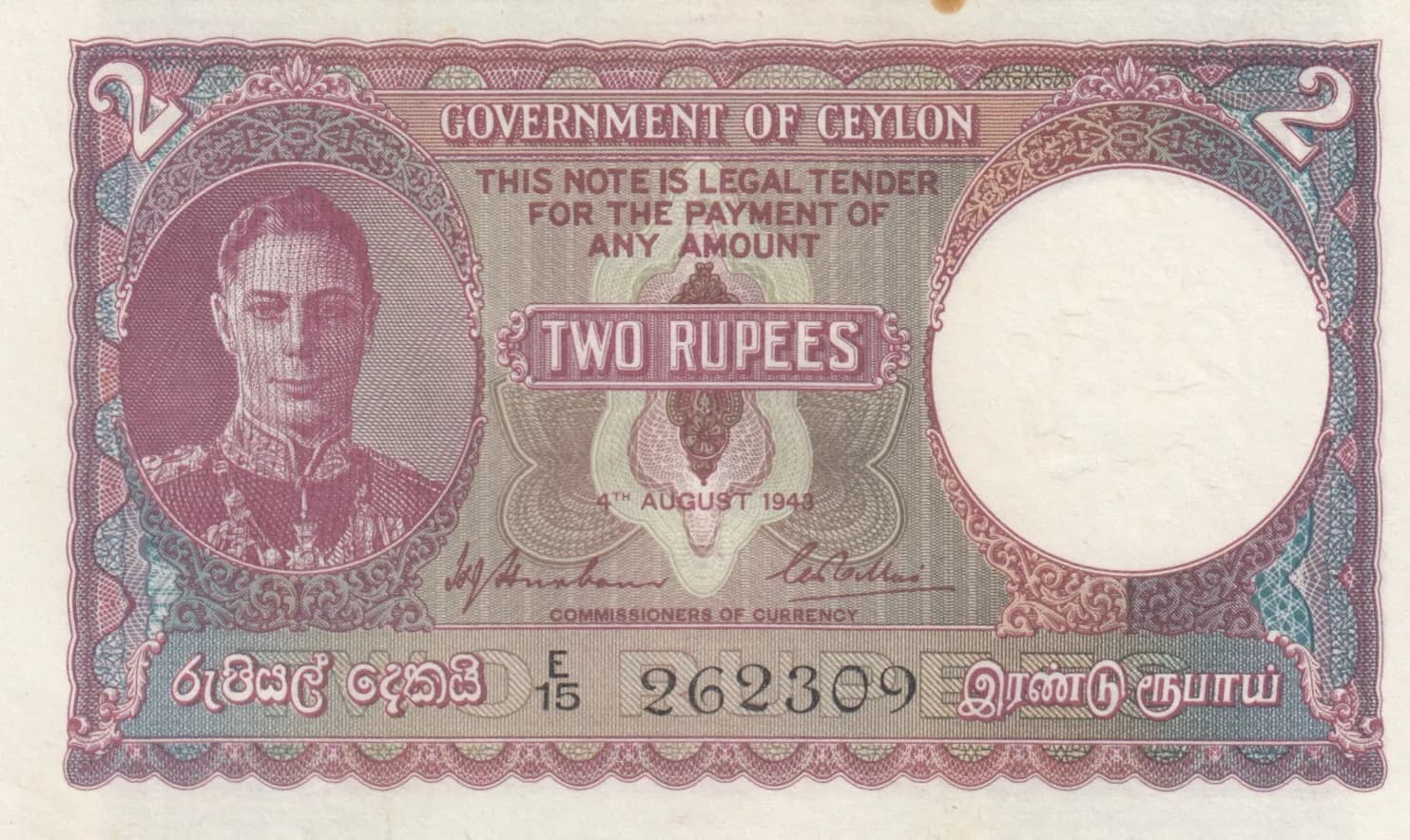
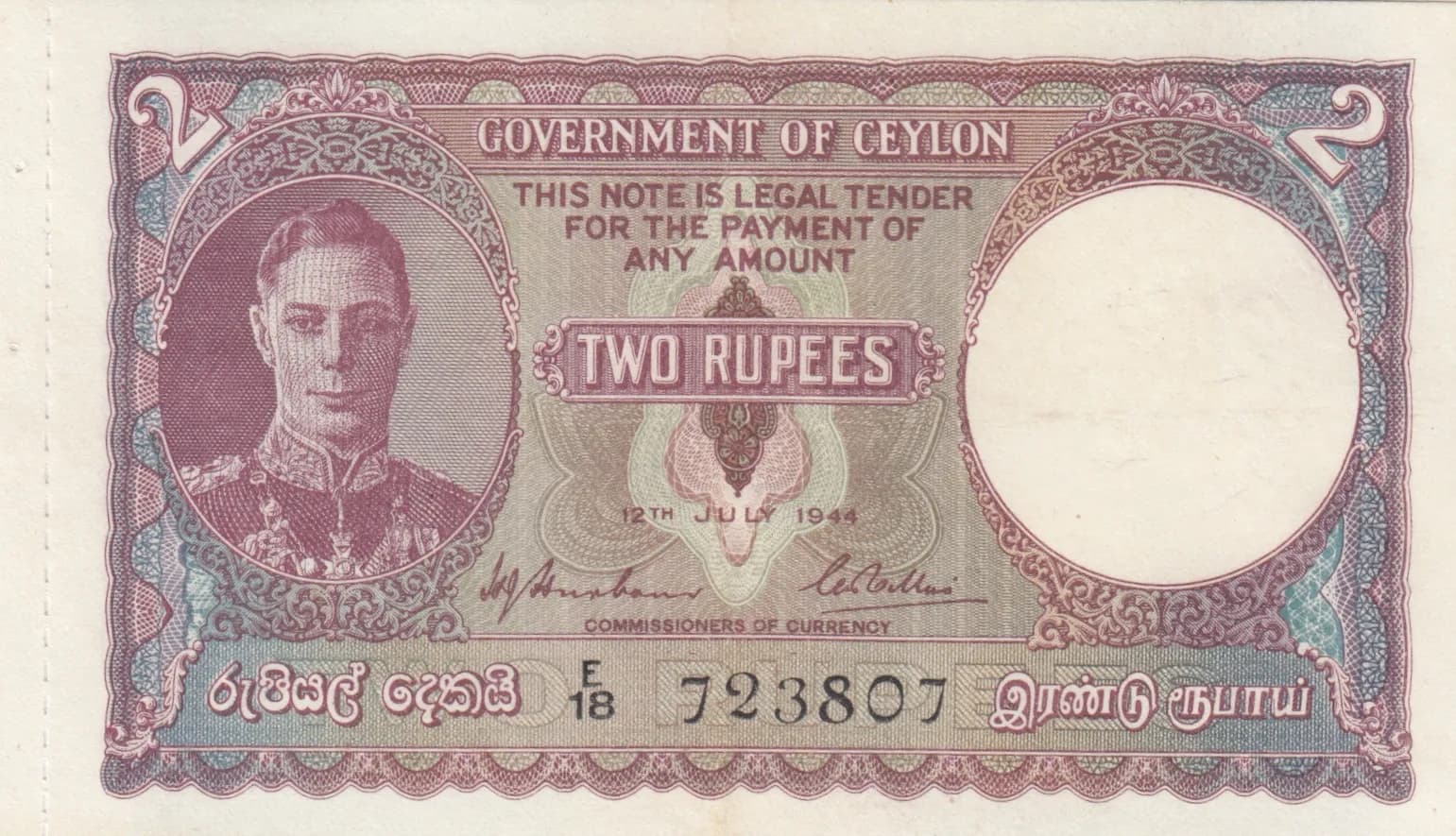
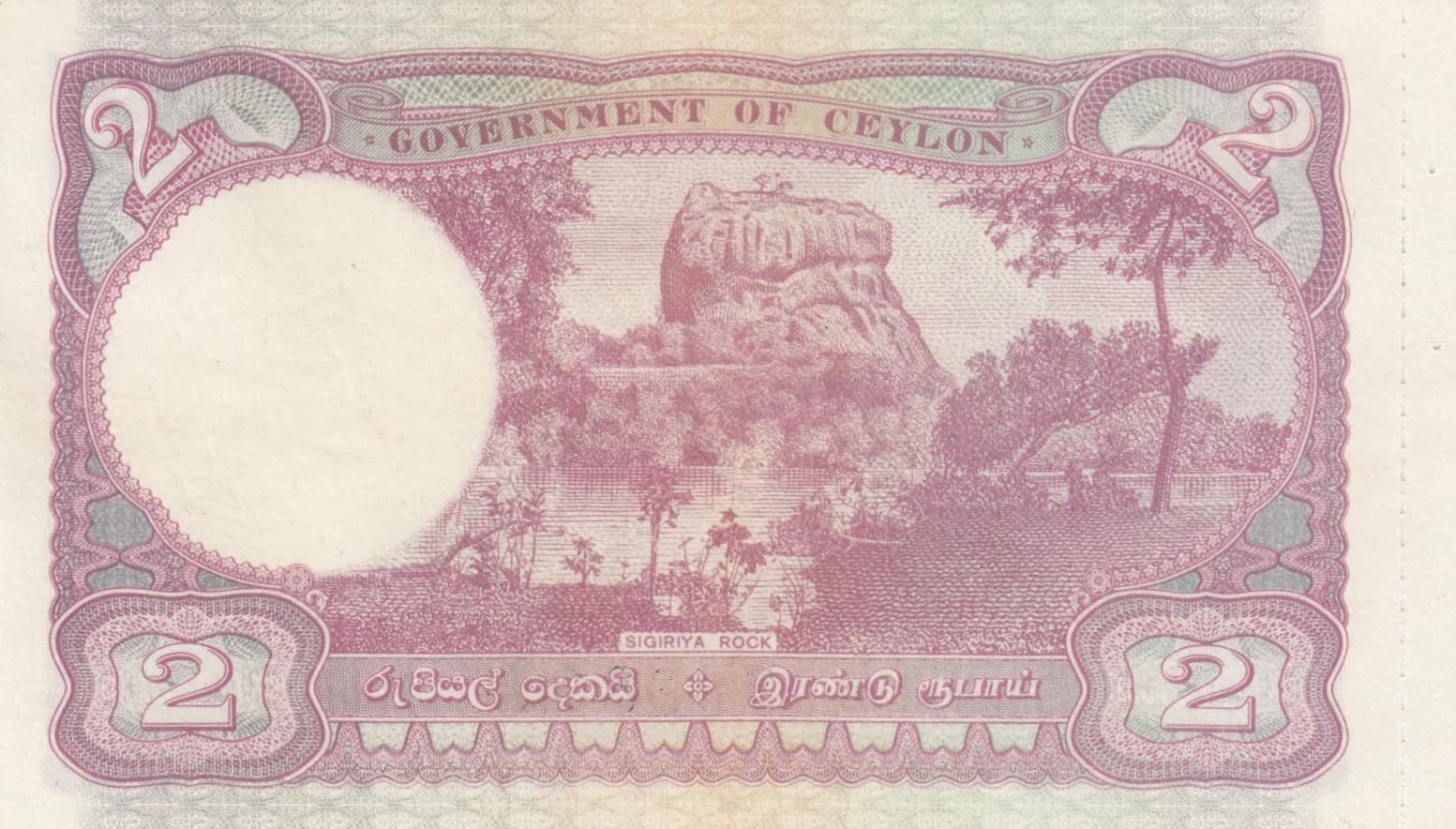
An exceptionally well-preserved example of Ceylon's 1944 two rupee note (Pick P-35) in AU condition, featuring a formal military portrait on the obverse and the iconic Sigiriya Rock on the reverse. Both sides display crisp printing in purple/mauve and green inks with ornate decorative elements characteristic of mid-20th century Commonwealth currency design. This note represents Ceylon's currency during World War II, just three years before the island would achieve independence from British rule.
Common. The 1944 two rupee note (Pick P-35) was part of standard currency circulation for Ceylon during a period of normal economic activity and sustained demand. No historical evidence indicates a limited print run, early recall, or withdrawal from circulation. AU condition examples are less common than circulated pieces, but the base note type itself is readily available in numismatic markets at modest valuations, typically under $30 USD even in high grades.
Issued by the Government of Ceylon on 12th July 1944, this note was produced during the final years of Ceylon's colonial period under British administration. The formal military portrait on the front reflects the Commonwealth's wartime currency protocols, while the reverse depicts Sigiriya Rock (Sigiri), one of Ceylon's most significant historical landmarks—an ancient fortress dating to the 5th century that symbolized the island's rich cultural heritage. The trilingual inscriptions in English, Sinhala, and Tamil demonstrate Ceylon's multicultural composition during this transitional period in Asian colonial history.
The obverse features a formal portrait of a British military officer wearing full dress uniform with medals and insignia, positioned in profile facing left within an ornate circular decorative frame—typical of Commonwealth currency honoring wartime leadership. The center contains the denomination and legal tender declaration with scrollwork flourishes. The reverse depicts Sigiriya Rock (also known as Sigiri), the dramatic 5th-century fortress complex rising from the central plains of Ceylon, rendered as an engraved landscape scene with surrounding tropical vegetation and palm trees. All four corners are ornamented with decorative circular frames containing the denomination numeral '2'. The design incorporates trilingual text reflecting English (official), Sinhala (majority language), and Tamil (significant minority language) communities.
Front side: 'GOVERNMENT OF CEYLON' | 'THIS NOTE IS LEGAL TENDER FOR THE PAYMENT OF ANY AMOUNT' | 'TWO RUPEES' | '12TH JULY 1944' | 'COMMISSIONERS OF CURRENCY' | Serial number: 'E 18 723807' | Sinhala: 'දෙයි රුපියල්' (Two Rupees) | Tamil: 'இரண்டு ரூபாய்' (Two Rupees). Back side: 'GOVERNMENT OF CEYLON' | 'SIGIRIYA ROCK' | Denomination markers '2' in all four corners | Sinhala: 'ශ්රී ලංකා' (Sri Lanka) | Tamil: 'இலங்கை ரூபாய' (Sri Lanka Rupees).
Intaglio (steel engraving) printing, the standard security printing method for Commonwealth banknotes of this era. The note exhibits characteristic fine line work, cross-hatching, and intricate shading throughout both the portrait and landscape elements. This high-security printing method was employed by the British currency printer, likely De La Rue, which was the primary supplier for Commonwealth currency production during the 1940s.
Serial number prefix 'E 18' with number 723807 observed. The 1944 issue is known with various serial number prefixes (A, B, C, D, E, etc.) representing different printing batches. The signature block and Commissioners of Currency designation remain consistent across all 1944 two rupee notes. No known overprints, color varieties, or error notes documented for this Pick number.