2 rupees 1943
About This Note
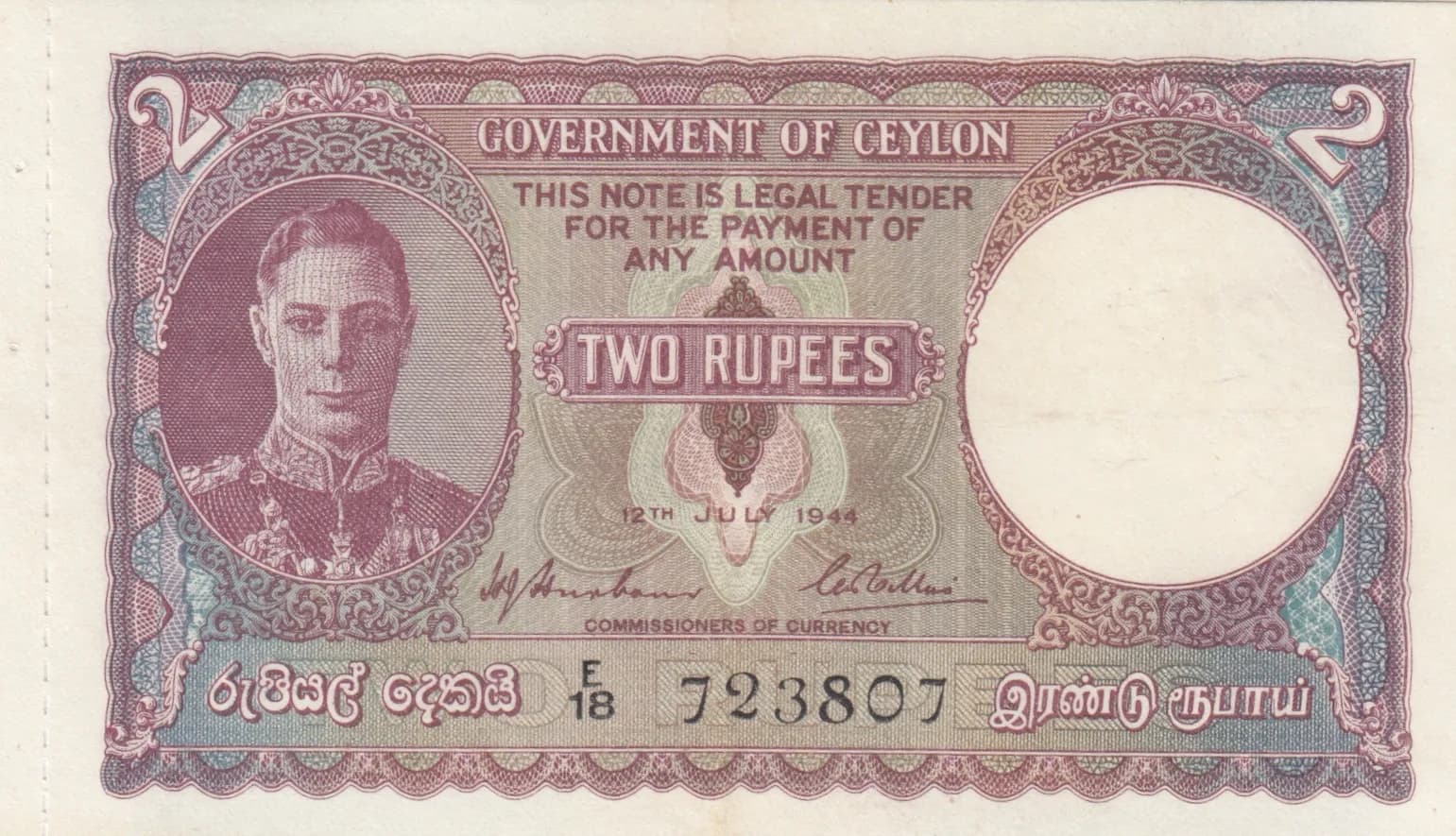
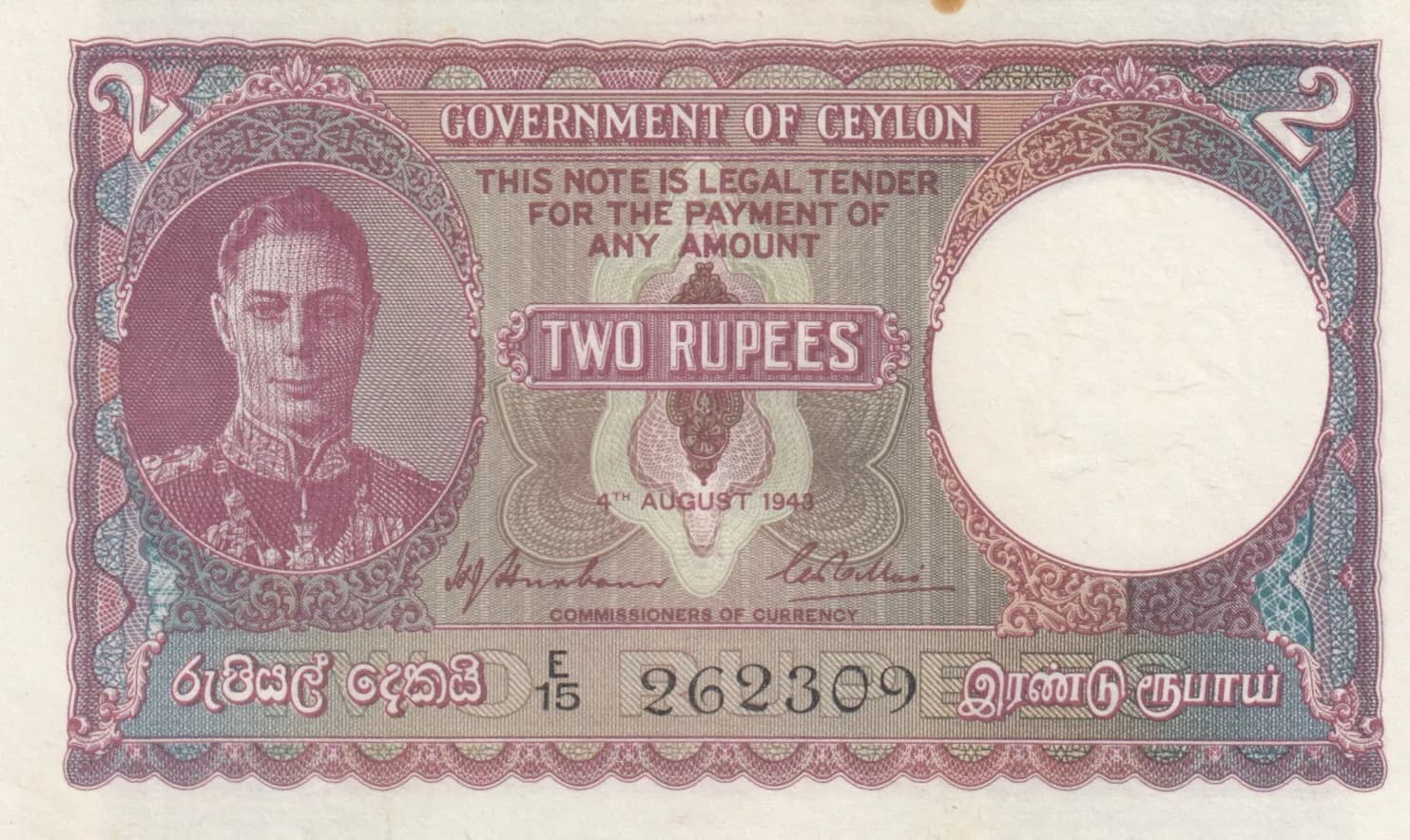
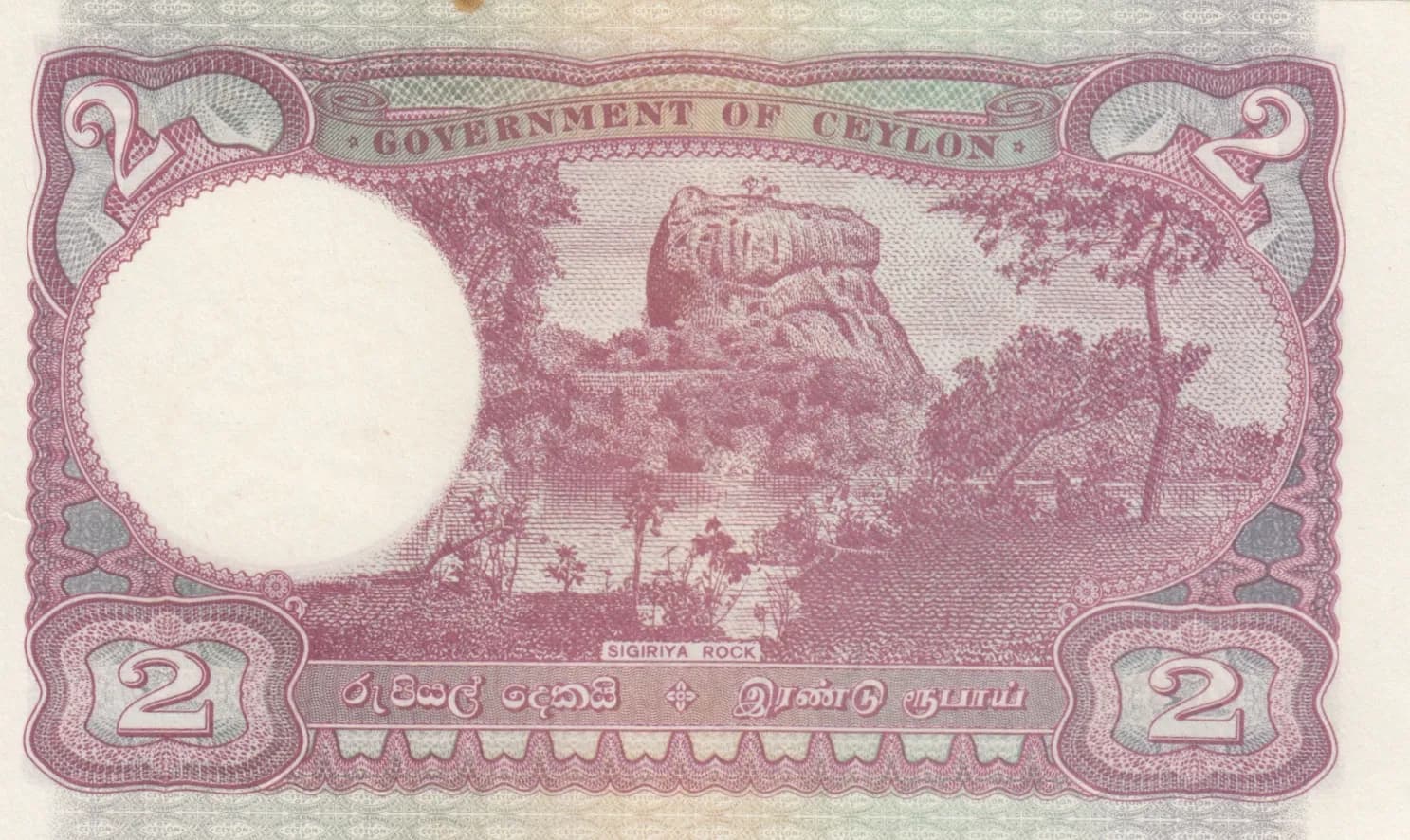
This is an AU-grade 2 Rupees banknote from the Government of Ceylon dated August 1943 (Pick P-35), featuring a military portrait in ornate circular frame on the obverse and the iconic Sigiriya Rock on the reverse. The note displays typical aging characteristics of a note from the early 1940s with light foxing and yellowing, yet maintains excellent clarity in the fine line engraving and well-preserved color palette of mauve, gray-blue-green, and cream tones. The serial number E/15 262309 and trilingual inscriptions (English, Sinhala, Tamil) exemplify Ceylon's multicultural currency design during the late colonial period.
Common. The 2 Rupees denomination from the 1943 Government of Ceylon issue was produced in substantial quantities to meet circulation demands during and immediately after WWII. This Pick P-35 is widely available in the collector market, even in higher condition grades like AU. No evidence exists of limited print runs, emergency issues, or short-lived authorization that would restrict availability.
This note was issued during World War II when Ceylon remained under British colonial administration, as evidenced by the formal 'Government of Ceylon' heading and the portrait of a military figure in formal dress reflecting the wartime context. The reverse depicts Sigiriya Rock, Sri Lanka's most iconic landmark and UNESCO World Heritage Site, which was incorporated into Ceylon's currency design as a symbol of national heritage and prestige. The trilingual text in English, Sinhala, and Tamil reflects Ceylon's diverse population and the colonial administration's acknowledgment of local languages alongside the colonial language.
The obverse features a formally dressed male figure, likely a British colonial official or military administrator, presented in left-facing profile within an ornate circular decorative frame—a common design element for Commonwealth currency of the period. The center displays the Government of Ceylon emblem and denomination text with the legal tender declaration. The reverse depicts Sigiriya Rock (also known as Sigiri), the dramatic 5th-century fortress rock formation rising 200 meters from the central plains of Sri Lanka, rendered in detailed landscape engraving with surrounding vegetation, trees, and mountainous terrain. Ornate circular frames appear in the corners, and decorative scrollwork and border patterns frame the entire note. The color scheme of mauve, gray-blue-green, and cream provides sophisticated visual distinction characteristic of Commonwealth currency design.
FRONT SIDE: 'Government of Ceylon' (English header); 'This Note is Legal Tender for the Payment of Any Amount' (legal declaration); 'Two Rupees' (denomination in English); 'August 1943' (date of issue); 'Commissioners of Currency' (issuing authority); 'E/15' (printer code); '262309' (serial number); 'රුපියල් දෙයි' (Two Rupees in Sinhala); 'இரண்டு ரூபாய' (Two Rupees in Tamil). BACK SIDE: 'Government of Ceylon' (header); 'Sigiriya Rock' (landmark identification); 'රුපියල් දෙයි' (Two Rupees in Sinhala); 'இரண்டு ரூபாய' (Two Rupees in Tamil); '2' (numeral denomination).
Intaglio line engraving on banknote paper, characteristic of security printing in the 1940s. The fine line engraving work visible in both the portrait detailing and the complex landscape rendering of Sigiriya Rock, combined with the intricate decorative borders and scrollwork, indicates production by a specialized security printer experienced in Commonwealth currency. The clarity and precision of the engraved lines observed in the visual analysis are consistent with high-quality banknote production standards of De La Rue or similar Commonwealth security printers active during the WWII period.
Serial number variety E/15 262309 is noted on the observed specimen. The E/15 prefix indicates printer identification code. No major recognized varieties of this Pick P-35 denomination are documented beyond standard serial number prefix variations. The August 1943 date is consistent with the standard issue date for this catalog entry. Notes from this series may exhibit variations in serial number ranges and prefixes depending on printing batches.