100 rupees 1952
About This Note
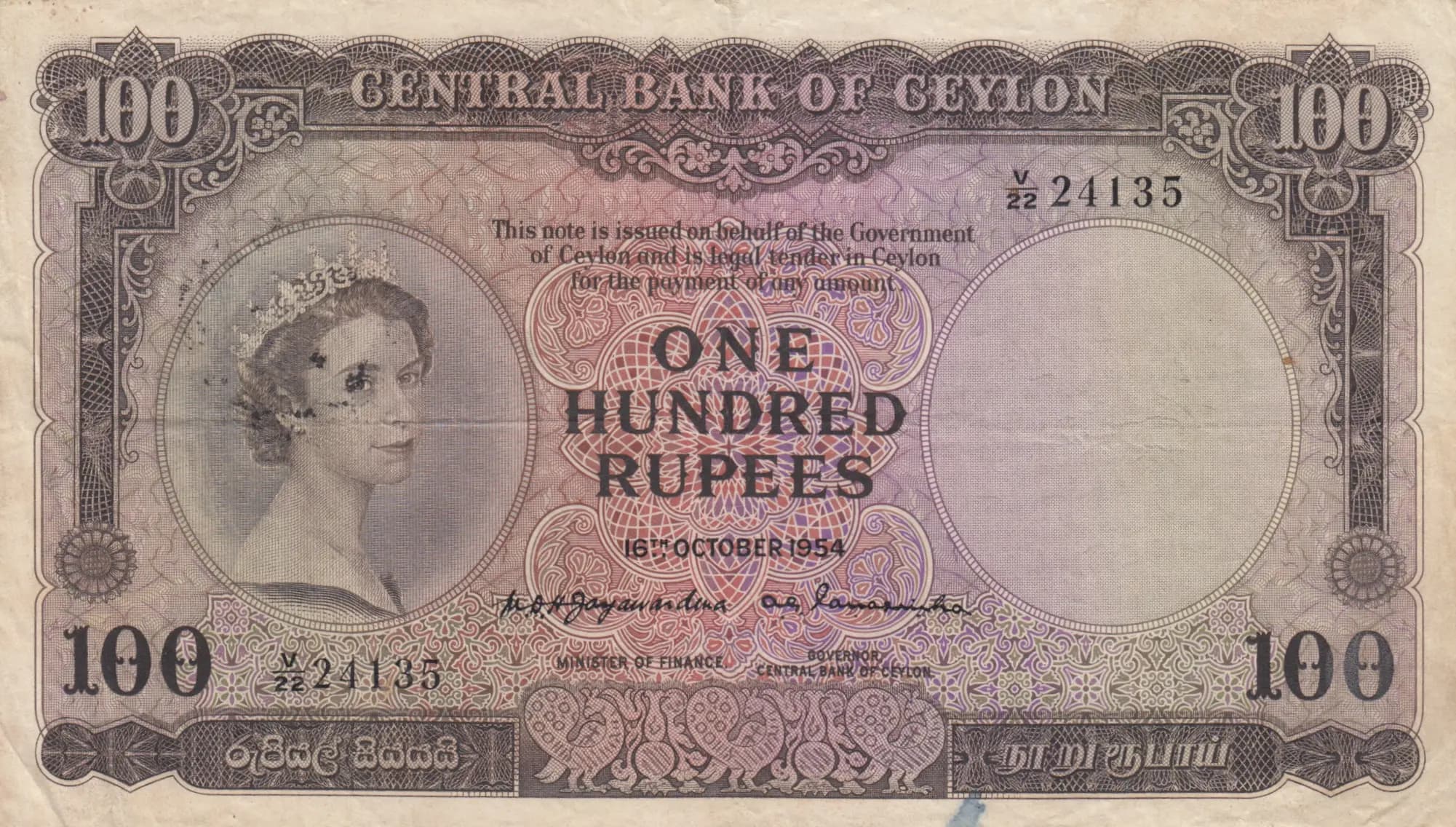
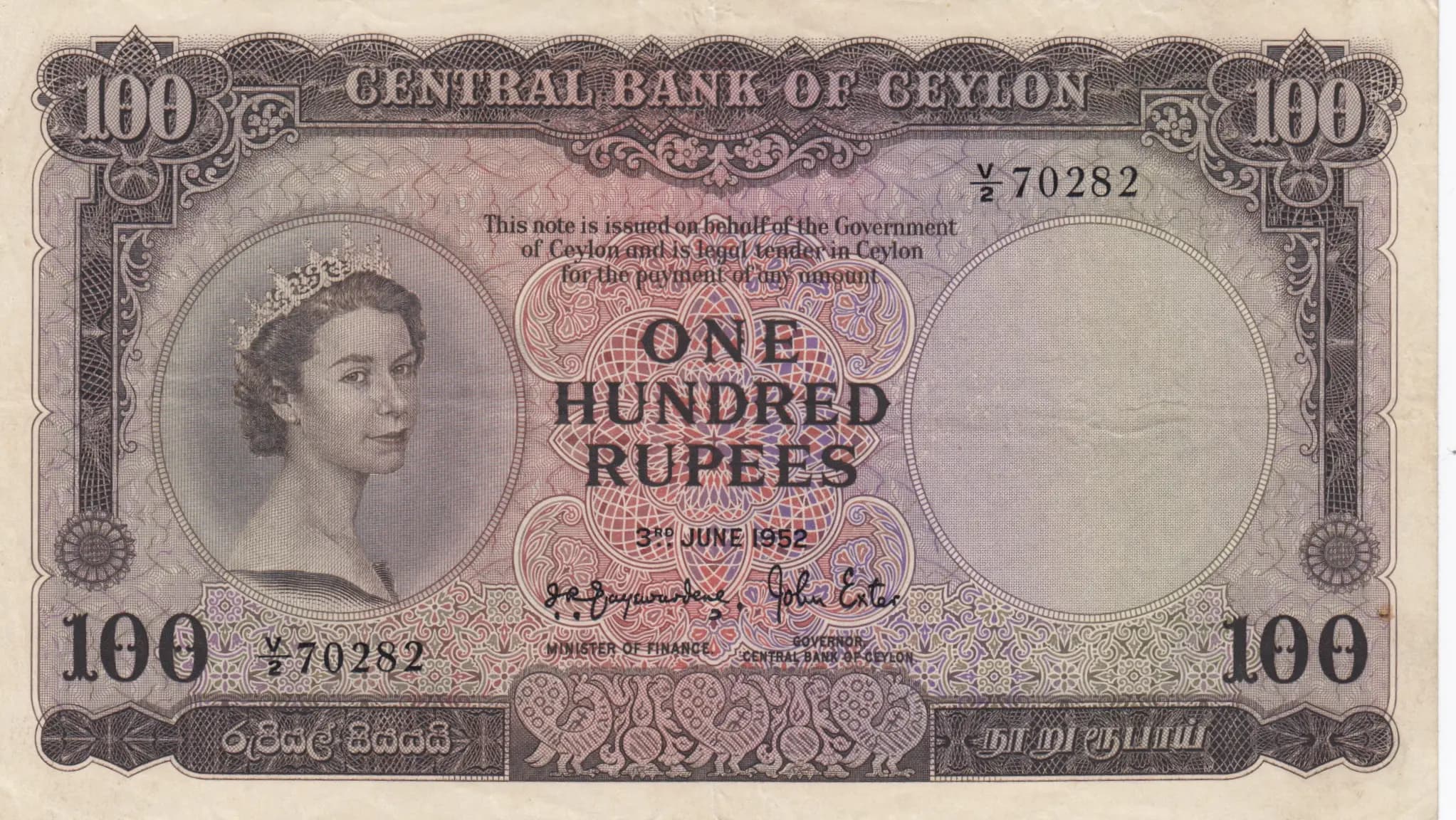
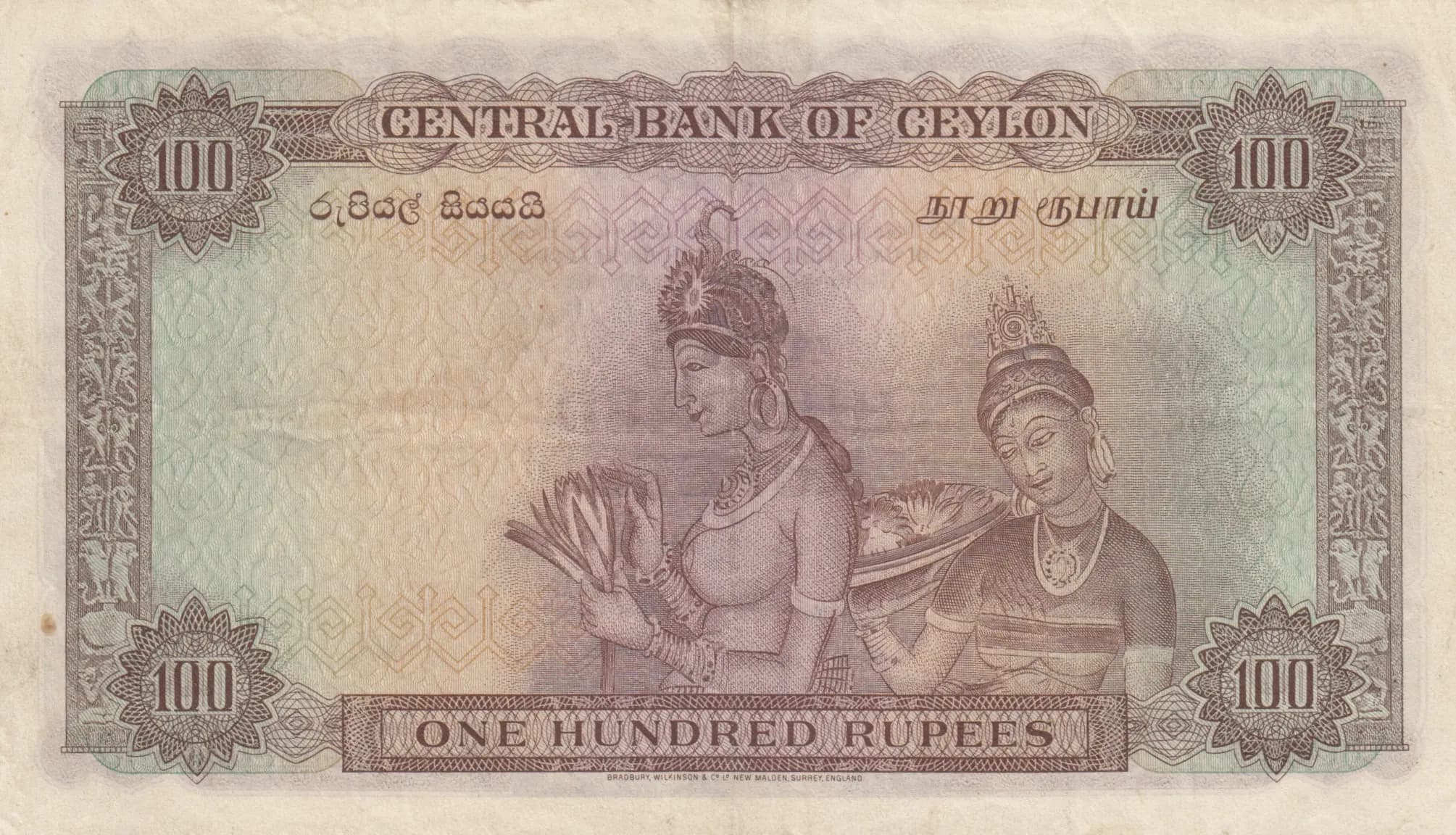
A handsome example of the 1952 Central Bank of Ceylon 100 rupees note (Pick P-53) in VF condition, featuring the iconic portrait of Queen Elizabeth II on the obverse within an ornate circular medallion. The reverse displays two figures in traditional Ceylonese dress with elaborate headdresses and jewelry against a geometric diamond-patterned background. The note exhibits the characteristic pink-purple and green color scheme of this issue, with intricate geometric and floral border designs throughout, though age-related foxing and creasing are evident consistent with its 70+ year vintage.
Common. The Central Bank of Ceylon's 1952-1954 100 rupees notes were issued in substantial quantities and remain readily available in the numismatic market. No specific print run restriction, recall notice, or short-lived issue period applies to this Pick number. VF condition examples are frequently encountered in dealer inventories and online sales, typically trading in the modest price range consistent with widely-circulated mid-20th century Commonwealth currency.
This note was issued on 30th June 1952 by the Central Bank of Ceylon, a period marking Ceylon's transition following independence in 1948 and the early years of the Central Bank's operations. The Queen Elizabeth II portrait reflects Ceylon's status as a Commonwealth dominion at this time, while the reverse imagery—depicting figures in traditional Sinhalese and Tamil dress with ornamental jewelry and regalia—celebrates the island's rich cultural heritage and diverse populations. The trilingual inscriptions in English, Sinhala, and Tamil underscore the nationalist emphasis on linguistic and cultural inclusivity in the newly independent nation's currency.
The obverse features Queen Elizabeth II rendered as a formal profile portrait in a circular medallion on the left side, presented in the classical style typical of Commonwealth currency of the period. The portrait is surrounded by elaborate ornamental borders incorporating geometric and floral patterns in the Art Deco-influenced style characteristic of 1950s banknote design. The reverse depicts two figures representing Ceylon's cultural diversity: a male figure on the left in traditional dress holding what appears to be a palm frond or ceremonial staff, and a female figure wearing ornate jewelry and headdress. Both figures are rendered in fine detail against a background of repeating geometric diamond patterns. Corner rosette designs and interlocking decorative borders frame the composition on both sides, with denomination numerals '100' prominently displayed in all four corners of the reverse within decorative squares. The color palette—pink, purple, brown, and cream on the obverse; green, brown, and purple on the reverse—reflects the security printing conventions of the era.
FRONT: 'Central Bank of Ceylon' (header); '100' and 'One Hundred Rupees' (denomination); '30th June 1952' (issue date); 'This note is issued on behalf of the Government of Ceylon and is legal tender in Ceylon for the payment of any amount' (legal tender clause); 'Minister of Finance' and 'Central Bank of Ceylon' (issuing authorities); Serial number 'Z 70282' (top right and bottom left); Sinhala and Tamil script inscriptions at bottom (content not fully transcribed from image). BACK: 'Central Bank of Ceylon' (header); '100' and 'One Hundred Rupees' (denomination); Sinhala and Tamil script at top (content not fully transcribed from image); 'Cosbery Wilkinson & Co New Malden Surrey England' (printer's attribution).
Intaglio engraving, the premium security printing method used by Bradbury Wilkinson (known as 'Cosbery Wilkinson & Co' on the printer's mark visible on the reverse). This labor-intensive technique involves engraving fine lines and detailed patterns directly into steel plates, producing the characteristic raised, tactile surface and the fine-line security patterns visible in the geometric borders, background designs, and portrait rendering. The intricate interlocking patterns, decorative rosettes, and detailed figure work are hallmarks of classical security engraving, providing both aesthetic quality and anti-counterfeiting protection.
This note is dated 30th June 1952 with serial number Z 70282. The catalog reference indicates this denomination was issued in both 1952 and 1954; the specific issue date on this example establishes it as the 1952 variety. The serial number prefix 'Z' is visible. Bradbury Wilkinson was the sole printer of these notes. Signature varieties may exist based on different Minister of Finance tenures, though signatures are not clearly legible in the provided images. Further research into specific signature varieties for this issue would require examination of additional examples or archival records.