1 rupee 1949
About This Note
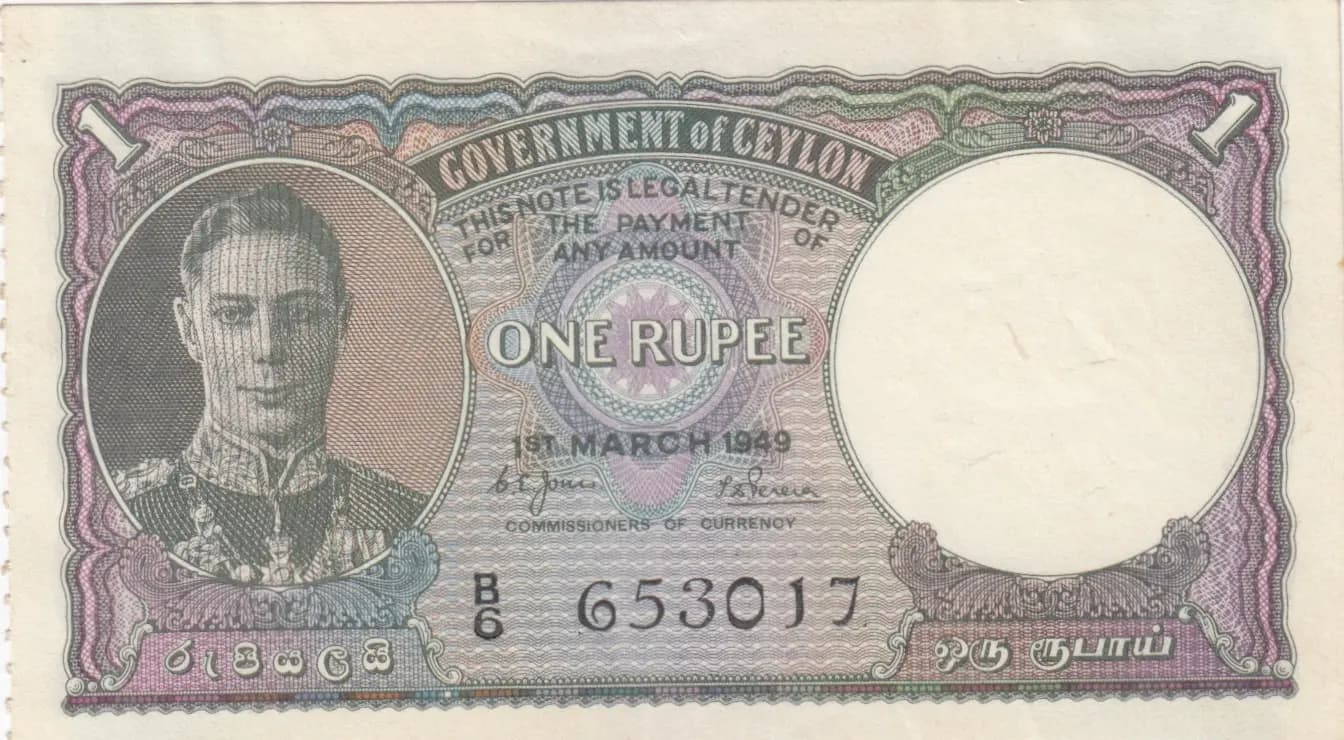
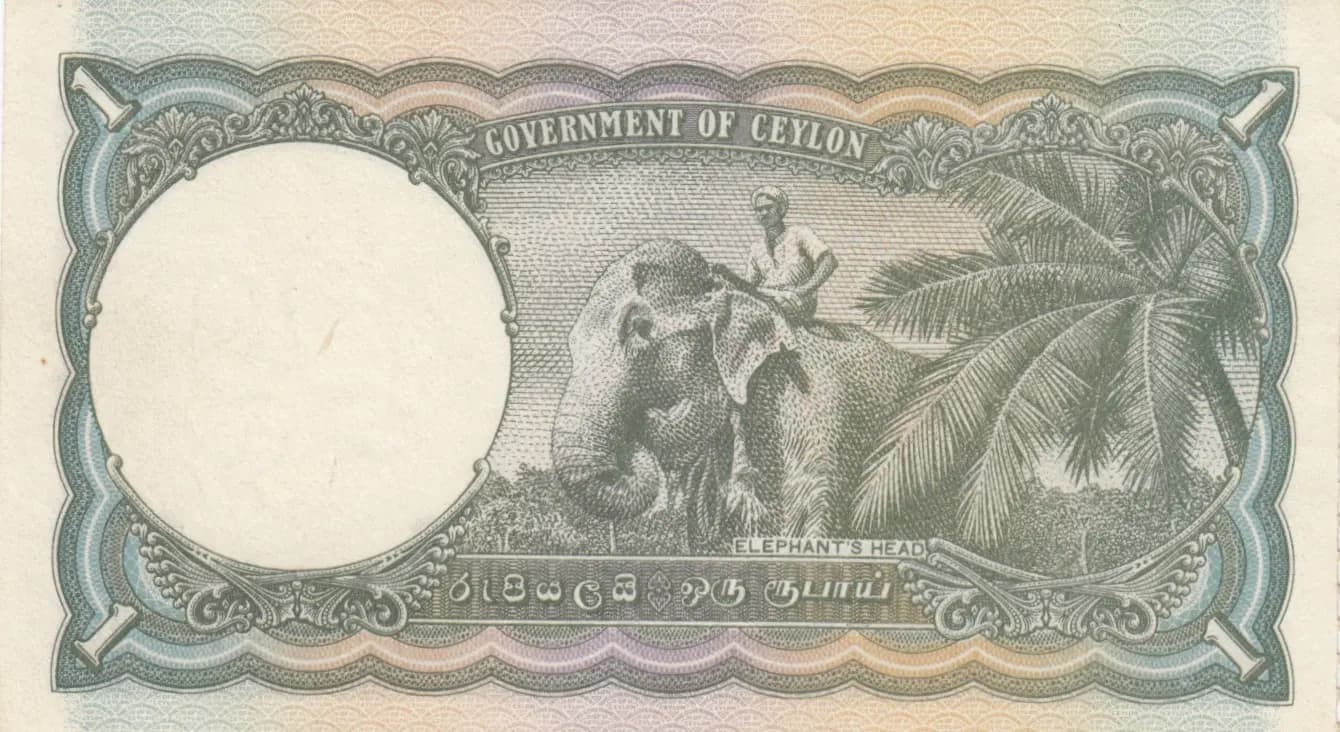
An exceptional example of Ceylon's 1949 one rupee note (Pick P-34), presented in AU condition with sharp engraving and vibrant multi-color printing. The note features a formal portrait of King George VI on the obverse and an elegantly rendered elephant's head amid tropical foliage on the reverse, both executed in fine line engraving. This specimen exhibits pristine paper quality with only minor natural aging consistent with its 75-year vintage, making it a desirable example for collectors of Commonwealth currency and Ceylon's early post-independence monetary period.
Common. The 1949 Ceylon one rupee note (Pick P-34) was produced in substantial quantities for circulation during the post-independence period. With a print run sufficient to supply the growing island economy and no record of significant recall or destruction, this denomination remains readily available in the numismatic market today. Even in AU condition, examples are regularly encountered at modest valuations, indicating robust supply relative to collector demand.
Issued by the Government of Ceylon in March 1949, this note represents a transitional period in Ceylon's monetary history, still bearing the portrait of King George VI as the island remained within the Commonwealth realm. The elephant motif on the reverse reflects Ceylon's cultural heritage and natural wealth, symbolizing the island's fauna and its importance to local identity. The bilingual English-Sinhala inscriptions mark the early post-independence assertion of local language on currency following Ceylon's independence in 1948.
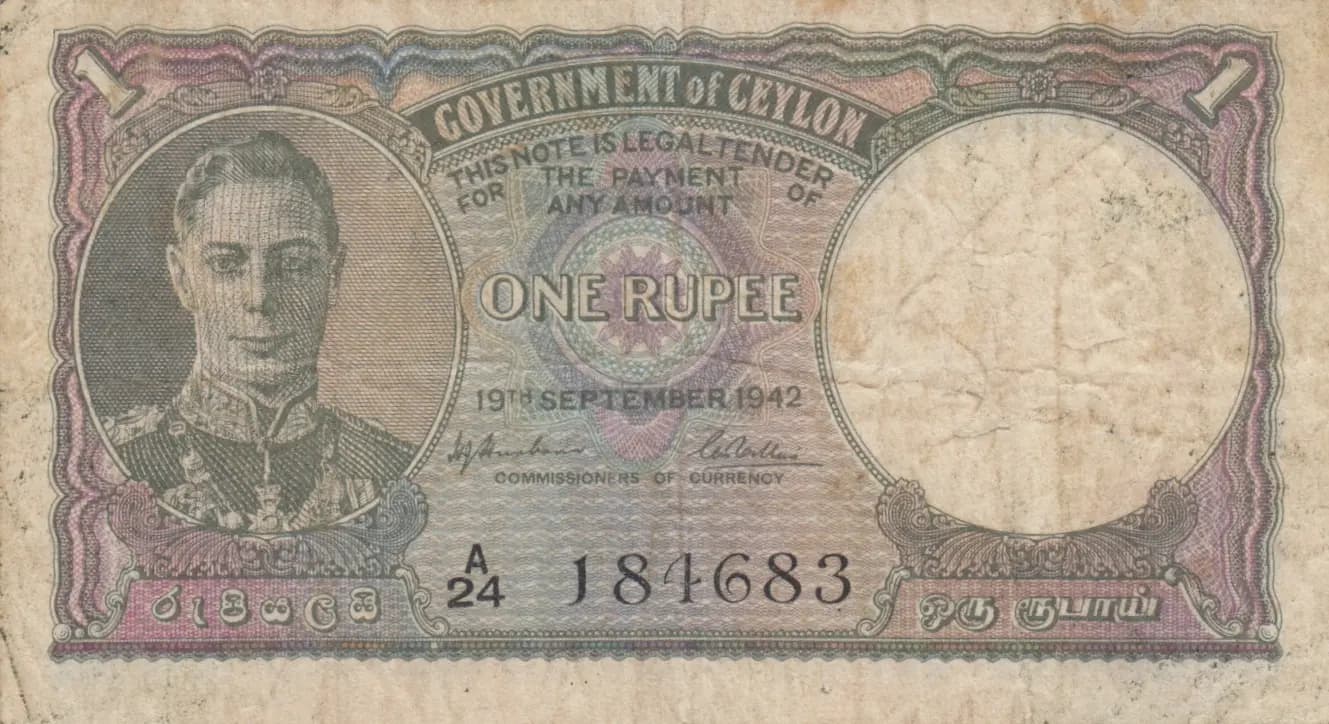
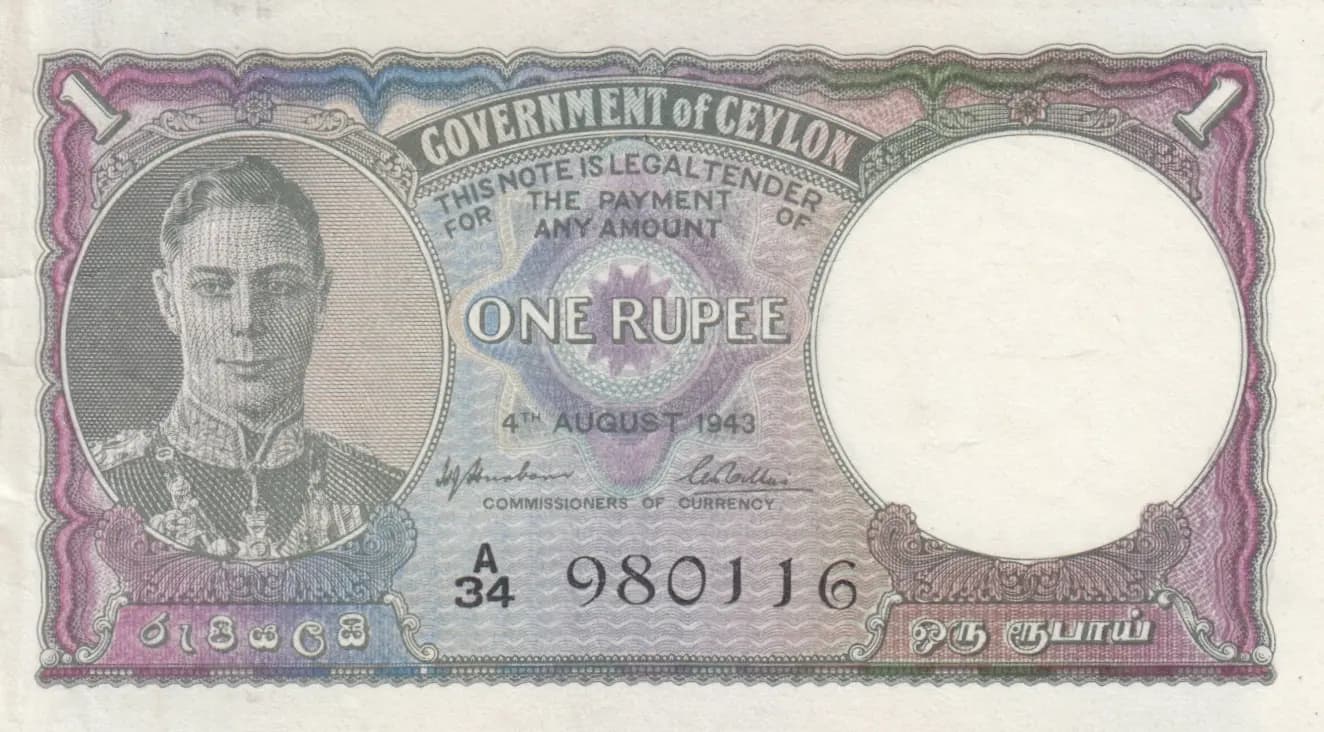
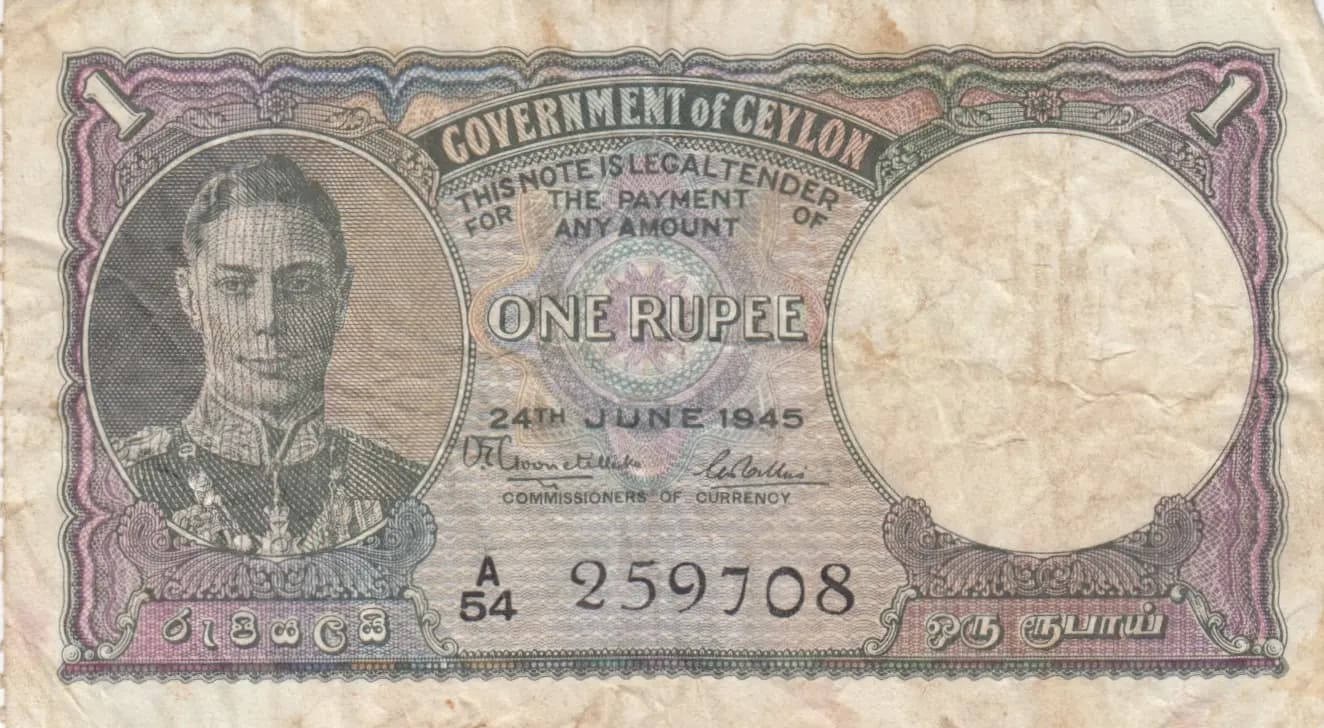
The obverse displays a formal left-facing portrait of King George VI in military dress uniform with high collar, framed within an ornate circular medallion. The center of the note contains the legal tender declaration and denomination marking 'ONE RUPEE,' with the date 'MARCH 1949' prominently displayed. The reverse features a finely engraved vignette of an elephant's head rendered among tropical palm fronds and foliage, identified as 'ELEPHANT'S HEAD' in the lower center. Both sides are framed by an elaborate decorative border featuring intricate geometric and floral patterns in multiple colors (purple, pink, blue, green, and black), with corner numerals '1' indicating the denomination. The design reflects the high standards of Commonwealth currency production of the era.
Front side: 'GOVERNMENT OF CEYLON' (English); 'THIS NOTE IS LEGAL TENDER FOR THE PAYMENT OF ANY AMOUNT OF' (English); 'ONE RUPEE' (English); 'MARCH 1949' (English); 'COMMISSIONERS OF CURRENCY' (English); Serial number 'B 653017' (English); 'ශ්රී ලංකා' (Sinhala: Sri Lanka). Back side: 'GOVERNMENT OF CEYLON' (English); 'ELEPHANT'S HEAD' (English); 'ශ්රී ලංකා' (Sinhala: Sri Lanka).
This note was produced using intaglio engraving combined with multi-color letterpress printing, a standard technique for high-security banknote production in the 1940s. The fine line engraving visible throughout—particularly in the portrait frame, elephant vignette, and border patterns—indicates work by a skilled security printer. While the specific printer is not noted in the available catalog data, notes of this period were typically produced by established Commonwealth security printers such as Waterlow & Sons or De La Rue. The sharp impression quality and color registration observed in the visual analysis are consistent with professional intaglio work.
This specimen is identified as the March 1949 issue with serial number prefix 'B' and serial number '653017'. The visual analysis confirms the 'THIS NOTE IS LEGAL TENDER' text variant (distinguishing it from the earlier P-30 which contains 'PROMISES TO PAY' text). Varieties of this issue are known to exist with different serial number prefixes (A, B, C, etc.), though all represent the same basic Pick catalog number P-34. The specific date notation 'MARCH 1949' on this specimen is consistent with the 1941-1949 issue period referenced in the catalog.