1 rupee 1943
About This Note
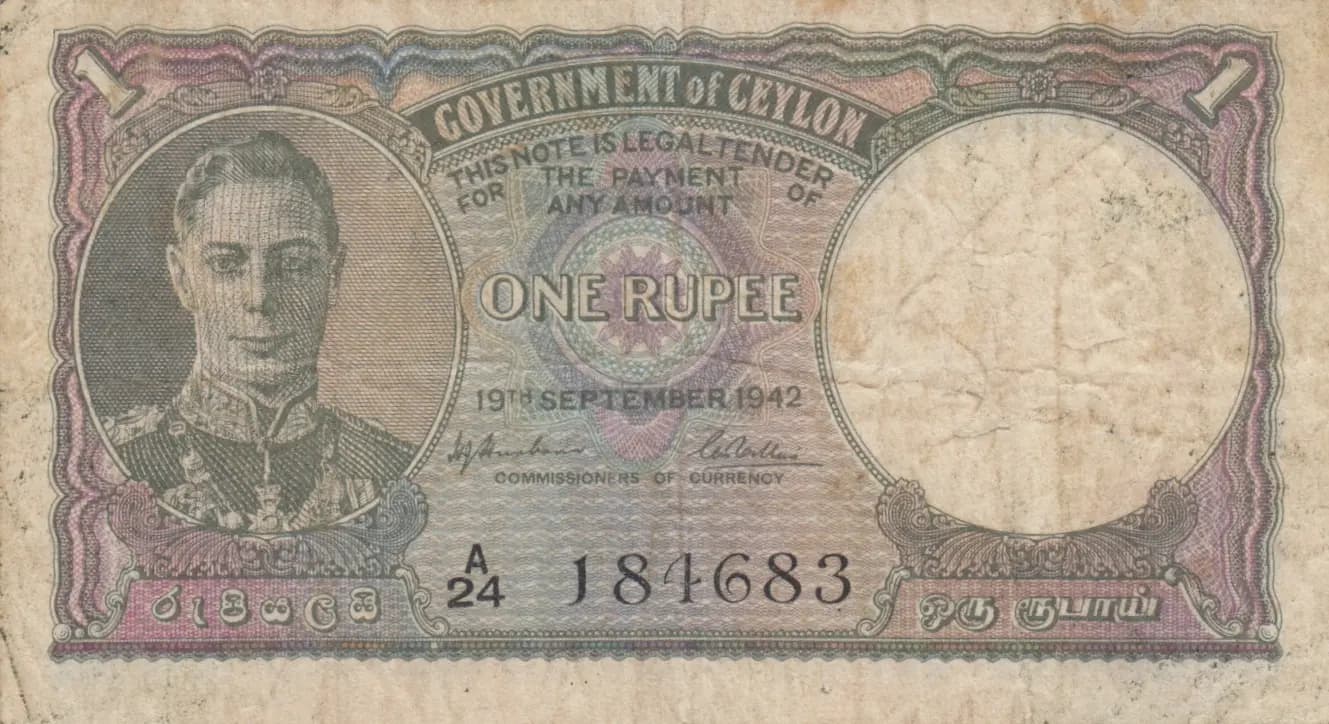
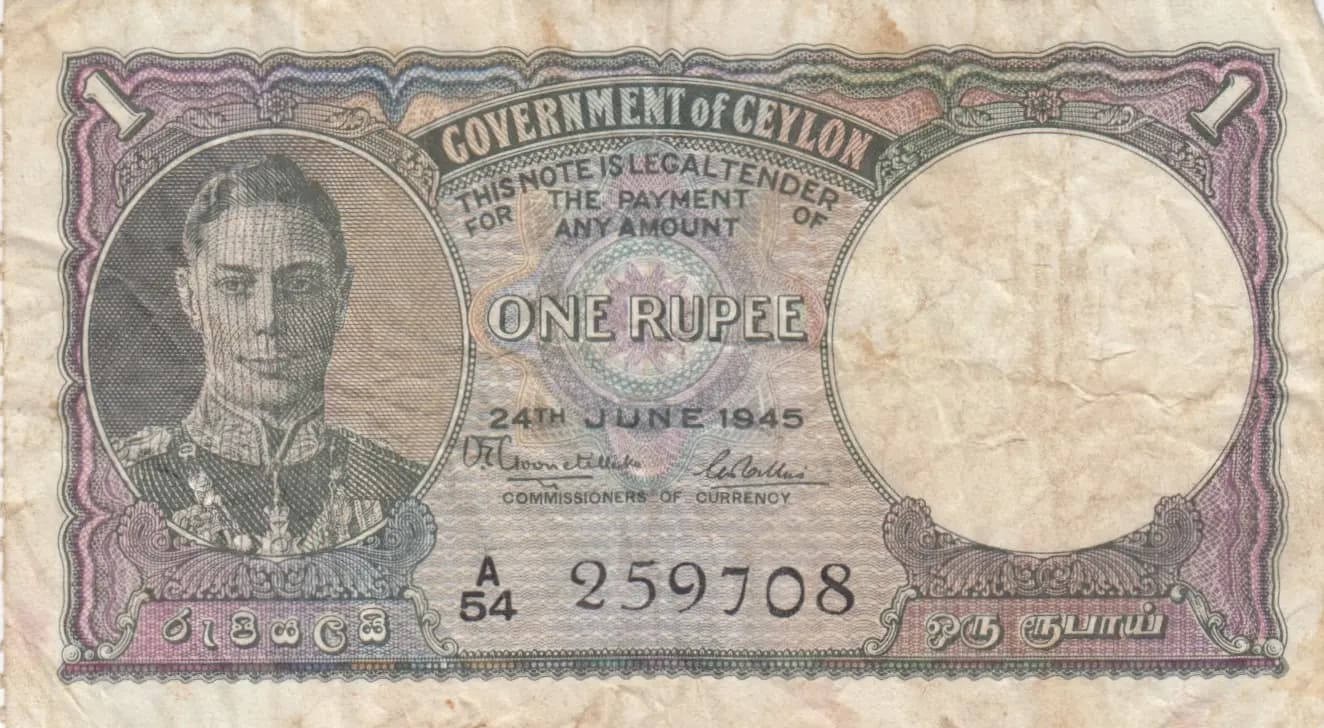
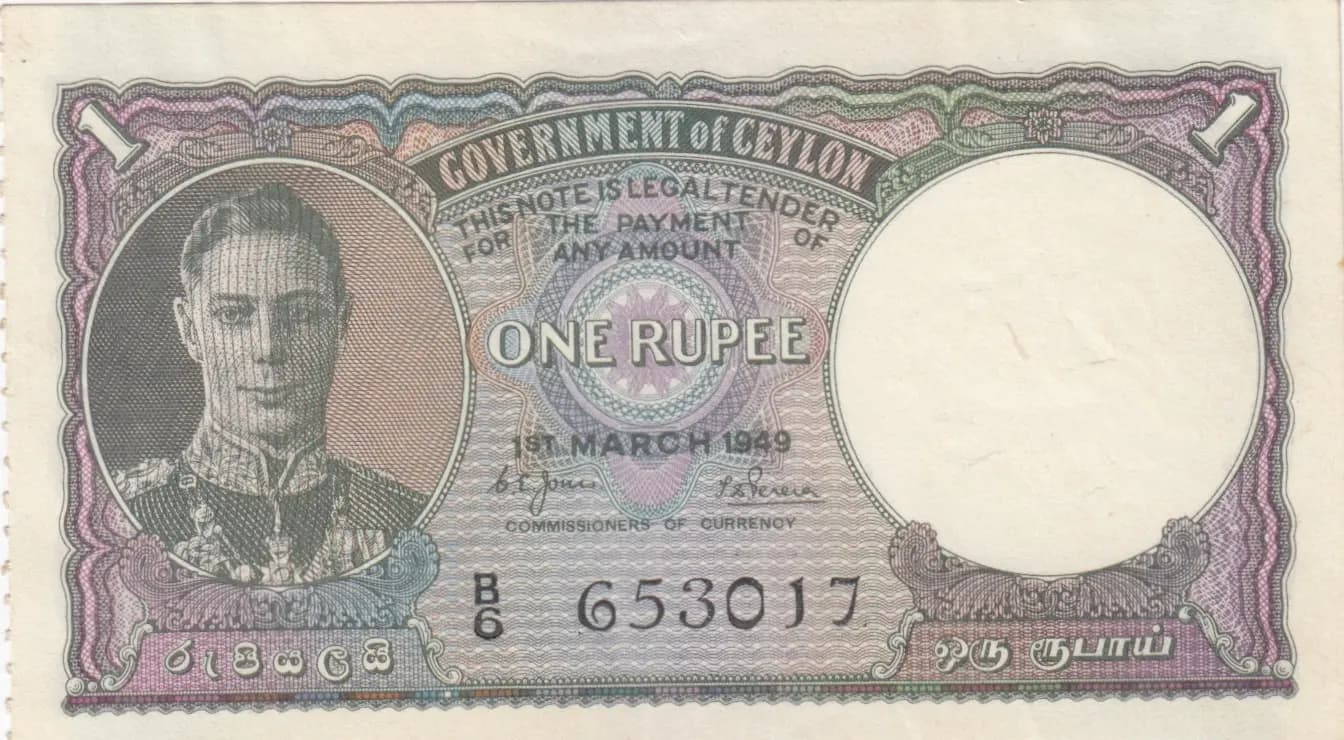
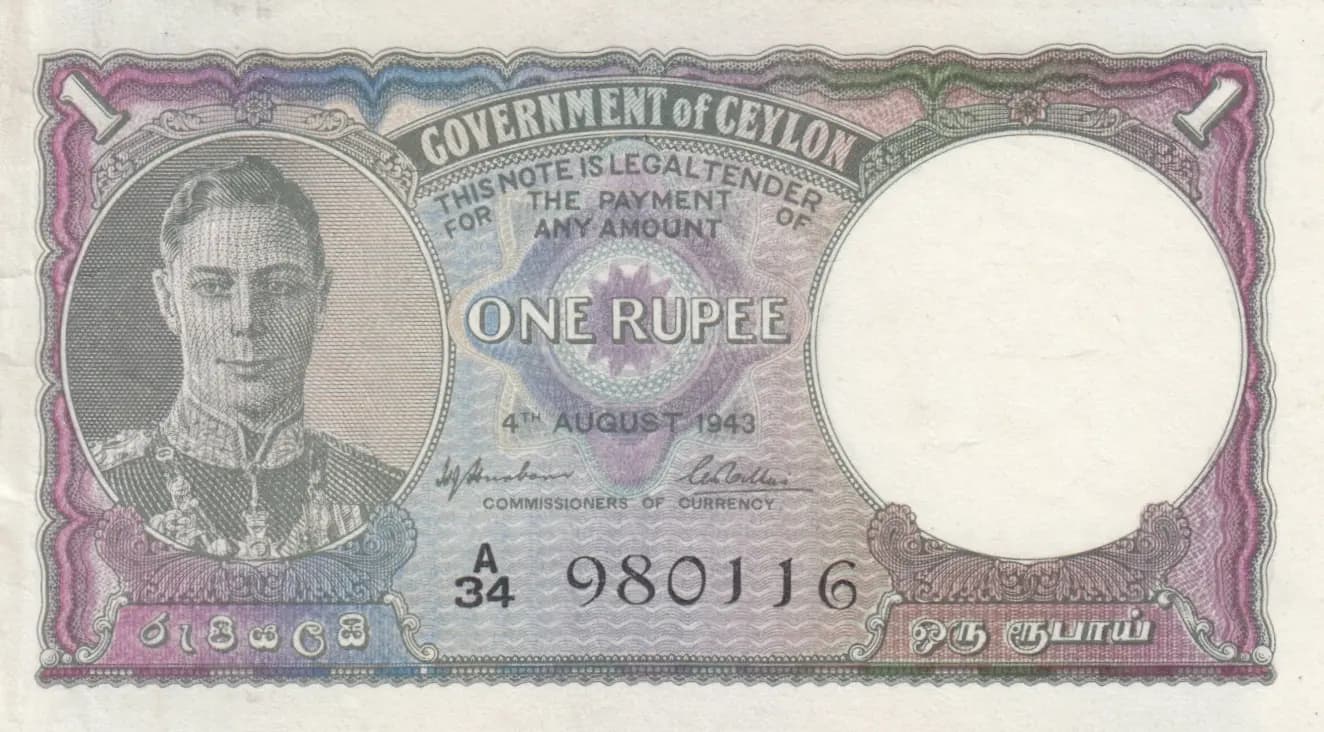
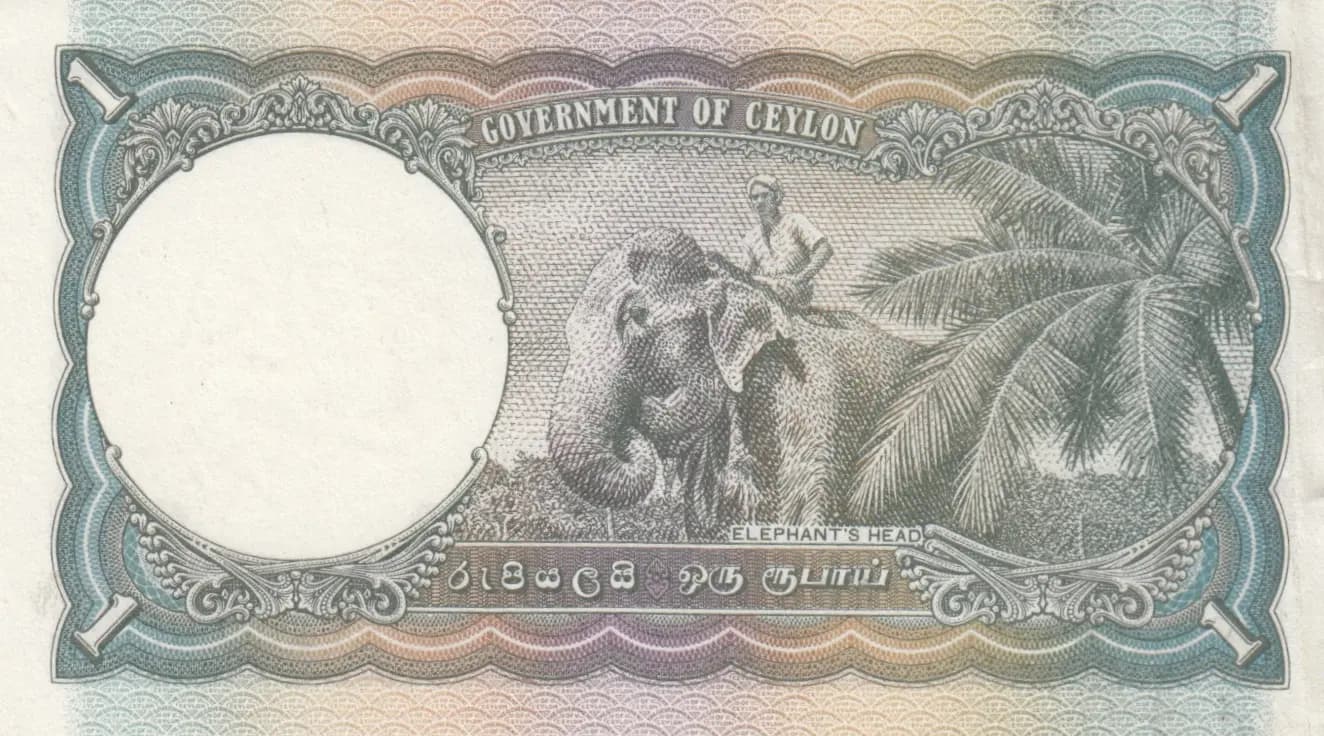
An exceptionally well-preserved 1 Rupee note from the Government of Ceylon dated 4th August 1943 (Pick P-34), graded AU. The note features a striking portrait of King George VI in military dress on the front, complemented by vibrant purple and multicolored ornate borders, while the reverse displays a finely engraved tropical scene with an elephant and handler amid palm vegetation. This is a scarce wartime Ceylon issue that represents an important transitional period in Sri Lankan currency history, with excellent eye appeal and sharp printing detail throughout.
Common. The 1943 Ceylon 1 Rupee (P-34) was part of a substantial wartime issue series produced from 1941-1949 as the standard circulating denomination. No evidence of restricted print runs, recalls, or short-lived issuing periods exists for this note. While excellent condition examples (AU grade) are more desirable than heavily circulated specimens, the note itself remains readily available to collectors at modest valuations. Wartime Ceylon issues are generally common in the market despite their historical interest.
Issued during World War II by the Government of Ceylon under British colonial administration, this note reflects the wartime economy when Ceylon was a strategic British possession. The portrait of King George VI and the legal tender proclamation emphasize Ceylon's status within the British Commonwealth during this period. The reverse depicts the elephant, a symbol deeply rooted in Ceylon's cultural and economic heritage, representing both the island's fauna and its historical significance in South Asian trade and colonial commerce.
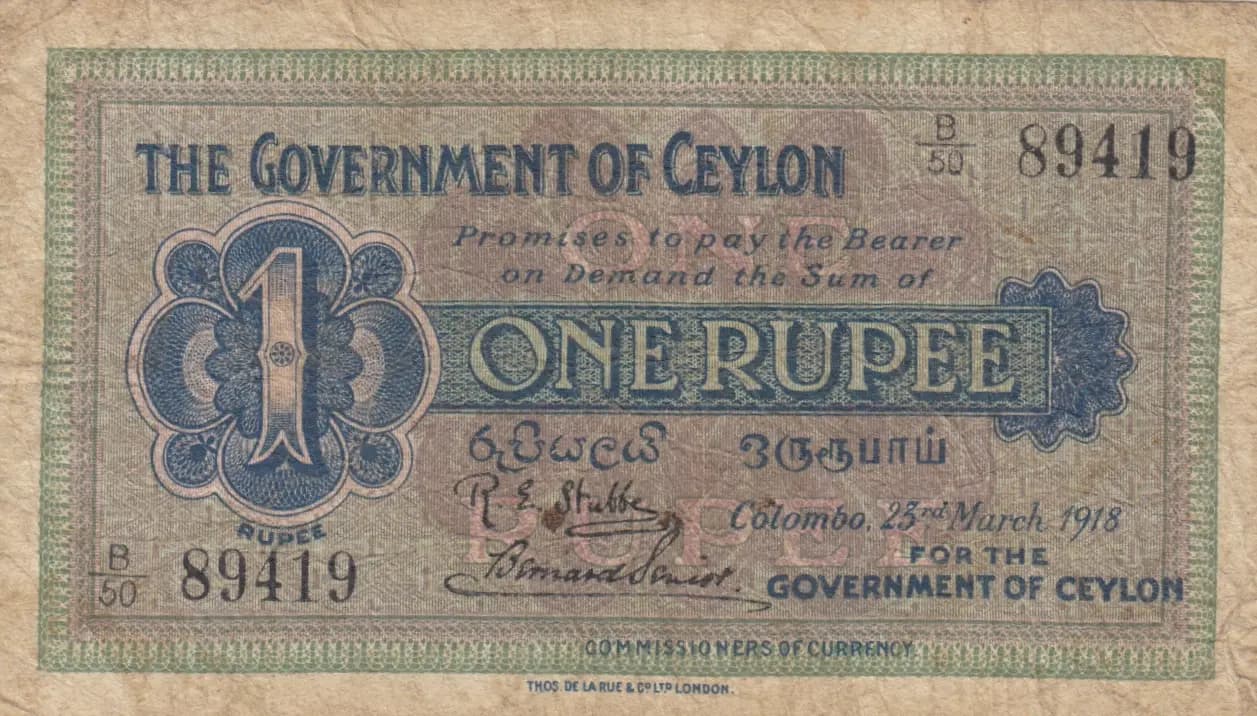
The front features a left-facing portrait of King George VI in formal military dress uniform with decorative insignia on the collar and chest, rendered within a circular decorative frame. The design incorporates an ornate border with scalloped edges in purple and multicolored gradients (blue, pink, green, brown), with a blank circular medallion positioned on the right side as a counterbalance. The reverse presents a landscape vignette of an Asian elephant with a mahout (handler) in a tropical setting dominated by large palm fronds, rendered in teal and green tones with fine cross-hatching detail. Both sides feature the trilingual inscription approach (English, Sinhala, Tamil) reflecting Ceylon's multicultural composition.
Front: 'GOVERNMENT OF CEYLON' (header), 'THIS NOTE IS LEGAL TENDER FOR THE PAYMENT OF ANY AMOUNT OF' (legal tender declaration), 'ONE RUPEE' (denomination), '4th AUGUST 1943' (issue date), 'COMMISSIONERS OF CURRENCY' (issuing authority), Serial number 'A34 9801116', 'ශ්රී ලංකා' (Sinhala: Sri Lanka), 'பொலு' (Tamil: Currency). Back: 'GOVERNMENT OF CEYLON', 'ELEPHANT'S HEAD' (scene description), 'ශ්රී ලංකා' (Sinhala: Sri Lanka), 'பொலු' (Tamil: Currency).
Intaglio (line engraving) printing, evidenced by the fine detailed line work, ornate border patterns with microdetail, and the sharp, clear impression visible throughout both sides. The cross-hatching technique and decorative flourishes are characteristic of high-security banknote production. While specific printer attribution for this Pick number would require archival research, Ceylon's wartime currency was produced under the oversight of the Commissioners of Currency; this series likely employed security printers contracted by British colonial authorities.
The observed variety is dated 4th August 1943 with serial prefix A34 and serial number 9801116. For P-34, varieties within this series include different date types (notes issued across 1941-1949), multiple signature combinations of Commissioners of Currency officials, and various serial number prefixes. This specific example represents the August 1943 date variety. No overprints or error characteristics are evident on this specimen.