1 rand 1966
Market Prices
27 salesAbout This Note
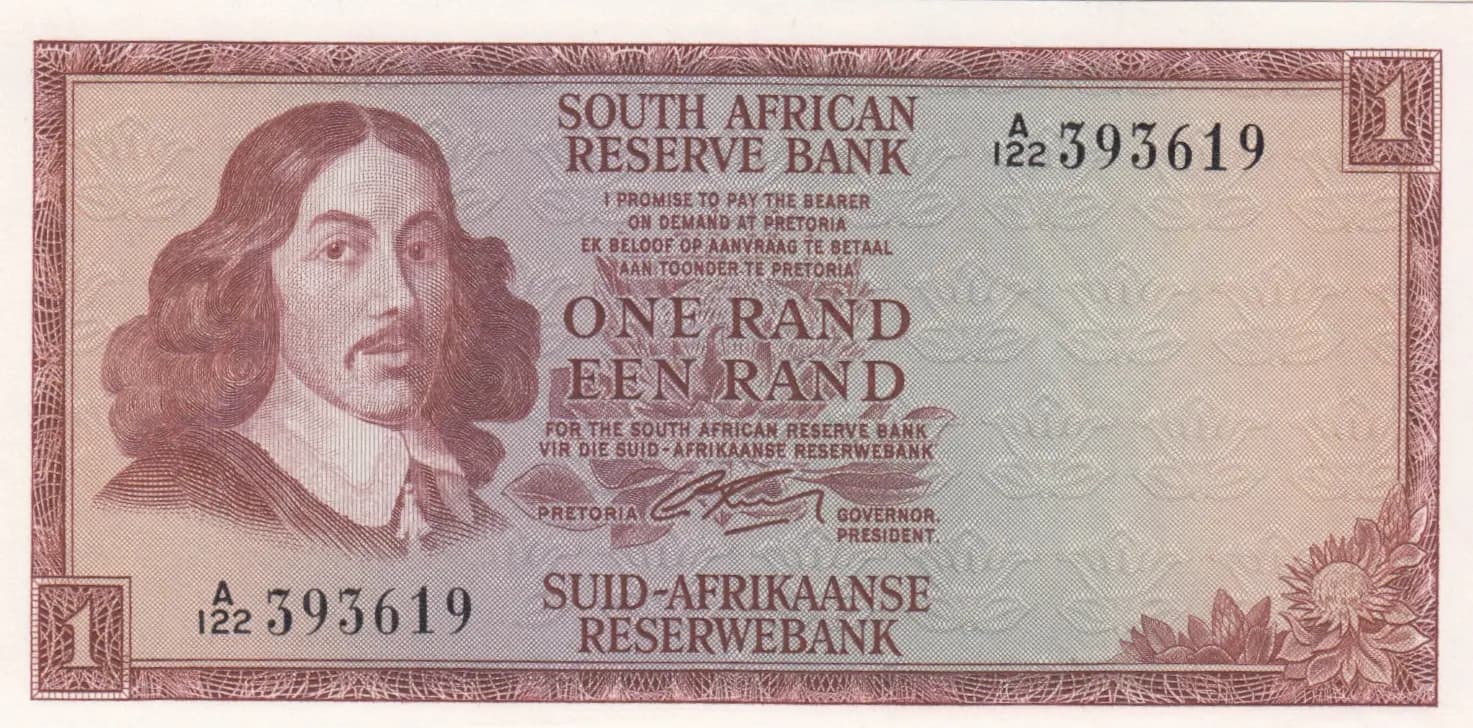
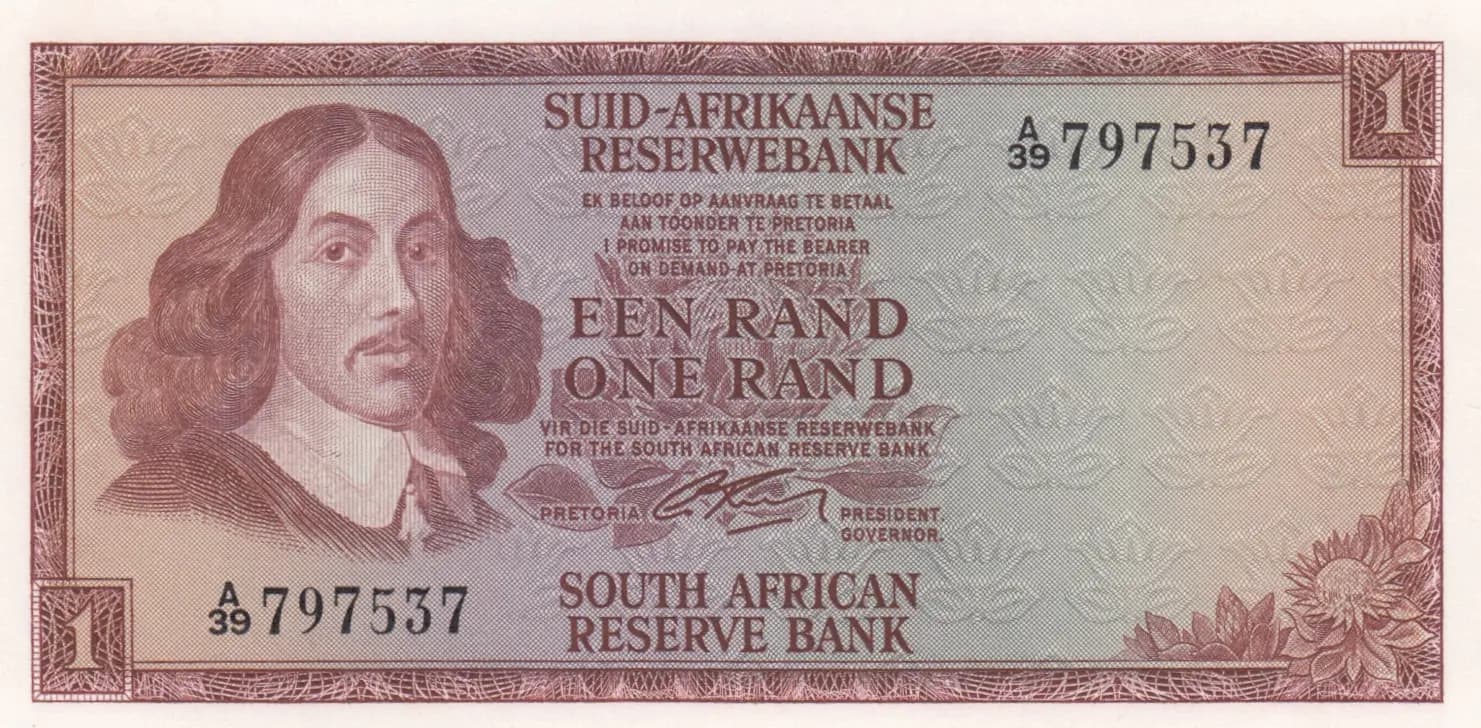
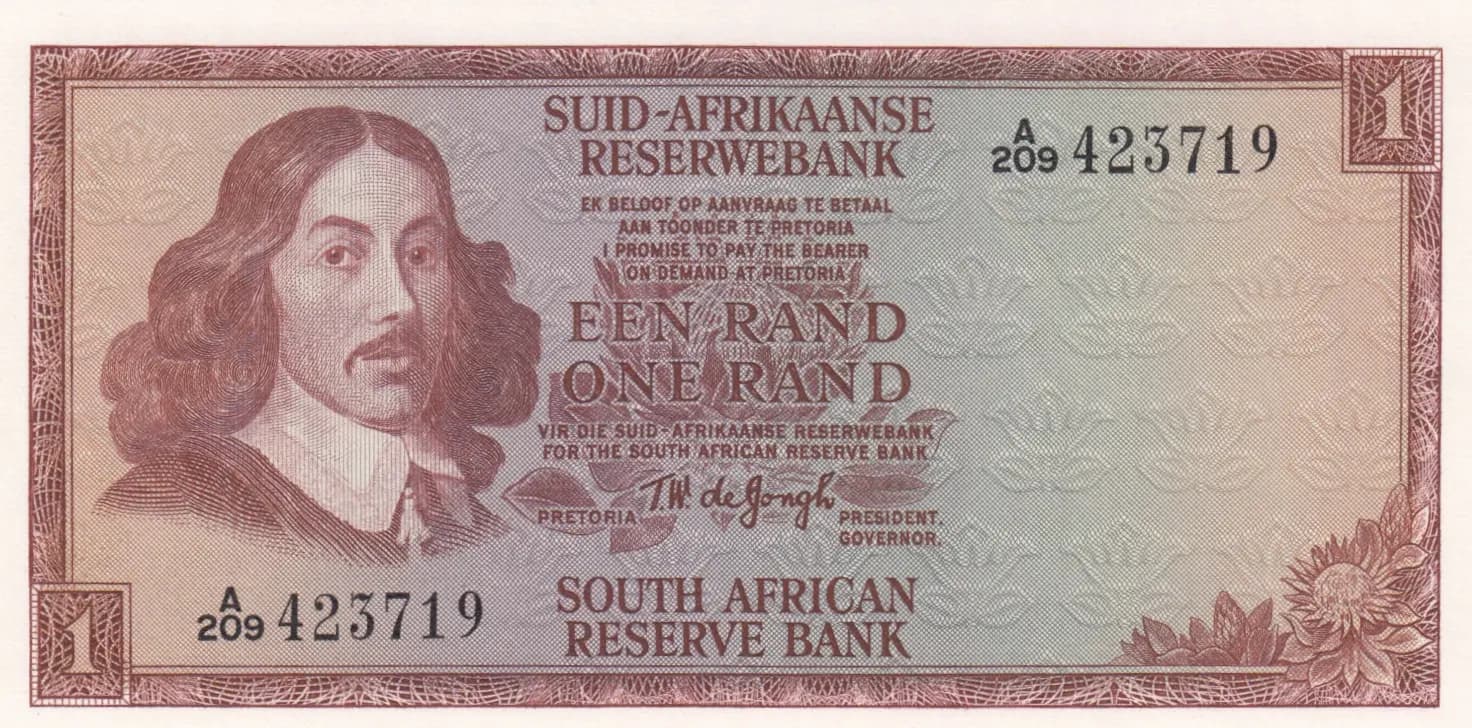
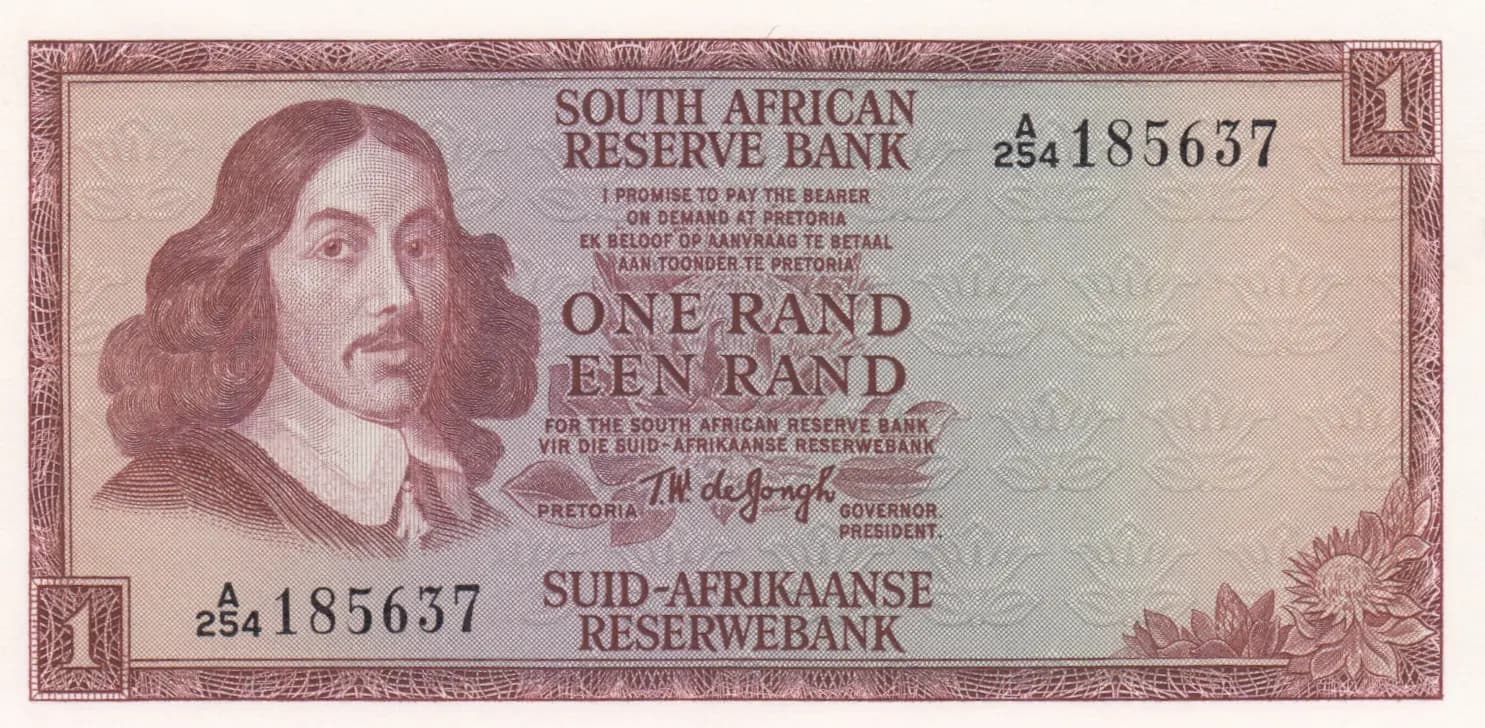
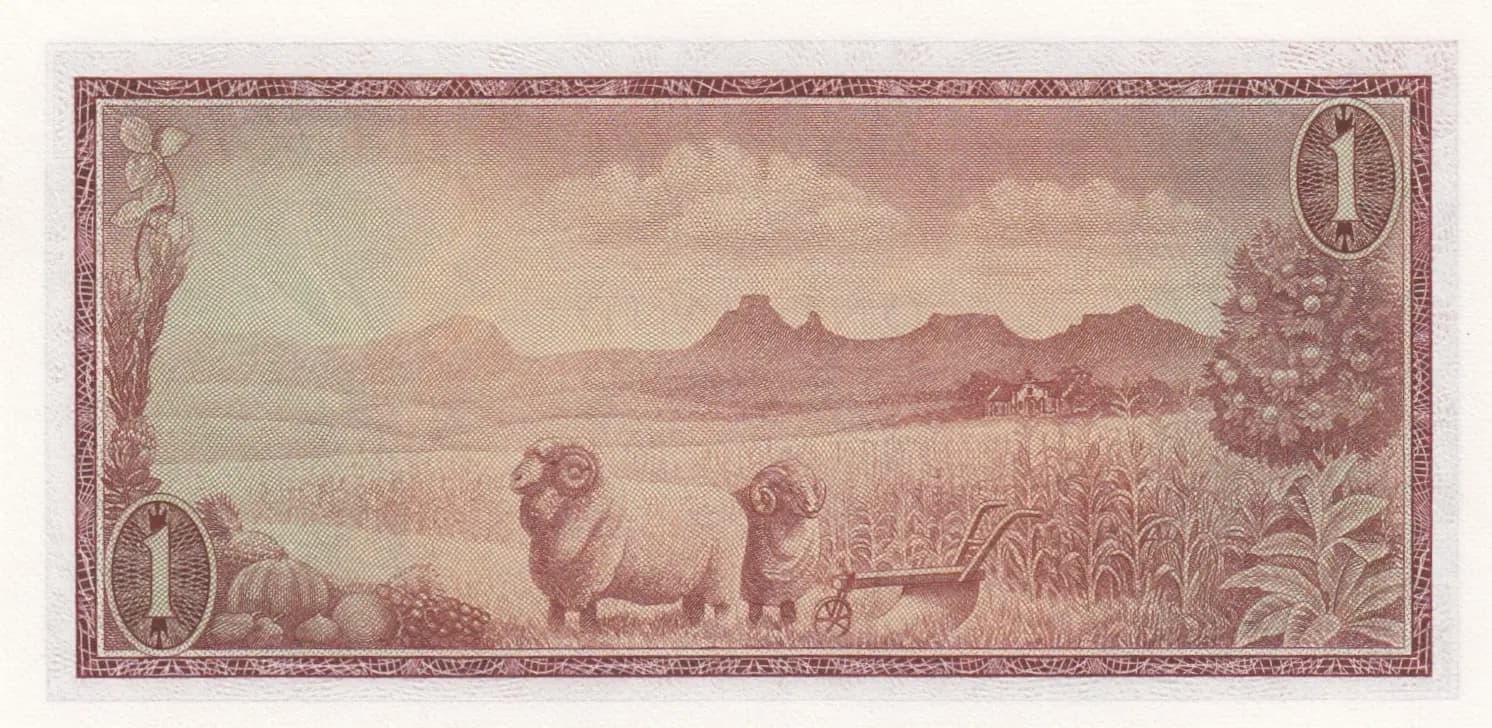
This South African Reserve Bank 1 Rand note from 1966 is presented in uncirculated condition with crisp printing and no visible wear. The note features a finely engraved portrait of a 17th-century figure on the obverse and an agricultural scene with sheep on the reverse, both rendered in warm brown and mauve tones. The bilingual English-Afrikaans design reflects South Africa's official languages during this period, making it a representative example of early post-independence currency.
Common. Secondary market eBay transaction data provided shows consistent sales across multiple condition grades (F through PMG 67) from 2012 to 2025, with typical UNC examples selling for $3-$16 and most transactions under $10. The catalog reference 2019 valuation of $3 for UNC condition and the high frequency of sales across nearly a decade confirms wide circulation and availability. No indication of limited print run, recall status, or scarcity factors.
Issued in 1966, shortly after South Africa's transition to a republic in 1961, this banknote reflects the nation's establishment of its own reserve banking system and currency identity. The portrait depicted is believed to represent an early colonial figure, while the pastoral agricultural scene on the reverse symbolizes the nation's economic foundation in farming and animal husbandry. The bilingual presentation in English and Afrikaans underscores the political dominance of these two languages in apartheid-era South Africa.
The obverse features an intaglio-engraved portrait positioned at the left, depicting a man with long wavy shoulder-length hair in 17th-century colonial dress with a detailed collar—characteristics consistent with historical figures from the Dutch colonial period in southern Africa. The portrait is framed by decorative corner ornaments and guilloche border patterns executed in fine line work. The reverse presents a romanticized agricultural landscape in intaglio, depicting two rams or sheep in the center-left of a pastoral scene, with maize/corn stalks visible on the right and a mountainous homestead settlement in the background. This imagery emphasizes the agrarian economic base of mid-20th century South Africa. Both sides employ symmetric compositional layouts with denomination numerals in decorative oval frames.
Front side: 'SOUTH AFRICAN RESERVE BANK' (English header); 'SUID-AFRIKAANSE RESERWEBANK' (Afrikaans equivalent); 'ONE RAND' / 'EEN RAND' (denomination in both languages); 'I PROMISE TO PAY THE BEARER ON DEMAND AT PRETORIA' (English) / 'EK BELOOF OF AANVRAAG TE BETAAL AAN TOONDER TE PRETORIA' (Afrikaans promise clause); 'FOR THE SOUTH AFRICAN RESERVE BANK' / 'VIR DIE SUID-AFRIKAANSE RESERWEBANK' (authorization statement); signature lines marked 'GOVERNOR' and 'PRESIDENT'; location 'PRETORIA'. Back side: Denomination numeral '1' in oval frames (top right and bottom left corners). Serial number 'A 254 1856537' appears on both front and back.
Intaglio engraving (recess printing), evidenced by the fine line work, detailed shading, and raised ink characteristics visible throughout both obverse and reverse. The decorative guilloche patterns, portrait rendering, and landscape scene all display the hallmarks of high-security intaglio production. The South African Reserve Bank typically contracted with internationally recognized security printers for this era's currency production.
This note is cataloged as Pick P-109b, distinguished by its English-language first line for bank name and denomination value (variant P-109a features the Afrikaans equivalent as the first line). The watermark is confirmed as Springbok. Replacement note serial number prefixes are documented as Z/1, Y/1, X/1, and W/1. The observed serial number 'A 254 1856537' does not appear to carry a replacement prefix, indicating this is a regular-issue example rather than a replacement note. No overprints or additional varieties are evident from the visual analysis.