5 pounds 1964
Market Prices
7 salesAbout This Note
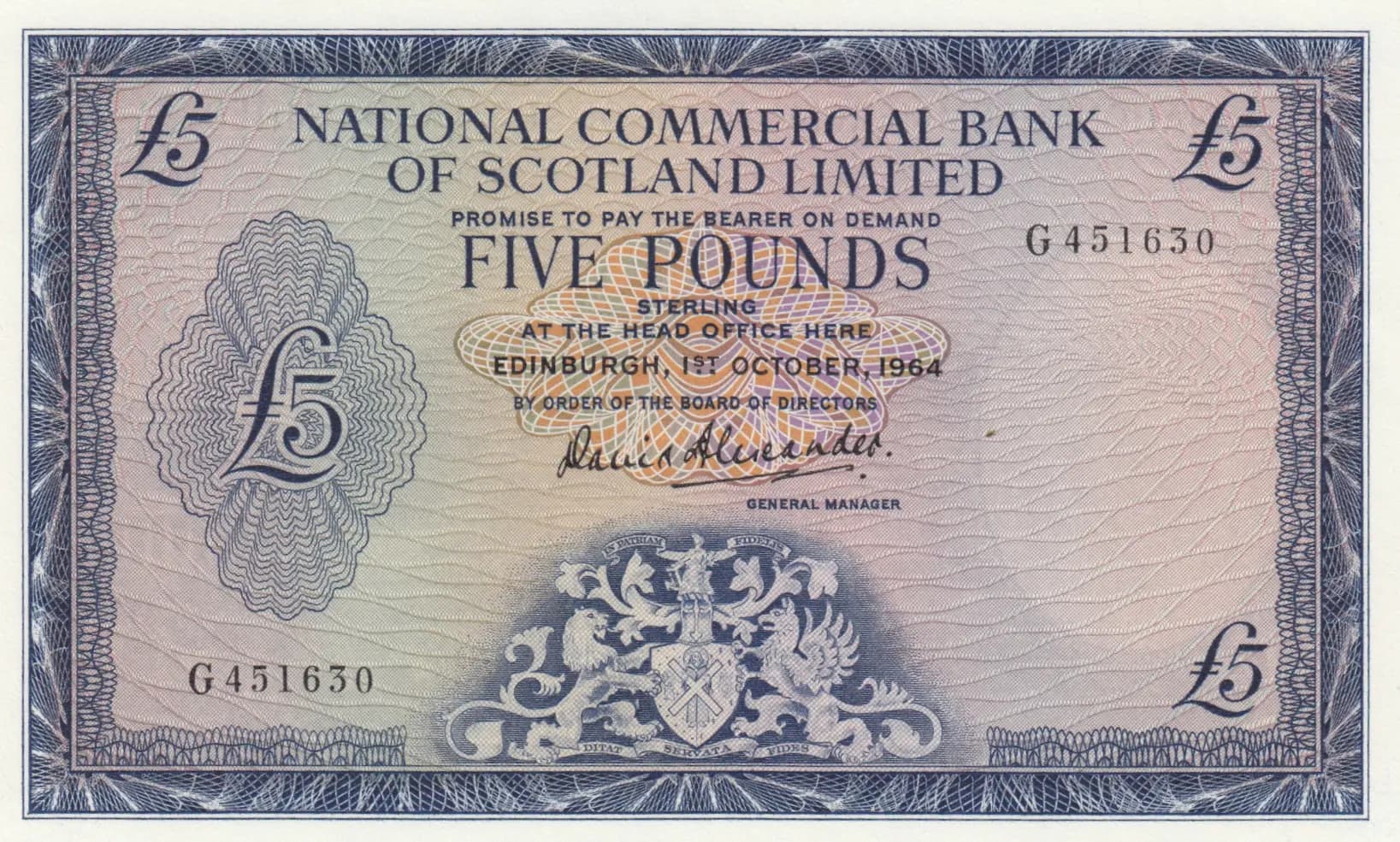
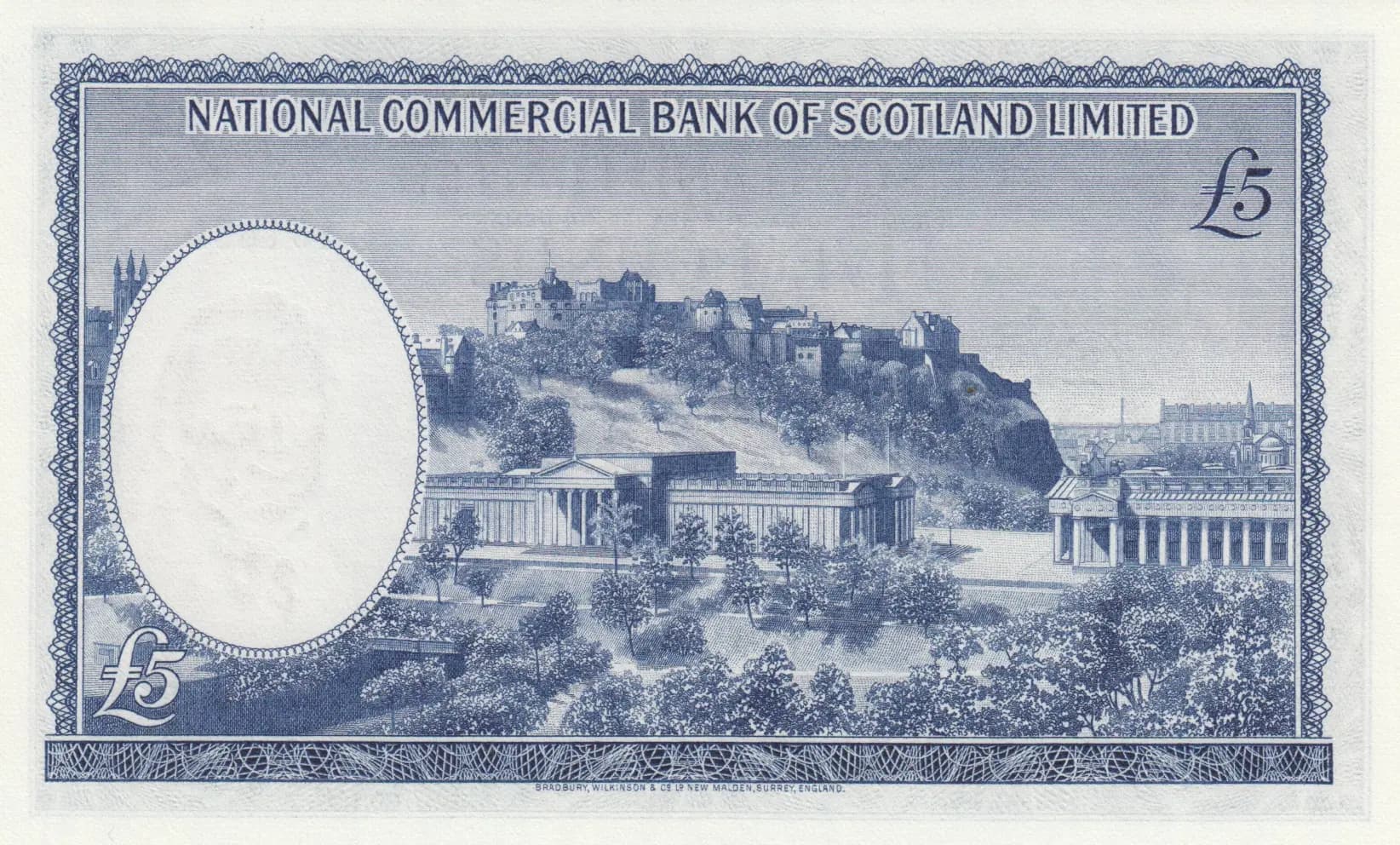
A pristine example of the 1964 National Commercial Bank of Scotland £5 note, presented in uncirculated condition with vibrant colors and sharp detail throughout. The note features a distinctive pale pink and cream palette with intricate blue engraving, displaying the Scottish coat of arms with lion rampant at the center-bottom of the obverse, while the reverse showcases a detailed landscape of Edinburgh Castle with classical architectural elements. This is a desirable Scottish regional note from the mid-20th century, with recent market data showing UNC examples commanding approximately $100-120, reflecting steady collector demand.
Common. While Scottish regional notes have collector appeal, this particular issue was produced in substantial quantities during the 1963-1966 circulation period. Recent eBay market data shows UNC examples selling consistently in the $100-120 range with multiple sales recorded across different years (2013-2023), indicating a regular supply in the collector market. The note is neither scarce nor rare in uncirculated condition.
Issued by the National Commercial Bank of Scotland Limited on 1st October 1964, this note represents an important period in Scottish banking history when regional Scottish banks maintained the privilege of currency issue. The reverse depicts Edinburgh Castle, Scotland's most iconic fortress, along with classical architectural structures representing Edinburgh's significance as Scotland's capital and cultural center during the post-war prosperity period. The note's design and issuer reflect Scotland's distinct financial identity within the United Kingdom during the 1960s.
The obverse features a formal banking design with the National Commercial Bank of Scotland's name prominently positioned above a classical promise-to-pay clause. The Scottish heraldic coat of arms with rampant lion and ornate shield is positioned at the center-bottom, serving as a symbol of national identity. An elaborate £5 denomination symbol with intricate circular line patterns appears on the left side, flanked by decorative rosette patterns in the corners. The reverse presents an engraved landscape scene depicting Edinburgh Castle prominently positioned on a hilltop, accompanied by classical columned structures (likely representing the National Gallery of Scotland or similar Edinburgh architectural landmarks) in the foreground, with church spires visible in the background cityscape. The overall design combines elements of Scottish heraldry, financial authority, and the nation's architectural heritage.
FRONT: £5 (denomination), NATIONAL COMMERCIAL BANK OF SCOTLAND LIMITED (issuing bank), PROMISE TO PAY THE BEARER ON DEMAND (legal tender promise), FIVE POUNDS STERLING (denomination and currency), AT THE HEAD OFFICE HERE (payment location), EDINBURGH, 1ST OCTOBER, 1964 (issuance location and date), BY ORDER OF THE BOARD OF DIRECTORS (authorization), GENERAL MANAGER (signatory title), G451630 (serial number). BACK: NATIONAL COMMERCIAL BANK OF SCOTLAND LIMITED (issuing bank), £5 (denomination), BRODBURY, WILKINSON & CO LTD NEW MALDEN, SURREY, ENGLAND (printer and location).
Steel-plate intaglio engraving, executed by Bradbury, Wilkinson & Co Ltd of New Malden, Surrey—the premier British security printer of the era. The technique is evident from the intricate fine linework throughout both obverse and reverse, creating complex geometric patterns and moiré effects designed to prevent counterfeiting. The detailed architectural rendering of Edinburgh Castle and the ornate heraldic imagery showcase the high-quality craftsmanship characteristic of Bradbury Wilkinson's security printing work.
This specific variety is dated 1st October 1964 with serial number G451630 and bears a handwritten signature of the General Manager. The National Commercial Bank of Scotland issued notes with various dated printings and signature variants between 1963 and 1966 (documented as 1.8.1963; 1.10.1964; 4.1.1966; 1.8.1966). The 1964 date places this example within the mid-range of the series' circulation period. The G-prefix serial number is typical of this issue.