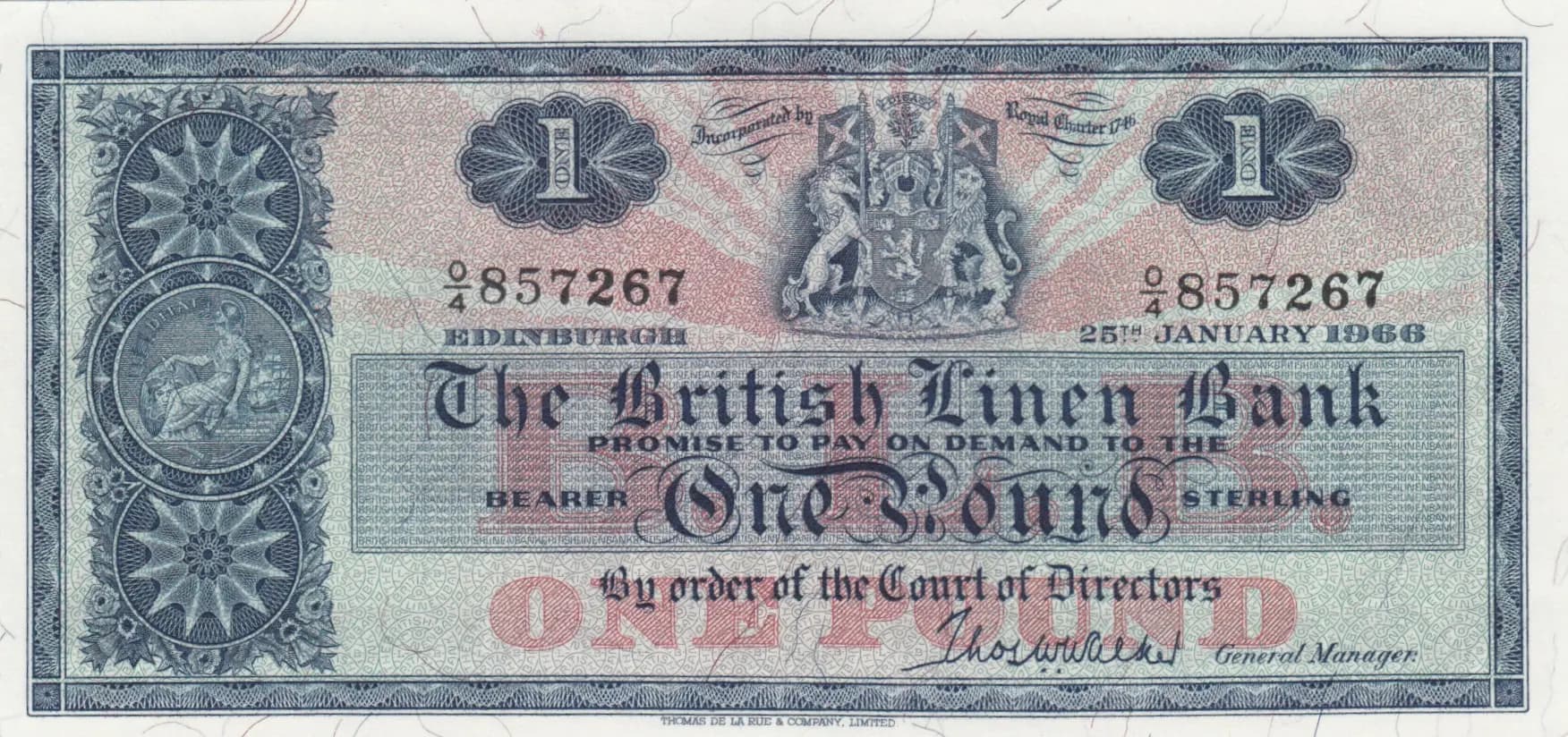
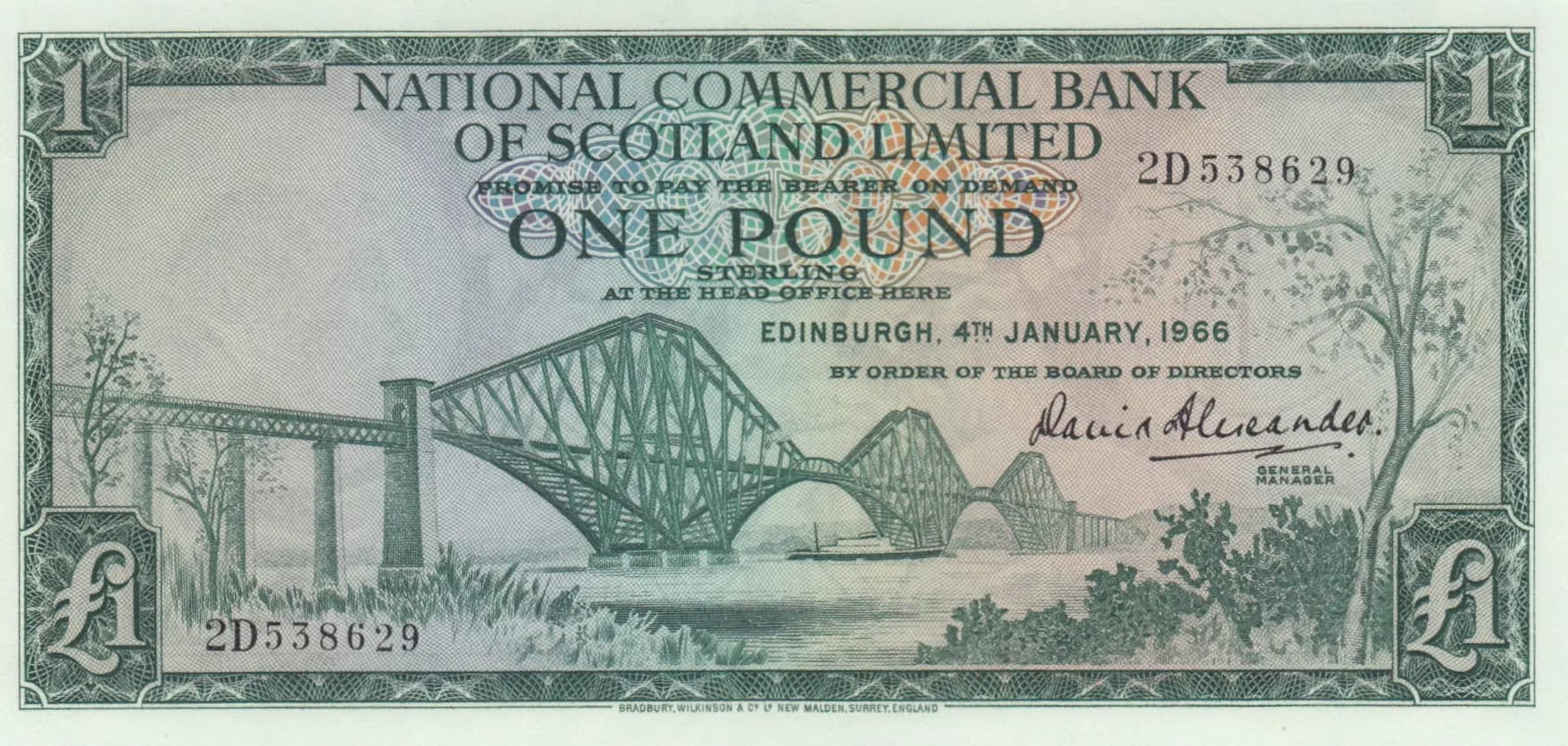
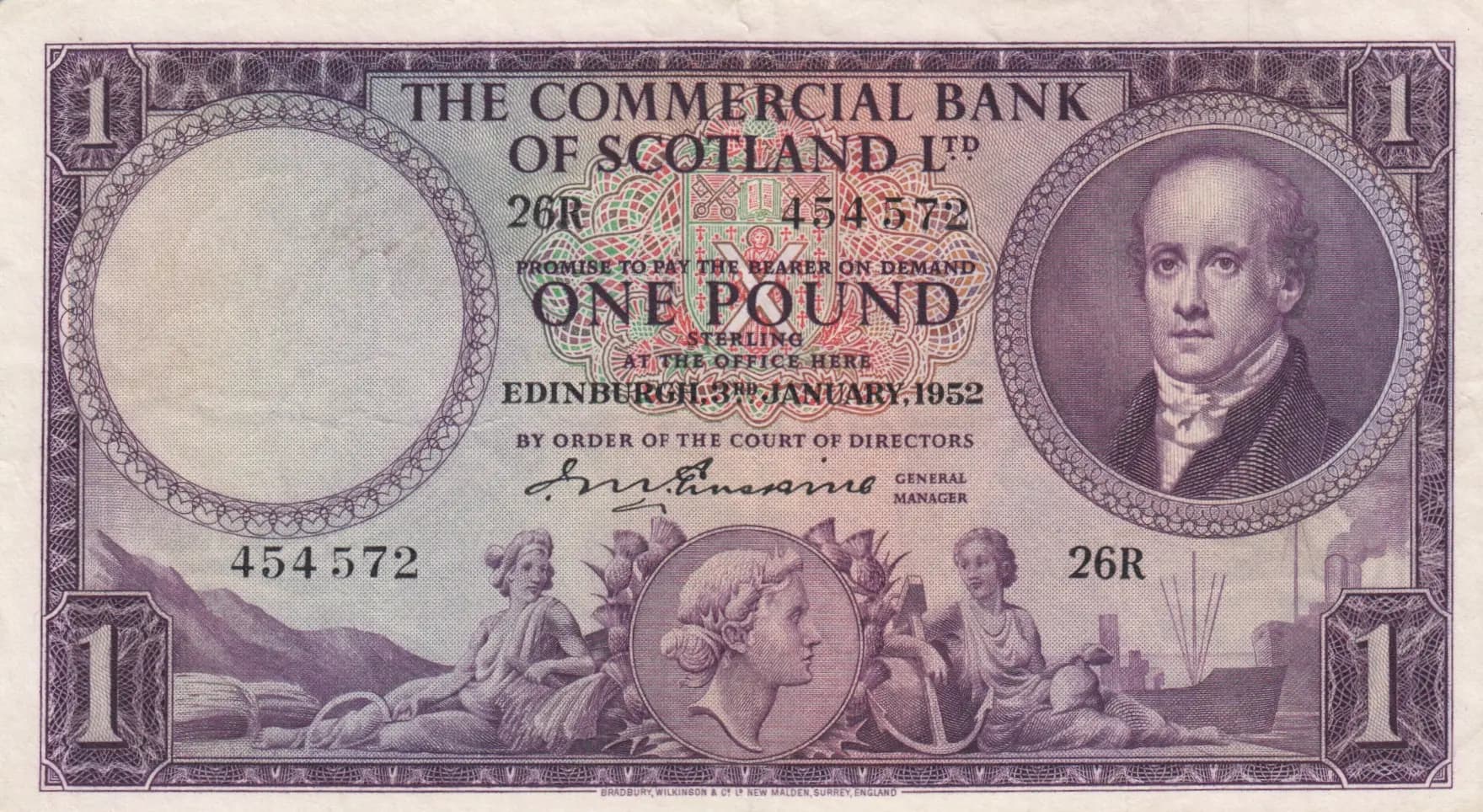
1 pound 1966
Market Prices
4 salesAbout This Note
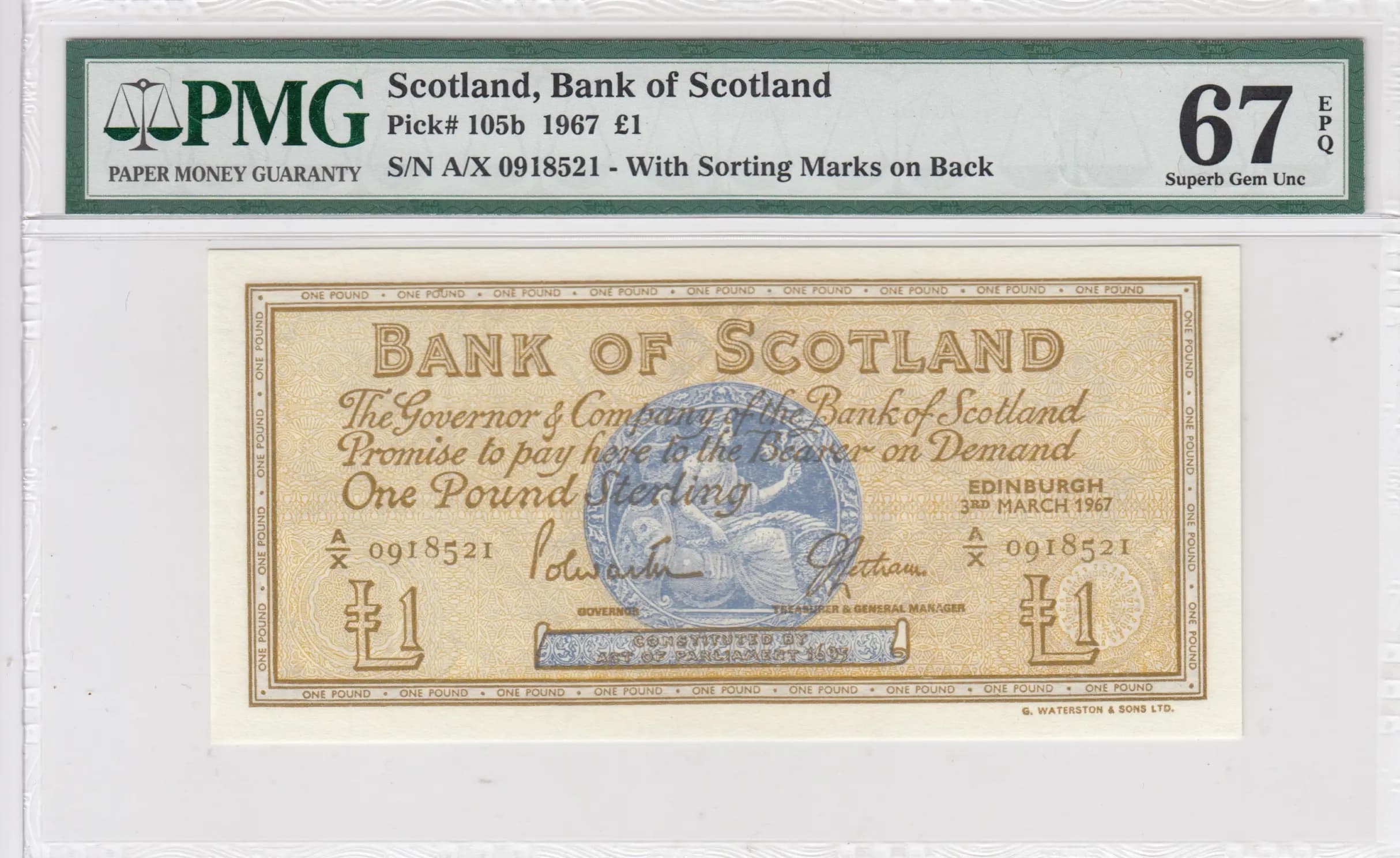
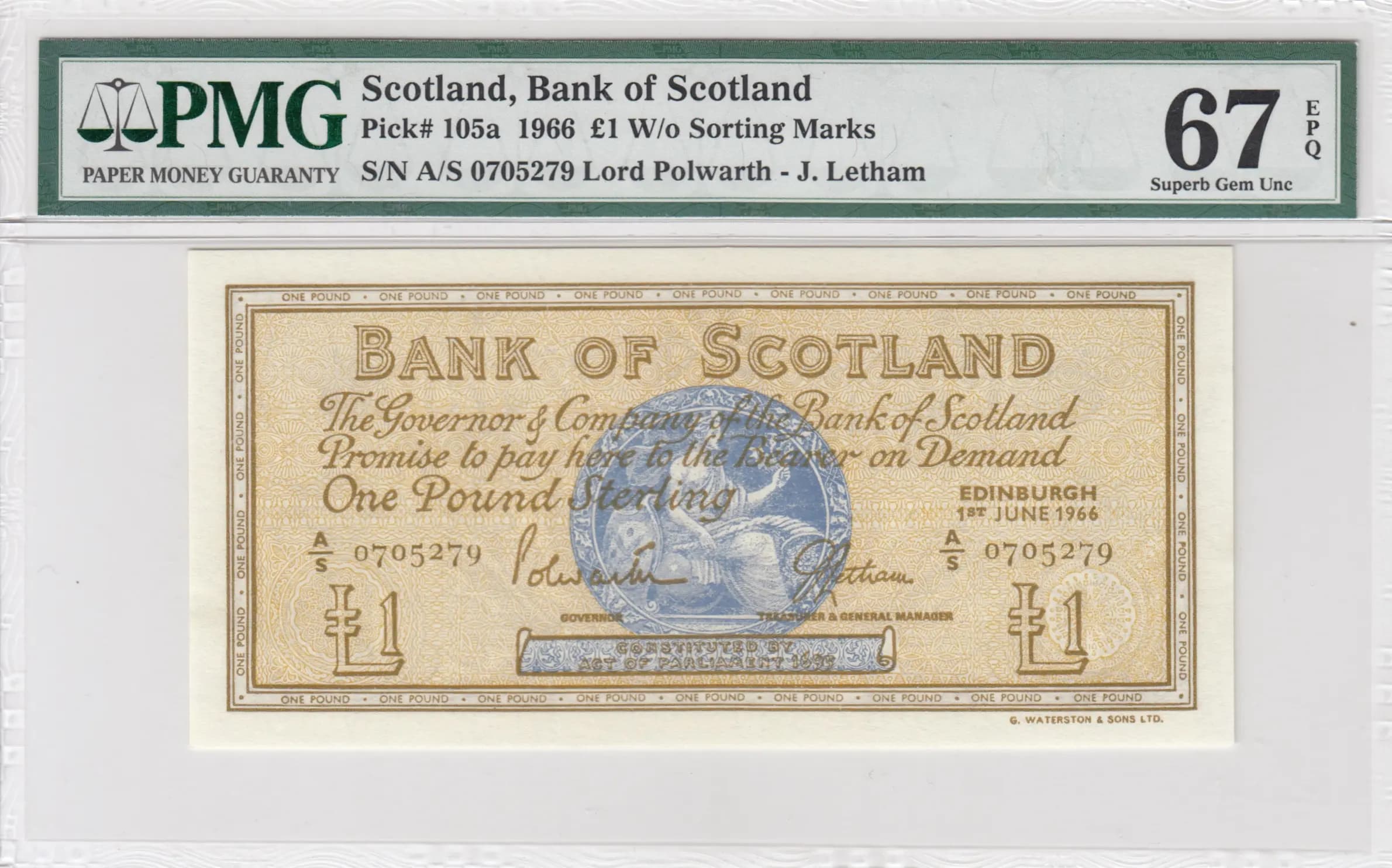
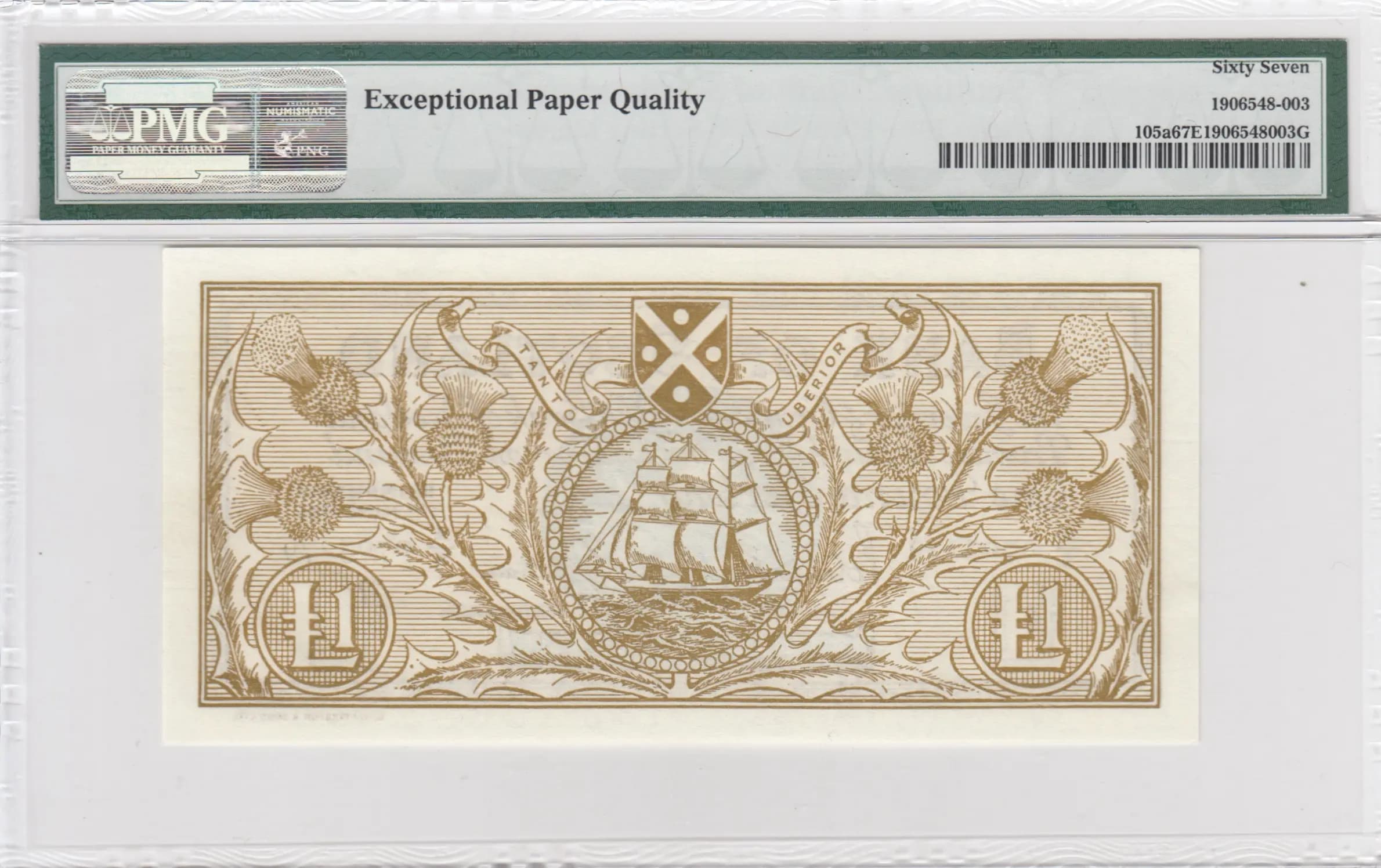
This is an exceptional example of the 1966 Bank of Scotland one pound note (Pick 105a), graded PMG 67 EPQ (Superb Gem Uncirculated). The note displays pristine condition with no visible wear, creases, or damage—the cream and brown color scheme remains vibrant with sharp, detailed engraving throughout. The central blue vignette portrait and ornate reverse design featuring a three-masted sailing ship and Scottish thistles showcase the fine craftsmanship typical of early 1960s Scottish banknote production.
Common. While this is a genuine Bank of Scotland issue from 1966, banknotes from this period and denomination were produced in substantial quantities for regular circulation. The eBay market data provided shows even high-grade examples (VF-AUNC) selling for $12.50-$21.50 in recent years, with 2019 catalog values of $18.50 (VF) to $65 (UNC), indicating robust supply at all grades. The PMG 67 EPQ grade is exceptional within the survivor population, but the note itself is not scarce by numismatic standards.
This 1966 note represents Bank of Scotland's post-war currency design, issued during a period of Scottish monetary independence within the United Kingdom. The bearded historical figure in the central blue medallion and the sailing ship on the reverse reflect Scotland's maritime heritage and historical identity, while the Scottish coat of arms and thistle flowers underscore the distinctly Scottish character of the issuer. Issued on 1st June 1966 by Governor Lord Polwarth and Treasurer & General Manager J. Letham, this note belongs to Bank of Scotland's traditional design series before the introduction of electronic sorting marks on later printings.
The obverse features a centrally positioned portrait of a bearded historical figure wearing period clothing, rendered in a blue circular vignette—this appears to be a historical Scottish dignitary or monarch, though the specific subject cannot be definitively determined from the visual alone. The note employs a cream background with ornamental brown borders and decorative elements, with 'ONE POUND' repeated along the top border. The reverse displays an elaborate design centered on a three-masted sailing ship enclosed in a rope-bordered circular medallion, flanked by four Scottish thistle flowers (two on each side) symbolizing Scotland's national identity. The top center features what appears to be the Scottish coat of arms, and pound symbols appear in circular frames at the bottom corners. The entire design is executed in fine line engraving with cross-hatching and intricate decorative scrollwork typical of high-quality banknote production.
FRONT: 'BANK OF SCOTLAND' (issuer name); 'The Governor & Company of the Bank of Scotland Promise to pay here to the Bearer on Demand One Pound Sterling' (promise to pay clause); 'EDINBURGH 1ST JUNE 1966' (place and date of issue); 'A/S 0705279' (serial number, appears twice); '£1' (denomination); 'G. WATERSTON & SONS LTD.' (printer); 'GOVERNOR' and 'GENERAL MANAGER' (titles of signatories Lord Polwarth and J. Letham). BACK: '£1' (denomination, appears twice in bottom corners); Scottish coat of arms and thistle flowers are symbolic rather than textual elements.
Intaglio engraving (line engraving) with fine cross-hatching and elaborate ornamental patterns. The note was printed by G. Waterston & Sons Ltd., Edinburgh, a Scottish security printer specializing in banknote production. The visual analysis confirms sophisticated security features through complex engraving detail and watermark placement in the circular vignette area, typical of 1960s banknote security standards.
Pick 105a specifically notes this as the variety 'Without Sorting Marks' on the reverse—later printings (Pick 105b) included electronic sorting marks. The signatories are Lord Polwarth (Governor) and J. Letham (Treasurer & General Manager), and the issue date is definitively 1st June 1966. The note exhibits one of two known watermark varieties for this issue. Serial number A/S 0705279 places this in the A/S prefix series. No overprints or exceptional serial number characteristics are evident from the images.