5 pounds 1967
Market Prices
1 saleAbout This Note
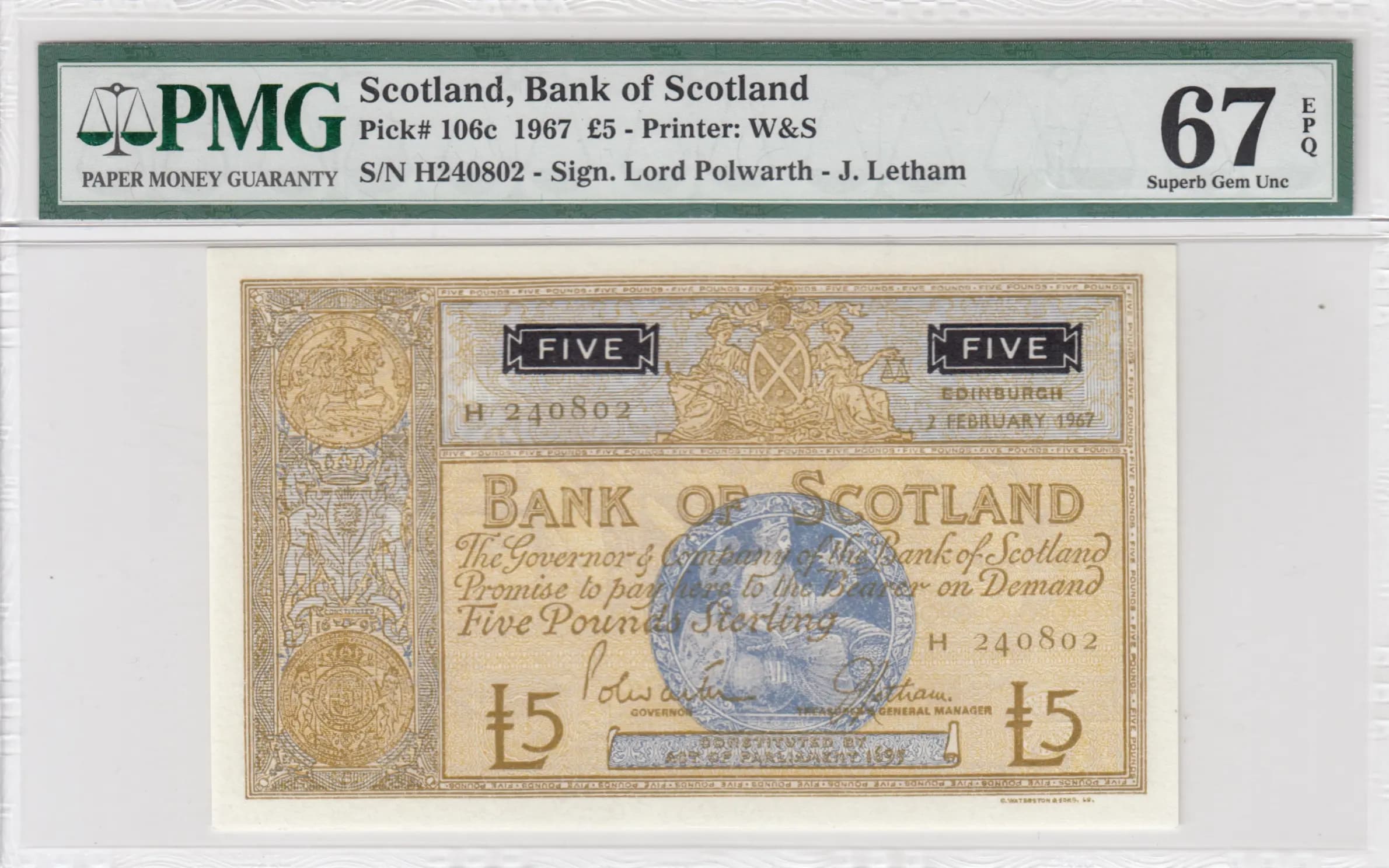
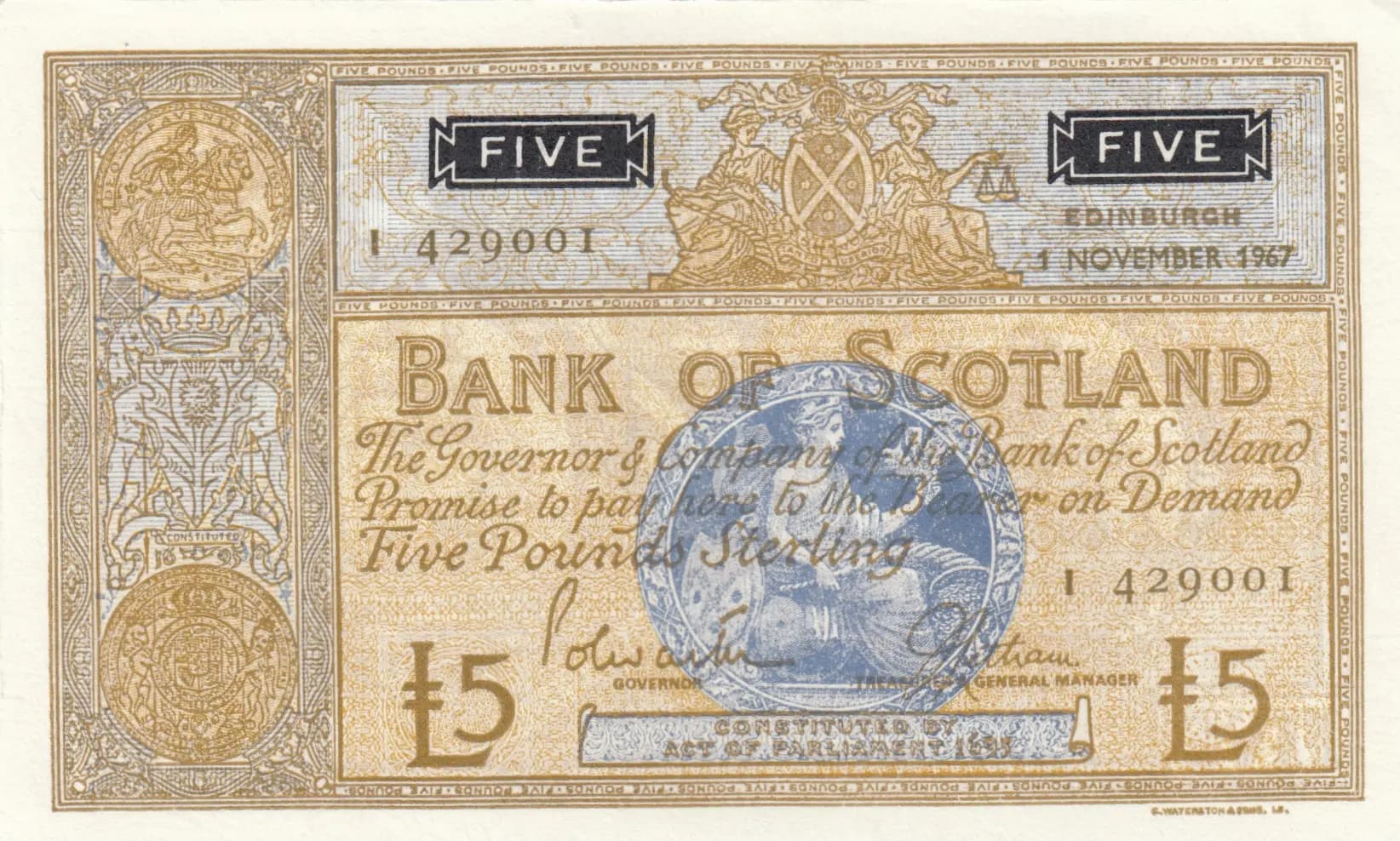
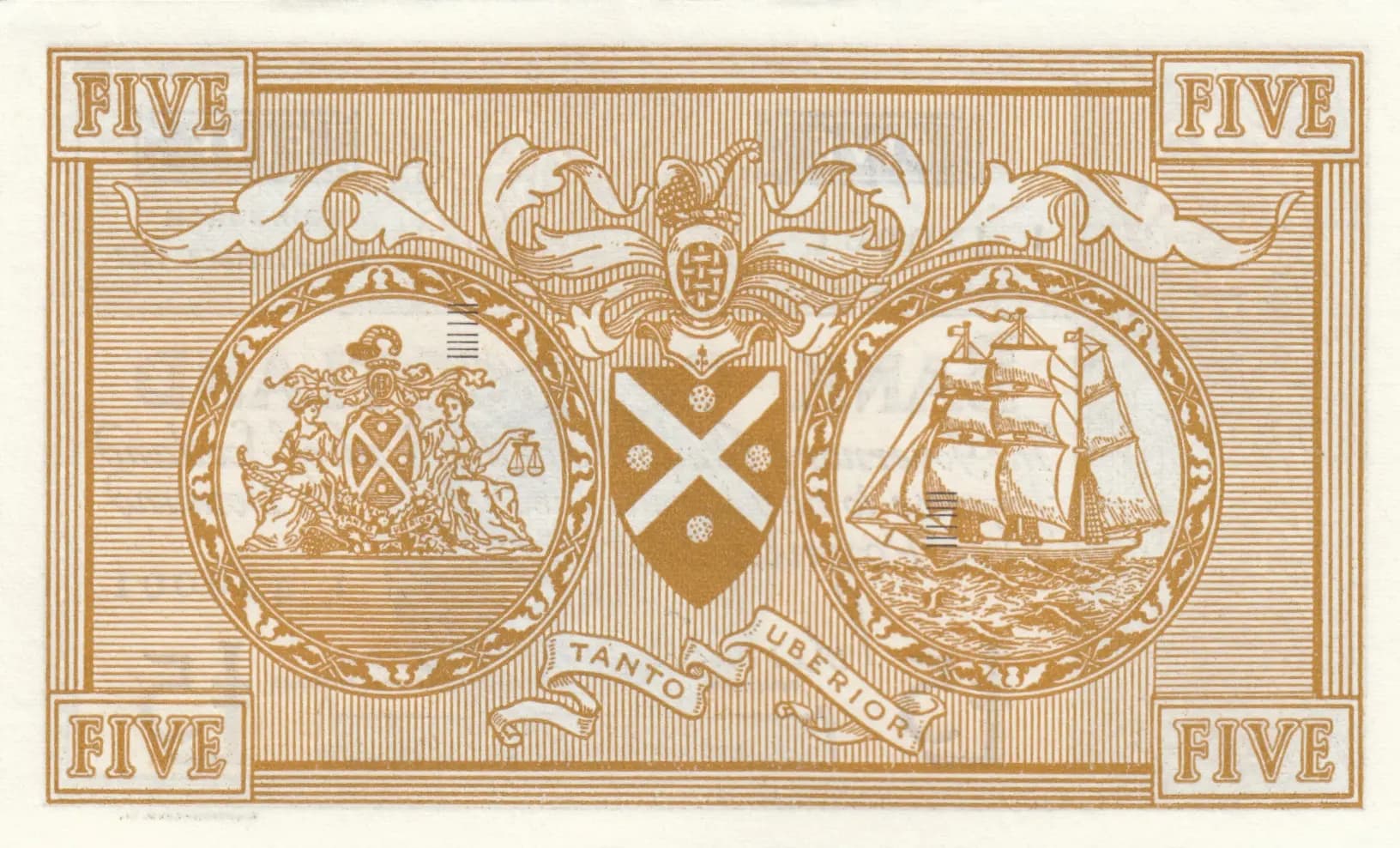
This is a Bank of Scotland £5 note from November 1967 (Pick P-106d) featuring the distinctive design of the 1961-1967 series with ornate gold/tan decorative borders and a striking blue circular portrait of Britannia at center. The note exhibits moderate aging consistent with circulation use, including some discoloration and foxing, placing it solidly in the AU (About Uncirculated) grade. The reverse displays Scotland's heraldic identity through St. Andrew's Cross and a three-masted sailing ship, making this an important mid-20th century Scottish banknote that remains highly collectible.
Common. This is a regular issue banknote from the lengthy 1961-1967 series of Bank of Scotland £5 notes, indicating substantial print runs typical of mainstream currency in active circulation. The eBay price data provided (VF examples selling for $29-60, UNC at $200) reflects standard collector pricing for common banknotes in their respective grades. The AU grade specimen shown here falls within the typical mid-range values for this series. No evidence exists of a limited print run, recall, or short issuing period that would elevate this to scarce or rare status. The note's age and the UK's transition to decimal currency in 1971 explains some preservation challenges, but these notes remain readily available to collectors.
Issued during the height of the British pound's international prominence, this 1967 Bank of Scotland note represents the institution's continued role as one of Scotland's three note-issuing banks since its 1695 foundation (as inscribed on the obverse). The imagery emphasizes Scottish identity through prominent heraldic symbols—the lion rampant, St. Andrew's Cross, and the sailing ship representing Scotland's maritime heritage—reflecting the cultural assertion of Scottish institutions during the post-WWII period when regional banknotes remained an important expression of national pride.
The obverse features a large circular medallion containing the heraldic lion rampant of Scotland on the left, while the dominant central element is a blue-tinted circular portrait of Britannia, the female personification of Britain, surrounded by ornate scrollwork and filigree borders. The entire note is framed in intricate gold/tan decorative borders with fine geometric and floral patterns. The reverse displays two large circular medallions: the left contains a heraldic/judicial scene with multiple figures (representing Scottish legal authority), and the right depicts a three-masted sailing ship (symbolizing Scottish maritime commerce and naval power). Between these medallions is Scotland's coat of arms featuring the saltire (St. Andrew's Cross—a white X on a gold shield with white bezants), topped with a crown and flanked by ornamental scrollwork. The design scheme emphasizes Scotland's sovereignty, legal traditions, and commercial heritage while maintaining the formal aesthetic of mid-20th century Commonwealth currency.
FRONT: 'The Governor & Company of the Bank of Scotland Promise to pay to the Bearer on Demand Five Pounds Sterling' (standard currency promise); 'BANK OF SCOTLAND,' 'EDINBURGH,' 'NOVEMBER 1967' (issuer, location, and date); 'CONSTITUTED 1695' (founding date of the bank); 'GOVERNOR' and 'GENERAL MANAGER' (signature titles); 'FIVE' and '£5' (denominations). BACK: 'FIVE' (denomination in corner panels); 'TANTO' (Latin: 'so much/by so much'); 'UBEFORE' (Latin: 'everywhere/wheresoever')—these Latin phrases form part of the heraldic motto tradition associated with Scottish arms.
This note was produced using steel-plate intaglio engraving, the premium security printing method of the era. The printer was G. Waterston & Sons of Edinburgh, a Scottish firm well-established in fine engraving work. The visual analysis confirms characteristics typical of intaglio: fine parallel line cross-hatching creating visual depth in the background, intricate border designs with exceptional detail work, and the crisp definition of portraiture and heraldic elements. The multiple circular frames, fine line work, and the quality of the filigree patterns throughout indicate hand-engraved plates with careful attention to anti-counterfeiting measures through complexity of design.
This example is specifically dated November 1967 from the P-106d variety. The serial number visible is 1429001. Bank of Scotland £5 notes from the 1961-1967 series can show variations in signature titles ('b' signature configuration noted in the reference data) and potentially in serial number prefixes indicating different print batches. The November 1967 date places this note near the end of the series' production run, as the Bank of Scotland would subsequently issue notes of different design. No major varieties (watermark changes, overprints, or significant design alterations) are recorded for this Pick number within the AU grade range.