10 riyals 1961
Market Prices
12 salesAbout This Note
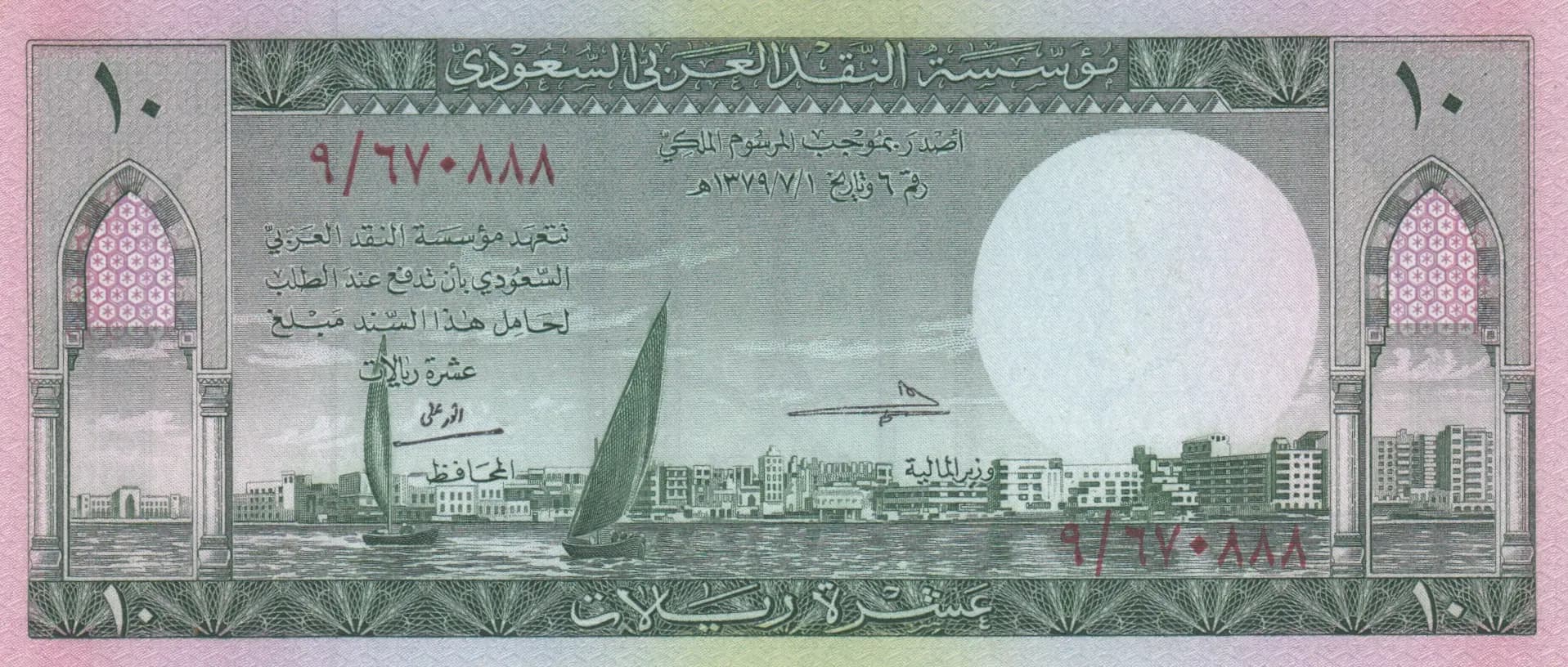
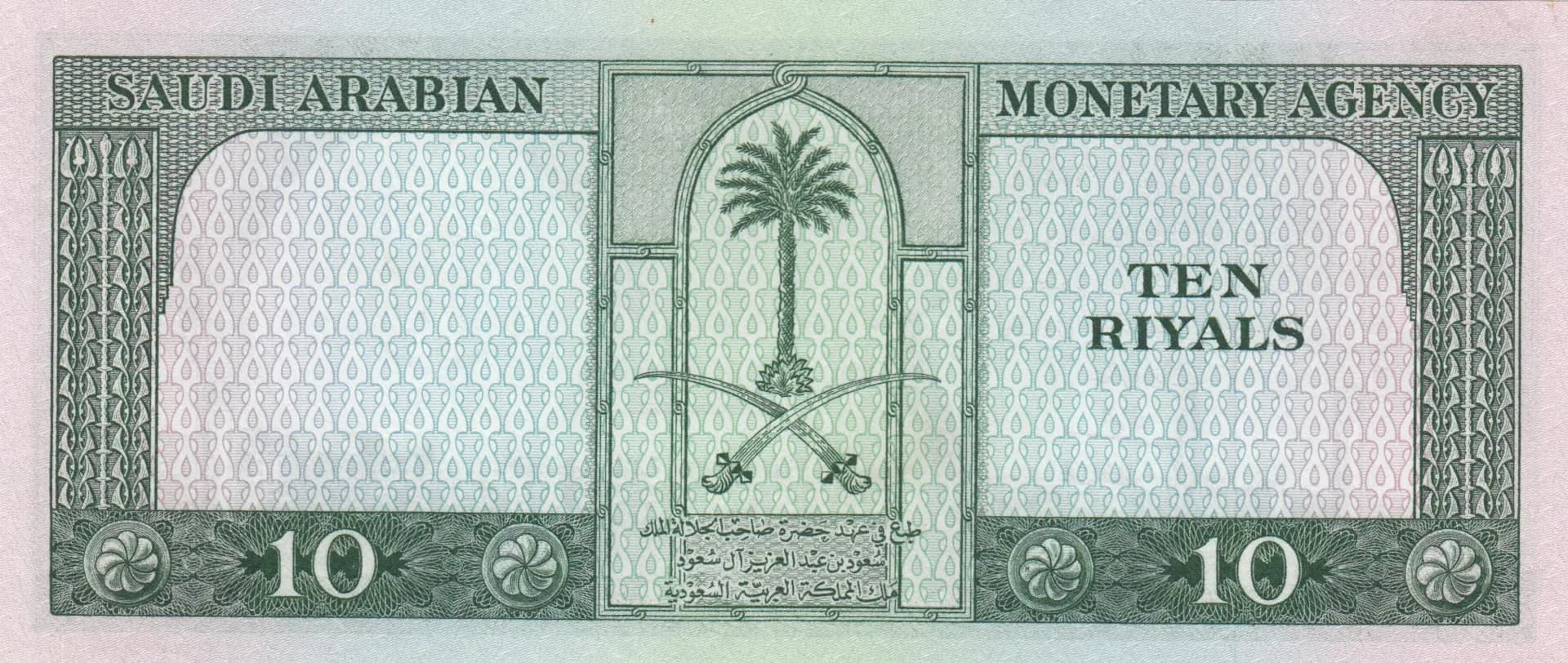
This is a stunning example of Saudi Arabia's first domestically-designed banknote series, the 1961 10 Riyal (Pick-8a) in uncirculated condition. The note features elegant vignettes of traditional dhows in Jeddah harbor on the obverse and the national arms (crossed swords and palm) on the reverse, rendered in distinctive pink/mauve and green tones with fine line engraving. As an early emission from the newly-established Saudi Arabian Monetary Agency, this note represents a pivotal moment in the Kingdom's monetary independence and remains highly sought by collectors of Middle Eastern currency.
Common. While this is an early date (1961) and an important historical issue, the 10 Riyal denomination from the first SAMA series was issued in substantial quantities and remains readily available to collectors. eBay sales data confirms consistent market activity across all grades, with UNC examples selling in the $250-$260 range in recent years, consistent with common-grade early regional banknotes. The catalog value of $650 for UNC reflects the note's age and historical significance rather than rarity; actual market prices run significantly lower, indicating healthy supply.
Issued in 1379 AH (1961 CE), this banknote was produced following Saudi Arabia's establishment of the Saudi Arabian Monetary Agency (SAMA) to manage the nation's currency. The imagery reflects the Kingdom's identity during this period: the Jeddah dhows represent the historic maritime trade that built the nation's wealth, while the crossed swords and date palm on the reverse constitute the central elements of the national emblem, symbolizing both martial prowess and agricultural abundance in the Arabian Peninsula. This series marked the transition from reliance on foreign currency designs to distinctly Saudi Arabian monetary iconography.
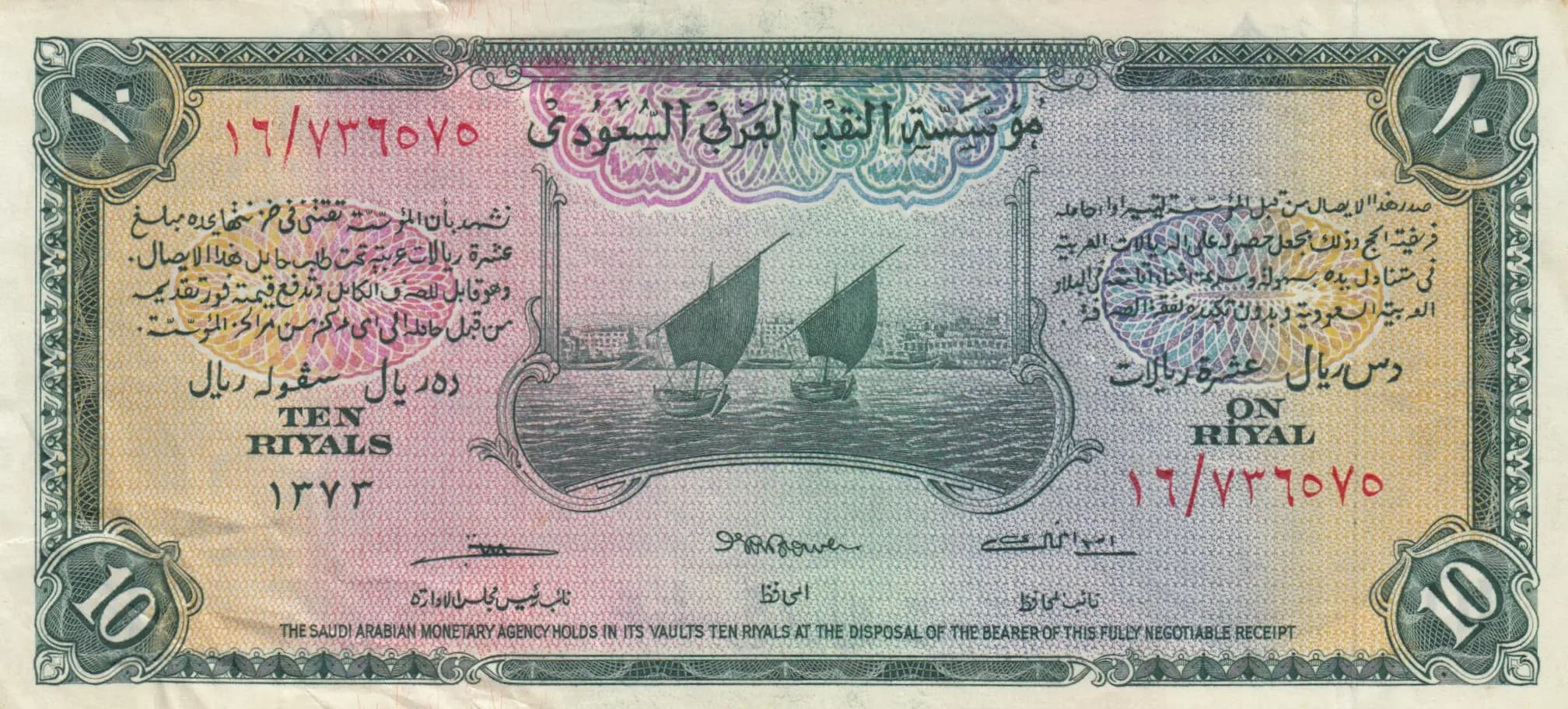
The obverse features a central composition of two traditional sailing vessels (dhows) anchored in Jeddah harbor with a multi-story waterfront cityscape visible in the background, representing the historic port city's importance to Saudi commerce. This maritime scene is flanked by ornamental Islamic architectural frames on both left and right sides, consisting of arched doorways with geometric arabesque patterns and palm frond elements in the decorative borders. The reverse presents the national arms centrally positioned within an Islamic archway: crossed scimitars beneath a date palm tree, a symbolic composition representing both the military strength and agricultural heritage of Saudi Arabia. The entire design is executed in fine line engraving with repeating geometric background patterns, rendered in a color scheme of pink/mauve with green accents. A prominent watermark featuring the national arms is visible in the center-right area of the obverse.
FRONT SIDE: 'مؤسسة النقد العربي السعودي' (Saudi Arabian Monetary Agency) | '9/670888' (Serial Number) | 'أصدر بموجب الرسوم الملكية' (Issued by Royal Decree) | 'في واقع 1/1379 هـ' (On 1st of 1379 AH / 1961) | 'تعهد مؤسسة النقد العربي السعودي بأن تدفع عند الطلب لحامل هذا الشيك عشرة رياليا' (The Saudi Arabian Monetary Agency pledges to pay the bearer of this note ten riyals on demand) | 'عشرة رياليا' (Ten Riyals). BACK SIDE: 'SAUDI ARABIAN MONETARY AGENCY' (English text) | 'TEN RIYALS' (English denomination) | '10' (Numeric denomination) | 'مؤسسة النقد العربي السعودية' (Saudi Arabian Monetary Agency in Arabic) | 'عشرة ريالات' (Ten Riyals in Arabic).
This note employs intaglio engraving (steel plate engraving), evidenced by the fine line work, precise geometric patterns, and the characteristic depth of impression visible in the detailed architectural elements and decorative borders. The multicolor printing required multiple passes using separate plates for the pink/mauve, green, and gray color separations. Based on the quality and execution characteristic of early SAMA issues and the Pick-8a designation, this note was likely produced by Thomas De La Rue or a similar British security printer, as was standard practice for Middle Eastern central banks during this period.
This specimen is identified as Pick-8a, the standard first issue variety of the 1961 10 Riyal note. The serial number visible (9/670888) indicates regular production output. Key identifiers for this specific variety include: the 1/1379 AH date, bilingual inscriptions (Arabic/English), the specific watermark design featuring the crossed swords and palm, and the embedded security thread. No major varieties (different signatures, overprints, or color variations) are documented for Pick-8a; later issues in the 1961 series (8b, 8c variants) exist but with the same basic design. The UNC condition indicates this note has never entered circulation and retains original crispness and color saturation.