500 escudos 1976 specimen
About This Note
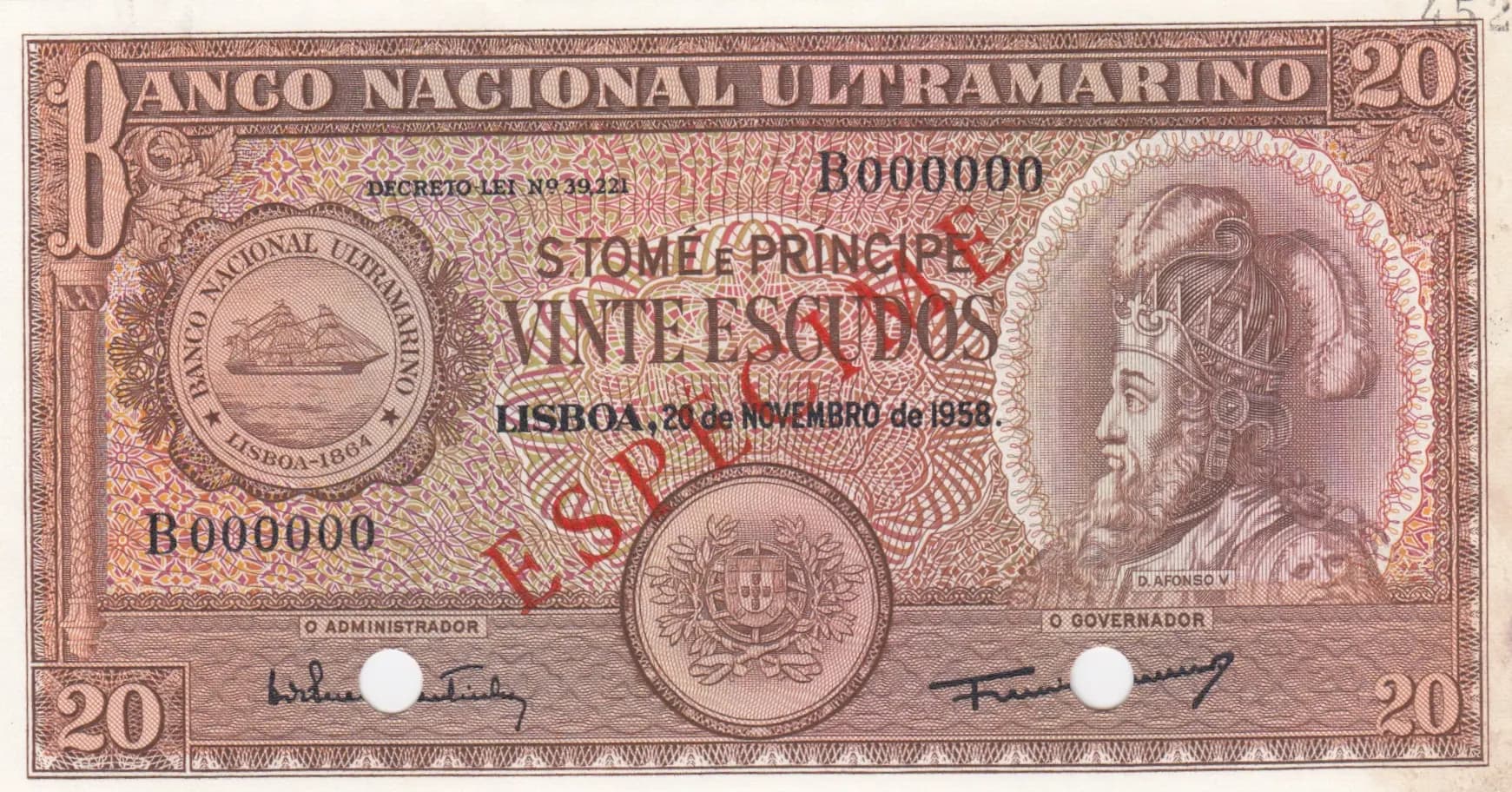
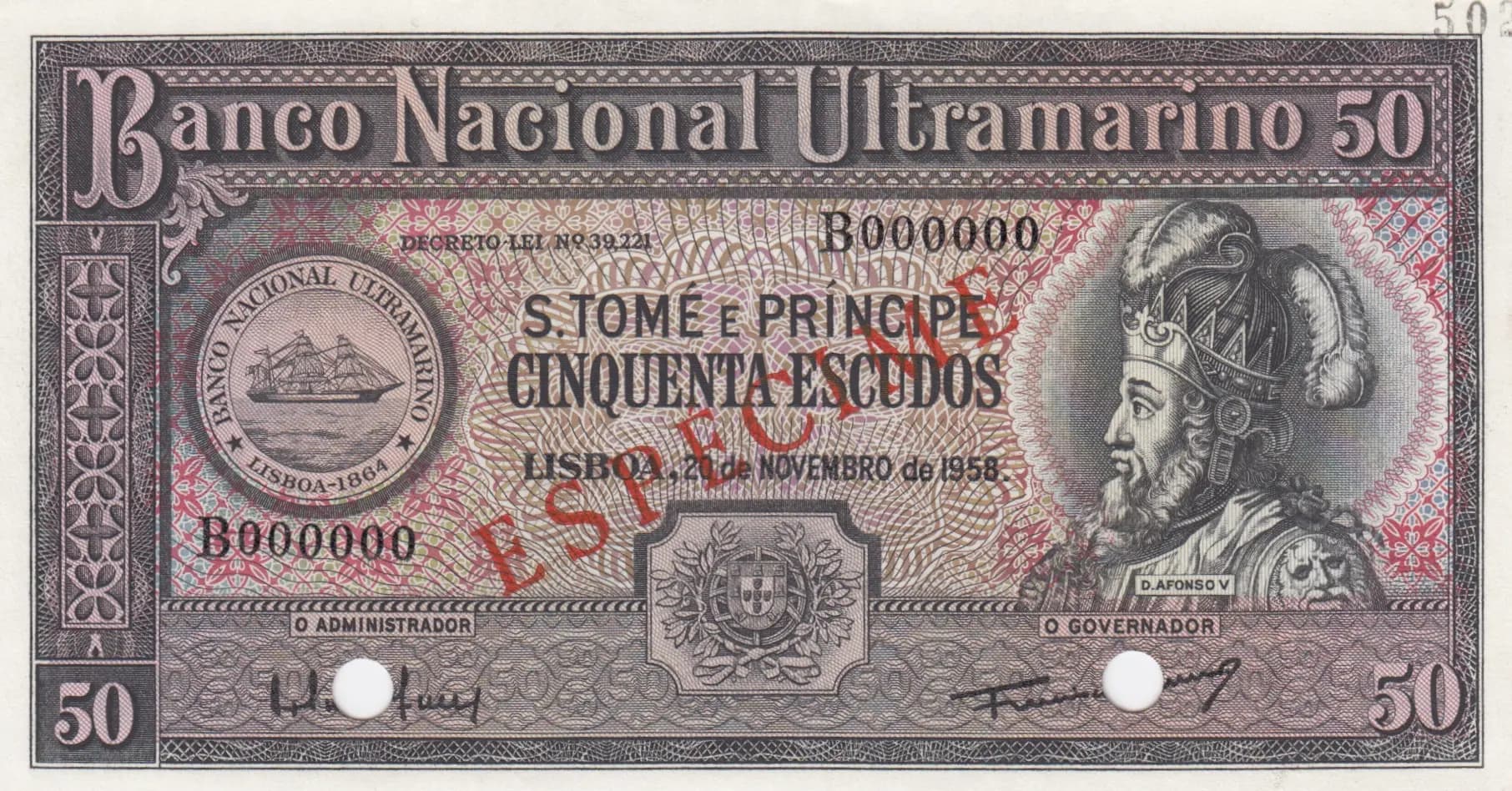
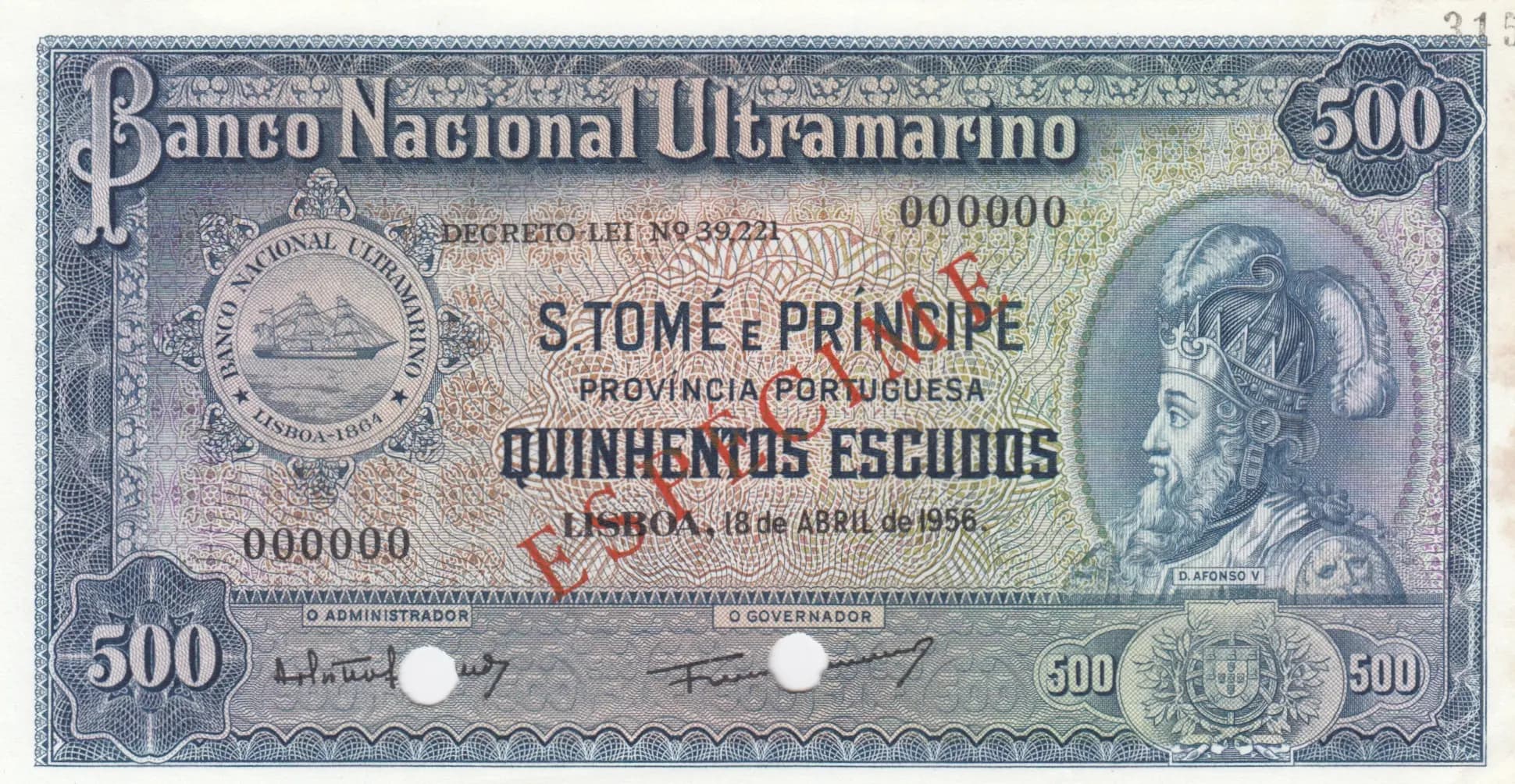
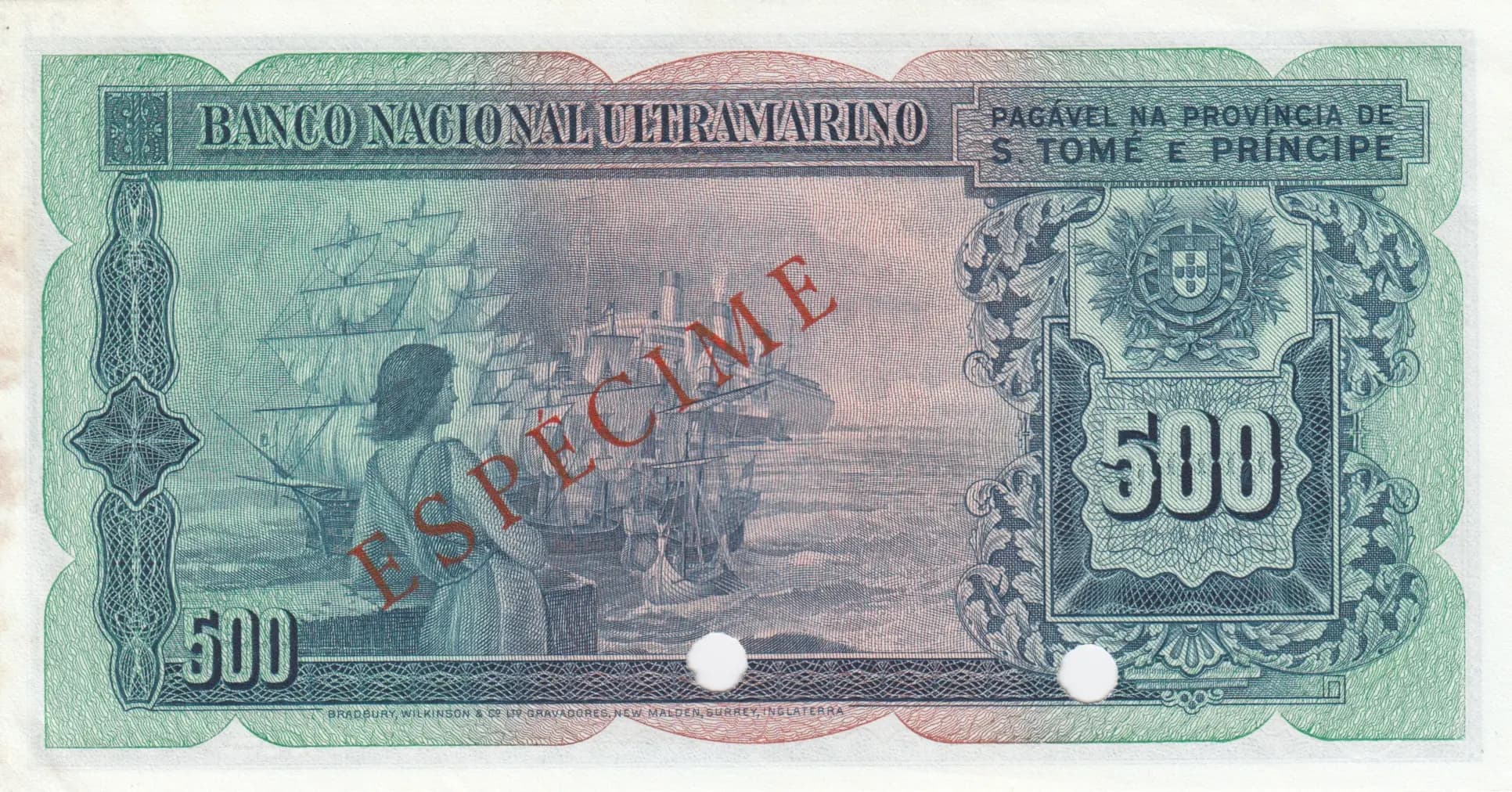
This is an uncirculated 1976 specimen note of 500 Escudos from Saint Thomas & Prince, issued by the Banco Nacional Ultramarino. The note features a portrait of D. Afonso V on the front and an elaborate maritime scene with sailing ships on the reverse, both rendered in fine engraved detail with blue-gray, purple, green, and brown tones. As a specimen note, it bears red 'SPECIMEN' overprints and two circular punch holes used to invalidate it from circulation, making it a desirable item for collectors of Portuguese colonial currency and specimen notes.
Common. While this is a specimen note (which typically has lower print runs than circulation notes), specimen notes from mid-20th century Portuguese colonial issues are regularly encountered in the market. The 500 Escudos denomination from this period was produced in substantial quantities. Specimen notes in this series appear with reasonable frequency in dealer inventories and auction results, indicating no significant scarcity premium.
This note was issued in 1976, just one year before Saint Thomas & Prince gained independence from Portugal in 1975 (though the decree referenced on the note dates to 1956). The portrait of D. Afonso V, the 15th-century Portuguese king, reflects the colonial Portuguese heritage of the territory. The ship depicted in the Banco Nacional Ultramarino's circular seal on the front and the maritime scenes on the reverse evoke the maritime trading heritage that connected Portugal to its overseas provinces, a central theme in Portuguese colonial identity and the history of this African island nation.
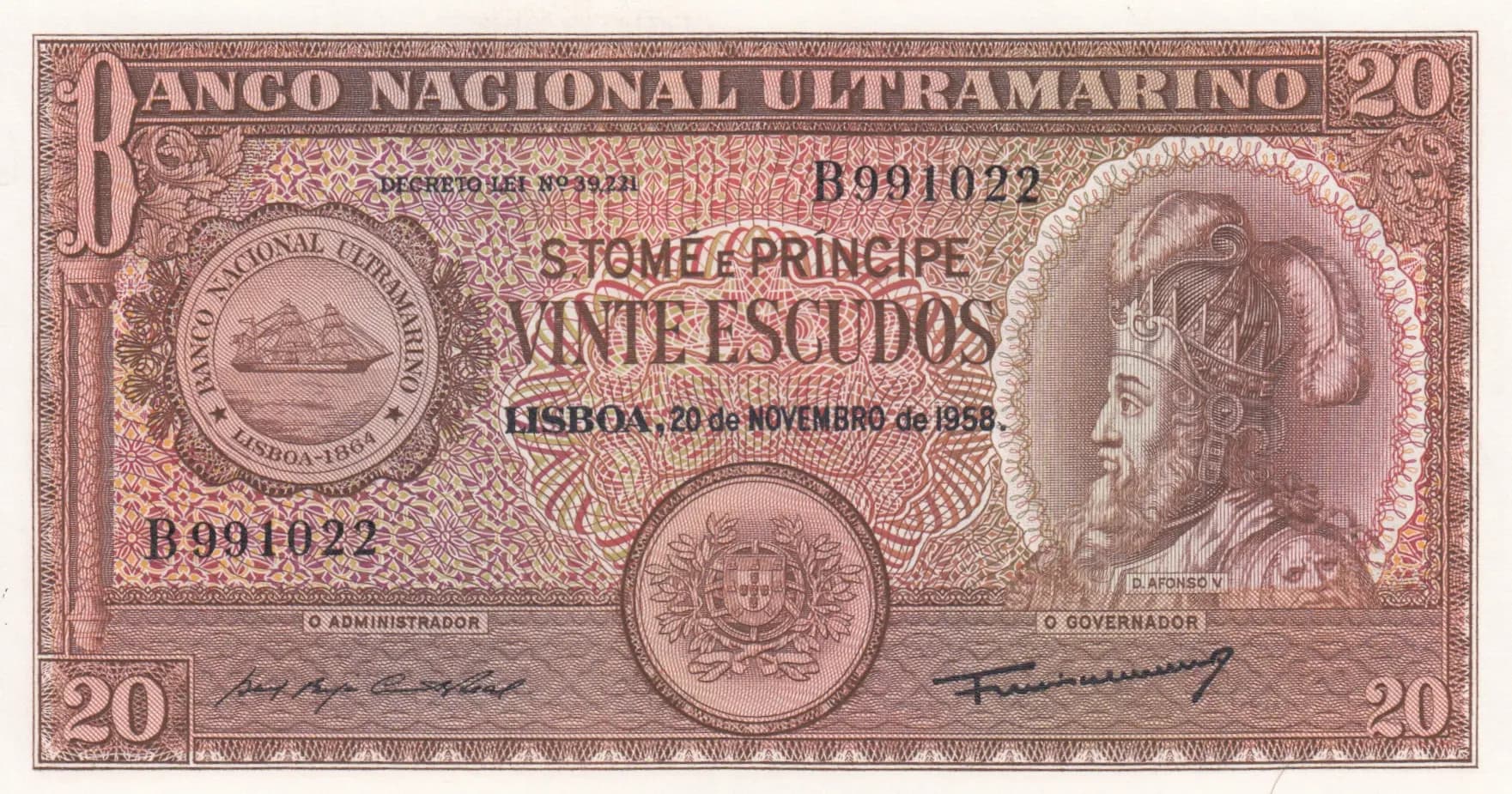
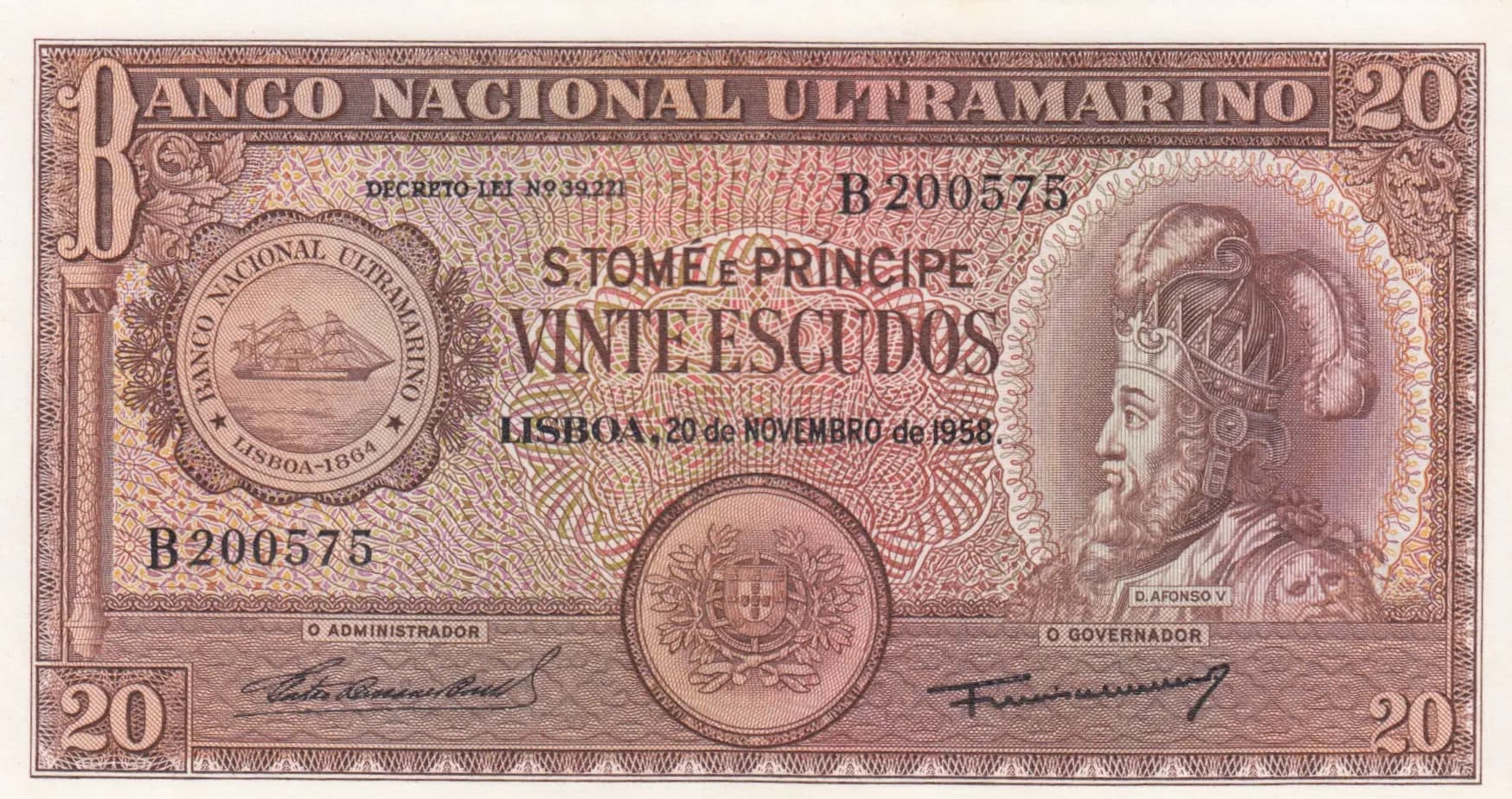
The obverse features a formal portrait of King D. Afonso V of Portugal (1432-1481), rendered in three-quarter profile on the right side of the note with his distinctive curled beard and regal bearing. This historical Portuguese monarch was chosen to represent Portuguese sovereignty and heritage on the colonial currency. The left side displays the circular seal of the Banco Nacional Ultramarino, established in Lisbon in 1864, incorporating a sailing ship symbolizing maritime commerce and colonial trade routes. The reverse depicts an elaborate maritime scene with period sailing vessels navigating waters, framed by ornamental borders featuring coat of arms and heraldic emblems. Throughout both sides, intricate guilloche patterns, floral and geometric ornamental designs, and fine engraved details create layers of decorative security and aesthetic complexity. The color palette of blue-gray, purple, green, and brown provides visual distinction and period authenticity.
FRONT SIDE: 'Banco Nacional Ultramarino' (Ultramarino National Bank); 'DECRETO LEI NO 39221' (Decree Law No. 39221); 'S.TOMÉ E PRÍNCIPE' (Saint Thomas and Prince); 'PROVÍNCIA PORTUGUESA' (Portuguese Province); 'QUINHENTOS ESCUDOS' (Five Hundred Escudos); '18 de ABRIL de 1956' (April 18, 1956); 'D. AFONSO V' (D. Afonso V); 'O ADMINISTRADOR' (The Administrator); 'O GOVERNADOR' (The Governor); '500' (500); 'SPECIMEN' (Specimen). REVERSE SIDE: 'BANCO NACIONAL ULTRAMARINO' (Ultramarino National Bank); 'PAGÁVEL NA PROVÍNCIA DE S. TOMÉ E PRÍNCIPE' (Payable in the Province of Saint Thomas and Prince); '500' (500); 'SPECIMEN' (Specimen); 'BRADBURY, WILKINSON & CO LTD GRAVADORES, NEW MALDEN, SURREY, INGLATERRA' (Bradbury, Wilkinson & Co Ltd Engravers, New Malden, Surrey, England).
Intaglio engraving (steel plate gravure), a premium security printing method. The note credits Bradbury, Wilkinson & Co Ltd, a renowned British security printer headquartered in New Malden, Surrey, England. This firm was among the world's leading currency and security document printers and is responsible for the fine line engraving, guilloche patterns, and detailed portrait work visible throughout the note. The specimen status is marked by red overprint text and deliberate punch hole invalidation.
This note is cataloged as Pick P-39s (specimen variant). The PMG population report indicates two variants exist for this base Pick number: P-39cts (circulation-type specimen) and P-39s (specimen). This specific example is the P-39s variety, identifiable by the red 'SPECIMEN' overprint and two circular punch holes characteristic of official specimen invalidation. The serial number appears to be 000000, typical of specimen notes. No signature varieties or other distinguishing features of note are observed in the visible images.