20 escudos 1958 specimen
About This Note
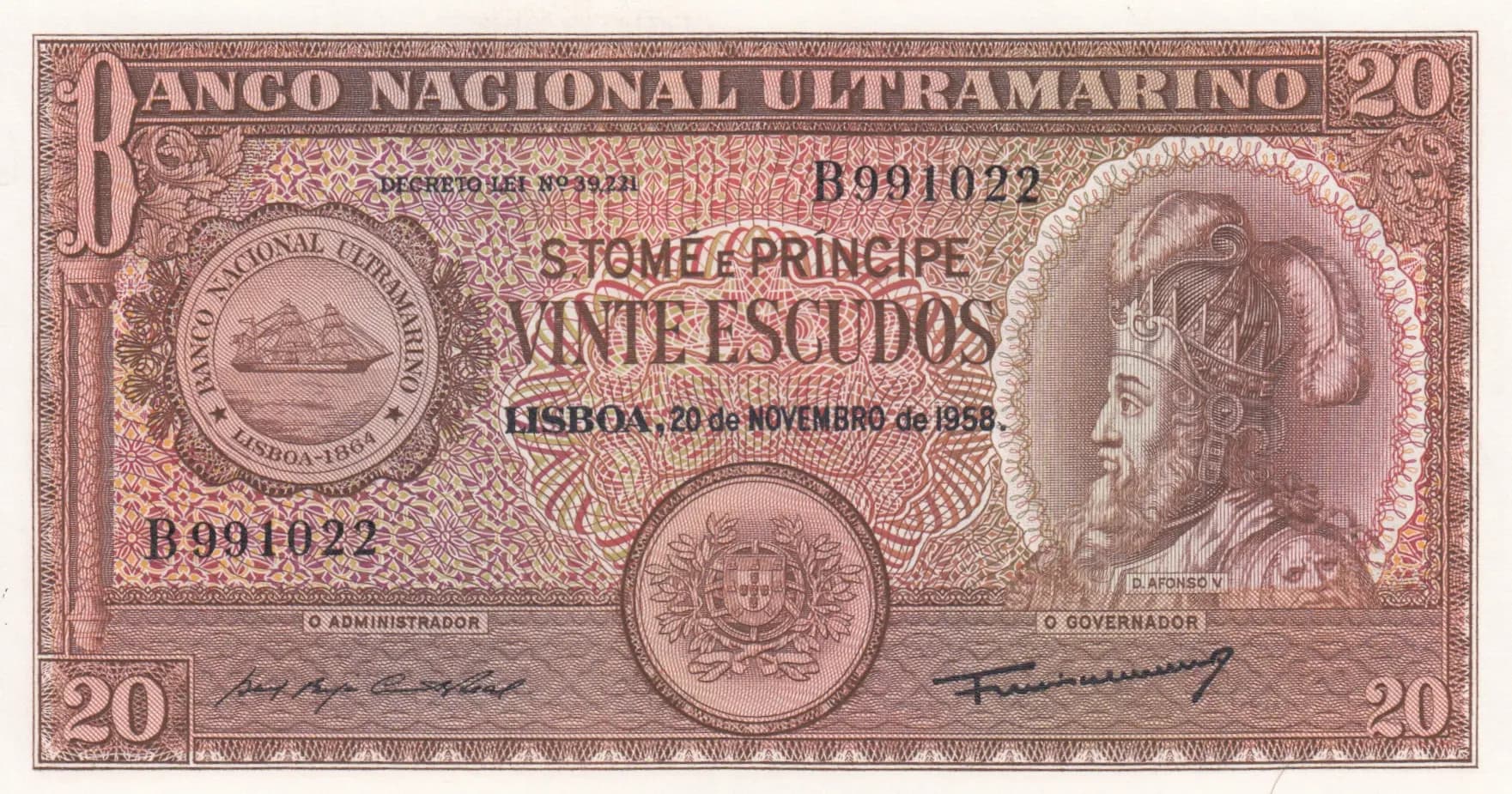
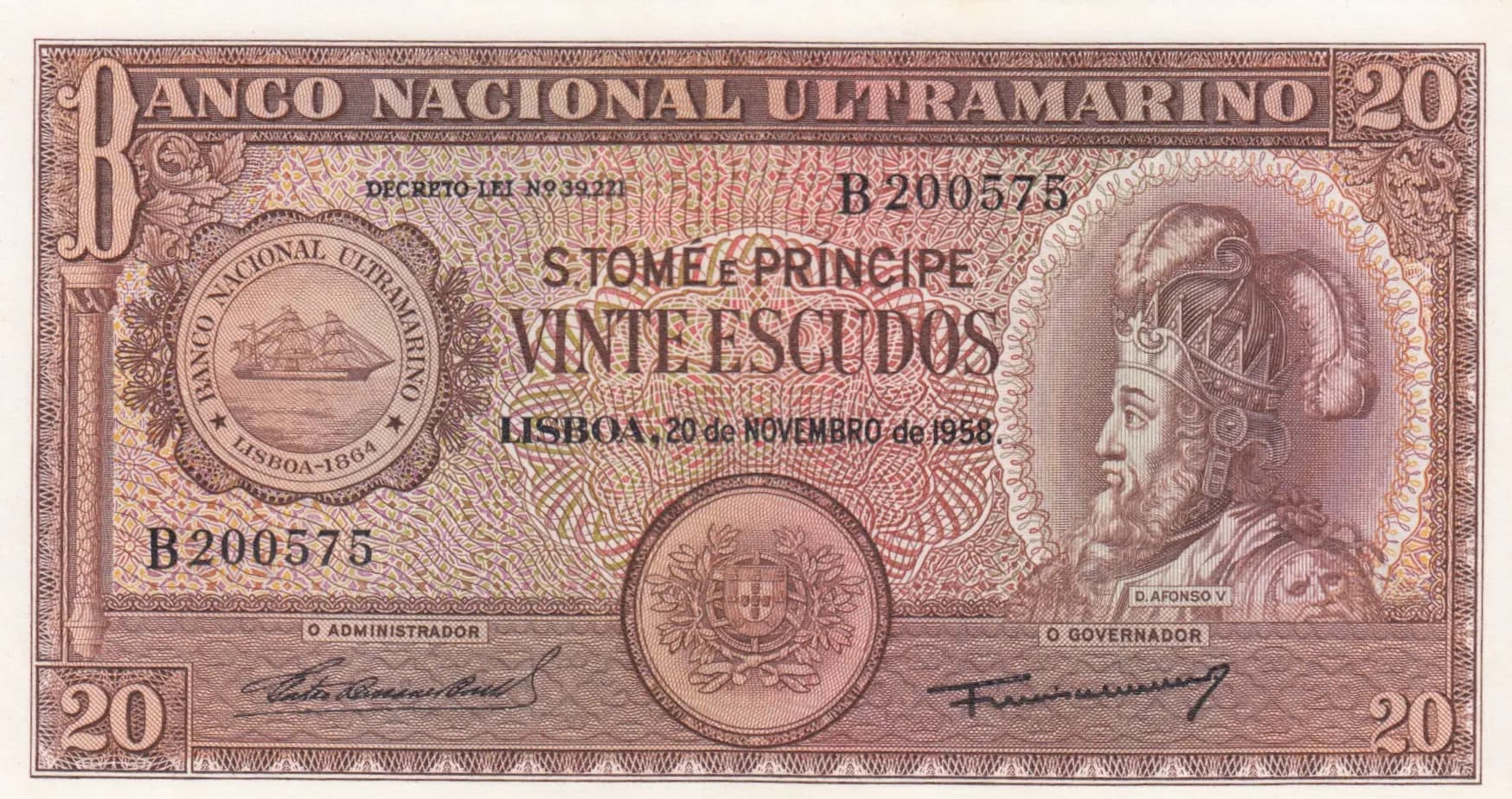
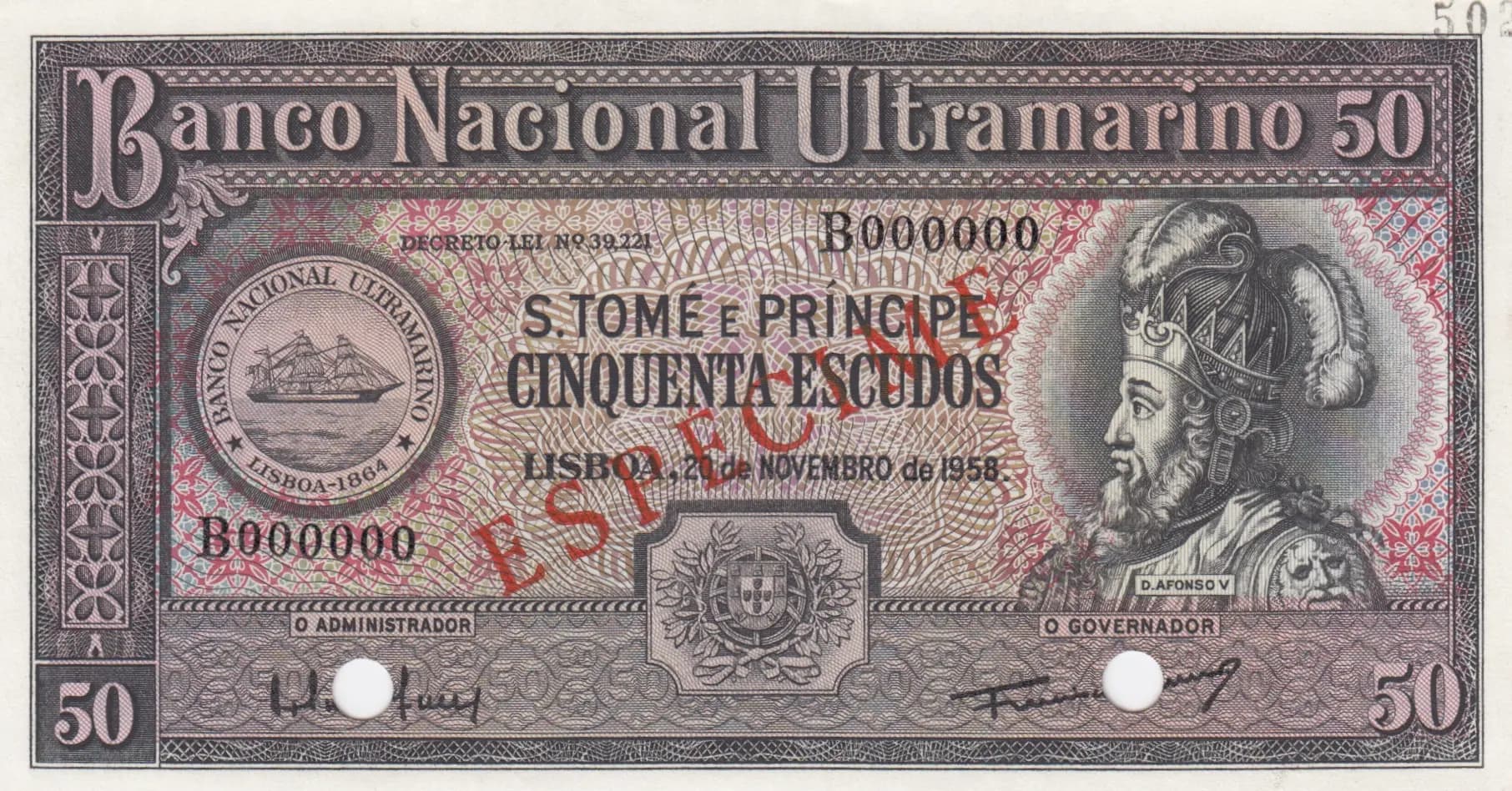
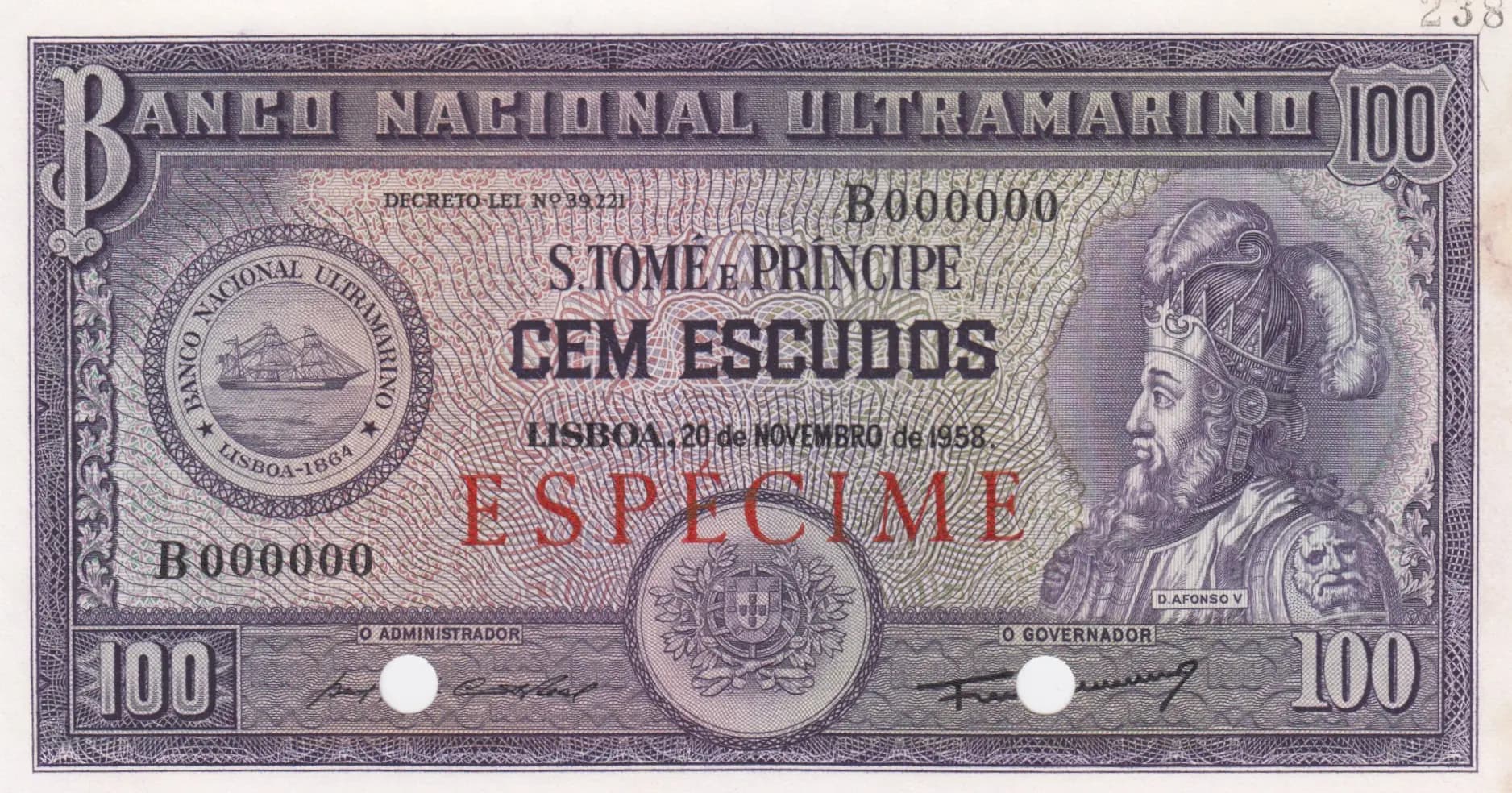
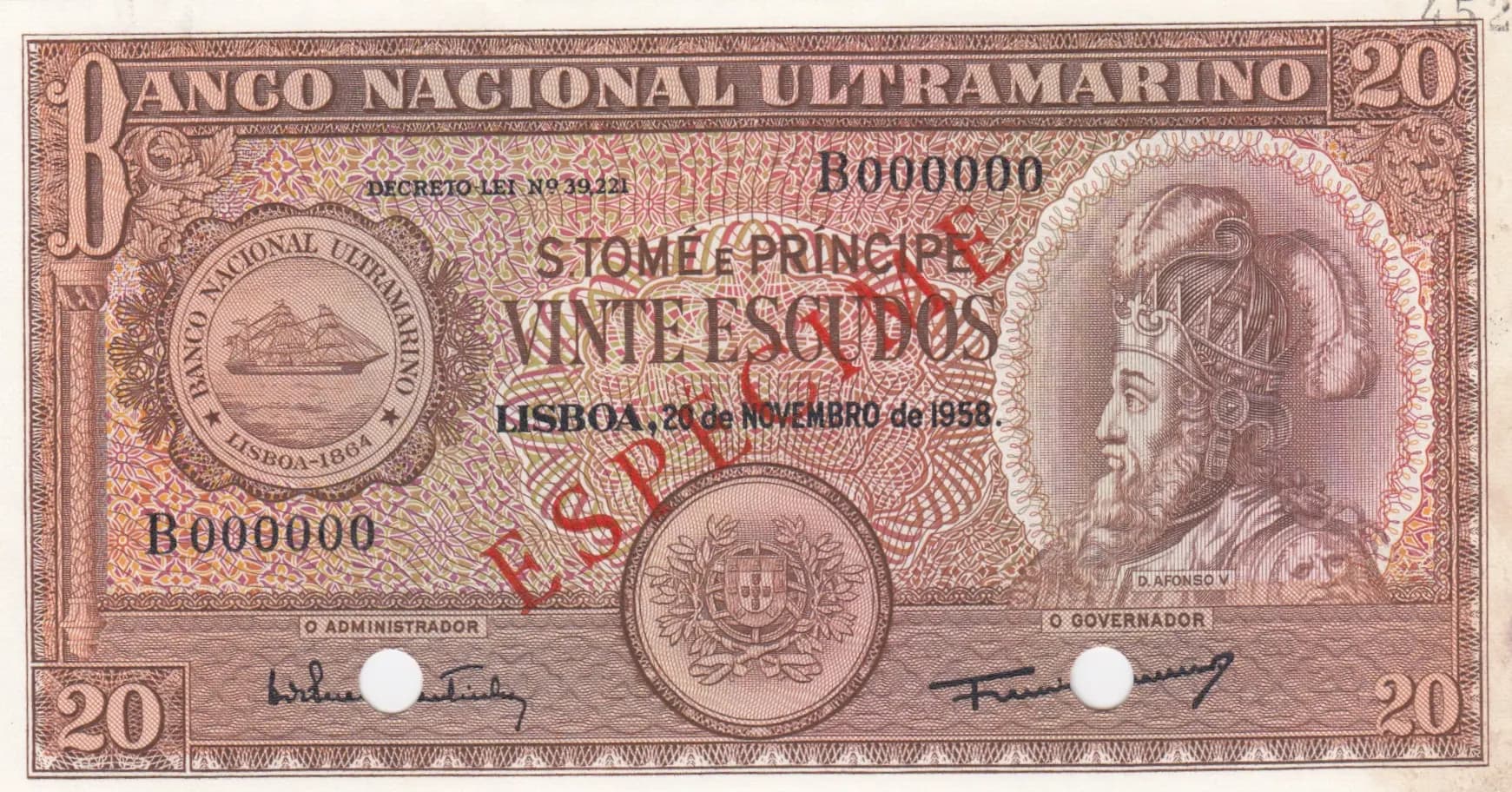
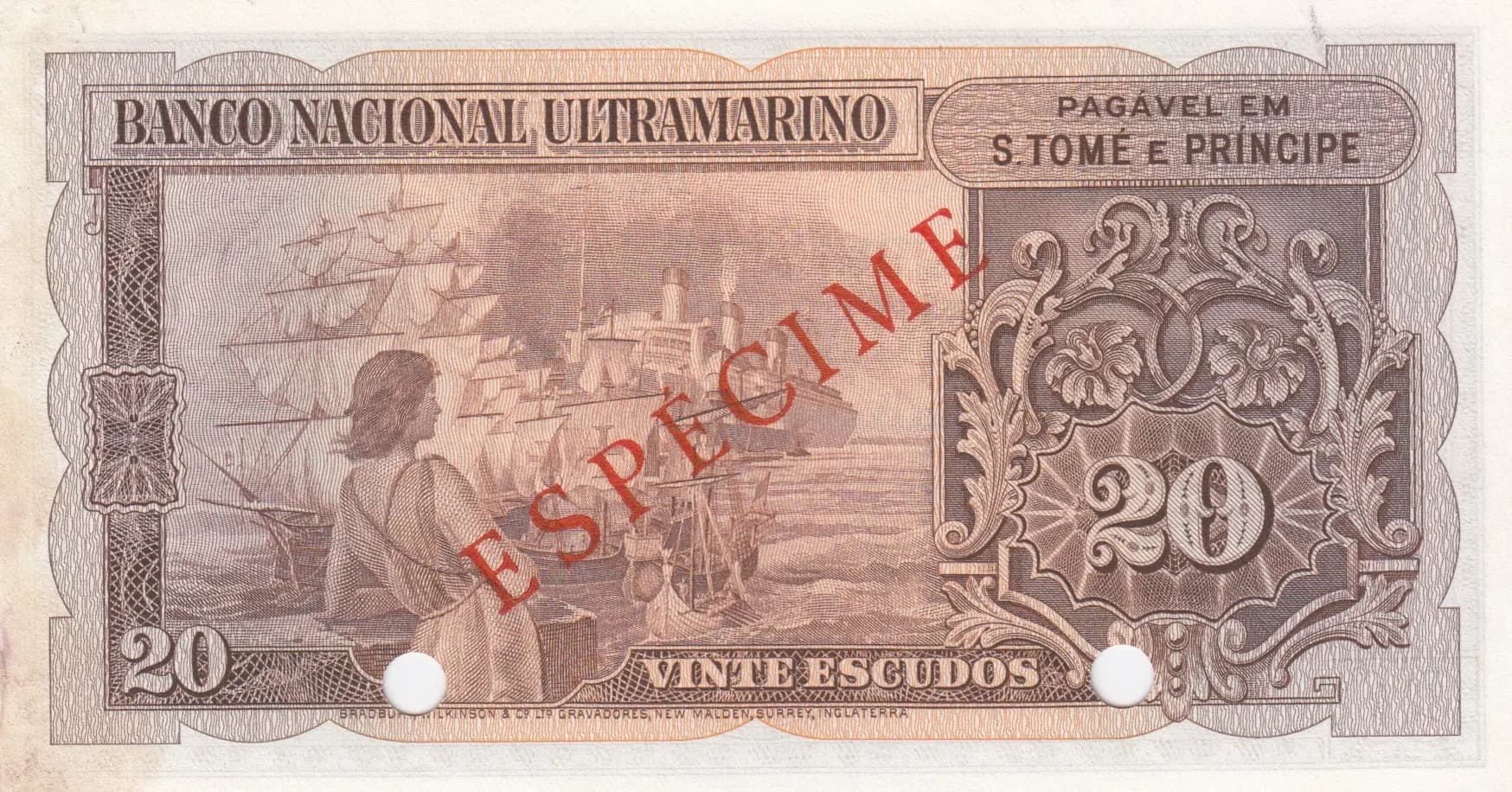
This is a 1958 specimen note from the Banco Nacional Ultramarino for São Thomé and Príncipe, graded AU and representing an important colonial-era Portuguese currency. The note features exceptional engraving work by Bradbury Wilkinson & Co., with a bearded male portrait on the obverse and an allegorical female figure on the reverse, both rendered in fine detail characteristic of mid-20th century security printing. As a specimen note with the characteristic red 'ESPECIMEN' overprint and two punch holes, this is an uncirculated example that preserves the sharp engraving and pristine paper quality typical of notes held in institutional archives.
Common. Specimen notes from the Banco Nacional Ultramarino's 1958 São Thomé and Príncipe series were produced in sufficient quantities for institutional and archival distribution. The Pick catalog lists only one variant (P-36cts) in the PMG population report, indicating no significant scarcity markers. Specimen notes, while not in general circulation, were systematically preserved by banks and institutions, resulting in reasonable survivor populations. AU-graded examples are desirable but not exceptionally rare in the current collector market.
Issued on November 4, 1958, this note represents Portuguese colonial currency during the final years of the Estado Novo regime in Portugal's African colonies. The inscription 'S.THOMÉ E PRÍNCIPE' and the reference to payment in that territory underscore the note's role in the colonial economy of Portuguese West Africa. The allegorical female figure on the reverse likely represents Portuguese civilization or commerce, a common allegorical theme used in Portuguese colonial banknotes to reinforce imperial cultural narratives.
The obverse features a formal portrait of a bearded gentleman positioned on the right side, rendered in classical engraved style typical of Portuguese colonial currency. The left side displays the circular seal of the Banco Nacional Ultramarino incorporating a sailing ship, symbolizing maritime commerce and Portugal's seafaring heritage. The center bears the Portuguese coat of arms and ornamental rosette patterns. The reverse depicts an allegorical female figure in classical dress, likely representing Commerce or Civilization, positioned with architectural cityscape elements in the background—a common symbolic representation in Portuguese colonial iconography. Both sides are framed by ornate decorative borders and feature complex guilloché patterns throughout, demonstrating the security printing standards of the era.
FRONT: 'Banco Nacional Ultramarino' (National Ultramarino Bank); '20' and 'VINTE ESCUDOS' (Twenty Escudos); 'DECRETO LEI Nº 39.421' (Decree Law No. 39,421); 'S.THOMÉ-PRIMEIRA' (São Thomé - First); 'LISBOA, 4 de Novembro de 1958' (Lisbon, November 4, 1958); 'O ADMINISTRADOR' (The Administrator); 'O GOVERNADOR' (The Governor). BACK: 'Banco Nacional Ultramarino' (National Ultramarino Bank); 'PAGÁVEL EM' (Payable in); 'S.THOMÉ E PRÍNCIPE' (São Thomé and Príncipe); '20' and 'VINTE ESCUDOS' (Twenty Escudos); 'ESPECIMEN' (Specimen); 'BRADBURY WILKINSON & CO., ENGRAVERS, NEW MALDEN, SURREY, INGLATERRA' (Bradbury Wilkinson & Co., Engravers, New Malden, Surrey, England).
Intaglio engraving (recess printing), executed by the renowned British security printer Bradbury Wilkinson & Co. of New Malden, Surrey. The note exhibits characteristic fine-line engraving, complex cross-hatching, and guilloché background patterns typical of high-security banknote production. The red 'ESPECIMEN' overprint was applied separately, likely through lithography or overprinting.
This note is identified as Pick P-36s, the specimen variety of the 1958 20 Escudos denomination. The specimen designation is confirmed by the red 'ESPECIMEN' overprint and the characteristic double circular punch holes through the note, standard practice for withdrawn or specimen currency. The catalog notes reference P-36cts as a variant, though the specific differences between these variants are not detailed in the provided data. The November 4, 1958 date and decree reference (Lei Nº 39.421) are consistent with this issuance.